VisitBerlin strikes a positive half-year balance for the tourism and convention business of the German capital: 5,058,677 visitors (+ 10.8 %) travelled to Berlin from January to June 2012, and spent 11,332,553 nights (+ 10.9 %) in the German capital during that period*. About one fourth of the room nights were generated by participants in meetings and conventions. They attended 57,800 meetings and conventions (+ 8.1%) during the first half-year 2012.
“The growth during the first half-year has exceeded our expectations by far”, says visitBerlin CEO Burkhard Kieker. “Despite a difficult economic environment outside Germany, the international guests are remarkable growth drivers in Berlin. Berlin’s special attraction appears to be unbroken.”
Berlin continues its uptrend: significant growth is recorded by the numbers of international visitors. 1,822,042 foreign guests travelled to Berlin during the first half-year 2012 (+ 12.8 %). They spent 4,646,376 nights in the city; this likewise corresponds to a 12.8 percent increase. The metropolis was particularly popular during the first six months of this year with guests from France (+ 19 %), Italy (+ 13.6 %) and Spain (+ 6.7 %). The growth rates on the European foreign markets as well as in the BRIC states are consistent with the marketing focus of visitBerlin.
The 781 accommodation providers of the city made available a total of 125,743 beds (June 2012). The average length of stay amounted to 2.2 days during the first half-year. Strong demand for Berlin’s event locations
Event organisers decide increasingly in favour of Berlin and stage more and more meetings and conventions in the city. The 57,800 events during the first half-year 2012 were attended by 4.6 million participants. These are seven percent more than during the comparable prior year period or 300,000 additional guests in absolute numbers. They spent 3.1 million nights in Berlin (+ 3%).
“The stepping up of our convention acquisition efforts is paying off. Berlin is number four on the international level amongst the cities with the highest number of association congresses, and for medical congresses Berlin is even number one”, says Kieker.
A central role is played by Berlin’s convention hotels: at the 50,300 events (+ 8%) staged there, 2.8 million participants (+ 3 %) were recorded. The highest growth rate was accounted for by special locations, such as bcc, Tempodrom or Kalkscheune. 200,000 or 20 percent more participants than last year were counted there.
Medical conventions and meetings (18 %) top the list, followed by political events (16%) and events in the fields of “banks, commerce, insurance” (14 %).
* Source: Berlin-Brandenburg Statistics Office ** Source: Convention Statistics Half-Year Report 2012, prepared by the independent market research company ghh consult GmbH on behalf of the Berlin Convention Office of visitBerlin
How many inhabitants does Berlin have? How large is the city? All numbers and facts concerning the German capital.
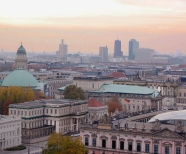
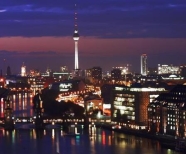
The capital city of the Federal Republic of Germany has a population of 3.5 million. Covering an area of 892 square kilometres, Berlin is the Goliath among German cities. By international comparison, the German capital is the second largest city in the European Union in terms of its population and the fifth largest in terms of its area.
The population density in Berlin is well above average. Statistically speaking, there are 3,809 Berliners to every square kilometre, the highest figure for any German city. The most densely populated area within Berlin is Friedrichshain-Kreuzberg, with 12,400 people to a square kilometre (1,400 in Treptow-Köpenick). By comparison, Mecklenburg-Western Pomerania has an average of 74 people per square kilometre.
With 175 museums, Berlin has more museums than rainy days. It also boasts more than 50 theatres and around 300 cinemas. The city has 4,650 restaurants, around 900 bars and 190 clubs and discotheques. It also has more doner kebab shops than Istanbul! The streets that meander through the German capital cover a distance of 5,350km (70km of which is autobahn) and these are lined with more than 400,000 trees. There are around 1.2 million cars registered in the city.
Berlin has been the German capital on several occasions throughout its history. Starting out as the capital of the margraviate and electorate of Brandenburg, this city on the River Spree later became the capital of the kingdom of Prussia and then the German Empire. East Berlin was the capital of the German Democratic Republic. Since German reunification in 1990, Berlin has been the capital of Germany once more.
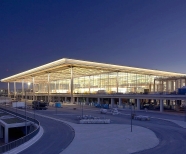
The lights are on, but there won’t be any flights from Berlin Brandenburg International airport until at least October 2013. Berlin city officials are likely to set a new opening date for Berlin’s long-delayed airport later this week. After embarrassing setbacks, the first flights will take off and land from Berlin Brandenburg International in October 2013, according to media reports.
Setting a date for the opening of Berlin’s glitzy new international airport has been nothing less than an odyssey, with city officials announcing one delay after the next for a hub that was supposed to swing open its gates to international travellers in November 2011. Recently, however, the mass-circulation Bild newspaper reported that after months of embarrassment, the city appears set to select a new date this week: 27th October, 2013 — two years later than the original date.
Citing an unnamed city official, the paper wrote that the airport’s supervisory board is expected to announce the new date imminently. The airport would open the morning after the closure of the existing Tegel and Schönefeld airports.
However, the new opening date remains contingent on getting the approval the airport’s highly complicated smoke extraction system by officials in the state of Brandenburg. The system is supposed to pump out toxic smoke in the event of a fire in order to protect passengers inside the terminal. Officials implemented the rules following a deadly fire at the Düsseldorf airport in 1996, which result in the deaths of 17 and caused hundreds of millions in damage.
Initially, the airport had been scheduled to open on 1st November, 2011, but it was then delayed to 3rd June, 2012. Only weeks before the planned opening, city officials pulled the plug. The extended delays have created massive cost overruns and financial problems not only for the airport’s operating company, but also for the airlines that plan to operate at the facility, including hard-hit Air Berlin.
Berlin is the capital city of Germany and one of the 16 states of Germany. With a population of 3.5 million people, Berlin is Germany’s largest city and is the second most populous city proper and the seventh most populous urban area in the European Union. Located in northeastern Germany on the River Spree, it is the center of the Berlin-Brandenburg Metropolitan Region, which has 6 million residents from over 180 nations. Due to its location in the European Plains, Berlin is influenced by a temperate seasonal climate. Around one third of the city’s area is composed of forests, parks, gardens, rivers and lakes.
First documented in the 13th century, Berlin was the capital of the Kingdom of Prussia (1701–1918), the German Empire (1871–1918), the Weimar Republic (1919–1933) and the Third Reich (1933–1945). Berlin in the 1920s was the third largest municipality in the world. After World War II, the city became divided into East Berlin—the capital of East Germany—and West Berlin, a West German exclave surrounded by the Berlin Wall (1961–1989). Following German reunification in 1990, the city regained its status as the capital of Germany, hosting 147 foreign embassies.
Berlin is a world city of culture, politics, media, and science. Its economy is primarily based on the service sector, encompassing a diverse range of creative industries, media corporations, and convention venues. Berlin also serves as a continental hub for air and rail transport, and is a popular tourist destination. Significant industries include IT, pharmaceuticals, biomedical engineering, biotechnology, electronics, traffic engineering, and renewable energy.
Berlin is home to renowned universities, research institutes, orchestras, museums, and celebrities, as well as host of many sporting events. Its urban settings and historical legacy have made it a popular location for international film productions. The city is well known for its festivals, diverse architecture, nightlife, contemporary arts, public transportation networks and a high quality of living
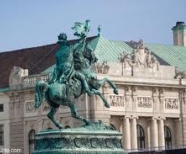
Trinity agent Alex Jarvis has just returned from visiting Vienna for Access Austria. The tour included site visits of Viennese hotels, venues, and museums, a high proportion of which are available for private hire. Access Austria is an annual industry event located in the Hofburg, the former palace of the Hapsburgs.
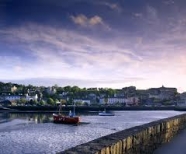
Effortlessly combining the traditional with the modern, the historic with the contemporary, and the dynamic with that famous Irish laid-back quality, Dublin is an exciting and inspirational city eager to extend a warm welcome to business tourists from across the globe. Scoring high on essential criteria such as accessibility, facilities and service, Dublin delivers in its own inimitable way.
Captivating experience: Dublin is a breath of fresh air, a truly unique capital that’s steeped in tradition yet young at heart. In the historic, compact city centre there are lots to do and see, and visitors will love the rich selection of galleries, museums, restaurants, pubs and shops, not to mention the traditionally warm welcome from Dubliners.
Traditionally high visitor turnout: World-renowned for our warm welcome and genuine sense of fun, the Irish people’s enviable passion for life promises to entice colleagues and peers from around the globe, guaranteeing high attendance at any international event.
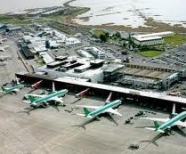
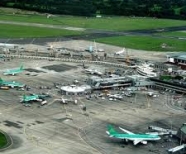
Easy access: Ireland ideally located on the edge of Europe, is less than an hour from London, less than two hours from Paris or Brussels and just six hours from the east coast of the US by air. Dublin Airport is Ireland’s busiest airport, with over 98 airlines flying to over 185 destinations, including direct scheduled daily flights from North America, mainland Europe, Britain and regular flights from the Middle East. Dublin International Airport is only 12KM from the city centre and the city itself is small and compact, and is tailor-made for carefree exploring by foot. It also has an excellent transport system, which includes anurban rail system (DART), a stylish new tram network (Luas) and an extensive citywide and national bus service. Taxis are plentiful and reasonably priced by international standards.
A proven track record: A proven track record in Handling Major International events Dublin hosted the 2003 Special Olympics (the first time it was held outside the US), the 2006 The Ryder Cup (at the K Club in Kildare, just outside Dublin) and the early stages of the 1998 Tour de France, the world’s best known bicycle race.
Safety: Dublin is a safe and welcoming city with a strong, stable economy. Over the last fifteen years, Ireland’s rate of economic growth has been the highest among member nations of the European Union. The city is one of the friendliest in Europe and maintains a relaxed and welcoming atmosphere
Professional, creative and experienced suppliers: DMCs can add creative flair to your event along with providing invaluable local knowledge, experience and practical solutions.
City, sea and countryside all within easy reach means activities such as golf, horse riding, hiking, 4×4 offroad driving, teambuilding, surfing, sailing, windsurfing, canoeing, hot air ballooning, car racing to name but a few are at your fingertips.
A wealth of cultural visitor attractions such as Trinity College Dublin & the Book of Kells, The Guinness storehouse, Dublin Castle, The Old Jameson Distillery, National Art Gallery, Dublinia, St. Patrick’s Cathedral are all in the heart of the city within easy distance of each other.
Unique Transport Options – Get a different view of Dublin with a tour of the city by horse & carriage, eco bike, high speed ribs around Dublin Bay, by land and water with the amphibious Viking Ducks or by vintage bus or car –all take group bookings.
Unusual venues from castles to hospitals, stadia to vaults and breweries to colleges are all available as conference and dining venues and will guarantee the WOW factor for your event.
Price/Value Relationship – Dublin offers wonderful hotels, unique venues and fantastic food, all at competitive prices. Add to this breathtaking scenery, lively cosy pubs, friendly locals and foot tapping, hand clapping traditional music and you have unbeatable value for money.
Unesco City of Literature – with writers such as James Joyce, Samuel Beckett, George Bernard Shaw, WB Yeats, John Synge, Oscar Wilde, Jonathan Swift and Bram Stoker all hailing from Ireland’s capital, Dublin was awarded the Unesco City of literature in 2010 for its’ ongoing contribution to the literary world.
The Dublin Pass includes access to over 27 of Dublin’s top attractions as well as over 20 added value facilities plus a one way ticket on the Aircoach – available at a discounted price to conference delegates!
Knowledge Capital – Experienced professionals, world-class researchers, multi-national organisations and innovative start-ups have all made Dublin their home. Over 1,200 overseas companies have chosen Ireland as their European base and are involved in a wide range of activities in sectors as diverse as e-Business, ICT, pharmaceuticals, healthcare, financial and international services. Half the world’s top fifty banks have operations in the International Financial Services Centre (IFSC) in central Dublin. In total, there are almost four hundred and thirty international institutions directly operating from Dublin with a further seven hundred managed entities carrying on business under the IFSCprogramme. Ireland is a key location for the pharmaceutical and chemical industry in Europe. Nine of the top ten companies in the world have operations in Ireland. Ireland is also home to thirteen of the world’s top twenty medical device companies. There are eighty three overseas healthcare companies and over half of these companies are involved in research and development, with a number of companies having dedicated research and development centres. The top ten independent software companies in the world all have significant operations in Ireland.
Dublin is European headquarters for many major ICT, financial, manufacturing and pharmaceutical companies such as Google, Face book, Mercke Sharpe & Dohme, Intel, Hewlett Packard, Microsoft, FI-Tech, HVB Bank, Populis, DEPVA Bank, DTS, Kelloggs and Aviva. Other companies with a strong presence in Dublin and its environs include Pfizer, Astrazenica, United Drug, Ernst & Young, Accenture, Citi, Glaxosmithkline to name but a few.
Dublin Airport Authority (DAA) and eircom are delighted to announce that they are now offering unlimited free WiFi at Dublin Airport for all users without registration.
The eircom WiFiHub service was launched at Dublin Airport in December last year and more than one million passengers have so far availed of the service. The enhancements to the service being announced today see all charges relating to the service waived, making it easier for passengers to avail of free WiFi at Dublin Airport.
To access free WiFi at the airport, passengers simply need to log on to either the Dublin Airport Free WiFi network or the free eircom WiFiHub network and click the “continue to surf” button on the homepage. Users can also download the free eircom WiFiHub app which is available from the Android and Apple stores. There is no signup or logon process and consumers can surf for free for as long as they wish.
“Dublin Airport is one of the few capital city airports in Europe to offer its customers free WiFi and this move puts us well ahead of the vast majority of our peers,” said DAA commercial director, Maurice Hennessy.
“eircom has worked closely with the DAA to deliver a high quality WiFi service at the airport and we are delighted that DAA in partnership with eircom can now offer this service for free to all airport users in a user friendly manner,” said Elaine Robinson, eircom’s director of products and strategy, consumer and small business.
In July alone, there were more than 600,000 WiFi sessions at Dublin Airport with customers spending 218,680 hours accessing the internet. “That’s equivalent to one person spending almost 25 years online,” according to Mr Hennessy.
The WiFiHub service at Dublin Airport originally offered free WiFi for 10 minutes, with a €1 charge for a full day’s access, once the free period had expired. DAA and eircom have now agreed to waive all charges and remove the sign-up process.
Most European airports still charge for WiFi (see table below). It costs £3 per hour at London’s Heathrow, Gatwick and Stansted airports, €4.50 for 90 minutes in Paris Charles de Gaulle after an initial free 15 minutes, and €4.95 per hour in Frankfurt after a free 30 minute period.
Just over 2 million passengers passed through Dublin Airport in August, an increase of almost 2% on the same period last year, according to the Dublin Airport Authority.
Passenger volumes to and from continental Europe increased by 2.5% with more than 1.1 million passengers travelling to European destinations during the month. UK traffic declined by 3% with just under 635,000 passengers travelling in August.
Transatlantic traffic to North America increased by almost 4% with just over 193,000 passengers travelling on this route sector last month. Traffic to other international destinations, which covers mainly flights to the Middle East and charters to North Africa, increased by 78%. More than 47,000 passengers travelled on these routes during August.
Passenger numbers on domestic routes declined by 21% with just over 7,000 travelling on domestic flights last month. So far this year, almost 13 million passengers have travelled through Dublin Airport, which is flat when compared to the same period last year.
Dublin Airport Welcomes Ryanair’s Plans For New Service To Lublin
September 20 2012
Dublin Airport is delighted to welcome Ryanair’s recent announcement to commence services to Lublin in Poland from December 18 next.
This is Ryanair’s sixth new service from Dublin Airport this year and one of 15 new services overall starting this year.
This brings Ryanair’s winter schedule to 54 routes from Dublin Airport.
Welcoming the announcement a spokesperson for the DAA said “We are always delighted when an airline announces a new service which leads to new opportunities for both leisure and business travellers.
“We look forward to the launch of the new service in time for the Christmas holiday season on December 18,” the spokesperson added.
New services launched from Dublin Airport in 2012:
Bournemouth Aer Lingus Regional Budapest Ryanair Copenhagen Aer Lingus Chisnau Air Moldova Dusseldorf Lufthansa Dubai Emirates Lublin Ryanair* Maastricht Ryanair* Palermo Ryanair Southend Aer Lingus Regional Stockholm Aer Lingus Verona Aer Lingus Verona Ryanair Warsaw (Modlin) Ryanair Washington United
DAA Statement Re Potential Industrial Action on October 1
September 25 2012
Dublin Airport Authority (DAA) regrets to inform passengers that operations at Dublin, Cork and Shannon airports may be affected by industrial action on Monday, October 1.
DAA has been served with notice of potential industrial action for October 1 by SIPTU and Mandate and in recent days, SIPTU has indicated that its members plan a series of rolling work stoppages at the three airports on that day.
DAA is deeply disappointed that trade unions have embarked on this unwarranted course of action and is exploring every option available to avert potential disruption to its operations. The planned industrial action, which relates to pension issues, is needless and will cause unnecessary worry and inconvenience for the travelling public.
DAA is currently in a conciliation process with trade union representatives in relation to the pensions issue under the auspices of the Labour Relations Commission (LRC). These negotiations are ongoing and the decision to persist with notice of industrial action, while the industrial relations machinery of the State is fully engaged with this issue, is unwarranted. DAA remains committed to the LRC process and is working alongside all other stakeholders to find a resolution to the pension issue.
DAA has today been granted leave by the High Court to seek an injunction against SIPTU in relation to the planned work stoppages, as they are contrary to existing agreements between the company and the trade union. A full hearing on the case has been set for Friday, September 28.
DAA is working on a potential contingency plan should the industrial action proceed and will update passengers further in the coming days. Unfortunately at this stage, due to the manner in which SIPTU has decided to act, it is impossible to predict what action may be taken and DAA is therefore not currently in a position to accurately gauge the impact of any planned dispute.
DAA will continue to explore all options available to attempt to avert potential disruption to our customers and urges trade union representatives to engage with the current conciliation process rather than take needless industrial action.
DAA will update customers further in the coming days.