

UKEVENTS UK Spring Budget wishes, mia’s latest survey, Conference News DEI market research, & more

This month’s news round-up brings you some of the industry and association news and views from March 2024, including UKEVENTS UK Spring Budget wishes, mia’s latest surveyConference News DEI market research, and more.

Headlines

UKEVENTS shared its UK Spring Budget wishes.

Ahead of the 2024 Spring Budget Michael Hirst OBE, Chair of UKEVENTS Working Group for Advocacy and Government Relations, shared his views on what the industry needs to meet its potential.

Writing on the UKEVENTS blog, he commented: “Ahead of the Spring Budget on the 6th March 2024, it is important that UKEVENTS lays out its recommendations to His Majesty’s Government on what the events industry can offer the United Kingdom.

“While the events industry continues to underpin so much in terms of cultural vitality, societal advancement and trade, there is much more it can offer the Government in terms of supporting its own policy agenda.”

The blog highlighted championing innovation, Facilitating trade and investment, preserving vibrancy, and more. 

Read the blog in full, here.

A researcher at the University of Northampton (UON) is asking event planners how they make decision to avoid disaster.

Claire Drakeley is a senior lecturer in Events Management at the UON and part way through a PhD in which she explores how critical decisions are made as events are taking place.

She is now asking event professionals to complete a 25min survey in which she presents different scenarios and asks survey participants how they would react to them.

Claire said: “…what if you’ve organised an event for 5,000 ticket holders, and then your audio-visual contractor doesn’t turn-up, there are major technical issues or the weather turns your venue into chaos?

“There’s a good chance you’ve been to an event where there have been major issues behind the scenes, but did you notice anything? These scenarios playout all the time, often combining to make it even more challenging, and it is usually up to the experience and knowledge of the Event Management Team to solve the problem before anyone notices.

“I hope this research will end up as a decision-making tool for new, and experienced event managers, which will help bring calm to the chaos and enable them make better decisions when faced with these complex situations.”

This is the first phase of Claire’s research and ahead of the next stage she is inviting survey participants to be part of an expert panel process with three rounds of online input over a four month period to record their feedback on the research and its findings.

The survey includes an invitation to participate in further research activity and to add an email address if they would like to receive the results of the research when it is completed next year.

If you would like to know more, or have any questions, please email Claire via –  claire.drakeley@northampton.ac.uk.

mia’s (Meetings Industry Association) latest survey, conducted in February 2024, has shown a positive financial industry outlook and rising future bookings.

Yet, as Kerrin McPhee, mia’s chief executive highlights, “…there are still a variety of matters that we as a sector must keep on the radar. We cannot ignore the vast evolution of events that we are anticipating taking place over the next 12 months.”

Yet, as Kerrin McPhee, mia’s chief executive highlights, “…there are still a variety of matters that we as a sector must keep on the radar. We cannot ignore the vast evolution of events that we are anticipating taking place over the next 12 months.”

Some of the survey’s highlights include:

  • 73% of organisations are forecasting greater revenue in 2024 than they did for 2023
  • 59% have more confirmed future business as of 1 January 2024 than they did as of 1 January 2023
  • Overall costs to the sector increased 14% on average in 2023
  • 50% of venues are currently prepared for the introduction of Martyn’s Law

View the report in full, via mia.

Conference News has launched market research to explore social responsibility, diversity, equality, inclusion (DEI), accessibility, and mindful language and content in event planning.

The publication, in partnership with Marketing Manchester, has shared that its aim is to uncover how organisers incorporate these values to foster more inclusive and responsible events.

You can support the research by providing your insights via the link in this feature on Conference News.

The Business Travel Association (BTA) is calling for an end to unfair and excessive airport pick-up and drop-off fees.

The BTA told TTG Media that “fees were earning UK airports £300 million a year and singled out Stansted, where a combined drop-off and pick-up is £17, as the most expensive in the UK.”

Details of fees were revealed in a BTA whitepaper, Drop the Drop Off Fees, alongside calls for a government investigation into the charges.

Clive Wratten, BTA chief executive, said: “It is utterly illogical that these fees have soared to such unprecedented levels. To get dropped off and picked up kerbside is a necessity for so many travellers.  

Read TTG’s feature, here.

The Business of Events (TBOE), the Think Tank and Advocacy Network for the global events sector, has published its plan of activity for 2024/5.

It will see a significantly expanded schedule of work and activity as the next 12 months is set to be a critical year for the global events economy, with several high-profile elections taking place around the world. 

In the UK, as well as a general election likely to be held towards the end of 2024, local government and mayoral elections will also be held around the country, potentially changing the local political landscape.

All of this means that it is going to be even more important to engage with politicians and policymakers, creating content, briefings and holding events to promote the value and benefits of having a strong business events economy.

As well as engaging with what will be one of the largest intakes of new MPs in a generation, the activity will also connect event planners, both domestic and international, with TBOE partners. These connections will help ensure that the UK remains at the forefront of the global business events industry and continues to meet the needs of planners and delegates.

Working alongside strategic and content partners, the plan also includes an expanded programme of regional, national, and international events. These events will be predominately invitation only, bringing together senior event industry leaders to connect with politicians, policymakers, stakeholders and planners to look at ways in which together we can build better local and national economies through business events.

Martin Fullard, Director of News & Content at TBOE said; “The need for increased advocacy to highlight the opportunities available by having a strong event economy has never been greater, which is why this year we are significantly expanding our sphere of activity; more research, more events, more insights and more engagement.

“In the UK, we have a limited but critical window of opportunity to tell our story, as the focus shifts towards a general election and a much-changed Westminster landscape. This is why we have been focussing on engaging with those who are likely to be in parliament and in positions of influence, as well as continuing to connect with the corporate and association planners and agencies, to ensure our partners have real-time insights into how the UK can become even more competitive as a world-leading event destination.”

This year, a number of regional events will also take place, along with specific Advocacy Forums, which will be held within existing events and trade shows. Due to the UK general election likely taking place in the Autumn of 2024, the signature Global Policy Forum will now be held in February 2025 in Westminster.

Full details of the plan can be downloaded via the Business of Events, here.

C&IT has published a feature on how to get the data stakeholders actually want for event ROI. 

The feature claims that even though 73% of event marketers are confident in their data, there is a gap when it comes to useful metrics.

Read more here, including details of a reaport that asked 500 brand decision-makers across Austria, France, Germany, the United Kingdom, and the United States working in the Alcohol, Beauty, FMCG, Retail and Technology categories about the live event marketing KPIs that matter, how they would use quality data and the developments they hope to see in the future.

Northstar Meetings Group has revealed that event professionals’ shift to hybrid working is making them more productive and improving company culture.

The group’s latest First Look Research survey reveals that 87 per cent now work from home for part of the week (61%) or work remotely all of the time (26%), with just 13 per cent describing themselves as office based.

Most (72%) were ‘happy’ with their working arrangements and 58 per cent said they thought the increase in hybrid working post-pandemic had increased productivity.

Download and read all the key findings, including thoughts of Northstar Media Group UK’s editorial director James Lancaster via M&IT.

View from the EDGE

EDGE Venues’ Commercial Director, Scott Ford, summed up this March’s monthly insights:
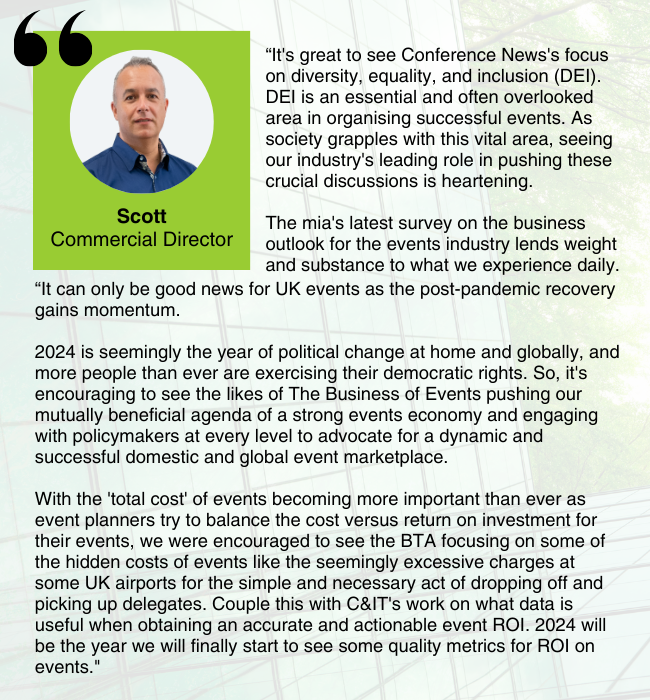
Image of Scott Ford, with his comment: "It's great to see Conference News's focus on diversity, equality, and inclusion (DEI). DEI is an essential and often overlooked area in organising successful events. As society grapples with this vital area, seeing our industry's leading role in pushing these crucial discussions is heartening.

The mia's latest survey on the business outlook for the events industry lends weight and substance to what we experience daily. It can only be good news for UK events as the post-pandemic recovery gains momentum.

2024 is seemingly the year of political change at home and globally, and more people than ever are exercising their democratic rights. So, it's encouraging to see the likes of The Business of Events pushing our mutually beneficial agenda of a strong events economy and engaging with policymakers at every level to advocate for a dynamic and successful domestic and global event marketplace.

With the 'total cost' of events becoming more important than ever as event planners try to balance the cost versus return on investment for their events, we were encouraged to see the BTA focusing on some of the hidden costs of events like the seemingly excessive charges at some UK airports for the simple and necessary act of dropping off and picking up delegates. Couple this with C&IT's work on what data is useful when obtaining an accurate and actionable event ROI. 2024 will be the year we will finally start to see some quality metrics for ROI on events."

Venue Feng Shui – a key to more productive meetings?

Venue Feng shui! Have you come across this yet? Feng shui is an ancient Chinese practice focused on creating harmony and balance in spaces. It is believed to have an impact on the energy flow (or “qi”) within a space. 

And the Feng Shui Society has many corporate clients using Feng Shui Accredited consultants to maximise their spaces. Organisations include Hilton Hotels, Marriott Hotels, Coca-Cola, and more. The society recommends well-chosen colour accents to stimulate positive brain responses. Feng shui harnesses natural elements, colour, direction, light, and placement to suit the event environment.

In event venues, the room arrangement in accordance with feng shui principles can influence the atmosphere and attendees’ experiences in several ways.

Comfort

Properly arranged furniture and decor can create a sense of comfort and wellbeing among your attendees. For example, ensuring seating arrangements are conducive to conversation and relaxation can help people feel more at ease.

Tip: Have an open space for networking events with little furniture to encourage movement and conversations.

Flow of energy

Feng shui emphasises the flow of energy throughout a space. By arranging elements in a way that encourages positive energy flow, attendees may feel more energised and engaged.

Tip: Streamline the flow of energy – make sure the space isn’t cluttered and only includes essential equipment and furniture.

Enhanced focus

A well-balanced space can help reduce distractions and promote focus. This is particularly important for events where attendees need to concentrate, such as business conferences or workshops.

Tip: Ensure the furniture is comfortable and inviting, for example, by avoiding sharp edges to promote focus. It’s also important to position furniture to be as optimal as possible for the work your attendees need to do.

Tip: Have you got several attendees at virtual meetings? Set up separate spaces with a comfy chair and side table near a power socket. Is there a breakout meeting where attendees need to take notes? Pull together a clump of desks and sturdy chairs in a well-lit spot.

Certain feng shui principles are also believed to have emotional effects. For example, incorporating elements of nature, such as plants or natural light, can evoke feelings of calmness and relaxation.

Aesthetic appeal

Feng shui encourages harmony in design, which can enhance the overall aesthetic appeal of the venue. A visually pleasing environment can positively affect attendees’ perceptions of the event and its organisers.

Tip: Add in some bright plants as a natural source of positive energy and to purify the air. Or hang mirrors strategically where you want to accentuate the ‘qi’ and create more light and space.

Symbolism

Feng shui often incorporates symbolism in its design principles. Symbolic elements can convey messages or evoke emotions that resonate with attendees, adding depth and meaning to the event experience.

Tip: A great example of this is water features. Water is a symbol of prosperity and abundance in feng shui, so adding a fountain or aquarium can suggest opulence.

The impact of feng shui on attendees may vary depending on individual beliefs and cultural backgrounds. Yet, many event organisers consider incorporating feng shui principles to create a more positive and harmonious environment for their guests. It can help attendees feel calm, more productive, and focused when done correctly, so it is definitely worth considering.

Meetings and event industry jargon explained

Meetings and event industry jargon can be a little overwhelming if you’re new to the industry. Like most industries, even if you’ve been around for a few years you can still come across new acronyms.

So here’s our quick guide to some of the lingo flying around to support you in your jargon busting journey.

A

Allocation – Agreement by a hotel to hold an agreed number of bedrooms at a fixed rate, for a set period of time.

Attrition clause – Used to protect accommodation providers when rooms allocated to a client cannot be filled. Hotels may impose fees when fewer rooms are filled than the agreed percentage of the number contracted.

B

Bed night – A measure of occupancy calculated by multiplying the number of guests by the number of nights stayed. For instance 12 guests staying from Monday to Thursday would clock up 36 bed nights.

Best available rate – Also known as a flexible rate. This is a variable rate according to demand and occupancy.

Build-up and breakdown – Additional time to set up and dismantle audio/visual and production equipment. If you need access in advance or after the event there may be an additional charge, depending on the time required.

By the piece –  Food purchased by individual item.For instance canapes at a drinks reception.  The alternative to by the piece is by the person in which a fixed price covers all food (or more often drink)consumed by the individual.

C

Complimentary ratio – The measure dictating how many rooms are provided free of charge compared with those paid for.

Comp. rooms – Complimentary rooms allocated by the hotel.

Confirmed reservation – Verbal or written agreement to proceed with the booking.

Contract – Binding agreement where there are legal responsibilities for both parties.

Customer rate – A special rate agreed with a customer in return for booking a certain number of rooms.  Be aware that this is usually lower than the corporate rate, the increased use of best available rate means it is not usually the cheapest option.

Cut-off date – Date when the venue will release a block of bedrooms to the general public.

D

DDR (Daily Delegate Rate) – Usually comprises hire of one meeting room, lunch,refreshment breaks and water in the meeting room. Generally better value than paying for all the elements separately. Check whether there are two or three refreshment breaks included, if you want tea and coffee for delegates on arrival as well as mid-morning and mid-afternoon.

DMC (Destination Management Company) – Company with local knowledge and which uses local suppliers at the destination.

DMP (Day Meeting Package) an inclusive package for non residential meetings typically covering the hours of 9am- 5pm.

E

End on end – A travel arrangement that combines two itineraries into one ticket for example flying from New York to Hong Kong and Hong Kong to Sydney on a single ticket rather than two separate ones.

EP – In hotel terminology this stands for European Plan but has nothing to do with the geographical location. It’s a rate that covers only room cost and not meals; an American Plan, in contrast, includes three meals a day

F

Folio – The written record of a guests account including all charges and payments.

G

Guaranteed late arrival – A room reservation guaranteed by a credit card or advanced payment if a guests arrival is later than the hotels deadline.

Ground arrangements – Services covering the land portion of events such as accommodation, visits to museums, site seeing tours and transfers between an airport and hotel and venue.

H

Hold time – The hour at which hotel rooms that have been reserved but not guaranteed are released for general sale: usually 4pm or 6pm.

Host bar – Private room bar set up, with drinks paid for by a sponsor (as opposed to a cash bar).

I

Inclusive rates – Including all taxes and service charge.

In – out dates – The dates on which a hotel guest arrives and leaves.

Interactive response –  A system that enables an audience to respond to prepared questions by means of a multi-function keypad. Responses are fed to a computer that tabulates them and displays the results graphically on a projection screen.

J

Junior suite – A hotel room featuring a living /sitting area that may not be partitioned off from the rest of the room, in addition to the bedding area.

Joint fare – A fee charged to a traveller taking a trip that involves more than one airline. The joint fare covers the cost of the entire journey.

K

Keynote address – A session that opens or highlights the meeting or event.

KPI (Key Performance Indicator) – Measure a value, such as the number of people who attend an event, which shows how effectively a business is achieving key objectives.

L

Limited-service hotel – Defined as a hotel without a restaurant. Such accommodation might, however offer a beverage option or continental breakfast.

LRA (Last Room Availability) – A contract that allows customers to book any hotel room, even the last available, at their usual rate.

M

MI (Management Information) – Good travel management companies will regularly provide management reports on travel spend, traveller behaviour and other data.

MICE – It may sound like the last thing you want to hear about in connection with a business meeting, but this is a commonly used acronym for the Meetings, Incentives, Conventions and Exhibition sector.

Microphones – There are a variety available:

  • Cordless/Wireless – portable, using its own power source.
  • Lapel – can be pinned to clothing, used if speakers walk around or need their hands free.
  • Lectern – attached to the lectern.
  • Roving – hand held, used for taking questions from the audience.
  • Standing – attached to an adjustable stand on the floor.
  • Table – on a short stand placed on the table-top, usually used by a panel of speakers.

N

Net rate – What everyone really wishes they were paying for when they travel, this is the price of a ticket before any third party commission or taxes are added.

Non-transferable – A ticket that is specifically for one passenger – the one named in the paperwork – and cannot be used by anyone else.

O

OBT (Online Booking Tool – The system that travel and meeting bookers use to make bookings where their companies preferred policy and suppliers are available.

Options

  • Option date (release date) – the date that the option expires and the venue can offer the space to another client.
  • First option – the space is being held for one client until the option date and they have first choice to confirm the booking.
  • Second option – the space will be offered to the second option client if the first option does not proceed.
  • Joint option – the space is held by two or more clients and the venue will proceed with the first one to confirm (contract) their booking.
  • All space hotel – when all function space at a venue has been reserved for one client

Overnight hold – Exclusive use of the meeting room for the duration of a multi-day event. You may be using the room during the day, but the venue may wish to book another event there in the evening. Check this, as it has implications for setting up and production. There may be a charge for overnight hold.

P

Preferred programme – A list of approved properties for an organisations employees to use where we will have negotiated rates, payment terms and extras (and often a level or guaranteed room availability), based on the companies and the travellers needs.

Pre-registration – The process of booking in for an event before the day itself, which can speed up check in time on the day,attract delegates with early bird discounts and provide organisers with useful advanced info.

Q

Queen room – In a hotel, this will have a queen sized bed, which is smaller than a full sized double. In the UK, a queen bed is about 120cm wide – generous for a solo traveller, cosy for a couple.

R

Rack rate – Published standard cost of a hotel bedroom.

RDR (Residential Delegate Rate) – Also known as 24-hour rate. As daily delegate rate, plus dinner, bed and breakfast.

RevPAR – Revenue per available room, the hotel industries way of calculating how much revenue is received relative to the number of rooms in a hotel over a given period.

RFI (Request For Information) – Process of gathering information to decide how to proceed. This can be the first step in a process and is often followed by a RFP.

RFP (Request For Proposal) – Invitation for suppliers to submit a formal business offer, which includes details of the products and services they can provide as well as a quotation.

Risk assessment – Carried out in advance of an event and lays out the potential risks, who can be effected, how serious they are and they can be mitigated.

ROI (Return On Investment) – Measurement of the success of an event, which can be by arrange of criteria such as financial, educational, motivational…

Room set-up – The instructions for how the conference and meeting rooms should be laid out, includes seating style, AV/PA requirements etc.

Room hire rate – Charge to hire a room and any equipment provided in it, with water for delegates. Usually used for syndicate rooms, as the main room is included in the delegate rate.

Rooming list – A breakdown of which rooms delegates have been assigned along with check in/check out details and and special requirements such as disabled access or dietary needs.

Run of house rooms – Available bedrooms which are allocated at a flat rate, regardless of the standard of the room and at the discretion of the hotel.

S

SLA (Service Level Agreement) – Agreed standards that all parties will work to.

Syndicate room (or breakout room) – Smaller room for group meetings away from the main event.

T

Theatre style – Potentially to most popular style for conferences, as the name would suggest Theatre style sees delegates sat in rows all facing the front. There can be a few variations, some venues can offer tiered seating which allows for better views and more seating. Room layouts really up there with event industry jargon, so check-out our full guide on room layout options, here, for more help.

Turnaround time – Time required to change a room layout or clean a room

TRevPAR – Similar to RevPAR but this takes into account all spending within the hotel including bars/restaurants, room service, WiFi charges etc.

U

Upgrades – Receiving something of a higher standard for the standard price. Hotels will often offer upgrades to key staff such as the directors, event planner or keynote speaker.

U shaped layout – U shape generally comes into play when larger numbers mean that boardroom style is too small. Delegates all have somewhere to write/type and one end of the set up is left empty so that everyone can see the AV set and speaker.

And don’t forget – our full guide on room layout options, here, for more help.

V

Venue finder – A person or company who find venues and negotiate rates on behalf of a client in return for commission paid by the venue. Similar to a travel agent.

VAT – Value Add Tax, currently at 20%, applicable to most items within an event. Room hire can sometimes exclude VAT is no catering is required.

Venue – A location where a meeting or event takes place.

W

Workshop – A breakout session from a larger event for training/educational purposes.

WiFi

  • Free Wifi – Wireless internet connection with no charge to access.
  • Paid Wifi – Wireless internet that costs guests for use.

Working Lunch – The most basic form of catering, usually taken within the meeting or event space and generally composed of sandwiches.

  • Working Buffet Lunch (WBL): A selection of finger foods taken in the meeting room to enable delegates to keep working.
  • Working Sandwich Lunch (WSL): A selection of sandwiches taken in the meeting room to enable delegates to keep working.

There you have it – meetings and event industry jargon explained!

And if you need expert support with your next event venue, start your search right here!

Trendy Meeting Spaces: 10 You Need to Experience

Looking for trendy meeting spaces that go beyond the ordinary? Whether you’re planning a meeting, team retreat, or training, these venues offer a special something to impress your delegates.

Each venue in our curated list of 10 is recommended by a member of our specialist EDGE Venues team:

Trendy Meeting Spaces

1. The Standard London

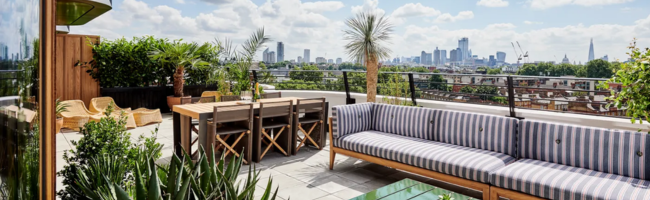
Daytime view of the London Skyline from the top of The Standard London

Location: London, United Kingdom

Max delegates: 75
Meeting rooms: 5
Bedrooms: 266
Nearest airport: 1hr 29mins

Image of Nichole, EDGE Venues' Operations Director, with the quote: Nichole adds: "The Standard London's meeting rooms come with self-catering options and incredible views of the city skyline. Definitely not your 'standard' meeting experience!"

View/Enquire/Book

2. The Principal York

Location: York, United Kingdom

Max delegates: 400
Meeting rooms: 11
Bedrooms: 155
Nearest airport: 54mins

Nichole says: “The Principal York offers classic historical-styled venues with plenty of natural daylight, ideal for keeping your delegates engaged. Plus, the views of the York Walls add an extra touch of charm.”

View/Enquire/Book

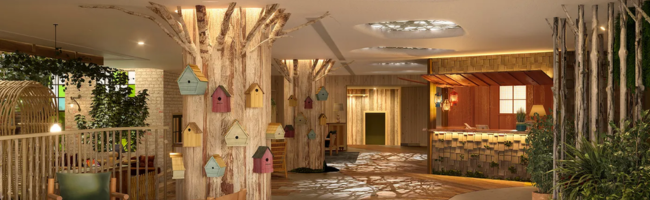
3. Treehouse Manchester

Location: Manchester, United Kingdom

Max delegates: 400
Meeting rooms: 7
Bedrooms: 224
Nearest airport: 32mins

Image of Catriona, EDGE Venues' Business Unit Manager, and her quote: "Treehouse Manchester brings the outdoors in, creating spaces designed to spark creativity. Plus, their farm-to-table food adds a unique touch to any event."

View/Enquire/Book

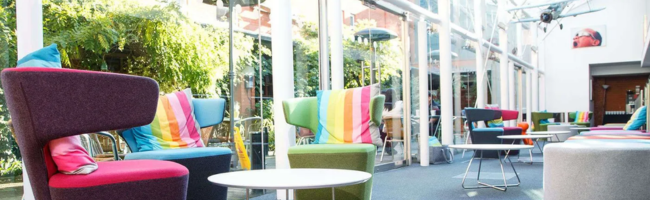
4. Thestudio Birmingham

Location: Birmingham, United Kingdom

Max delegates: 220
Meeting rooms: 19
Bedrooms: 0
Nearest airport: 31mins

Catriona adds: “thestudio Birmingham offers a non-corporate atmosphere with brightly coloured meeting spaces. Tucked away in the city centre, it’s a hidden gem with great outdoor areas.”

View/Enquire/Book

5. Horwood House

Location: Buckinghamshire, United Kingdom

Max delegates: 270
Meeting rooms: 15
Bedrooms: 165
Nearest airport: 48mins

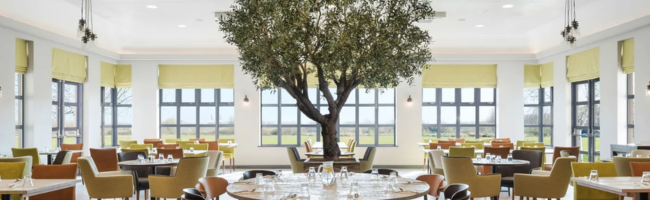
Image of Freya, EDGE Venues' Business Support, and her quote: "Horwood House recently underwent a £6 million transformation. As a modernised listed Manor House, it's an ideal space to 'get together, meet, and retreat'."

View/Enquire/Book

6. Wyboston Lakes

Location: Wyboston, United Kingdom

Max delegates: 620
Meeting rooms: 50
Bedrooms: 416
Nearest airport: 35mins

Freya adds: “Wyboston Lakes leads the way for sustainability. The venue recently signed the Net Zero Carbon Events Pledge, making it a top choice for eco-conscious events.”

View/Enquire/Book

7. Tewin Bury Farm Hotel

Location: Hertfordshire, United Kingdom

Max delegates: 800
Meeting rooms: 9
Bedrooms: 53
Nearest airport: 36mins

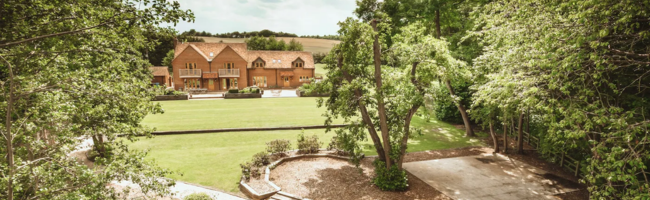
Image of Felicity, EDGE Venues' Business Support, and her quote: "Tewin Bury Farm offers an expansive 700-acre setting with a range of accommodation. And its space allows for unique team-building activities, from sheep herding to foraging."

View/Enquire/Book

8. ICC Wales

Location: Newport, United Kingdom

Max delegates: 5000
Meeting rooms: 15
Bedrooms: 0
Nearest airport: 46mins

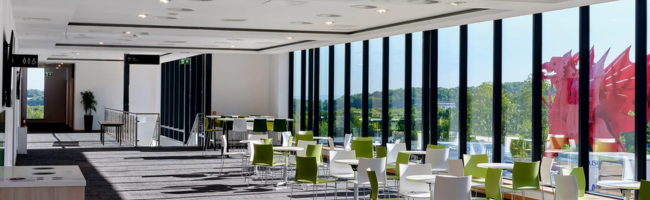
Felicity adds: “ICC Wales is dedicated to sustainability. It offers initiatives such as providing carbon footprint information on menus and repurposing unused items for charitable causes.”

View/Enquire/Book

9. Chicago Booth London

Location: London, United Kingdom

Max delegates: 340
Meeting rooms: 20
Bedrooms: 0
Nearest airport: 34mins

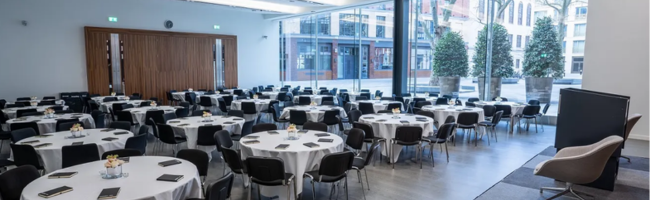
Image of Scott, EDGE Venues' Commercial Director, and his quote: "Chicago Booth London provides a unique and flexible meeting space flooded with natural light, right in the heart of the City."

View/Enquire/Book

10. Bounce Farringdon

Location: London, United Kingdom

Max delegates: 400
Meeting rooms: 2
Bedrooms: 0
Nearest airport: 37mins

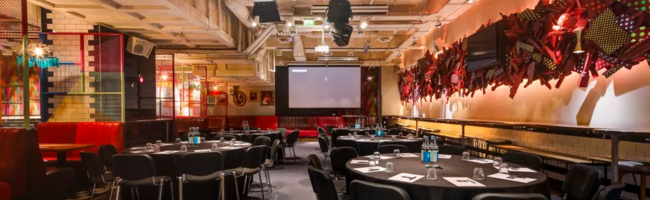
Scott adds: “Bounce Farringdon offers meeting spaces in a fun, interactive ping-pong-themed environment. Its spaces combine with the latest event technology for a truly memorable experience.”

View/Enquire/Book


These 10 trendy meeting spaces offer more than just a place to gather. They provide immersive environments designed to inspire creativity, collaboration, and a lasting impression on your delegates.

Interested in exploring further spaces for your meetings or events? Give our search a try at EDGEVenues.com.