Barcelona Hotel Opening

Hotels, Venues & Event news
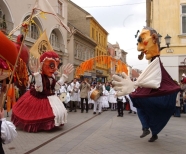
Pulling together the best in classical music, opera, jazz and folk music, this annual festival is the largest cultural event in Hungary. A multitude of venues throughout the city welcome both, Hungarian and international performers. Budapest celebrates its 33rd Spring Festival in 2013.
There will be over 50 performances and exhibitions to choose from during the 10 days of the festival, the Budapest Opera will premier Parsifal and Rigoletto, the Papp László Sport Arena will welcome dance house events, the Palace of Arts will feature a series of classical concerts and several plays are on the repertoire at the Hungarian National Theatre.
The Budapest Spring Festival also celebrates the 132nd anniversary of a great Hungarian musician, Béla Bartók, with a concert by the National Philharmonic Orchestra on March 25th, in the Palace of Arts.
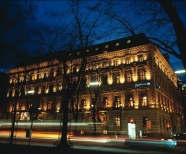
The Radisson Blu Palais Hotel in Vienna has offered a special meeting package for 2013:
Meeting Special
SINGLE ROOM including buffet breakfast, minibar (one fill per day), WIFI
as from € 119,00 per room/night, including all services charges and taxes, net hotel.
CONFERENCE PACKAGE including 2 coffee breaks, business lunch, welcome coffee, soft drinks and standard technical equipment as from € 57,00 per person/ day, including all services charges and taxes, net hotel
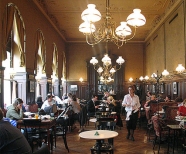
It inspires passion, opinion and addiction. It’s the world’s second most valuable commodity (after petroleum), and it will almost certainly play a memorable role in your travels, no matter where you’re headed. We’re talking about coffee, of course, and the best places to partake…
Addis Ababa
Some claim that Ethiopia is coffee’s birthplace, so it’s not surprising that the good stuff is ubiquitous here. If you’re invited to an Ethiopian coffee ceremony, don’t miss it: it’s a unique and elaborate ritual you’ll never forget. If not, there’s always Tomoca, a traditional Italian-style café that’s guaranteed to please.
Havana
Cubans love their coffee, which is served strong, black and sweet in small espresso-sized cups. Homegrown in the Escambray and Sierra Maestra Mountains, a fresh brew will be brought out as an icebreaker wherever you go. Coffee houses are sprouting by the minute in Havana, but you can’t go past local classic, Café de las Infusiones.
Istanbul
Surprisingly, Türk kahve (Turkish coffee) isn’t as widely consumed in its homeland as çay (tea). But don’t worry: you’ll have no trouble getting your caffeine fix in Istanbul. Traditional coffee houses such as Etham Tezçakar Kahveci serve a brew thick and powerful enough to put hair on your chest!
Medellín
Colombia is famous for its rich, aromatic coffee. Unfortunately, it exports most of its best beans, leaving a mainly mediocre brew for its own citizens. One exception to this rule is groovy Le Bon Café in Medellín. You can also visit plantations in the Zona Cafetera and purchase coffee directly from the growers.
Melbourne
Coffee in Melbourne is often trumpeted as the world’s best, lovingly prepared with both Italian and supreme local roasts. The café scene is integral to much of the city’s socialising; lingering over a coffee is sacred, whether with a newspaper or with friends. Try stalwart Pellegrini’s for it’s old school, quintessentially Melburnian experience, or hit one of the many Third Wave spots like Collingwood’s Proud Mary for an updated brew.
Rome
As befitting the land of espresso, Italians take their coffee seriously. Do as the Romans do, and be precise about what you’re drinking: will it be un caffè, un caffè macchiato, un caffè lungo, un cappuccino or un caffè corretto? Famous throughout Rome, Caffè Sant’Eustachio is the perfect place to practise your newfound vocabulary.
Santa María & Valle de Dota
Coffee is probably Costa Rica‘s most popular beverage – you’ll be offered cafécitos everywhere you go. Aware of its energising qualities, the country’s government even decreed in 1840 that all labourers building roads should receive a free cup every day. Visit Santa María & Valle de Dota for an insight into the Tico coffee industry.
São Paulo
Brazilians like their coffee strong as the devil, hot as hell and sweet as love. In the morning they take it with milk (café com leite). After that, it’s cafezinhos, regular coffee served in either a glass or an espresso-sized cup. Thanks to its Italian heritage, São Paulo boasts Brazil‘s best cafés, with Café Floresta being one of our favourites.
Seattle
It’s hard to complain about Seattle’s weather when one of the best forms of rainy-day solace, coffee, is available in such abundance. Trust us, this is one inviting city to get a buzz on. Though Seattle is where Starbucks (and its terrifying ‘Trenta’) originated, there’s no need to go the chain café route: not with one-off gems like Caffé Vita to choose from.
Vienna
Vienna has a strong claim to the ‘Coffee Capital of the World’ title. Its Kaffeehäuser (coffee houses) are as famous as its classical music, and an attraction in themselves. The sheer number of coffee houses is staggering, but each has its own flair and flavour. Aida is a 1950s timewarp of a place, with a clientele to match and coffee to sing about.
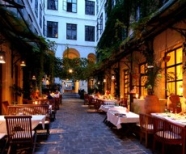
Dozens of Vienna’s top restaurants offer great menus at a reduced fixed price from 18 to 24 February.
The DiningCity Restaurant Week is being hosted in Vienna for the eigth time and is amongst the culinary highlights of the year. Also on offer this time are excellent menus at a reduced fixed price. The surprise menus cost €19 at lunchtime (for trhree courses) and €29 in the evening (for three courses). Establishments with two or more toques charge a supplement of €10 (evening and lunchtime). The Restaurant Week offers a unique opportunity to discover new places to eat at a discounted price.
About 70 top restaurants across Austria will be participating in Restaurant Week, with the focal point being on Vienna. They include the restaurants Anna Sacher, Ambassador, Stadtgasthaus Eisvogel, Harry’s Time, Hansen, Settimo Cielo, Theophil, Ella’s and Kristian’s Monastiri.
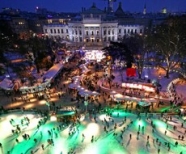
From 25 January to 10 March 2013, City Hall Square (Rathausplatz) will be transformed into a gigantic ice surface, making it a paradise for ice skating fans of all ages.
The dreamily lit facade of City Hall forms the backdrop for the Vienna Ice World. The 7000 square meter surface offers ice-skating fans a fabulous landscape of ice. Skaters of all styles, from spirited and wild to sweeping and elegant, can glide around the rink daily from 9 am to 10 pm to the hits of the 80s and 90s as well as waltzes. A fantastic ice path about 750 meters long will snake through the romantically lit City Hall Park. In addition, six curling rinks await visitors.
At various outdoor stalls and in the Almhütte, gastronomes pamper guests with culinary delicacies from around the world. Warming drinks are also available, of course, at the Vienna Ice Dream – from aromatic organic punch to hot tea. An opportunity to warm up is also provided by the special child and family friendly panorama tent, whose glass façades afford a lovely view of the ice skaters on Rathausplatz.
1,200 pairs of ice skates preheated with warm air can be rented on-site. On the opening evening (24 January), ice skating is free for all
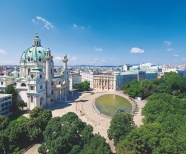
Dodging Vienna‘s tourist traps and making the most of the Austrian capital on a tight budget is easy when you know how. Read on to learn how to see Klimt masterpieces for free, fill your belly for €6 and score opera tickets for a song.
Neighbourhood walks
To really see Vienna, walk – it won’t cost you a cent. The Hofburg, in the 1st district, was the Habsburg dynasty’s HQ for 700 years; approach it from cobbled Michaelerplatz, guarded by colossal Hercules statues, for the full whack of its imperial might. Notice Otto Wagner’s flower-draped Jugendstil buildings near the Naschmarkt, as you amble south to the Freihausviertel, in the 4th district, crammed with one-of-a-kind cafes, studios and the boutiques of local creatives. Or for a brush with Viennese artist Hundertwasser’s psychedelic, wonky-floored architecture, roam to the Hundertwasserhaus and Kalke Village, in the 3rd district.
Vienna freebies
Without forking out for a ticket, you’ll get only a tantalising glimpse of Gothic Stephansdom, but the late Romanesque Michaelerkirche is free, as is the nearby 14th-century Augustinerkirche, at its soul-stirring best when the choir sings mass at 11am on Sunday. It costs nothing to visit the MAK‘s outstanding collection of decorative arts from 6pm to 10pm on Tuesdays, while the Wien Museum on Karlsplatz showcases Roman finds, baroque art and the Klimt and Schiele masterpieces for free on the first Sunday of each month. There are free guided tours of the Rathaus, Vienna’s whimsical neo-Gothic city hall, at 1pm on Mondays, Wednesdays and Fridays.
When the sun’s out, join the Viennese in the Burggarten, home to Mozart’s statue, waltz past Strauss in the pond-dotted Stadtpark, or spy the Riesenrad (of The Third Man fame) while wandering along tree-lined avenues in the Prater. Admission to the baroque gardens at Schönbrunn and the riverside Donauinsel is also gratis. To tiptoe off the beaten track, take tram 6 to the Zentralfriedhof cemetery, where the ghosts of Beethoven, Schubert, Brahms and Strauss hang out in group 32a.
City savers
If you plan on covering a lot of museums, invest in a 72-hour Vienna Card (www.wien.info), giving unlimited use of public transport as well as discounts on all the top sights and attractions. Otherwise, you’re better off buying a weekly Wochenkarte (www.wienerlinien.at), valid from Monday to Sunday, for the trams, buses and U-Bahn.
Save on Vienna’s prized 20th-century art collection, MUMOK, by visiting on a Thursday evening, when entry costs €5 instead of €10.
Luxe for less
In-the-know travellers can live the high life for a pittance in Vienna. Among the best culture deals are the standing-room tickets at the city’s stately 19th-century concert halls. Opera at the Staatsoper? That’ll be €3 to €4 for a standing room ticket, sold 80 minutes before the performance. Or book standing room tickets (€4 to €6) up to seven weeks ahead to see the Vienna Philharmonic perform in the Musikverein‘s lavishly gilded Grosser Saal. Advance standing room tickets are also available for cheap at the Volksoper (€2 to €3) and the Burgtheater (€2.50).
Klimt, Freud, Mozart, Mahler – they all frequented Vienna’s palatial Kaffeehäuser (coffee houses), and so can you for the price of a coffee (€3 to €5). Pull up a Thonet chair to browse the papers or enjoy a game of billiards at chandelier-lit Cafe Sperl, a vision of faded, turn-of-the-century grandeur. Trotsky once played chess beneath the vaults and marble columns at Cafe Central, with free live piano music from 5pm. you can also treat your ears to free live piano music at 1950s-style Cafe Prückel from 7pm to 10pm on Monday, Wednesday and Friday, and at Cafe Landtmann from 8pm to 11pm Monday, Tuesday and Sunday.
Budget sleeps
For the best deals, avoid peak summer season and school holidays, when rates soar and beds are at a premium. If you’re travelling in a group, try apartment rental: with rates starting at €20 per person per night, it can be a real bargain, and also offers the chance to live like a local. Try Oh Vienna (www.oh-vienna.com), Way to Stay (www.waytostay.com) and GAL Apartments Vienna.
Vienna’s hostel scene is gaining a cool new following, thanks to a growing crop of design-focused backpacker digs. We particularly like loungey my MOjO vie (www.mymojovie.at), Believe it or Not and Kaiser23, all in Vienna’s happening 7th district. For a more homely Austrian ambiance, book well ahead at family-run B&Bs such as Pension Kraml and brilliantly central Schweizer Pension.
Cheap eats
Want to eat out for less than €10? Make lunch your main meal of the day, as many places offer a two-course Mittagsmenü for between €6.50 and €9. Among our favourites are the Terence Conran-designed Café Drechsler, and wood-panelled neo-Beisl Gasthaus Wild (Radetzkyplatz 1) for its winningly fresh, seasonally-inspired menus. Deli-cum-record-store Tongues (www.tongues.at), boho-chic Mill (www.mill32.at) and sleek vegetarian restaurant Tian (www.tian-vienna.com) are other inexpensive lunch picks.
Cheese at the Naschmarkt by Andrew Nash. Creative Commons Attribution Sharealike licence
From Monday to Saturday, you can assemble your own picnic at one of Vienna’s food markets. Naschmarkt is the most famous, packed with cafe stalls where you can stop for lunch or snack on falafel and kebabs. Turkish cafes, bakeries and delis huddle around the Brunnenmarkt and Yppenplatz in the up-and-coming 16th district. Karmelitermarkt in the 2nd district has an excellent farmers market on Saturday. Follow the locals’ lead and brunch or lunch at one of its cafes, such as Kaas am Markt (www.kaasammarkt.at) or Tewa (www.tewa672.com).
After a night out, the hungry Viennese gravitate towards a Würstelstand (sausage stand), such as the Bitzinger Würstelstand am Albertinaplatz, open until 4am. Here a fistful of change buys you a Bosna hot dog with fried onions or a cheesy Käsekrainer sausage.
Make it happen
Low-cost airlines easyJet (www.easyjet.com) and Niki fly to Vienna Airport (www.viennaairport.com). Ryanair (www.ryanair.com) serves Bratislava Airport (www.airportbratislava.sk), where a regular bus service (www.slovaklines.sk) makes the 90-minute journey into central Vienna. If you’re coming from another Austrian city by train, look out for ÖBB (www.oebb.at) SparSchiene rail tickets, bookable in advance online, for discounts of up to 60% on normal 2nd-class ticket prices.
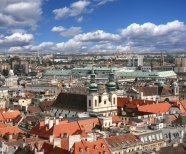
DESTINATION VIENNA
Location of offices: Austria – Vienna
Currency: Euro
Flying Time from UK: 2 hours 10 minutes
Flying Time from USA: East coast non-stop 9 hours 40 minutes, West coast with stopover
between 13 and 14 hours
Time difference to UK: GMT + 1 hour
Time Difference to USA: GMT – 5 hours (East Coast) – 8 hours (West Coast) daylight savings
time observed
TEN IDEAS YOU CANNOT DO AS A TOURIST IN VIENNA
1. “Gourmet Tour off the beaten track” through the historical inner city, including various tasting opportunities – “Exclusive Gourmet Tour visiting venues that a tourist would not have known about.
2. “Pastry workshops” or cookery competitions.
3. Tour through the Chocolate museum, with chocolate tasting and visit to the museum shop.
4. Special themed walking tours, such as “In the footsteps of the Third Man”, “Vienna’s Underground”, Music & Dance”, “Architecture” etc.
5. Waltz lessons at the famous “Elmayer” Dance School.
6. Art workshops at a number of museums.
7. Segway, old timer rally, interactive photo safari.
8. Oldtimer tram and horse drawn carriage rides to gala dinner venues in a historical palace or museum. In the evenings horse drawn carriages can be organised from the hotels for an evening transfer to the gala dinner venues (Museum, Palaces).
9. Private reception in the rooms of the Spanish Riding School in combination with a visit to watch the Lipizzaner Horses.
10. Adventure tours through Vienna’s Prater amusement park, with a backstage glimpse of some great attractions.
TOP REASONS TO VISIT VIENNA
1. Vienna is the world capital of music and culture
2. Vienna is a city with an impressive imperial heritage
3. Vienna maintains a balance between urban and green areas in a way that no other metropolis does
4. Vienna enjoys a reputation of being one of the safest & cleanest cities in the Europe.
5. Vienna is the top city for worldwide conventions & corporate events
6. Vienna – a city located in the heart of Europe, accessible by plane or train from all over the world.
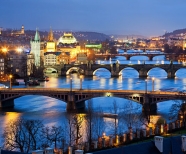
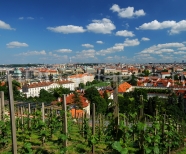
…nowadays, there are 7 vineyards in Prague
The vineyards around the city were founded by the Emperor Charles IV in the 14th century. The vineyards gave the name to the luxury municipal district Vinohrady (the Czech expression for “vineyards”), formerly also called Královské Vinohrady (Royal Vineyards). The most famous Prague vineyards are St. Clara’s Vineyard in Troja, Grebovka in Vinohrady and St. Wenceslas Vineyard in the Prague Castle.