
BVEP delivers pre-election manifesto for Britain’s £70bn events industry

The Business Visits and Events Partnership (BVEP) has published a report ‘Events Deliver Growth, Jobs and Opportunities. A Manifesto for Britain’s Events Industry’, which illustrates the sector’s contribution to the country’s economy ahead of the upcoming General Election on 12 December 2019.

The manifesto sets out the value of Britain’s events industry, which currently stands at £70bn through direct spend and accounts for over 50% of spend in the UK visitor economy. The events sector, both business and leisure, is estimated to now provide more than 700,000 jobs across Britain.

Simon Hughes, vice chair, BVEP, said: “Our starting point is one of significant economic impact, expert delivery of complex and creative events and active support from government departments that recognise the importance of establishing Britain as the destination of choice for hosting events.”

The document outlines five key areas to help position Britain as the leading European country for staging events including: working together to enhance the UK’s position as a leading European country for hosting events, creating a more competitive tax regime, supporting the industry in driving forward its skills agenda, avoiding greater regulation, growing infrastructure, enabling greater access and increasing investment.

Hughes continued: “In order to deliver this manifesto, we need more collaboration, less regulation and more investment in infrastructure on a national, regional and local level. All of these areas align with many of the requests from across different business sectors and are based on the proven success of Britain’s Event industry to deliver opportunities for great careers, real economic benefits and outstanding creative solutions and experiences.”

Luxembourg Convention Bureau sets sights high for international meetings

The newly created Luxembourg Convention Bureau is aiming to secure a spot in the top 50 business meetings and events destinations in the ICCA ranking.

“Our main goals are to enter the top 50 of the business events destinations worldwide and to double the number of international congresses,” said Francois Lafont, CEO of business events Luxembourg.

Luxembourg  has the quality of being one out of three capitals of the European Union, its excellent connectivity, its location in the heart of Europe and its innovative economic sectors will definitely secure Luxembourg on the agenda of international congress organisers.”

The Luxembourg Convention Bureau was set up to optimise the country’s meetings and events offering with strong support from the government.

The convention bureau aims to build upon Luxembourg’s economic and scientific strengths, with an emphasis on securing association meetings from its key economic and research sectors, as well as regional and European corporate and incentive events.

The main sectors that Luxembourg has identified are automotive, cleantech, finance, IT, life sciences, logistics, manufacturing, maritime and space.

“We are working on putting together an ambassador programme at the moment and we want to ensure we pick the right people from the main sectors we have identified,” Lafont added.

Luxembourg has also announced strategic partnerships with key industry players such as Luxinnovation, its national innovation agency and Luxembourg Institute of Science and Technology (LIST) which aim to further highlight the local knowledge expertise.

Luxembourg has ambitions to become a country where industry professionals chose to meet, exchange and connect. With more than 170 different nationalities, Luxembourg is a crossroad road for people coming from all over the world. The new convention bureau is dedicated to connecting the right people outside Luxembourg to the right people inside the county.

Hotels of the future

Lifestyles are changing and in 2018 the UN forecast that 60% of people will live in cities by 2030. The private rental sector is growing with 56% of all consumers saying that home ownership is less important than it used to be. Investment in the hotels and leisure sector of real estate is up 3% from 2018. So, what will our hotels look like in a few years time?

Co-living

Many new hotels incorporate apartments and long-term rentals. There’s been a rise in the ‘subscription society’ where people prefer to rent rather than own, from music, cars, homes and furniture. Co-living is on the increase. It gives people flexibility to move quickly, have their rent, bill and fees in one payment and live in a community with good leisure and social facilities.

Personalisation

In all industries there is a trend for personalisation, which is being driven by big data. Guests in hotels want to be treated as individuals, rather than just another customer. Hotels can log guests’ preferences, offer similar services to those they have requested previously or at other hotels in the same group.

Smart Hotels

Hotels are now using internet-enabled devices, which can send data to one another. Smart hotel designs allow guests to control the heating or air conditioning from their phone, or turn on the TV by giving a voice command to a smart speaker. Smart bedrooms can automatically adjust things like the brightness of light bulbs, or the temperature of a radiator to maintain the guest’s preferred conditions. Superfast internet and strong Wi-Fi coverage is essential for business travellers. They would also like wireless charging devices, an app on their mobile phone for the room controls, Bluetooth keyless locks and electric vehicle charging points.

Artificial Intelligence

Chatbots can be used to improve customer service. Firstly, there is no language barrier and they can replace personal contact at check-in and check-out, reducing waiting times and giving quick and clever answers to questions. They can also take orders for room service, guide guests around the hotel, deliver products to bedrooms or meeting rooms, answer questions about the hotel or the surrounding area, order a taxi and they work 24/7. Although still having someone on reception to talk to is crucial.

Bleisure Travel

Combined business travel and leisure travel is increasing, particularly among the millennial generation. Many conference and meeting attendees will stay on after their event to experience the destination, take part in local activities and use locally sourced products. One of the barriers is the booking processes, transferring from a company paid stay to leisure. If the same hotel wants the guest to stay for both parts of their trip, they need to appeal to both markets, rather than the guest transferring to Airbnb for their leisure stay.

Food and beverage outlets and dining – what’s happening in the events industry

All hotels are looking at their space and seeing what they can do with it to make as much revenue as possible. The static destination restaurant may become a thing of the past as a lot of diners tend to visit once only for the experience, then tick it off the list and move on. Generation Z no longer has a meal to catch up with friends, as they already know what they’ve been doing from social media, so they are more interested in having an experience and socialising at the same time, hence the increase in unusual venues with activities, such as Swingers offering mini golf, Bounce (ping pong), Ballie Ballerson (ball pit), Flight Club (darts) and even axe throwing. This trend is termed ‘competitive socialising’.

Hotels are incorporating more food and beverage offerings, so as well as the usual bar and restaurant, there will be a ‘grab and go’ outlet and roof top used as bar, restaurant and leisure space. Rooftops are now the most profitable areas of venues. Hotels need to offer something to make people leave home and deliver everything in the one building: rooftop restaurant and bar, members’ lounge, public lounge, wellness, competitive socialising, experiential space and independent retail outlets in the same place. Put that offering in a ‘cool’ environment, with excellent connectivity and the customers will stay all day. Everyone is conscious of their physical and mental wellbeing, so wellness is a key part of the offering, providing leisure alongside the work and social environments.

The Ned is a good example of an aspirational venue with a variety of F&B offerings, which encourages repeat business. The Hoxton, Ace Hotel and Citizen M in Shoreditch have all become community hubs, because the brands know their customer and the area, so create the ‘buzz’ to make themselves into cool hotels. With an increase in independent workers, they’ve all realised there’s a need for these individuals to work and socialise, so created spaces for them to mix.

So, what can we expect in hotel and event space in the future? Food halls, either inside or outside with multiple kitchens. These venues can then add films, educational lectures and business training, sound studios, a lounge bar with a DJ and a community support element. Restaurants are collaborating with local organisations (using food waste, offering local apprenticeships and training) and conscious of their environmental footprint. We’ve already seen an increase in street food and food markets, where there are multiple choices from micro-diners in the same area. Street Feast’s venues are a good example, open to the public and offering venues for exclusive use for up to 3,000 people for all sorts of events.

Marriott launches Delta Hotels in the UK

Marriott International has launched its Delta Hotel brand in the UK with three openings in the closing months of the year.

Delta Hotels by Marriott are now open for business in Milton Keynes and Cheltenham (pictured above) and will be followed by the Delta Hotels by Marriott Nottingham Belfry by the end of the year.

A further five Delta Hotels are expected to open in the UK next year.

The four-star brand, which “elevates the details that really matter”, was acquired by Marriott in 2015 and comprises more than 70 hotels across the US, Canada, China and Germany.

“We are delighted to bring Delta Hotels’ refreshing take on hospitality to the UK after opening the first European outpost in Frankfurt last year,” says John Licence, Vice President Premium & Select Brands Europe at Marriott International.

“Delta Hotels by Marriott maximises the key essentials, streamlining the travel experience so that guests can get the most out of their stay.”

All three UK hotels have been redesigned prior to opening. Guests can expect fast wifi, modern fitness centres, convenient dining and trademark Delta Bars.

The 138-room Milton Keynes property has 600sqm of event space and is located close to the M1, while the 122-room Cheltenham Chase hotel features a spa and pool, countryside views and events space with capacity for up to 350 delegates.

Experts Eye: Valencia

Business Development Manager, Paula Calton shares her insight into Valencia and what this beautiful city can offer for meetings and events.

The port city of Valencia lies on Spain’s south eastern coast, where the Turia River meets the Mediterranean Sea. It’s known for its City of Arts and Sciences, with futuristic structures including a planetarium, an oceanarium and an interactive museum.

Valencia is today one of trendiest MICE tourism destinations, where all types of conferences and fairs are held, ranging from medical to technological sectors, making it an ideal location for your business trip.

The Valencia Conference Centre (Palacio de Congresos) has hosted nearly 3000 events since its opening in 1998 As well as being voted as the World’s Best Convention Centre by the International Association of Conference Centres (IACA). Designed by the British architect Norman Foster it has a total of 15,581 m², divided into 3 auditoriums, 9 commission rooms and an exhibition hall, all of them with latest technological equipment.

The Feria Valencia is the longest-standing event organiser in Spain, and has the largest exhibition area of its kind in the country and one of the ten largest in the world, covering an impressive 230 000 square metres of surface area with 19 pavillions, 48 rooms, 3 auditoriums and 3,000 parking spaces. Feria Valencia offers suitable space for all types of events  with a capacity of up to 20,000 people. The 47 external events held at the Feria last year attracted over 100 000 people to the city alone. 

València is accessible by air, land and sea. It boasts travel links to many major Spanish and European cities. The airport, situated just 8 kilometres from the centre of València, has regular daily flights to popular domestic and international destinations. The city also has two main railway stations, the Estación del Norte, from which the local train network operates, and Joaquín Sorolla, offering AVE high-speed rail services to Madrid, Cuenca, Seville and Córdoba. ALVIA and EUROMED long-distance trains also depart from Joaquín Sorolla, providing connections to cities including Barcelona. 

Convention Bureau Italia showcase Italy as a meetings destination

Italy at Hand, an international meetings event organised by Convention Bureau Italia to showcase Italy as a meetings destination, has reported a successful event.

The event, which was held at Auditorium Parco della Musica in Rome between 7 and 9 November, welcomed more than 180 participants.

These delegates included those from the public sector as well as special guests such as Ray Bloom, president and founder of IMEX Group and Patrick Delaney, managing partner of Sool Nua, who are both leading figures in international meetings and events industry.

A total of 1,165 business meetings were held during the three-day event between 45 international buyers from both events agencies and in-house corporate event teams and 35 Italian exhibitors which aimed to showcase Italy as an events destination.

“Project quality, love of one’s country and a strong innovative drive in the international MICE sector: these are the ingredients that gave birth to Italy at Hand, The Event, the second edition of which has just ended with resounding public success,” said Carlotta Ferrari, president of Convention Bureau Italia.

“We take pride in the enthusiasm of the participants and the satisfaction of the Buyers and Exhibitors. They are a clear demonstration of the validity of our idea: to show the best of Italian know-how to the whole world, without neglecting creativity and enjoyment. I would like to thank the whole CBItalia team as well as our partners, who together have allowed Italy at Hand – The Event 2019 to achieve such excellent results.”

Italy at Hand also incorporated interactive activities to break up the monotony of back-to-back meetings. The activities were based on four themes, art, love, rituality and innovation, which, according to the event organisers, are Italian characteristics that only “hands can express”.

Next year, the Italy at Hand event will be held in Matera, a city on the rocky outskirts of the Basilicata region, in southern Italy.

Investors remain optimistic as more than 200 hotels under development in London

There are 210 new hotels in the development pipeline for London as investors remain optimistic about the capital’s market potential for growth post-Brexit.

That’s according to a new study by private wealth law firm Boodle Hatfield. Almost a quarter (48) of the hotels with planning permission or already under construction in London are located in Westminster, adding more than 6,800 new bedrooms. Luxury and boutique hotels account for 74% of the planned new hotels in Westminster.

These include: the former US Embassy in Mayfair, which is being developed into a 137-room, £1b Rosewood hotel; a Nobu hotel is being built in Marylebone that is part funded by Hollywood actor Robert De Niro; and the Londoner on Leicester Square, which will have 350 rooms and two cinemas.

A further 12 hotels are planned for the Heathrow area.

The UK’s hotel market is one of the few sectors of the UK economy to have benefited from the Brexit-related slump in sterling, the law firm said, because the decrease in value of the pound has made it cheaper for international tourists to visit the UK and has also encouraged more “staycations”.

Rajeev Joshi, partner at Boodle Hatfield, said: “Investor appetite in the London hotel market is holding up. But investors will want to know that this new supply of hotels can be soaked up by increasing demand.

“For tourism to continue to grow, the UK needs to ensure that post-Brexit, we do not start to be seen as a less convenient destination for tourists from the EU or from further afield. Greater investment in infrastructure will be a key part of this. Accelerating the delivery of projects such as the third runway at Heathrow and the Crossrail would help.”

Top 10 areas for hotels currently in development across London:

BoroughHotels with planning
permission
Hotels startedTotal
Westminster272148
Hillingdon
(Heathrow Airport)
8412
Brent4711
Tower Hamlets5510
Kensington &
Chelsea
549
Hammersmith &
Fulham
549
Hounslow549
Redbridge729
Camden639
Hackney718
Total7955134

Former Brexit day sees steep decline in London hotel performance

STR have released preliminary performance figures suggesting that the Brexit day that never was saw a steep decline in occupancy and revenue per available room (revpar) rates across London hotels.

Occupancy and revpar fell by 11.2% and 11.7% respectively on 31 October, the Brexit deadline until the date for the UK’s departure from the EU was moved until 31 January 2020.

The performance of London hotel across the rest of the month showed a 1.9% drop in occupancy to 87.6%, while average daily rate increased by 1.7% to £162.07 and revpar was largely flat, down 0.3% to £141.97.

The supply of new rooms to the market was up by 1.6%, ahead of a 0.3% decrease in demand from guests.

STR will release the full results for October later this month.

What does Bilbao offer for an event?

Bilbao, an industrial port city in northern Spain, is surrounded by green mountains. After years of financial uncertainty, Bilbao has once again become a dynamic city, full of amenities and focused on environmental and urban regeneration.

Bilbao International Airport is located just 10km from the city centre and has direct connections to the main Spanish & European cities. The city has more than 4,00 hotel rooms and in the region are 200 hotels providing in excess of 13,000 beds. The impressive Guggenheim Museum and the Euskalduna Palace, a conference and music centre, have become the icons of the new Bilbao, a city that is gradually regaining space and handing it back to the people.

Basque gastronomy makes Bilbao the best place to taste an entire galaxy of Michelin stars (it has 9 awards). There are also tempting pintxo bars, traditional taverns, grill houses and cider restaurants within the gastronomic capital.

BILBAO EXHIBITION CENTRE is one of the most modern trade-show complexes in the world in terms of design and amenities. It offers 150,000 m2 of exhibition space, 18,000 m2 congress centre, 41,500 m2 atrium and restaurants, 100,000 m2 outside space (gardens & paved areas) and 4,000 parking spaces.

For events requiring unique venues options available in Bilbao include:

Bilbao
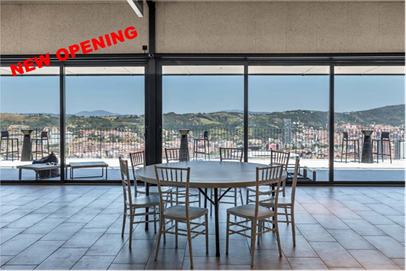
Brand new! A minimalist space with an area of 400 m2 that offers breath taking views of Bilbao.
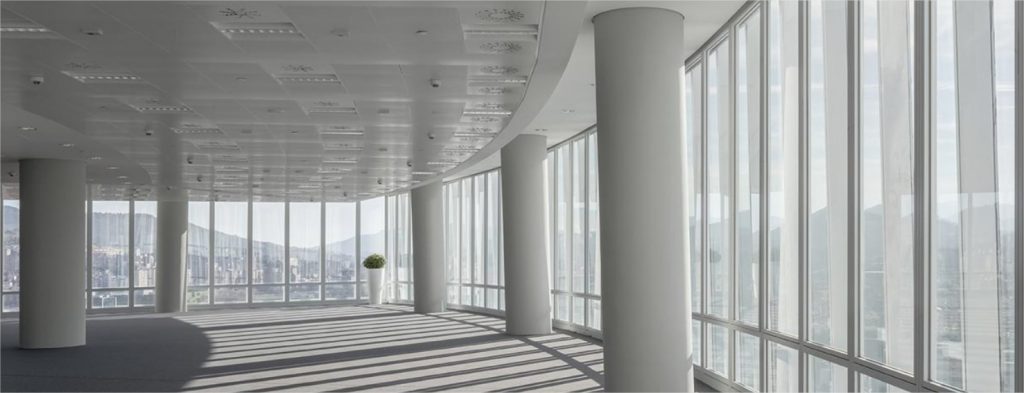
A 24th floor (111 m above ground level) with 1,000 m2 of open-plan floor that offers spectacular views of the city.
An old coffee factory converted into a multi-functional space ideal for hosting all kinds of events. It offers 400 m², high ceilings, large windows, natural light and a terrace on the riverfront.