The 240-bedroom hotel operated as an InterContinental property until 2005, when it was sold to what was then Principal Hayley Group and became the George hotel. It was then renamed the Principal Edinburgh George Street following the launch of the Principal brand in 2016.
After the sale of the Principal group to French-group Covivio and InterContinental Hotels Group (IHG) last year and “significant renovations”, it is being rebranded once more as the InterContinental Edinburgh – The George.
The property is an integration of a number of Georgian townhouses that were originally built in the 1780s.
Karan Khanna, managing director, UK & Ireland, IHG, said: “We are excited to grow our luxury presence in Scotland as we continue the integration of the Principal portfolio. Edinburgh is a key city in our home market so it’s great to reintroduce our flagship brand, InterContinental, to the city. I am confident its arrival will receive a warm welcome and the team will deliver a great service to guests.”
Tom Rowntree, vice president, global luxury brands, IHG, said: “InterContinental Edinburgh – The George is a fabulous addition to the brand, marking the return of InterContinental to Edinburgh. We look forward to helping our guests unlock the heritage of this hotel and the enchanting city of Edinburgh.”
InterContinental Edinburgh – The George is the third InterContinental in the UK, joining InterContinental London – Park Lane and InterContinental London – The O2. IHG has 349 hotels operating under eight brands in the UK, with a further 26 in the pipeline.
WiFi is a difficult topic for event organisers for several reasons: technology is continually changing; the terminology isn’t easy and we don’t know how attendees will behave at our events. So, we’ve looked at some of the things to consider and ask the venue when you’re on a site visit and at the time of planning your event.
WiFi Terminology
These terms are probably the most important things to understand:
Average speed provided – ask the venue for this information and do a speed test to check but remember this will differ depending on the users at the venue.
Bandwidth – this is the amount of data that can be transmitted (uploaded) or received (downloaded) per second. Every action will remove capacity from the network, so the more users the slower it will be.
Bandwidth Utilization Report – a document issued by a network service provider that shows the amount of bandwidth used by a specific event. Ask for this report to cover the duration of your event, to show how many connections you had at peak period and how much is being used.
Latency – the time (in milliseconds) it takes for Internet traffic to travel from a device to a server. Higher latency is an indication of a poorer quality network.
Shared Bandwidth – a set amount of bandwidth distributed among all devices on a network. If you don’t have your own network, then the capacity will be shared by everyone in the venue.
Wireless Density – the theoretical number of wireless connections that can be supported at a specific bandwidth within a specific space. This is particularly important if you want everyone to be on their devices at the same time.
Wireless Access Point (WAP) – a device that allows a connection to a wired network from a wireless device.
Considerations
Think about what you need to accomplish and the delegates behaviour. Will they use the WiFi for polling, downloading an app, social media, checking emails in breaks. If everyone is doing the same thing at the same time it is going to create peaks in usage.
Is the venue’s WiFi a shared medium? Is there bandwidth dedicated to the conference area, which you would share with other event organisers who are running events at the same time. Or is the bandwidth shared throughout the whole venue (accommodation, restaurants, offices, venue staff etc).
Find out if there are other events running at the same time and what they are going to be doing, if they have heavy usage, then it will affect your service.
Can you bring in your own bandwidth? This will give your security of service and encrypted servers. Check whether it is directly from a mobile provider or whether it is additional hardware using the venue’s bandwidth. Who will you pay for this and what is the pricing model?
If you are bringing your own, find out if the venue can turn of their service in your area to make sure you don’t have competing networks in the same area, as this will reduce the performance.
What model Wireless Access Points does the venue have? This will tell you how recently they have been upgraded. Look for 802.11 b/g/n/a/c which are the newest. 802.11 with a b and/or g are quite old now. Find out when the WiFi was last upgraded, whether it was part of all of it, or whether there are plans to do so before your event. You definitely don’t want an upgrade going on while you are onsite.
As you walk through a venue, the WiFi will hand over from one Wireless Access Point to another and there shouldn’t be an interruption in the service. You can test this by connecting and walking around to see if the connection is stable.
Find out how the network handles mobiles that connect automatically but aren’t active. Will the network kick them off? If the network is running at capacity will someone who isn’t using their device be kicked off so someone else can connect?
Can the network balance the load to manage heavy use in certain areas, if extra capacity is needed in a meeting room or the moment everyone rushes out at a break? Make sure the network can sense this and send capacity where it is needed.
Are you buying total bandwidth or per connection and what happens when you reach your limit? Try and negotiate a 5% over capacity, just in case you exceed the planned requirements. These might just be for a short period of time, so maybe a period of 15 minutes would be enough to cover this.
Ask for usage reports whilst the event is running and whether you will be able to make changes to the network there and then.
The venue should be able to give you room coverage maps to show where the Wireless Access Points are, find out which areas are covered, particularly if you are using outside space.
Think about putting critical technology on a hard-line, such as registration computers, the speakers’ laptop, organisers office etc
Check whether there is a team on site who can support you throughout the event and what hours are they available.
Advise attendees of the network they should use on site as there will probably be various to choose from. Don’t just download any free connection from a mobile hotspot as there is no guarantee of security, particularly at exhibitions.
It’s important to engage with the venue as early as possible, they need to understand your requirements and what both sides need to do to fulfil them. The conference staff won’t have all the answers, so engage with the venue’s IT team and take advice from your IT team too.
The ICC Cricket World Cup has boosted hotels’ performance in London but failed to stop the regions sliding.
That is according to the UK Hotel Market Tracker: Q2 2019 produced by HVS London, AlixPartners and STR, which reports London recorded continued strong growth in the second quarter of the year as hoteliers pushed rates for visitors travelling to watch the cricket.
In contrast, regional revenue per available room (revpar) decreased for the second consecutive quarter, even with numerous matches being hosted outside of the capital. The report said the combination of top line retraction, cost pressures and unrelenting new supply is putting significant pressure on regional hotel margins.
With revenue declining, costs increasing and active pipeline remaining at 6% of current supply, operators may struggle to increase profitability, particularly in locations outside the main tourist hubs or without robust corporate activity.
Revpar in London increased by 6% in the second quarter, as hoteliers benefited from sporting events including the Cricket World Cup and Major League Baseball at the London Stadium.
Active pipeline (10% of current supply) will be monitored by operators in the capital given relatively flat occupancy, but a revpar increase of over 6% over the last 12 months demonstrates how robust demand remains.
Across the UK, only £360m of transactions were completed in Q2 2019 – some £144m in London and £210m in the regions – with transaction flow continuing to be impacted by Brexit uncertainty, which is seeing deals either being put on hold or taking longer to complete.
£2.1b of transactions were completed in London in the 12 months to Q2 2019, an increase of 54% on the previous year. This figure was boosted by the sale of the Grange portfolio in Q1 (£1b) and the 163-bedroom Crowne Plaza Kensington in Q2 to a Singaporean consortium led by Heeton Holdings (£84m, or £513,000 per bedroom).
Yields in London and the regions remain tight in comparison to historical averages, although there was little evidence of further compression in Q2 2019, except in isolated cases in London.
Elisha Temple recently headed into London to build her product knowledge on what the City has to offer for meetings and events. Here part 2 of her tour…
The Ned
Overall Impression:
The Ned, a gorgeous 1920’s building situated a few steps from Bank station. When you step into The Ned you are instantly amongst people, the mingle of conversations fills the lobby as you walk through to the reception area. It is fascinating to see the original style of the building with a slight contemporary twist. With 8 individual restaurants all situated within the ground floor lobby space, there is certainly something for everyone. Semi-private seating arrangements are ideal for informal, intimate meetings, catch-ups or networking.
There are 6 meeting rooms situated on the 6th floor, a dedicated conference floor with the Tapestry room which can hold up to 200 delegates in theatre style with the Saloon included for catering, you will never run out of space. All the meeting rooms are flooded with natural daylight and traditional high ceilings which gives you an airy feel. 2 terraces are also available for exclusive hire, with stunning views of the City of London.
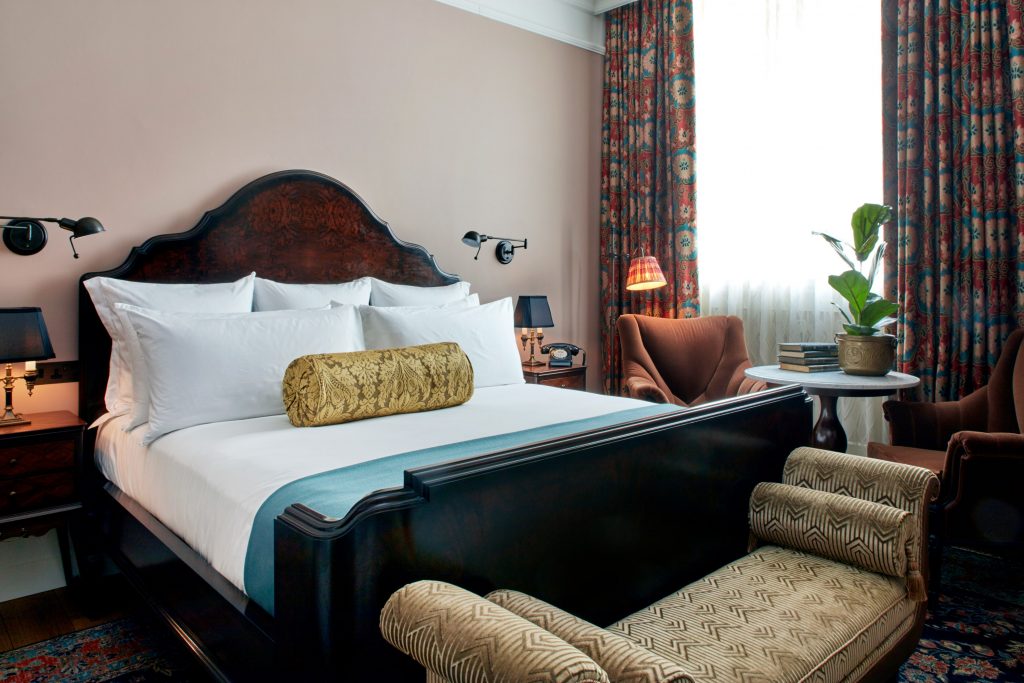
251 bedrooms are available on site, each of these with their own shape, size and character. Again, the 1920’s theme has been continued however a modern twist has been added to make the rooms cosy.
The NED
Considerations:
This
is the perfect location for a client looking for a traditional venue to
accommodate large conferences in the City. The gorgeous décor compliments the
history of the building and brings the original features to life.
Searcys at the Gherkin
Overall Impression:
Searcys at the Gherkin stands tall in the City of London; a short 5 minute walk from Aldgate Station. As you enter you are greeted by reception for a quick security check before heading through the barriers to the lifts. Using the lifts, you go to the 34th floor before crossing into a second lift across the corridor to the dedicated Searcys lift to the 38th floor for the conference floor.
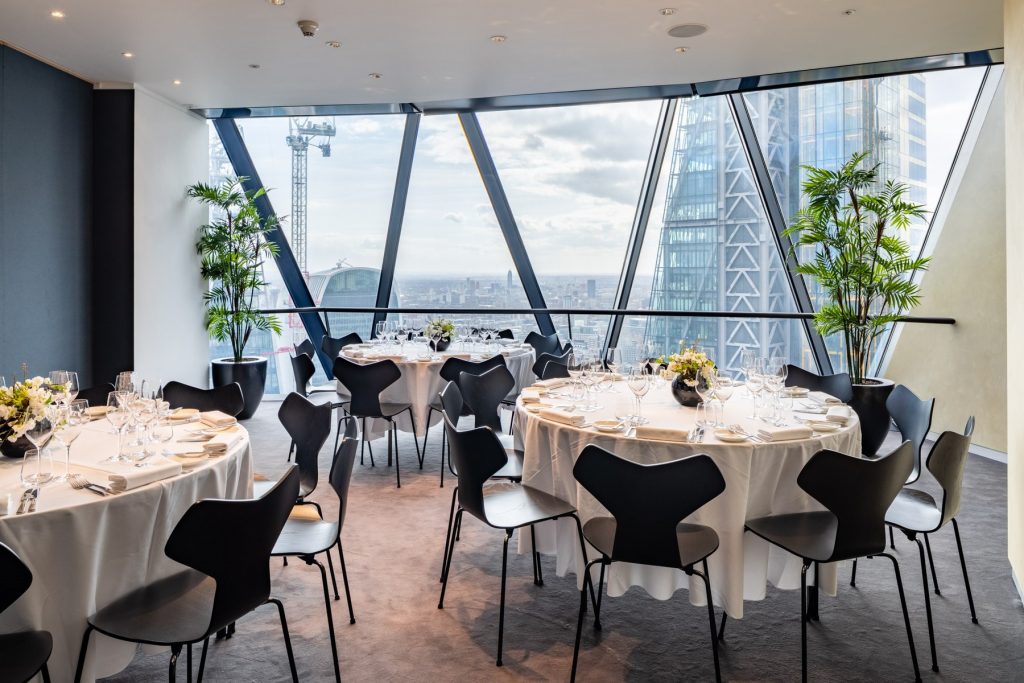
The conference floor holds 5 meeting rooms, 4 of these rooms can merge together to make 2 larger spaces seating up to 60 delegates in theatre style. Each of the meeting rooms are flooded with natural daylight and beautiful city scape views as well as flexible seating arrangements and AV equipment. In addition, there is the opportunity to walk around the outer edge of the Gherkin and experience the breath-taking views; a perfect way to break away from a meeting.
The Helix restaurant situated on the 39th floor of the Gherkin is available for exclusive hire. Seating up to 140 delegates for dinner, this space is perfect for corporate parties. Then, moving up the stairs you have the Iris Bar. Situated at the very top of the Gherkin you receive a full 360-degree view of London. This space is also available for exclusive hire and can hold up to 100 delegates for a drink’s reception.
Searcys at the Gherkin
Considerations:
A wonderful thing about Searcys at the Gherkin as it’s minimal chic gives you the opportunity to personalise and dress each of the spaces to suit you own requirements however there is also enough design within all of the space that it will not look unfinished without it. In a great location of the City of London and with breath-taking views, this location is ideal for a client looking to impress. With plenty of natural daylight, the meeting rooms are ideal for all day meetings.
Andaz Liverpool Street
Overall Impressions:
As you enter the building you are kindly greeted by the concierge. The lobby is a contemporary, edgy space with high ceilings with plenty of space for larger groups; this is certainly a themed carried on through the hotel. Andaz is in the ideal location next to Liverpool Street station, accessibility is perfect for those travelling into London.
The conference floor is a dedicated meeting space area with 14 meetings rooms there is a space suitable for every meeting. The entire venue is incredibly blank canvas and very malleable: TV screens, meeting room signs, coloured lighting – these are just some of the elements that can be changed to suit the client. The Great Eastern is a wonderfully open space with a designated kitchen area for service, this room can seat up to 250 delegates in theatre style and comes with the Gallery area for a breakout space as well as a supper balcony for a more intimate setting. Bishops Gate is another popular room, when hiring this room, you also gain the Chancery; an ideal pair for a day meeting with a catering breakout space for minimal service disruptions.
The meeting rooms are bright and airy with high ceilings and AV equipment available in all. The Studio is a standalone, completely exclusive space with a built-in kitchen. This space is perfect for team building, boardroom meetings. The Masonic Temple is certainly a memorable space. With a gorgeous marble flooring and fixed throne seating set around the outer edge of the room, this room offers a dark, mysterious tone. Perfect for dining or even conference, the Masonic Temple is the ideal room to make a lasting impression.
Bedrooms certainly continue the contemporary, edgy style. A practical room ideal for a corporate stay for 1 or more nights.
Andaz Liverpool Street
Considerations:
As one of my favourite hotels on the visit, I feel the general style of the hotel is very fresh and modern. The staff are very friendly, polite and helpful which has a massive impact on the experience at the hotel. Andaz certainly fits the criteria for those clients looking for quirky venues in the city.
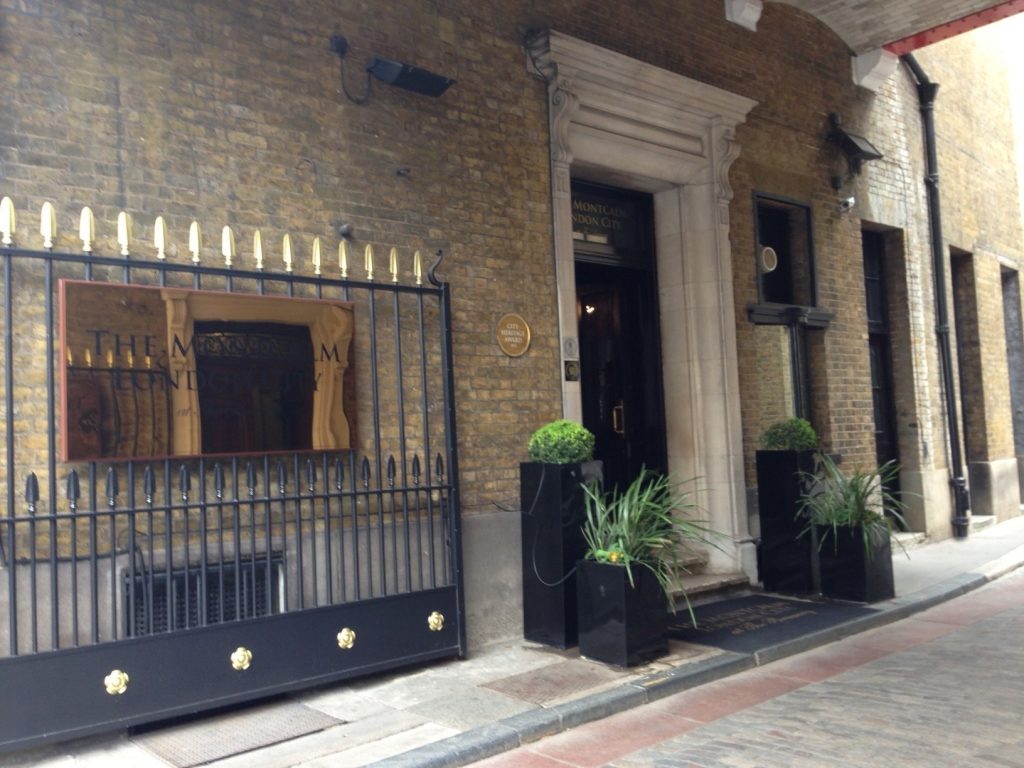
The Montcalm at The Brewery London City
Overall Impressions:
The Montcalm is neatly tucked away from Chiswell Street, a short walk from the Barbican and Moorgate Station. As you walk into the Montcalm you are greeted by the concierge team who welcome you to a gorgeous lobby. The meeting rooms are all easy to access, well-lit and beautifully displayed; perfect for conference or dining. All meeting rooms are similar in size seating up to 20 in boardroom.
The bedrooms are very spacious. Due to the nature of the building, each of the rooms are different in size. One touch I found particularly interesting was access to a mobile phone for the duration of your stay that gives you full access of use for maps, calls, emails etc – when checking out this phone is entirely wiped back to its original state ready for the next user.
The Josephine room is situated in below the restaurant; to access this restaurant you need to walk down the road. The Josephine Room is available for exclusive hire and can seat up to 20 in hollow square.
The Montcalm at The Brewery London City
Considerations:
The Montcalm is a beautiful hotel throughout and is ideal for a relaxed meeting for up to 20 delegates. The location is ideal for those travelling by train and it is a great way to escape while still being in the city.
It was officially announced that starting from 01 October 2019, simplified Electronic Visa for foreigners visiting St. Petersburg will be implemented!
Tourists and business travellers will be able to visit St. Petersburg on a simplified electronic visa starting this October under President Vladimir Putin’s new orders.
Putin has promised to offer e-visas to foreign visitors in 2021 as he vies to collect $15.5 billion in annual tourism revenue by the end of his presidential term in 2024. Tourists around the world have frequently cited difficulties with obtaining visas as a barrier to visiting Russia.
Potential tourists are directed to apply for electronic visas on the Russian Foreign Ministry website no later than four days before their arrival, the decree states. Applicants will not be charged a consular fee.
The offer will be open to citizens from a list of countries which will be announced at a later date, the decree says.
It’ll be electronic single-entry visa and will allow visitors will be able to stay in Russia for eight days out of the 30-day validity period.
The move is expected to attract 12 million tourists each year, up from the 8.2 million who visited St. Petersburg last year.
Since 2017, passport holders from 18 countries have been able to obtain free single-entry e-visas to visit Russia’s Far East Federal District. E-visa is already available for Kaliningrad and Vladivostok and now St. Petersburg is coming!
This is a positive development that Russia is opening its doors to and making it simpler to visit and experience our country.
The Glasgow Convention Bureau has reported an almost £1 million economic boost to the city’s economy after hosting the 27th International Input-Output Association Conference (IIOA).
The IIOA conference, which was held at the University of Strathclyde’s Technology and Innovation Centre, came to the UK for the first time and attracted a record number of delegates from nearly 50 countries.
The week-long conference focuses on the advancement of knowledge in the field of date compilation and economic statistics and its uses across a wide variety of sectors. This year, in particular, the conference concentrated on sustainability and minimising the environmental impact of a conference on its host destination.
“Conferences can be a major contributor to greenhouse gas applying emissions through things like delegate travel, meals and paper use, and the IIOA is developing and implementing strategies that compensate for some of the ecological footprint caused by our international meetings,” said Sanjiv Mahajan conference chair and vice president of The International Input-Output Association.
“This is our first ever UK conference and we were delighted to come to Glasgow, which has established a strong reputation for its commitment to sustainability and promoting responsible business tourism. We asked delegates if they would like to make a small voluntary donation to support the work of local environmental charities and I’m delighted that we were able to split £1,000 between Energy Action Scotland and the Woodland Trust in Scotland.”
The IIOA conference fits in with Glasgow’s goals of becoming one of Europe’s most sustainable business tourism cities after being listed 7th out of 35 countries in the Global Destination Sustainability Index.
“Our sustainability team has worked hard to identify ways that we can support clients like the IIOA to minimise the environmental impact of their meetings,” said Gordon Hodge, head of conferencing and events at the University of Strathclyde.
“Even simple gestures like encouraging delegates to bring their own water bottles to fill up for free; smart menu choices which include more vegetarian or vegan options; or making the most of our city-centre location and connectivity with public transport, can make a difference. We’re committed to doing our bit to reduce the University’s carbon footprint and to prove that people really can make Glasgow greener, even if they’re only in the city for a few days.”
Pestana Plaza Mayor Madrid is the first hotel
in the history of Plaza Mayor, offering 89 rooms and suites, of which almost
half face the Plaza Mayor square, offering both elegant and contemporary
design.
The hotel features an outdoor pool located at
the top of the building, ideal for those Spanish summer days, with views over
the historic rooftops of Madrid. The Spa, located on the level below the
square, offers an immediate atmosphere of tranquillity with its indoor pool and
traditional vaulted brick ceilings, a fully equipped treatment centre, a
fitness centre and various other breathtaking surrounding and unique spaces,
ideal for holding events.
The hotel’s restaurant offer includes the RIB |
Casa de la Carnicería | Beef & Wine, specializing in meat, and the
Cafeteria on the Plaza Mayor square, dedicated to tapas and snacks, as well as
a cocktail bar, the Coqueteleria evocative of Madrid’s most bohemian years, for
pre or post-dinner cocktails and drinks.
Located in Plaza Mayor, in the heart of
Madrid’s capital, Pestana Plaza Mayor Madrid encompasses two historic buildings
– the 17th century Casa de la Carnicería and an old fire station. This hotel is
a true tribute to its original architecture, in which its solid walls, reveal
the 400 years of history of the Plaza Mayor, one of the most emblematic of
Europe, while its interiors pay homage to the work of the old craftsmen,
weavers, carpenters, blacksmiths and potters.
The hotel is only a stone’s throw from the main monuments
and highlights of the city, including the Puerta del Sol, the Royal Palace,
Catedral de la Almudena, Gran Via, Callao Square, the Debod Temple or the
iconic El Rastro market. The Paseo del Arte, where you’ll find large museums
such as the Prado, Reina Sofia and Thyssen, is only 20-minute walk away.
The shortlist for the London Venue Awards has been announced and we’re delighted that many of our EDGE Venues licensees who’ve made the final, and here they are…
Events budgets defied the trend for total marketing budgets during the second quarter of 2019, registering solid growth and extending the upturn which has been recorded in recent quarters, according to the Q2 2019 IPA Bellwether Report.
The upturn in events budgets comes against a backdrop of flatlining marketing budgets overall, as firms reported no change to available expenditure amid growing political and economic uncertainty.
The net balance of marketing executives recording growth in events budgets increased to 4.8 per cent in the second quarter, from 3.4 per cent previously, signalling a stronger gain in available advertising spend. Aside from main media and internet marketing, events was the only other Bellwether category to expand during Q2.
Forecasts made previously for the 2019/20 financial period were upbeat, corroborating with the latest data. A net balance of 2.5 per cent anticipates events budgets to rise over the coming budget-setting year.
However, the bigger picture for marketing budgets is less positive as the latest Bellwether data signals a stalling of growth, with the net balance falling from 8.7 per cent to 0 per cent. The 20 per cent of panel members reporting greater marketing spend was completely offset by those cutting expenditure, while the remaining 60 per cent kept budgets unchanged since Q1.
Events budgets bucked the downward trend in Q2 of 2019
Events budgets bucked the downward trend in Q2 of 2019
Growing economic uncertainty, continued ambiguity over Brexit and additional risk through a change of political leadership in the UK were mentioned by firms as factors expected to challenge the business environment over the coming year. This created hesitancy among clients and delayed decision making. Panel members also raised concerns that difficult conditions domestically were damaging consumer confidence and impacting consumption. Businesses were also wary of headwinds from external sources, particularly spillover effects into UK markets from global trade disputes and weaker growth at key export destinations such as Europe and Asia.
Paul Bainsfair, IPA director general, said: “Between Boris, Jeremy and Brexit, coupled with a dip in consumer confidence, it is perhaps no wonder that this quarter’s Bellwether shows zero growth to overall UK marketing budgets. Until a clearer political and economic path is outlined, the vast majority of companies are locked in stasis. It is reassuring to see, however, that some companies are revising up their investment in main media advertising; this is where they will build the longer term growth of their brands, which is crucial to weathering these tougher times.”
Joe Hayes, economist at IHS Markit and author of the Bellwether Report, added: “The expansion in marketing budgets during the first quarter proved short-lived, but developments in the wider economy during Q2 have shown that more intense challenges lie on the horizon for UK businesses. Firms have subsequently adjusted to this, belt-tightening in some cases and withdrawing into a wait-and-see approach once again. Given the economic and political uncertainties that remain at large, a neutral stance towards budget setting appears fully justified.
“That said, internet marketing remained a bright spot. We see continued growth in the digital space, with panellists pointing to ongoing drives through technological improvements and social media channels. Firms also kept boosting main media marketing spend, with brand recognition and building initiatives ongoing.”
Event planners want their employers to do more to make their work less stressful, according to a new survey.
A survey sent to attendees of De-Stress Fest, the event industry’s first free well-being festival at The Royal Horticultural Halls in May, returned with a very clear message, as 100 per cent of respondents said that they want employers to do more to make their work less stressful.
Laura Capell-Abra from Stress Matters, one of the festival’s partners, said “It’s no surprise that organisers are desperate for their employers to recognise their plight, however it’s not asking the impossible. By taking time out to hear their needs and give them tools such as going on our Mental Health First Aider Workshops, employers will be able to put systems in place to avoid stress getting out of control, thereby achieving a happier and more productive work force.”
80 per cent acknowledged that the job itself had become more stressful in the last five years, with some saying that their workload had doubled. When asked about the kind of wellness initiatives they’d like to see in the workplace there were a wide range of responses to aid mental and physical well-being including taking the Stress Matters pledge, talk therapy, meditation, re-balancing, massage, yoga, workshops and Access Bars which ‘de-frag’ the brain.
Three quarters took away useful tips from the festival to help them de-stress at work and home, with one in four recognising the need to take a break to re-energise body and mind to be more productive in the long run. Breathing techniques were also a big hit as were re-balancing and posture re-alignment.
Lorraine Thorne, venue sales manager at RHH, said “I’m glad De-Stress Fest served people well, and many took something valuable away with them. The survey also showed that there is a need for events like this and everyone wants De-Stress Fest to happen next year. We are currently in discussion, so watch this space.
“Throughout the Royal Horticultural Society we now have Wellbeing Champions who can point staff to the appropriate person to help their situation. We are also promoting walking at lunchtime and we will be offering yoga, massage and meditation in the near future.”