
CHS Leeds 2024, EventWell® Buddy service, The Power of Events Careers Hub, & more

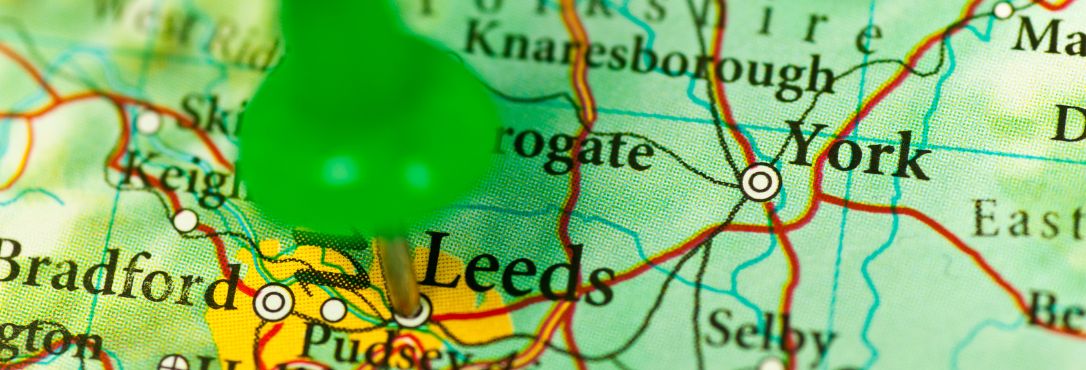
Leeds map

This news round-up brings you some of the industry and association news and views from February 2024, including CHS Leeds 2024, EventWell®’s Buddy service, ABPCO’s 2024 Festival of Learning, IMEX Frankfurt’s Sustainable Event Report, and more.

Headlines

CHS Leeds 2024 has announced speakers and content for its educational seminars which will take place at The Royal Armouries, 23rd April.

It claims the programme will be one of the most comprehensive guides to organising modern events, with an A-Z, available to delegates, produced by the speakers live at the event. 

Beginning with ‘Event Organising 101’, presented by Neil Thompson, The Delegate Wranglers, Louisa O’Connor, SEEN Presents and Justine Bruce, QHotels Collection, and finishing with a challenging session on Accessibility from Orla Pearson, MyClearText Ltd and Acessloop, the sessions will summarise key take away points and add them to a working compendium that will be shared with all delegates at the end of the day. 

Julie Phillips, Operations Director, CHS Leeds, said: “In essence, they [visitors] want to go back to basic event organising, but through the lens of a massively evolving event world here in 2024. I really think we’re going to deliver, and what’s more, we’re giving them something to take away with them. So, if they do miss a session, they can still have the key take outs in our A-Z.”

CHS Leeds will also continue to follow its values of looking after event organiser’s personal and professional growth with each speaker asked to ensure their sessions are as empathetic and practical as possible. The team will write the A-Z throughout the day and make it available to download via QR code. 

Find out more, here.

Julie Shorrock, the newly-appointed chair of trade association beam, has spoken to M&IT about her plans for 2024, the state of the sector, and more. 

Julie told the magazine, “I’d like to see more collaborations between associations. I think we work better together. When another association’s doing something good, I think we could do a lot more sharing and collaborative work. We’ve already started with IACC, with BTA, and I look forward to developing those relationships this year.”

Read the full interview, here.

Ahead of IMEX Frankfurt in May, the team has published a Sustainable Event Report revealing the successes, experiments and learnings from last year’s show.

The report lifts the lid on sustainability planning in the run-up to and execution of IMEX Frankfurt 2023, sharing notable achievements in waste diversion and energy use, as well as highlighting opportunities for improvement as Carina Bauer CEO of the IMEX Group explains:

“This is the second report we’ve produced, working with our sustainability consultants MeetGreen®, meaning we can now benchmark our progress against 2022. It’s an opportunity to share our successes and our challenges with the wider industry so that they can take what we’ve learned and weave these into their own events.”

Read more here.

ABPCO has announced its 2024 Festival of Learning “Fit for the Future” content. 

The Association of British Professional Conference Organisers (ABPCO) has finalised the programme for the 2024 ABPCO Festival of Learning, taking place at the Scottish Event Campus (SEC) in Glasgow on the 29th and 30th of April. This year’s theme, “Fit for the Future,” reflects ABPCO’s commitment to preparing the event industry for the challenges and opportunities of the future.

Monday, 29th April kicks off with an exclusive networking session for new members and first-time attendees at the Crowne Plaza, followed by an evening at the Glasgow Science Centre with food, drinks and a fireside session titled “Cultivating Success: The Transformative Impact of Mentoring” featuring Cally Willoughby-Ward of Chatty Penguin, Sammy Connell of NASUWT, Sarah Vaughan of CITMA, and Rebecca Towell of Full Circle.

Monday afternoon attendees will also have an opportunity to take part in an Invisible Cities Walking Tour of Glasgow.

Tuesday, 30th April includes: Event Power – A Force for Good, The Winning Combination, Tips and Hack, Adapting to the Future with Limited Resources – The BEST Example, Accessibility – The Next Frontier in Event Management, Avoid the Pitfalls and Dodge the Disasters – Stay Future Fit by Minimising Risk, and Closing Keynote – Unlocking a future of heightened productivity and reduced stress.

Heather Lishman, ABPCO’s association director says: “Our carefully curated sessions and workshops are designed to empower attendees with the knowledge, tools, and insights needed to thrive in an ever-evolving landscape. This is a unique opportunity to explore future trends, network with peers, and drive positive change in our industry.”

Read more, here.

EventWell is expanding its support services.

The charitable social enterprise will launch its EventWell® Buddy service at International Confex 2024 in February.

Helen Moon, EventWell founder and chief executive, explains, “It is currently estimated that 15 – 20% of the population are neurodivergent, with approximately 8 out of 10 of those individuals choosing not to attend events due to anxiety, uncertainty around accommodations, communication challenges and more.

We created the EventWell® Buddy service to help reduce potential barriers for neurodivergent attendees by having trained professionals on-site to provide information, comfort and a friendly face to those needing extra support at events.”

EventWell® Buddy Meeting Points provide a designated space at exhibition and conference entrances, Quiet Room or other key locations where attendees can seek assistance from EventWell representatives.

Read more, here.

EVCOM, the event and visual communication association, has launched EVCOMference 2024.

The EVCOMference is the association’s annual conference, which gathers industry leaders, experts and next-generation talent together for a programme of keynotes, panels and discussions. It will take place on 22nd April at RD Studios, London.

This year, the programme is underpinned by facilitated discussions across three core areas: Harnessing Tech, Business Solutions and Building a Better Industry. Within these streams it will be touching on topics such as virtual production and AI, preparing for growth and maintaining a hybrid workforce, neurodiversity and apprenticeships. 

Find out more about the event, here.

The Power of Events has launched a new Careers Hub. 

The not-for-profit company – which aims to showcase the UK events industry – has designed the hub to showcase the depth and range of career opportunities available across the seven sectors that make up the UK events industry.

The hub states: For people looking to change roles, those looking to start their careers and those interested in events currently working in other industries, the hub is packed with information and links to advice, insight, and support. This includes the five main routes into the industry and a glossary that reveals the breadth of job roles across all the different sectors. It also includes links to some of the key support organisations that have helped curate the content and can provide more support and information.

Check it out, here.

Meeting Needs has rebranded as a charity foundation.

Chris Parnham, Meeting Needs chair, said that the refocus is “to better clarify what we are and what we do.” The brand’s new strapline reads: Meeting Needs is a foundation that awards life-changing grants to small charities, with funds raised from within the meetings and events industry.

Read more on M&IT

View from the EDGE

EDGE Venues’ Commercial Director, Scott Ford, summed up this February’s monthly Insights:
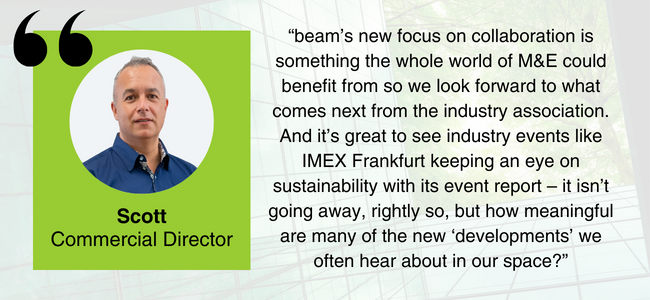
Image of Scott Ford, with his comment: "“beam’s new focus on collaboration is something the whole world of M&E could benefit from so we look forward to what comes next from the industry association. And it’s great to see industry events like IMEX Frankfurt keeping an eye on sustainability with its event report – it isn’t going away, rightly so, but how meaningful are many of the new ‘developments’ we often hear about in our space?”

Event sponsorship has changed – has yours?

Most commercial and association events have some form of event sponsorship, whether that’s financial, direct or indirect support. Yet, the expectations of sponsors have changed!

You can’t hang your hat on giving these vital investors a logo on signage, advertisement in a programmes or the opportunity to provide corporate gift bags. Sponsors are looking at events to connect them with your attendees and begin a relationship.

The best way to help them achieve this is to give the the chance to help attendees, rather than selling to them. But how?

Know your attendees

An in-depth understanding of the audience profile will make sure that you target the right companies for event sponsorship. They usually look for access to decision-makers and a highly engaged audience.

Consumer brands treat potential customers as fans, and business events give sponsors an opportunity to meet attendees face-to-face, make a connection and build loyalty.

Managing the event sponsorship package

Your results won’t be as good if you outsource your sponsorship sales and management. You need to get to know your sponsor and find out exactly what they are expecting. If you build a long-term relationship, there will be less turnover and a more successful outcome for both sides.

Understand the sponsor’s objectives

Fact finding is an integral part of the negotiation process. How does the sponsor’s involvement in the event link to their organisation’s strategic, or tactical objectives? Build an environment of trust to help your sponsor find the right package to meet their goals.

Check how many people or departments are involved, as they may have different objectives.

Measure the return on investment or return on objectives

There are many ways of measuring success, but if you deliver to the sponsor’s objectives then they will be happy. Find out what information they need, update them regularly and make sure that they are informed if there are any changes to the event.

Talk to sponsors onsite and afterwards and check that everything is as expected.

Examples of event sponsorship

Sponsors need to be integrated into the event, so branded experiences are a great opportunity, for example:

  • VIP networking events
  • Innovation hubs
  • Meeting pods
  • Refreshment stations
  • Wellbeing corners
  • Sampling innovative food and drink
  • A thought-leadership educational element to the event
  • Or work with the sponsor to design a bespoke opportunity to engage with attendees at the event and afterwards.

The engagement must be meaningful and creative so attendees pay real attention!

What if things don’t go as planned?

We know things can change or go wrong at events. So make sure you know what to do if the sponsor isn’t satisfied and deal with it immediately. Have contingencies ready to go! If they are happy with their experience of how you deal with a problem, you’re more likely to resecure a sponsor’s support for your next event.

How to use AI in event management

Artificial Intelligence (AI) has boomed in recent years and AI in event management has become a giant trend. But what is it, and how can you use it the event industry?

What is AI?

AI is a branch of computer science to develop intelligent machines to think and work like humans. Computer systems perform tasks that usually need human intelligence. These include visual perception, speech recognition, planning, decision-making, problem-solving and translation between languages.

Most of us are now familiar with voice recognition systems such as Amazon Alexa, Google Home, Siri, and Cortana. The driverless car has been developed which senses its environment and move safely with little or no human input.

Increasingly more intelligent devices are being used in homes through thermostats, lighting, and home security systems. AI is already being used in marketing, customer service, medical research, entertainment delivery, shipping/product delivery and much more.

Examples of AI in event management

SIMULTANEOUS INTERPRETATION

‘Wordly’ is a system that uses voice recognition to instantly translate an event presentation into over 50 languages. All that is required is a patch from the sound system into the internet-based application. Attendees access the information via their mobile devices using Wi-Fi.

The cost is lower than providing human interpreters, sound booths and issuing audio headsets to attendees. Although this system will not replace the need for human translators for high-end events, it enables simultaneous translation for a broad range of events.

SPEEDY REGISTRATION USING FACIAL RECOGNITION

Airlines are testing facial recognition for boarding passengers. iPhone users can use it to unlock their phones. Hotels in China are using it for room check-in. If a conference delegate adds their picture upon event registration, cameras on arrival recognise them and print the badge automatically. This speeds up the process while increasing security.

For more information about facial recognition, take a look at our previous article.

Tracking attendee numbers, demographics, and mood anonymously: iPhone cameras can be used for facial recognition to collect estimates of the number of attendees, their age, gender, demographics, reactions, the amount of time spent and what they are looking at in an exhibition or other event area. It can be used anonymously, so there is no concern about privacy.

CHATBOTS

Chatbots can provide good support and reduce the number of staff onsite. They can conduct conversations using text and respond humanely and are available 24/7.

CHATGPT

Similar to a chatbot, organisers can use ChatGPT. ChatGPT is a language model developed by OpenAI. The “Chat” in ChatGPT refers to the model’s ability to engage in conversation and generate human-like text based on the input it receives.

ChatGPT is designed to understand and generate coherent and contextually relevant text. It is pre-trained on diverse internet text data, allowing it to capture patterns, context, and information from various sources. Users can interact with ChatGPT by providing prompts or queries, and the model generates responses based on its training data.

It’s important to note that ChatGPT operates based on patterns in the data it was trained on and doesn’t have real-world knowledge or understanding. It may generate plausible-sounding but incorrect or nonsensical responses, so take it with a pinch of salt.

The premium version of ChatGPT has recently been updated to include up-to-date information and the latest news, meaning it can generate more factual and relevant information.

Organisers can use this to pull data, create reports, compile checklists, write copy, and so on. It is a handy tool to save time and resources.

MAKING CONTACTS

Matchmaking programmes driven by AI can analyse registration data, social media feeds, surveys, agendas, and badge scans to suggest matches for event attendees and exhibitors. Attendees can be given recommendations to attendees on the best sessions, speakers, and panels to attend. This ultimately could improve attendee ROI.

DATA COLLECTION AND ANALYSIS

Software like ChatGPT can analyse data and make predictions more quickly and deeply than doing this manually. It can be used for better attendee personalisation, to provide more accurate data for decision-making, to streamline communications, to plan content and improve sales.

AI can monitor online content, remember what a user clicks on and prioritise future content based on these clicks. It can also provide links to related content sources. In the case of an online newsletter, each reader could receive a customised page based on their interests.


There will be more development of AI in event management and beyond, as the adoption of these tools becomes widespread. It has already taken the industry by storm; we’ll be keeping watch on what becomes capable of in the future.

Is facial recognition valuable to your event?

Facial recognition will bring changes to the event industry. However, alongside the cost, there are concerns about privacy and how attendee data is stored and used. 

It could be of great benefit, particularly at large-scale events. But would your attendees be comfortable knowing they are being watched?

Facial recognition technology

The recognition technology is becoming more advanced each year and is now being used commercially as biometric identification in place of passwords. 

It has also been introduced by the Metropolitan Police in London. 

Cameras in popular locations will scan passers-by to find criminals and suspicious individuals. This Computer Weekly guide looks at the use of facial recognition technology by UK police forces, and where it’s heading next. The guide includes police facial recognition controversies, including how it originally had ‘no firm legal basis, poor transparency and questionable accuracy (especially for women and people with darker skin tones)’.  

The EU Parliament adopted a ban on facial recognition in public places in 2023. While the technology may not be introduced to the rest of Europe soon, it can still be used for events.

Facial recognition technology is still new and daunting for the events industry. Organisers and attendees will need to experience it and see the benefits, before trusting it.

Will facial recognition improve the attendee’s experience?

Event attendees can opt-in to share a photo when registering and supply certain pieces of personal data. Then, faces can be scanned on arrival at the event, avoiding the need to queue for a badge. Or attendees can check on-site at a kiosk which produces a badge. 

The new radio frequency identification (RFID) badge has a code which can be detected by an electronic reader. It is far easier and quicker to detect than the current method of manually scanning badges.

It can also add another level of security if only people who have registered in advance and have been approved are permitted to join.

Data about the event can be collected and analysed in real-time. For example, in the conference rooms judge how well attended the sessions are, the number of attendees in breakout sessions, demographics of attendees, and the number of attendees for catering. 

A further step is to detect facial expressions to judge the interest in presentations and assess positive and negative reactions. Facial recognition cameras can also be used at exhibitions to find out how people navigate the event, which stands they visit and how long they stay there.

This technology can impress attendees and many will find it a fun and exciting experience. It will enable an attendee to have a completely personalised event, as a camera recognises a delegate’s face wherever they go. When they arrive, their badge will be printed automatically, in seconds.

Considerations

However, event organisers need to reassure attendees about how their data will be used. Where and how long it will be stored? How does it take UK GDPR into account? 

In the USA, guidelines on the use of facial recognition are falling behind. There are calls for federal legislation and an executive order, as well as attention from courts, the private sector, civil society organizations, and other organisations that work with facial recognition technology and provide guidance for the technology’s responsible development and deployment.

The technology does have its problems and will need to be addressed so that facial recognition can be used effectively. As with all technology, it can make errors and incorrectly identify attendees, leading to confusion and frustration. It can also be costly and time-consuming to set up and integrate into the event.