Academic Venue Solutions (AVS) is delighted to welcome two new members, Ashorne Hill and DMU Venues to its growing portfolio of exceptional meeting and event venues.
Ashorne Hill is a dedicated conference centre in Leamington Spa, set in 35 acres of stunning Warwickshire countryside and based around a Grade II listed Manor House.
The venue boasts 40 dedicated conference rooms and has over 100 bedrooms which are a mix of executive and standard rooms.
Perfectly located just a few minutes’ walk from Leicester city centre, DMU Venues can provide the perfect setting for a diverse range of events including meetings, conferences, exhibitions, performances and celebrations. Making them the ideal venue to host an event.
Natalie Williamson, General Manager of Academic Venue Solutions said: “We’re delighted to welcome these high-quality venues to our collection of academic venues. Their range of meeting and conference spaces provides event planners with a unique and diverse range of options.”
They join a list of other supreme venues that have joined membership of AVS over the last 12 months including; Senate House, Northumbria University, Cardiff University, Robinson College, Unique Venues Birmingham, University of Law, to name but a few.
Academic Venue Solutions will be showcasing the exceptional spaces available at its member venues at the Conference and Hospitality Show on the 30 April. An ideal opportunity for event organisers to meet the team as well as three of its members King’s Venues, Nottingham Conferences and Keele University Events and Conferencing. Visit stand RB2 and discover why academic venues are a smart choice for your events.
The Fattal Hotel Group, the owner of the Jurys Inn and Leonardo hotel brands, has announced that it has signed a lease agreement to open a new property in Bristol.
The 200-bedroom hotel will be part of the Glassfields development close to Bristol’s business district. It will mark the Jurys Inn and Leonardo group’s debut in Bristol.
The hotel will be managed by Jurys Inn and Leonardo Hotels UK and Ireland, but branding of the hotel has not yet been confirmed. The site will include a restaurant and bar and meeting facilities and is expected to be complete in the fourth quarter of 2020.
Fattal Hotel Group has made a number of UK acquisitions in recent months. These include Southampton’s Grand Harbour Hotel, and the Midland Hotel on Manchester’s Adair Street. The company is also investing £32 million in the redevelopment of the existing Jurys Inn Edinburgh, along with its adjacent site, which will convert a listed building into a new 131-room Nyx Hotel.
The group also announced it has acquired the leases for four Grange Hotels properties in central London. All four will be rebranded under the Jurys Inn and Leonardo and Nyx portfolios.
Jason Carruthers, managing director of Jurys Inn and Leonardo Hotels UK & Ireland, said: “This is a truly exciting time as we expand our offering in the UK with this key site in a major city like Bristol.
“2018 was another year of substantial growth for Jurys Inn and Leonardo Hotels UK & Ireland, and we have ambitious plans to continue this in 2019 across the group as we offer an exceptional experience, in fantastic city centre locations across the UK.
“We continue to look to grow and strengthen the Leonardo brand and hotel network and will pursue further appropriate and commercially attractive new potential development and acquisition opportunities as they arise.”
Room to Reward has announced that De Vere hotel group is the latest group to join its unique hospitality charity. All properties in the group’s portfolio, with locations from Surrey to the Cotswolds, will donate a percentage of unsold rooms in order to give a ‘thank you’ break to some of society’s Hidden Heroes.
“We are very proud to join Room to Reward,” said Gail Hunter, Group Human Resources Director for De Vere. “It’s a brilliant initiative that enables us to recognise the extraordinary dedication of these wonderful volunteers and give back just a bit of the time they have selflessly dedicated to helping others.”
Founded in 2015 by Nicolas J. Roach – Chairman of Harbour Hotels – Room to Reward works on a simple premise. Hotels across the U.K donate their anticipated unsold rooms, charities and voluntary groups nominate their Hidden Heroes for a break, Room to Reward makes it happen.
“We are absolutely thrilled to welcome De Vere to the Room to Reward journey,”said the Charity’s Director, Adam Terpening. “Their wonderful support will give the inspirational volunteers nominated to us an amazing selection of hotels to choose from.”
To date, approximately 350 hotels have joined the initiative. Collectively, the hospitality industry has pledged in excess of £350,000 worth of breaks. Over 500 Hidden Heroes from the charity sector have benefitted from a Room to Reward break.
“We have been overwhelmed by the way the hospitality industry has taken Room to Reward to its heart,” said Mr. Terpening. “Having another prestigious hotel group on board is further demonstration of the wonderful support we receive. We are hugely grateful to Gail and everyone at De Vere.”
Marriott International expects to add 19 new properties and more than 3,000 rooms to its Middle East and Africa portfolio in 2019. Underpinning a strong demand for its diverse brands, the new additions are in line with the company’s expansion plans to add more than 100 new properties and nearly 26,000 rooms across the region by the end of 2023. Marriott estimates its development pipeline through 2023 represents up to $8 billion of investment from property owners and is expected to generate over 20,000 new jobs across the region.
“Our growth across the Middle East and Africa is fuelled by a strong demand for our diverse range of well-established brands, each offering different attributes that cater to this region’s ever changing and evolving marketplace,” said Jerome Briet, Chief Development Officer, Middle East & Africa, Marriott International. “This region continues to present us with opportunities to further grow and enhance our portfolio across new and established markets. While the majority of our growth will be through new-builds, we are seeing an increasing number of conversion opportunities, especially in the luxury space.”
Year-to-date, the company has opened five new properties in the region and is expected to add 14 more – bringing its portfolio across the Middle East and Africa to nearly 270 properties and over 60,000 rooms – by the end of the year.
Unwavering Demand for Luxury Brands that offer Unrivalled Experiences
The company is poised to expand its luxury footprint in the region by more than 70 percent by the end of 2023, with more than 25 luxury properties under development. The company expects to grow its luxury portfolio in 2019 with seven anticipated openings across four brands:
With the recent opening of W Dubai – The Palm and the anticipated openings of W Muscat and W Yas Island, W Hotels should double its portfolio in the region.
St. Regis anticipates debuting in Jordan and Egypt with the openings of The St. Regis Amman and The St. Regis Cairo.
The iconic North Island is expected to of world-renowned hotels and resorts.
JW Marriott anticipates marking its entry into Oman with the opening of the JW Marriott Muscat Convention Center.
Substantial Growth across Premium Brands
The growth of Marriott’s premium brands remains steady across the region with more than 30 hotels expected to be added to the portfolio by the end of 2023. By the end of 2019, the company expects to have added four new hotels under its premium portfolio for the region:
The Autograph Collection anticipates marking its debut in Kenya with the addition of Sankara Nairobi.
Marriott Hotels and Marriott Executive Apartments strengthened its presence in Saudi Arabia with the recent openings in the Diplomatic Quarter of Riyadh. Marriott Executive Apartments is also expected to open a new property in Madinah later this year.
Marriott Hotels is also planning to open its second property in Algeria, in the capital city of Algiers.
In addition to the openings in 2019, Marriott is also focused on the transformation journey of Sheraton Hotels & Resorts, the company’s most global brand. In the region, Sheraton Jeddah Hotel and Sheraton Grand Hotel, Dubai are currently undergoing renovations that represent the brand’s vision for the future.
Regional Demand for Select-Service Hotels Continues to Fuel Growth
Currently representing over 40 percent of the company’s development pipeline through 2023, select-serve brands continue their rapid growth trajectory across the Middle East and Africa. Building on the momentum from 2018 – with ten properties added across the region, including four Aloft hotels in the UAE – the company expects to add seven new properties by the end of this year:
Four Points by Sheraton anticipates expanding its portfolio with a total of four openings in 2019.The brand recently opened properties in in Sharjah (UAE) and Setif (Algeria) and is on-track to open two more properties this year including, Four Points by Sheraton Dar es Salaam New Africa in Tanzania and Four Points by Sheraton Lahore in Pakistan.
Residence Inn by Marriott expects to make its debut in Algeria with the opening of Residence Inn by Marriott Algiers
Protea Hotels by Marriott plans to expand the brand in Uganda with the opening of Protea Hotel by Marriott Naguru Skyz.
Element Hotels is set to launch its first property in Africa with the opening of Element Dar es Salaam in Tanzania.
As part of its strategy to grow international business events in the UK VisitBritain has added two key roles to the team.
Jamie Ades, who will continue working closely with UK destinations to grow international events, has been promoted to the role of senior destination manager. Ades will be responsible for managing strategic partnerships with North American membership organisations, working collaboratively on events and engaging with the membership to win more events for the UK. With over 10 years’ selling experience in the meetings and events industry, Ades will use his expertise to deliver results. Previous roles include working for some of London’s leading venues; The Barbican, ExCeL London and the QEII Centre.
Marian Tabera has been appointed to the role of bid researcher & event pipeline executive, having spent three years in VisitBritain’s Commercial Division as E-Commerce Executive. In her new role, working with destination partners, Tabera will be responsible for developing a pipeline of international events, with a key focus on targeting international association events that have a good sector fit with the UK and have not been held here for 10 years or more. Before joining VisitBritain Tabera worked for Marriott International in London and Yourtour.com Belgium.
According to the latest data tracked by HotStats, the UK hotel industry has had a rough start to 2019, with rising costs biting into profits.
Total gross operating profit per room came in at £35.44 in February – a 4.4 per cent drop on the same month in 2018.
Despite a 0.5 per cent increase in revenue per available room (revpar), non-room revenues dropped 0.4 per cent to 36.2 per cent of total revenue. This included a 0.7 per cent decrease in food and beverage and a 1.3 per cent decline in conference and banqueting.
Still, hotels managed to hit a 0.2 per cent gain in overall revenue. However, this was wiped out by rising costs, including a 0.5-point increase in payroll as a percentage of total revenue to 32.8 per cent.
The biggest cost increase proved to be utilities, which rose 8.7 per cent year on year to £5.98 per available room – equivalent to 4.8 per cent of total revenue. This was followed by an 8.2 per cent hike in sales and marketing expenses.
As a result, profit contribution at UK hotels was recorded at 28.7 per cent of total revenue, which is far below the average of 38.2 per cent for the 12 months to February.
Michael Grove, director of intelligence and customer solutions, EMEA at HotStats, said: “While top-line numbers have actually been positive – albeit slightly – rising costs are having an adverse impact on flow through.”
In contrast to the UK averages as a whole, properties in Cardiff saw an 8.9 per cent year-on-year increase in profit per room, owing largely to Wales hosting England in the 2019 Six Nations Rugby tournament.
But in Edinburgh, despite the city hosting Six Nations matches, gross operating profit for hotels fell 27.7 per cent – the Scottish capital’s sixth consecutive month of profit decline.
Staying away from home when you have accessibility needs is definitely challenging and not all hotels are able to offer the same standards when it comes to making spaces welcoming to everyone. However, Scandic Hotels has worked to make their properties accessible to people with disabilities. This is good business sense as people with disabilities are travelling more and no longer constitute a niche group. And since there are about 80 million people with some kind of disability in Europe alone, the market is huge.
Scandic is the leading hotel company in the Nordic countries with 57,000 rooms in more than 280 hotels. The group is a leader when it comes to accessibility and appointed an Accessibility Director, Magnus Berglund, who has been an ambassador for the company since 2003. They were the first group to develop an Accessibility Standard which was developed in cooperation with guests with special needs, employees and associations representing people with disabilities. It was created by carefully following people as they move from the parking lot and through Scandic’s hotels.
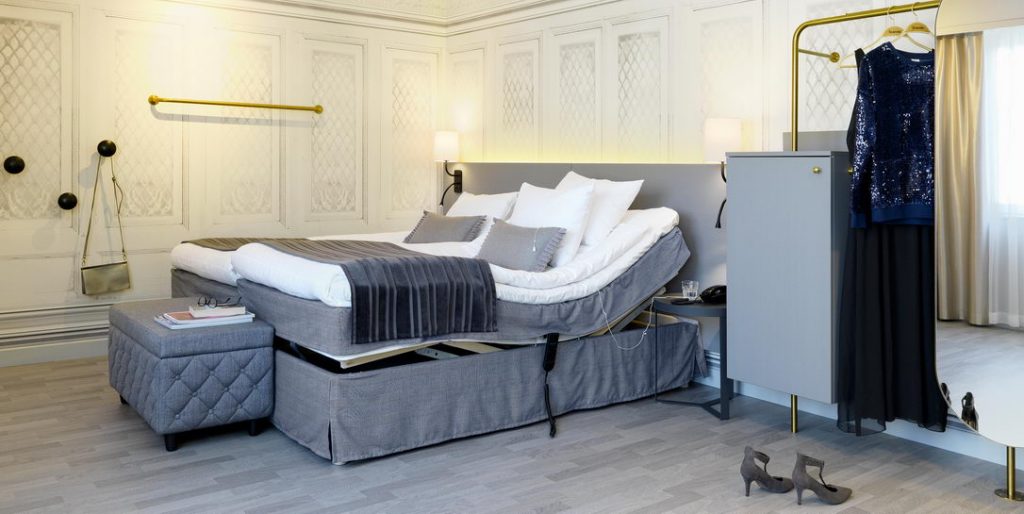
Guests enjoy solutions from vibrating alarm clocks/smoke detectors, safety info in Braille at reception, desks, peepholes and doorbells at wheelchair height and hearing loops to mobile lifts at some hotels. As a result, the Scandic Hamburg Emporio in Germany, for example, was able to host 300 athletes who use wheelchairs during the 2018 Wheelchair Basketball World Championships.
Today, the standard covers 159 points, 105 of which are mandatory at all hotels. New this year are Scandic’s “allergy rooms” with wood flooring rather than carpet, hypo-allergenic skincare products, bedding made from synthetic materials and special laundry and cleaning procedures. Scandic’s allergy standard is the next step, following the successful ‘Breakfast for All’ concept.
Information about accessibility is on the individual hotel website so it’s easy to see what facilities are available at each property.
Not so long ago, hotel rooms for guests with disabilities looked like hospital rooms, Scandic’s “Design for All” means that an accessible room is designed just as well as any other room, with smart solutions that are barely noticeable except to the people who need them. “Making hotels accessible to more people needn’t be expensive or compromise good design,” says Berglund.
The company regularly carries out accessibility training for its 18,000 staff, through practical exercises and online courses. As a result the company has won numerous awards in recent years. Scandic was recognized for “Best accommodation for disability access” at the World Responsible Tourism Awards 2015 and for having “one of the most innovative practices” in the Zero Project 2018.
“Some 70 percent of all disabilities are invisible, which we take into consideration when developing accessibility solutions at our hotels,” says Berglund. “Our goal is to create fantastic hotel experiences for everyone. What makes us most proud is when guests say that when they stay at Scandic, they’re treated as hotel guests, not people with special needs. We are constantly developing accessibility at our hotels since it’s such a complex issue. We never consider our work to be done.” he concludes.
Fun fact about accessibility at Scandic:
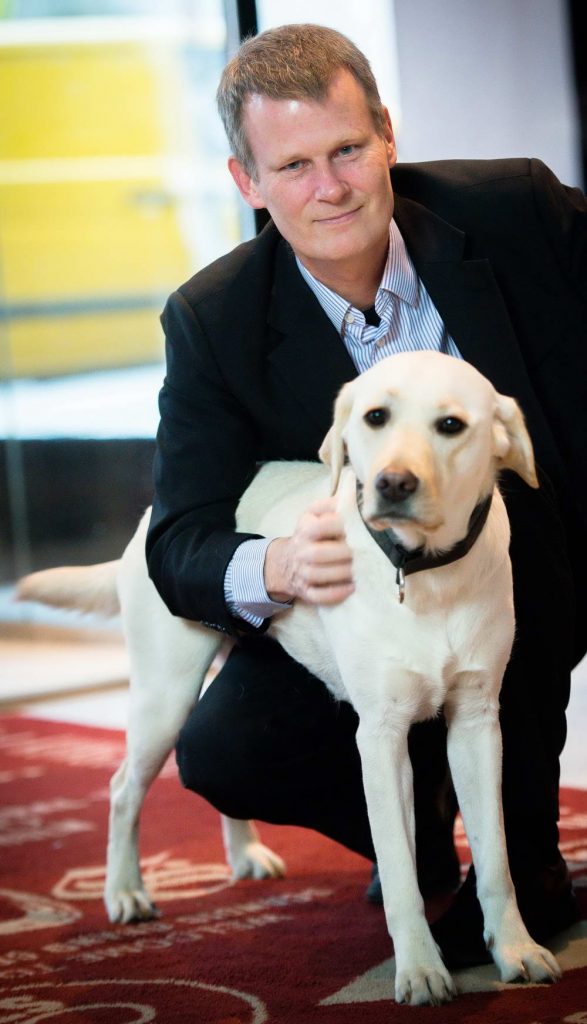
Four-legged friends are always welcome at Scandic and the hotel also has its own service dog, Dixi. Dixi is well-loved and very popular on Scandic’s social channels and on Instagram @dogatwork.
PPHE Hotel Group (Park Plaza Hotels Europe) has received planning permission to begin construction on a £180 million development project that will house the Art’otel London Hoxton – the brand’s second property in the capital.
The group calls the site a key opening for the Art’otel luxury collection across Europe. The next phase of construction is set to begin this summer, with plans to open the property in 2023.
The 27-floor building will feature 343 guest rooms and suites, as well as five floors of office space.
The top storeys will offer a lounge, bar, gym and restaurant with views of the London skyline. Meanwhile, the lower ground levels will feature a gallery space that will play host to a rotating calendar of exhibitions, as well as cultural and artistic events.
The ground floor will be used for hotel and separate office entry, with escalators leading to a mezzanine for the reception and a second restaurant.
PPHE Hotel Group is also set to open Art’otel properties in the former Battersea Power Station in 2022 and New York City’s West Chelsea district in 2023. The brand already has a presence in Amsterdam, Berlin, Cologne and Budapest.
Commenting on the Hoxton development, Boris Ivesha, president and CEO of PPHE Hotel Group, said: “We are delighted to be expanding our pre-opening works for this flagship project and bring our wholly owned Art’otel brand to an area of London which is known to be a leading cultivator of arts and cultural programmes at a global level.
“Working with the local and art community will be one of our main priorities and we are already committed to the gallery being open to the public for free use throughout the year. We are looking forward to creating long-term value for the brand and to see Art’otel London Hoxton join Art’otel London Battersea Power Station and the recently announced New York City project, which will be [our] first Art’otel outside of Europe.”