As a company that wants to survive this uncertain time, our biggest incentive is to lay off staff. But what the Government is failing to realise is that this decision will impact far more lives and hurt the Government more than providing us with cash to keep going. Unemployment, recession, mental health, and suicide will undoubtedly be the outcome of many individuals that are facing reduced hours or loss of jobs – does the Government want that on their hands? We need help now before it is too late!
Government help for the Hospitality Industry. Open letter to the Prime Minister
Dear Prime Minister,
We are writing to you to request urgent cash injections into the hospitality industry to support our staff. Our industry is worth around £43 billion per annum and employs over 700,000 people throughout its vast supply chain.
For those that are not in the ‘mainstream’ hospitality industry and work in an office or other setting, that may be seen as support services are not yet receiving any help from the Government. EDGE Venues, is a venue procurement platform and Trinity Event Solutions is a venue finding agency that operates out of offices – therefore we are not eligible for any financial help yet and there will be many more businesses like us, that work in this industry that cannot currently get help.
This is a worrying time as we are being penalised by the Government for working in an office setting.
We do not want to lay our staff off, but we need cash injections to keep them and so far, the hospitality industry has received very little support from the Government. With the current Employment Laws, a good employer who shies away from zero-hour contracts only has the option of laying their staff off in this current situation.
If we lay off our staff, they will then need to claim benefits and may get into serious financial problems.
Several of our staff have children to support. They are faced with the daunting prospect of going without basic provisions, such as food, to ensure their children are provided for while they’re on reduced hours or unable to keep their job. Universal Credits and other benefits will only cover up to a certain level, and the delay in getting benefits set up will mean our staff will suffer. Rather than the Government having to pick up the pieces, support our staff through means-tested benefits, long term debt and wade through the considerable administration burden – let us look after our staff. We just need cash now!!
Please do not give us complicated processes to apply through. We do not have the time or the resources, and neither do you. Make it a simple cash payment or access to cash per job-based on an average wage bill for the last four months to help us survive and care for our staff.
Don’t give us Debt give us Grants otherwise we have an incentive to lay people off
Make it simple; it could be a 50:50 split of debt and grants. The money can be controlled and only to be paid into salaries, so you know that the money is going directly to the people who need it. This will release the money to enable us to pay our bills, thus allowing our suppliers to survive. This simple act rolled out across other companies will ensure staff job survival, protection of the economy through our supply chain, and less burden on your Government.
We are at the front line on week 5 of event cancellations, we cannot wait. This is causing us to make decisions against our wishes, and all we want to do is look after our staff.
Please can the Government step in and help us and make this a reality. We implore you not to stand by and let our staff who are highly skilled and pretty brilliant lose their jobs. We want to contribute to economic growth not be a burden to it.
I have concluded that if my company receives an injection of £10,000 per employee to ensure a minimum of six months’ work of a 3 day week, I could achieve this in my sector. And I would happily pay my bills on time, supporting the local economy, and pay back £5,000 per employee within 12 months of Virus-free world.
What I don’t want is small amounts of money that the whole process of achieving creates a distraction to me while I fight to keep my business, my customers, suppliers, and my staff.
Jacqui Kavanagh, CEO of Trinity EDGE Holdings Ltd
Keep updated with our latest news, including daily updates on the Coronavirus virus here

Event insurance, are you covered for Coronavirus COVID-19?
Before the breakout of Coronavirus, insurance cover for communicable diseases was either part of the standard policy or could be added at low cost. However, since January 2020, when the insurance companies realised the extent of the problem, this cover was removed. It is unlikely that an event organiser will be able to add it to an insurance policy now as it is classed as a pre-existing condition and listed under excemptions.
However, the way to get around this going forward is for organisers to put clauses in their contracts with event attendees, speakers, exhibitors, suppliers and venues.
If you think you are going to cancel an event, the best thing to do is speak to your insurance company as early as possible, take advice and understand what the procedure and terms are. Make sure you’ve got all the necessary evidence to claim successfully. The worst thing to do is present them with a claim after the event has been cancelled, without notice. Each claim will be assessed on an individual basis, taking the government advice into account and whether Force Majeure applies.
Force Majeure
This is a provision in a contract that allows a party to suspend or terminate the performance of its obligations when certain circumstances beyond their control arise, making performance inadvisable, commercially impracticable, illegal, or impossible. A recent example is a law passed by the Swiss government prohibiting public events of more than 1,000 people which caused the cancellation of the Geneva Motor Show. Some other considerations are if the city/country is in a state of emergency, flights have been suspended or travel has been prohibited.
- The law that applies will be the law of the country where the event is being held
- If your meeting is in the UK but attendees are from China, USA or EU countries which are not operating flights to the UK
- Hotel contracts will usually have a Force Majeure contract that applies to the hotel’s location, so would only apply if that destination prevents the event.
Will Coronavirus be covered by future insurance?
After 9/11 very few event insurance policies would cover terrorism, but as time passed the option was offered with an expensive premium in proportion to the risk. In the longer-term insurance underwriters adjusted their assessments and exposure to claims and the rates reduced. At the moment we don’t know how long Coronavirus will last and the impact on events in the future. When will a vaccine be available or will the virus die out in due course? There may be legislation to address insurance claims due to Coronavirus in the future, but in the short-term it’s better for event organisers to take matters into their own hands and build clauses into their contracts.
This article does not constitute legal advice and we advise organisers to take independent legal guidance which is appropriate to their circumstances. This article is not intended to be relied upon to make specific decisions.
Hotels to turn into temporary hospitals
The health secretary said empty hotels across the country would help ease the pressure on hospitals that are filling up with patients. Speaking on the BBC’s Andrew Marr Show on Sunday (15 March), when asked if more hospitals should be built, he responded: “We’ve seen that many hotels are empty, so we’ve got ready-built facilities looking after people.”
On the back of this suggestion, Best Western Great Britain has said it will consider turning hotels into temporary hospitals if the NHS needs additional bed space during the coronavirus outbreak.
Rob Paterson, chief executive of Best Western Great Britain, said: “We are in unprecedented territory so we would be willing to take unprecedented steps to support the national effort.
“If the NHS wants additional bedspace, and we can partner with other companies to provide the right medical equipment and supplies and we can do it safely, then we would be willing to start having those conversations immediately. Whatever we can do to help.”
Best Western has approximately 260 hotels in Great Britain, with almost 15,000 bedrooms.
Keeping check back with EDGE Venues Insights for the latest coronavirus updates, including news on whether other hotels will consider temporary hospitals with their properties.
Government is not advising to ban events at this stage
Update on the coronavirus issue following today’s COBRA meeting
Following todays COBRA meeting the government is now moving to a ‘delay’ phase against coronavirus which has now been classed as a global pandemic. PM Boris Johnson has said that banning events will have little effect on containing the spread of the virus. He also commented that ” All stages we are guided by the science.”
There is not yet a national reason to distance people socially according to the Chief Medical Officer.
Proceed, postpone or cancel?
Decisions need to be made about forthcoming events that are being organised, whether to continue as usual, postpone them until later in the year or cancel them entirely. We saw yesterday that Imex has cancelled their event in Frankfurt in May. So, with the spread of Coronavirus, how should you come to a decision how to proceed in the next few months?
The first consideration is to make an informed decision, based on facts. We work in a collaborative and supportive industry and everyone understands the value of the global events industry. The most important factor is making a choice that is best for the business and whether the company’s objectives can be met without the event or if there is reduced attendance. What is the event’s purpose and what are the alternatives? Once this decision has been made, then the legal and insurance factors come in to play, but these should not be the driving factor whether the event should go ahead.
Force Majeure
The question is whether damages have to be paid if the conference is cancelled. So, does Force Majeure apply? It does if the event is illegal, impossible or commercially impracticable to hold. A recent example is a law passed by the Swiss government prohibiting public events of more than 1,000 people which caused the cancellation of the Geneva Motor Show. Some other considerations are if the city/country is in a state of emergency, flights have been suspended or travel has been prohibited. Fear is not force majeure.
Cancellation or postponement
Establish the critical mass of attendance for the purpose of the event to be successful. If 10% of attendees cannot be there it probably won’t have a significant impact, but if 30% or more don’t attend then that’s a different situation. Set a date when the decision will be made whether to proceed or not, considering travel arrangements, event set up, suppliers etc and make a well-thought-out business decision.
Contracts
Check all contracts: venues, DMCs, a/v providers, caterers, other suppliers, as well as attendees, exhibitors and sponsors. Is there an event cancellation policy in place and what will this mean? Take advice about whether the force majeure provisions apply, your legal team can argue about cancellation and attrition fees. It’s in everyone’s interest to proceed with the event, so if numbers are reduced then speak to the venue about minimum attendee numbers, accommodation and the spend on food and beverage because it is in everyone’s interest to negotiate. If there’s a new agreement make sure you have an addendum signed by both parties. If additional hygiene practices are required, find out what the venue is going to put in place and get these agreed in writing.
Insurance
There are two factors here. Firstly, the event insurance, check your general liability insurance, which should cover you if an attendee becomes ill at an event and have a claim against your company. Does this specifically cover COVID-19? Some insurance companies excluded COVID-19 from their policies since January 2020 as it became more prevalent. Secondly, there is business travel insurance which may come into effect if a company imposes travel restrictions to their employees.
Crisis Management and Communication
There should already be a plan in place and even if it isn’t entirely appropriate to the current circumstances, then elements may help to manage the situation.
Communicate with the stakeholders separately and stick to the facts. Keep the message simple and clear. If you are proceeding, then tell people about the hygiene practices onsite and how the event will be managed. Update any statements as necessary before and during the event.
This article does not constitute legal advice and we advise organisers to take independent legal guidance which is appropriate to their circumstances. This article is not intended to be relied upon to make specific decisions.
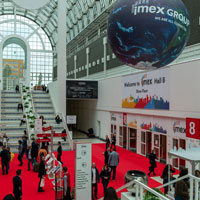
IMEX Frankfurt 2020 is cancelled
Events industry affected by Coronavirus – Major industry trade show cancelled.
EDGE Venues has just been made aware that IMEX Frankfurt 2020 has been cancelled which has resulted in the events industry again being affected by Coronavirus. This is a disappointing blow to the events industry and we would like to express our heartfelt thoughts to the IMEX team.
The IMEX event is a major industry trade show that brings together our industry to network and generate business. It is a great shame that this event has now been cancelled.
Jacqui Kavanagh, CEO of Trinity EDGE Holdings Ltd comments, “The cancellation of any event is very sad news. These events are business-critical as our professional industry needs to network, discover new products and ideas and build relationships.
Our industry is a community that supports our clients in an everchanging world. Meetings and events, whether local, regional or global are a point of change delivering a positive impact, return on investment and a return on business. It is of great sadness that this key event delivering into our industry has been cancelled.”
EDGE Venues will continue to publish articles on the coronavirus situation and how this affects the event industry. Daily articles are published which can be read here.
If you would like to contact us regarding this subject or any other articles we have published our contact details can be found here.
Carton House to rebrand under Accor’s Fairmont portfolio
The four-star Carton House in Co Kildare is to rebrand to become part of Accor’s Fairmont portfolio.
The hotel will now undergo a complete refurbishment before being unveiled as Fairmont Carton House later this year.
Once the multi-million pound renovation is complete, Carton House, originally built in 1739, will be home to 170 bedrooms and suites, in addition to its two 18-hole championship golf courses.
The property is owned by the Belmullet Hospitality Group, controlled by Irish American businessman John Mullen, who said the rebrand will help ‘elevate’ the hotel’s reputation.
“Carton House is one of Ireland’s most significant landmarks, and we are excited to have Fairmont, one of the most prestigious hotel brands, to work with us to elevate the hotel to its rightful place in Irish hospitality,” Mullen said.
“The signing of Fairmont Carton House reflects our expertise in the luxury segment and reinforces our commitment to growing our luxury offering across the UK and Ireland, ” said Thomas Dubaere, chief operating officer of Accor Northern Europe.
Across its global portfolio Fairmont has more than 75 hotels.
Cheltenham Racecourse tackles coronavirus
The Cheltenham Festival is one of sports most popular events of the year, attracting more than a quarter of a million people over the 4-day event.
Prior to the event, which starts today, there was mounting uncertainty due to the coronavirus, and the pressure to cancel following suspensions of large events in other countries. However, with the Public Health England advising that there is no requirement for the UK to ban large scale events it has gone ahead and is defying the coronavirus fears.
Instead of cancelling, which unfortunately other smaller events are doing – despite the governments’ advice to continue with holding events, Cheltenham Festival have instead issued pre-event communications to reassure attendees of the precautions and additional measures that will be in place. Cheltenham racecourse has increased the number of facilities available to racegoers such as washbasins and toilet facilities along with ensuring hand sanitiser will be readily available and paper towels. They have also increased the number of staff to ensure soap and drying facilities are constantly available.
According to The Racing Post, there will also be posters around the racecourse which will demonstrate the latest public health advice.
In the lead up to the event, advice was issued to those that have recently visited certain foreign destinations advising them to stay away from the event if they were displaying symptoms.
Ian Renton, regional director of Cheltenham Racecourse, said: “We’re working closely with the Department of Health to maximise hygiene facilities at the course. “We are looking to improve it where we can and hygiene is at the centre of what we are doing.”
As the coronavirus situation changes daily and many people are still unsure what is going to happen over the coming days and weeks, we should look at cases such as the Cheltenham Festival to gain confidence on how large scale events can still go ahead and be managed appropriately. The additional resources and procedures that are being put in place can be followed for smaller events and communication is key both before and during the events.
Culture Secretary Oliver Dowden said that events such as Cheltenham should go ahead as planned despite cancellations and postponements being made public in other European countries. ‘We are guided by the facts and we are guided by the evidence. At the moment the advice is clear from the chief medical officer: there isn’t a need to cancel such events.’
These events are essential to millions of businesses worldwide providing platforms for people to network, engage and conduct business. The Cheltenham Festival is expected to attract around 70,000 people which will contribute to the economy and many businesses including in the supply chain are reliant on these types of events going ahead.
As a venue procurement platform, we are committed to encouraging these events to continue in times of disruption and will keep sharing positive case studies and information to our audiences.
Coronavirus risks long term damage to the events industry
The rapid spread of coronavirus around the world is taking its toll on the events industry and the vast supply chain that supports it. The virus is presenting the industry with an unprecedented global challenge that could be longer lasting than the lifespan of the virus itself.
As the number of coronavirus cases climbs around the world, event organisers face the risk that the disruption will last for several months with people being overcautious to attend future events and the knock-on effect of events that have recently been cancelled.
At this point, it’s hard to know how fast it will spread or what the accurate fatality rate is so we can only learn as the situation develops. With the unknown, it therefore becomes very difficult to predict what the impact of the coronavirus outbreak will be but within the events industry. We are already experiencing consequences that will undoubtedly have a long term effect on certain businesses with the fear that a number will not be able to survive.
Public transport more likely to be a source of transmission than any events
The UK events industry is worth £43 billion and is suffering from many attendees or event organisers either postponing or cancelling outright, which goes against the advice that has been published. The Deputy Chief Medical Officer, Jonathan Van-Tam has stated that ‘There will be no ban on live events and other large-scale mass gatherings across the UK in the near future.’ He also adds that with the virus having a small radius of infection of two metres, pubs and public transport are more likely to be a source of transmission than any events.
Cancelling events will not only have a devastating impact on the supply chain but also on the local and wider economy. The current situation which is panic-driven rather than fact-driven is creating a negative impact on the industry and must be taking a toll on the mental wellbeing of all staff involved.
The events industry should set a positive example and not overreact
As an industry that is at the forefront of public and media attention, we should be setting a positive example in light of the coronavirus outbreak and not overreact. We have a duty of care to look after the large supply chain connected to the industry and until there is evidence or guidance stating events should be cancelled, we should continue with planned events.
Martin Fullard of Mash Media recently told the BBC cancelling events should be a last resort. He also commented that “The events industry is famously resilient and that through collaboration it has a duty to look after its supply chain, which in some cases could see businesses losing out.”
For more articles around the Coronavirus, including top tips for event organisers, check out our industry insights.