Opening of the refurbished Malta Marriott Hotel & Spa

The Malta Marriott Hotel & Spa located in Balluta, St. Julian’s opened on 13th of January 2020, following a €30m investment in renovation.

The 5* hotel is a 20-minute drive from the island’s capital Valletta and 12 km from Malta International Airport. It is located next to a sandy beach and a seafront promenade within the bustling, cosmopolitan town of St. Julian’s.

There are 13 different meeting spaces all on the dedicated meetings floor of the building, connected through a series of syndicate rooms, with terraces and gardens to enjoy breaks outside. The largest space is the gallery with capacity of 320 in theatre-style. All the meeting rooms have natural daylight.

The Malta Marriott Hotel is contemporary in style, with 301 bedrooms — including 25 Club Rooms, 29 Suites and a 150 square-metre Presidential Suite with views of Balluta Bay. There are indoor and outdoor swimming pools, a fully equipped spa and fitness centre.

The Malta Marriott also has a M Club Lounge, which is on the top floor, with outdoor terraces and views of the Mediterranean Sea. There are five restaurants and three bars, including its signature restaurant Taro housed at The Villa, a 19th century palazzo adjacent to the hotel’s grounds, overlooking the bay.

Marriott’s EDITION Hotels due to open three hotels this year

The lifestyle brand, EDITION Hotels, conceived by Ian Schrager will increase its hotels from 10 to 13 by opening three more this year. There are a total of 15 hotels in the pipeline, which are due for completion in the next three years and will double the size of the group:

2020 openings

  • The Tokyo EDITION, Toranomon

Due to be completed in the Summer, this will be the first EDITION Hotel in Japan, the Tokyo EDITION Toranomon is part of the redevelopment of the former Pastoral Building. This is a mixed-use project of homes, offices, and a medical centre. The hotel will have 206 guest rooms with views of Tokyo skyline, three restaurants and bars, spa, indoor pool and fitness center

  • The Reykjavik EDITION

This hotel will open towards the end of this year, in the centre of Reykjavik. It will have 250 rooms and suites, a private rooftop, nightlife space and ballroom, three restaurants and a café.

  • The Dubai EDITION

Again, this hotel should open at the end of this year and is located in downtown Dubai, opposite the world-famous Dubai Mall. There will be 210 rooms and suites, seven restaurants, swimming pools, pool deck dining, a spa and fitness centre, events spaces with multiple meeting rooms and a ballroom.

Openings is 2021

  • Ginza, Tokyo
  • Riviera Maya at Kanai
  • Singapore
  • Tamapa
  • Doha

Openings is 2022

  • Milan
  • Madrid

The EDITION brand aims to combine a personal, intimate, individualized and unique experience, with the global reach and using the operational expertise and scale of Marriott. The hotels aim to encompass great design and true innovation with personal, friendly, modern service as well as one-of-a-kind food, beverage and entertainment offerings …“all under one roof”.

NH Hotel Group adds eight properties from Boscolo hotels to their collection

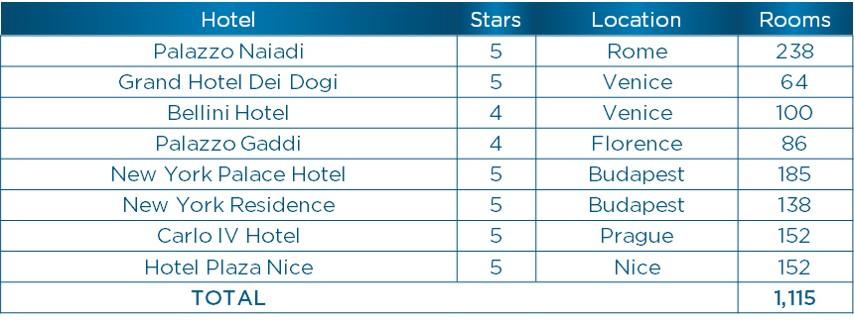
NH Hotel Group has reached an agreement with Covivio, one of the key European real estate players, to operate a portfolio of eight high-end hotels, with prime locations in Rome, Florence, Venice, Nice, Prague and Budapest.

The portfolio includes iconic hotels such as the Palazzo Naiadi in Rome, the Carlo IV in Prague, the Plaza in Nice and the NY Palace in Budapest.

These Boscolo hotels had previously been bought by Covivio. The agreement has an initial duration of 15 years and the transaction is expected to be fully complete by the end of the first half of 2020. However, the hotels in Florence and Nice which are currently being fully refurbished are expected by June 2020 and January 2021 respectively.

This agreement will add 1,115 rooms to NH Hotel Group’s luxury properties. The hotels are centrally located in Rome, Florence, Venice, Nice, Prague and Budapest, six are in the 5-star and two are 4-star categories. The hotels are flagship establishments and they will gradually be rebranded under the Anantara Hotels & Resorts and NH Collection brands.

Is CSR important to you and the venue you use?

It makes sense to use a venue that reflects your company’s CSR philosophy and policies, but do you check this with them before booking your event? It’s important that event organisers make the attendees feel welcome and the attitude and infrastructure of the venue is a part of this. Jacqui Kavanagh, CEO of EDGE Venues, share her thoughts on what to consider for meetings and events when looking at CSR.

Connecting with the community

Many venues undertake initiatives that support local projects. In America, some venues are creating co-working spaces which can be used by community-based groups. Businesses pay to hire the venue in the usual way, but outside these hours the space can be used by specific groups to encourage and develop their education or skills. There are opportunities for event organisers to contribute to these community projects, either through a team-based activity or meeting people in need of mentoring or training.

Charitable programmes

Venues often support local charitable programmes and an event organiser can partner with them to give back to the local area. This can be done through donations, not necessarily monetary, but giving unused food and drink, stationery and other items to refuges, schools and non-profit organisations.

Sustainability

Selecting a venue that is ‘green’ is good for the environment but can also be good for the delegates. Many venues are building ‘green’ features into their properties, solar power to water reduction, rooftop gardens and recycling points.

Using an accessible and inclusive venue

Everyone needs to move around the venue with ease and in most properties ramps and access to lifts is standard. However, some venues use braille text on signage, hearing loop systems, and have trained their staff specially to understand these needs.

Diversity

Many venues have diversity policies in place, but just don’t publish them. You can ask the venue about their diversity programme or check with independent organisations such as the Disability Equality Index.

A purpose-built conference centre will have different facilities to a hotel group or independent hotel or smaller, unusual venue and their CSR programmes with reflect this, so it’s worth asking them for details before booking your event to make sure that their philosophy works well with your company’s CSR code.

Six Senses to open a hotel in London in 2023

The first Six Senses Hotel will open in the UK at Whiteleys, Bayswater, West London. The building is a former art deco department store, which then became a shopping centre in the 1980s and closed in December 2018.

The hotel will have 110 bedrooms and suites, as well as 14 residences. It will have a lobby bar and lounge, all-day dining restaurant with an open kitchen and seating area in the courtyard. The original Grade II façade, central courtyard, dome and internal staircase (modelled on the La Scala opera house in Milan) will all remain. Contemporary art from British artists will be used throughout.

The hotel will have a Six Senses Spa in the style of an old-fashioned London underground station, with fitness area and indoor swimming pool. On the second floor, residents and members will access a social and wellness club and coworking spaces.

Six Senses Hotels Resorts Spas was acquired by IHG earlier this year and currently has 18 hotels and resorts and 30 spas in 21 countries.

Trends in food and drink

As we know, where the consumer market leads, businesses follow. So, here’s a look at the trends in food and drink, which is what we can look forward to in offerings from hotels and venues as these filter through to their menus.

Organic and healthy choices

Sugary food and drink are less popular than it was as people are becoming more aware what they are eating, driving the healthy food and drinks trend. The same is true of alcoholic and non-alcoholic drinks. There are far more option on menus for people with food intolerances and preferences, including celiac, dairy free, low fat, vegetarian, vegan, keto and organic options. Alternative diets are becoming more mainstream and more vegetables are being added.

Plant-based options

The trend toward plant-based diets is set to grow rapidly in 2020 and non-meat substitutes now have more flavour than they used to. Unusual ingredients becoming more mainstream, such as nutritional yeast, seaweed, hemp, ashwagandha, cassava, bijao leaves, cocona, acai, aguaje, and maracuya.

Healthier snacks

Alternatives to crisps are becoming more readily available with ingredients like chickpeas, beetroot, carrot, peppers, kale and quinoa. People are moving away from three meals a day and using healthy snacks to fill the gaps.

Alternative Milks

Coconut, almond, goats’, rice, oat and soy milks are readily available in supermarkets and cafes. Oat milk consumption is set to rise as it is very popular in hot drinks and has a low environmental impact compared with some of the other options.

Jackfruit

The Indian Jackfruit is often used as a substitute for pulled pork because of its texture and is also being used in recipes instead of tofu and quorn in curries and chilli recipes. It’s low in sodium and calories, but high in fibre, B vitamins and potassium.

Sparkling Water

Sparkling water consumption has grown from consumers who like fizzy drinks, but still want to cut down on sugar.

Unusual fruits

Different fruits are being introduced, both eaten fresh and incorporated in food and drinks. Some of the flavours are prickly pear, dragon fruit, bergamot orange, yuzu, ugli fruit, pineberry, aprium, limequat, cherimoya and strasberry.

Brightly coloured food

Chefs want their food to be talked about and Instagrammable food needs to be bright and appealing

Even more focus on sustainability

Food waste and food miles – it’s here already and will continue to be important. There’s more focus on using ugly fruit and vegetables and eliminate wasted produce at all parts of the food chain.

Simple, natural dishes

This particularly applies to puddings, where healthier options are becoming available using less cream, sugar and carbohydrates by substituting ingredients.

Mind food and mood food

Food to stimulate the brain has been discussed for some time and used in working lunches and conference menus. Food also has an influence on the way we feel, so menus are being designed with ingredients that can change the way we feel too.

Traditional cooking methods

The use of wood fired ovens and grills is set to make a comeback, for bread, pizza and other food and traditional cooking techniques become popular again.


Event design and production – some ideas for a successful event

In this world of more digital communication the need for personal engagements has also increased. People need to connect and the event organisers who are linking event design to experience and behavioural science in to a strategy to achieve objectives are running very successful events. Here are some ideas that you might want to think about when setting objectives and planning your next conference or meeting.

Don’t give the delegates too many choices

Some events have grown over the years and multiple concurrent breakouts have been added to please everyone or more networking sessions to satisfy sponsors. However, giving attendees too many choices makes them think they are missing out or need to be in two places at once and the result is that they are dissatisfied. It’s like looking at a restaurant menu and there’s too much on it and it’s overwhelming and if your choice isn’t excellent then you wish you’d chosen something else. If the attendees are overloaded then they’ll skip sessions and attendance will decline. What the delegate wants is value for their time (and money), then time to review, reflect and respond to the content.

You don’t need a huge budget to deliver a successful event – all you need is an idea

Do something different, as new experiences trigger a new way of thinking. Incorporate novelty and interest through narrative and this will help the listeners to retain key messages.

Create a shared identity, values and purpose and this will strengthen the bond between delegates and the organiser.

Do something memorable at the end of the event as that’s the last thing that people will remember. If you make the peak of the event the finish or farewell, then they will leave on a high.

Production – check the venue

When you’re planning the event there are four key pieces of information that a production company will need to know:

What is the available access into the meeting space?
When will it be available?
The dimensions of the meeting room or area
The power distribution in the meeting room

Access

It’s very simple for you to walk to the function room from the catering area or reception but find out how the production company brings its equipment in to the meeting space. There is a large variety of equipment which could be needed depending on the requirements and particularly if layouts are being changed during the event.

Dimensions

Assessing this information has improved dramatically with the internet, as venues now have websites with downloadable floorplans. Look out for pillars that don’t appear on the floorplan and also the accuracy of dimensions. Make sure you check the height and width of doors and ceiling and beware of chandeliers. The screen needs to be the correct size for the audience and this will have an impact on the capacity of the room.

Power

Most events will need addition lighting, check what needs to be hired it and whether you’ll incur a bill to hire alternative power options.

Timings

This can become complicated if the venue has multiple bookings with different companies setting up and de-rigging. The time it will take can only be estimated once the venue has been checked and the technical equipment has been booked. There is also the issue of booking the crew, based on budget and the amount of time allowed to set up for the event.

The main objective is to find the right venue and to do this the organiser needs to talk to everyone involved, so they all understand the requirements before the venue search can start. Site inspections are important so make sure you ask the right questions.

In conclusion, the best event will deliver the message by creating the greatest interest and least amount of effort. More isn’t necessarily better, and you can’t be all things to all people.

Keep as safe as you can whilst travelling

Events often require travelling in the UK or abroad and working on site at an event in places which are not under the direct control of your company, so we’ve put some guidelines together to try and avoid foreseeable problems and difficulties, as well as the implementation of appropriate precautions. However, the checks should be modified and developed in the light of personal experience and current conditions.

Planning a trip

  • Make sure someone in the office knows where you are going and how long you’ll be there for.
  • Google street view is good for identifying landmarks in an unknown area. Try to stick to well lit, busy streets and wherever possible walk facing oncoming traffic. Do not take short cuts through quieter areas such as parks. If you have any concerns head to a public place such as a hotel, garage or a shop. Keep your mind on your surroundings and avoid distractions such as your mobile phone or headphones.
  • If you have to carry equipment such as laptops, files, etc, use a suitable bag with shoulder straps or wheels to avoid muscle strains. Avoid branded laptop bags which draw attention to the fact you are carrying a laptop. Keep valuables in a zipped bag or inside pocket.
  • When leaving a hotel to return to your car, always ask to be accompanied if it is dark or if you feel uncomfortable. Your personal safety is important.
  • Ensure you park in a safe, well-lit and designated parking zone.
  • Make sure HR know who to contact on your behalf in case of emergency.

And if the trip is overseas …

  • Contact the Foreign Office for any relevant travel advice and visa requirements.
  • Sufficient time should be allowed to process visa applications.
  • Check all participants have a valid passport.
  • Obtain medical advice to determine necessary vaccinations, immunisations, first aid requirements, the NHS website has good information
  • Ensure you have access to funds to cover emergencies and unexpected delays. Take more than one means of payment with you (cash, debit card, credit card)
  • Check information on climate, local culture, local customs and other local information.
  • Obtain tickets, using authorised suppliers only and any other necessary documentation for travel.
  • Ensure adequate insurance cover is in place for groups and/or individuals.
  • When travelling in Europe employees should carry a European Health Insurance Card
  • Find out where your nearest British embassy or consulate will be and keep their contact details somewhere safe.

Wherever you go, print a copy of the contact details you might need, as well as your passport and payment card and hard copies. If phone lines are suspended, you may not be able to access information electronically.

Personal accident and safety in an emergency

  • Familiarise yourself with the details of your Company’s emergency medical assistance and travel insurance prior to departure.
  • If you need emergency assistance it’s a good idea to locate a hotel close by, get there safely and stay there. Make sure it is somewhere you will be comfortable for a prolonged period.
  • Call your office and inform them of your location
  • If your company has an Employee Assistance Programme that provider will be able to help
  • In the event of an emergency that is out of your control such as a terror attack, a tube strike, or fire, use your common sense to make a sensible escape from the area.
  • Make sure you have the contact details of the nearest police station and hospitals.

During civil or political unrest, or if you feel threatened, leave the country if it’s safe to do so. Continue to check FCO travel advice and subscribe to email alerts for updates. Follow the advice of the local authorities unless the FCO travel advice advises differently. Avoid all crowds, demonstrations or large gatherings. Remain in touch with your airline or tour operator and insurer. If you’re visiting and staying in a hotel, identify the emergency procedures in place.

If you wish to leave, but are unable to do so due to disruption, cancellation or overload of commercial transportation operations, follow the advice of the local authorities. Remain in touch with your airline/tour operator, insurer and try to stay in touch with the Company. Take sensible precautions until it is safe to attempt departure. Depending on the crisis and location, The FCO will offer a range of channels for you to request help (for example: in person to a member of their crisis team on the ground, by phone, the internet or SMS) – they’ll advertise these widely at the time.

In the event of an emergency that is out of your control such as a terror attack, a tube strike, or fire, use your common sense to make a sensible escape from the area.

A good DMC is invaluable in emergency situations as they will have staff with local knowledge and procedures in place to cope with unforeseen problems.

For more information check the Suzy Lamplugh Trust which has information on personal safety and carries out training on how to stay safe at work.

Hotels of the future

Lifestyles are changing and in 2018 the UN forecast that 60% of people will live in cities by 2030. The private rental sector is growing with 56% of all consumers saying that home ownership is less important than it used to be. Investment in the hotels and leisure sector of real estate is up 3% from 2018. So, what will our hotels look like in a few years time?

Co-living

Many new hotels incorporate apartments and long-term rentals. There’s been a rise in the ‘subscription society’ where people prefer to rent rather than own, from music, cars, homes and furniture. Co-living is on the increase. It gives people flexibility to move quickly, have their rent, bill and fees in one payment and live in a community with good leisure and social facilities.

Personalisation

In all industries there is a trend for personalisation, which is being driven by big data. Guests in hotels want to be treated as individuals, rather than just another customer. Hotels can log guests’ preferences, offer similar services to those they have requested previously or at other hotels in the same group.

Smart Hotels

Hotels are now using internet-enabled devices, which can send data to one another. Smart hotel designs allow guests to control the heating or air conditioning from their phone, or turn on the TV by giving a voice command to a smart speaker. Smart bedrooms can automatically adjust things like the brightness of light bulbs, or the temperature of a radiator to maintain the guest’s preferred conditions. Superfast internet and strong Wi-Fi coverage is essential for business travellers. They would also like wireless charging devices, an app on their mobile phone for the room controls, Bluetooth keyless locks and electric vehicle charging points.

Artificial Intelligence

Chatbots can be used to improve customer service. Firstly, there is no language barrier and they can replace personal contact at check-in and check-out, reducing waiting times and giving quick and clever answers to questions. They can also take orders for room service, guide guests around the hotel, deliver products to bedrooms or meeting rooms, answer questions about the hotel or the surrounding area, order a taxi and they work 24/7. Although still having someone on reception to talk to is crucial.

Bleisure Travel

Combined business travel and leisure travel is increasing, particularly among the millennial generation. Many conference and meeting attendees will stay on after their event to experience the destination, take part in local activities and use locally sourced products. One of the barriers is the booking processes, transferring from a company paid stay to leisure. If the same hotel wants the guest to stay for both parts of their trip, they need to appeal to both markets, rather than the guest transferring to Airbnb for their leisure stay.

Food and beverage outlets and dining – what’s happening in the events industry

All hotels are looking at their space and seeing what they can do with it to make as much revenue as possible. The static destination restaurant may become a thing of the past as a lot of diners tend to visit once only for the experience, then tick it off the list and move on. Generation Z no longer has a meal to catch up with friends, as they already know what they’ve been doing from social media, so they are more interested in having an experience and socialising at the same time, hence the increase in unusual venues with activities, such as Swingers offering mini golf, Bounce (ping pong), Ballie Ballerson (ball pit), Flight Club (darts) and even axe throwing. This trend is termed ‘competitive socialising’.

Hotels are incorporating more food and beverage offerings, so as well as the usual bar and restaurant, there will be a ‘grab and go’ outlet and roof top used as bar, restaurant and leisure space. Rooftops are now the most profitable areas of venues. Hotels need to offer something to make people leave home and deliver everything in the one building: rooftop restaurant and bar, members’ lounge, public lounge, wellness, competitive socialising, experiential space and independent retail outlets in the same place. Put that offering in a ‘cool’ environment, with excellent connectivity and the customers will stay all day. Everyone is conscious of their physical and mental wellbeing, so wellness is a key part of the offering, providing leisure alongside the work and social environments.

The Ned is a good example of an aspirational venue with a variety of F&B offerings, which encourages repeat business. The Hoxton, Ace Hotel and Citizen M in Shoreditch have all become community hubs, because the brands know their customer and the area, so create the ‘buzz’ to make themselves into cool hotels. With an increase in independent workers, they’ve all realised there’s a need for these individuals to work and socialise, so created spaces for them to mix.

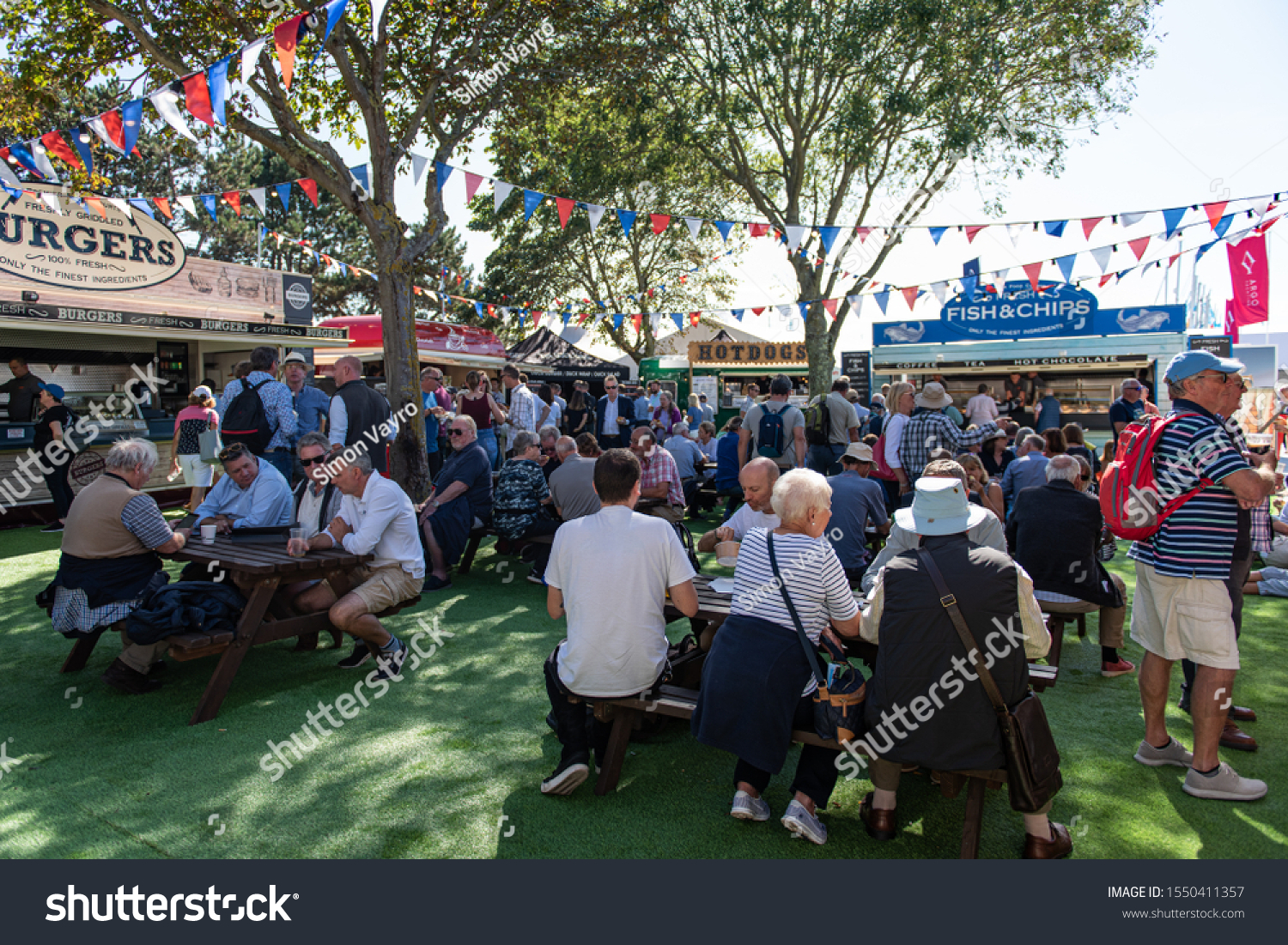
So, what can we expect in hotel and event space in the future? Food halls, either inside or outside with multiple kitchens. These venues can then add films, educational lectures and business training, sound studios, a lounge bar with a DJ and a community support element. Restaurants are collaborating with local organisations (using food waste, offering local apprenticeships and training) and conscious of their environmental footprint. We’ve already seen an increase in street food and food markets, where there are multiple choices from micro-diners in the same area. Street Feast’s venues are a good example, open to the public and offering venues for exclusive use for up to 3,000 people for all sorts of events.