
Keep as safe as you can whilst travelling

Events often require travelling in the UK or abroad and working on site at an event in places which are not under the direct control of your company, so we’ve put some guidelines together to try and avoid foreseeable problems and difficulties, as well as the implementation of appropriate precautions. However, the checks should be modified and developed in the light of personal experience and current conditions.

Planning a trip

  • Make sure someone in the office knows where you are going and how long you’ll be there for.
  • Google street view is good for identifying landmarks in an unknown area. Try to stick to well lit, busy streets and wherever possible walk facing oncoming traffic. Do not take short cuts through quieter areas such as parks. If you have any concerns head to a public place such as a hotel, garage or a shop. Keep your mind on your surroundings and avoid distractions such as your mobile phone or headphones.
  • If you have to carry equipment such as laptops, files, etc, use a suitable bag with shoulder straps or wheels to avoid muscle strains. Avoid branded laptop bags which draw attention to the fact you are carrying a laptop. Keep valuables in a zipped bag or inside pocket.
  • When leaving a hotel to return to your car, always ask to be accompanied if it is dark or if you feel uncomfortable. Your personal safety is important.
  • Ensure you park in a safe, well-lit and designated parking zone.
  • Make sure HR know who to contact on your behalf in case of emergency.

And if the trip is overseas …

  • Contact the Foreign Office for any relevant travel advice and visa requirements.
  • Sufficient time should be allowed to process visa applications.
  • Check all participants have a valid passport.
  • Obtain medical advice to determine necessary vaccinations, immunisations, first aid requirements, the NHS website has good information
  • Ensure you have access to funds to cover emergencies and unexpected delays. Take more than one means of payment with you (cash, debit card, credit card)
  • Check information on climate, local culture, local customs and other local information.
  • Obtain tickets, using authorised suppliers only and any other necessary documentation for travel.
  • Ensure adequate insurance cover is in place for groups and/or individuals.
  • When travelling in Europe employees should carry a European Health Insurance Card
  • Find out where your nearest British embassy or consulate will be and keep their contact details somewhere safe.

Wherever you go, print a copy of the contact details you might need, as well as your passport and payment card and hard copies. If phone lines are suspended, you may not be able to access information electronically.

Personal accident and safety in an emergency

  • Familiarise yourself with the details of your Company’s emergency medical assistance and travel insurance prior to departure.
  • If you need emergency assistance it’s a good idea to locate a hotel close by, get there safely and stay there. Make sure it is somewhere you will be comfortable for a prolonged period.
  • Call your office and inform them of your location
  • If your company has an Employee Assistance Programme that provider will be able to help
  • In the event of an emergency that is out of your control such as a terror attack, a tube strike, or fire, use your common sense to make a sensible escape from the area.
  • Make sure you have the contact details of the nearest police station and hospitals.

During civil or political unrest, or if you feel threatened, leave the country if it’s safe to do so. Continue to check FCO travel advice and subscribe to email alerts for updates. Follow the advice of the local authorities unless the FCO travel advice advises differently. Avoid all crowds, demonstrations or large gatherings. Remain in touch with your airline or tour operator and insurer. If you’re visiting and staying in a hotel, identify the emergency procedures in place.

If you wish to leave, but are unable to do so due to disruption, cancellation or overload of commercial transportation operations, follow the advice of the local authorities. Remain in touch with your airline/tour operator, insurer and try to stay in touch with the Company. Take sensible precautions until it is safe to attempt departure. Depending on the crisis and location, The FCO will offer a range of channels for you to request help (for example: in person to a member of their crisis team on the ground, by phone, the internet or SMS) – they’ll advertise these widely at the time.

In the event of an emergency that is out of your control such as a terror attack, a tube strike, or fire, use your common sense to make a sensible escape from the area.

A good DMC is invaluable in emergency situations as they will have staff with local knowledge and procedures in place to cope with unforeseen problems.

For more information check the Suzy Lamplugh Trust which has information on personal safety and carries out training on how to stay safe at work.

Hotels of the future

Lifestyles are changing and in 2018 the UN forecast that 60% of people will live in cities by 2030. The private rental sector is growing with 56% of all consumers saying that home ownership is less important than it used to be. Investment in the hotels and leisure sector of real estate is up 3% from 2018. So, what will our hotels look like in a few years time?

Co-living

Many new hotels incorporate apartments and long-term rentals. There’s been a rise in the ‘subscription society’ where people prefer to rent rather than own, from music, cars, homes and furniture. Co-living is on the increase. It gives people flexibility to move quickly, have their rent, bill and fees in one payment and live in a community with good leisure and social facilities.

Personalisation

In all industries there is a trend for personalisation, which is being driven by big data. Guests in hotels want to be treated as individuals, rather than just another customer. Hotels can log guests’ preferences, offer similar services to those they have requested previously or at other hotels in the same group.

Smart Hotels

Hotels are now using internet-enabled devices, which can send data to one another. Smart hotel designs allow guests to control the heating or air conditioning from their phone, or turn on the TV by giving a voice command to a smart speaker. Smart bedrooms can automatically adjust things like the brightness of light bulbs, or the temperature of a radiator to maintain the guest’s preferred conditions. Superfast internet and strong Wi-Fi coverage is essential for business travellers. They would also like wireless charging devices, an app on their mobile phone for the room controls, Bluetooth keyless locks and electric vehicle charging points.

Artificial Intelligence

Chatbots can be used to improve customer service. Firstly, there is no language barrier and they can replace personal contact at check-in and check-out, reducing waiting times and giving quick and clever answers to questions. They can also take orders for room service, guide guests around the hotel, deliver products to bedrooms or meeting rooms, answer questions about the hotel or the surrounding area, order a taxi and they work 24/7. Although still having someone on reception to talk to is crucial.

Bleisure Travel

Combined business travel and leisure travel is increasing, particularly among the millennial generation. Many conference and meeting attendees will stay on after their event to experience the destination, take part in local activities and use locally sourced products. One of the barriers is the booking processes, transferring from a company paid stay to leisure. If the same hotel wants the guest to stay for both parts of their trip, they need to appeal to both markets, rather than the guest transferring to Airbnb for their leisure stay.

Food and beverage outlets and dining – what’s happening in the events industry

All hotels are looking at their space and seeing what they can do with it to make as much revenue as possible. The static destination restaurant may become a thing of the past as a lot of diners tend to visit once only for the experience, then tick it off the list and move on. Generation Z no longer has a meal to catch up with friends, as they already know what they’ve been doing from social media, so they are more interested in having an experience and socialising at the same time, hence the increase in unusual venues with activities, such as Swingers offering mini golf, Bounce (ping pong), Ballie Ballerson (ball pit), Flight Club (darts) and even axe throwing. This trend is termed ‘competitive socialising’.

Hotels are incorporating more food and beverage offerings, so as well as the usual bar and restaurant, there will be a ‘grab and go’ outlet and roof top used as bar, restaurant and leisure space. Rooftops are now the most profitable areas of venues. Hotels need to offer something to make people leave home and deliver everything in the one building: rooftop restaurant and bar, members’ lounge, public lounge, wellness, competitive socialising, experiential space and independent retail outlets in the same place. Put that offering in a ‘cool’ environment, with excellent connectivity and the customers will stay all day. Everyone is conscious of their physical and mental wellbeing, so wellness is a key part of the offering, providing leisure alongside the work and social environments.

The Ned is a good example of an aspirational venue with a variety of F&B offerings, which encourages repeat business. The Hoxton, Ace Hotel and Citizen M in Shoreditch have all become community hubs, because the brands know their customer and the area, so create the ‘buzz’ to make themselves into cool hotels. With an increase in independent workers, they’ve all realised there’s a need for these individuals to work and socialise, so created spaces for them to mix.

So, what can we expect in hotel and event space in the future? Food halls, either inside or outside with multiple kitchens. These venues can then add films, educational lectures and business training, sound studios, a lounge bar with a DJ and a community support element. Restaurants are collaborating with local organisations (using food waste, offering local apprenticeships and training) and conscious of their environmental footprint. We’ve already seen an increase in street food and food markets, where there are multiple choices from micro-diners in the same area. Street Feast’s venues are a good example, open to the public and offering venues for exclusive use for up to 3,000 people for all sorts of events.

Marriott launches Delta Hotels in the UK

Marriott International has launched its Delta Hotel brand in the UK with three openings in the closing months of the year.

Delta Hotels by Marriott are now open for business in Milton Keynes and Cheltenham (pictured above) and will be followed by the Delta Hotels by Marriott Nottingham Belfry by the end of the year.

A further five Delta Hotels are expected to open in the UK next year.

The four-star brand, which “elevates the details that really matter”, was acquired by Marriott in 2015 and comprises more than 70 hotels across the US, Canada, China and Germany.

“We are delighted to bring Delta Hotels’ refreshing take on hospitality to the UK after opening the first European outpost in Frankfurt last year,” says John Licence, Vice President Premium & Select Brands Europe at Marriott International.

“Delta Hotels by Marriott maximises the key essentials, streamlining the travel experience so that guests can get the most out of their stay.”

All three UK hotels have been redesigned prior to opening. Guests can expect fast wifi, modern fitness centres, convenient dining and trademark Delta Bars.

The 138-room Milton Keynes property has 600sqm of event space and is located close to the M1, while the 122-room Cheltenham Chase hotel features a spa and pool, countryside views and events space with capacity for up to 350 delegates.

Investors remain optimistic as more than 200 hotels under development in London

There are 210 new hotels in the development pipeline for London as investors remain optimistic about the capital’s market potential for growth post-Brexit.

That’s according to a new study by private wealth law firm Boodle Hatfield. Almost a quarter (48) of the hotels with planning permission or already under construction in London are located in Westminster, adding more than 6,800 new bedrooms. Luxury and boutique hotels account for 74% of the planned new hotels in Westminster.

These include: the former US Embassy in Mayfair, which is being developed into a 137-room, £1b Rosewood hotel; a Nobu hotel is being built in Marylebone that is part funded by Hollywood actor Robert De Niro; and the Londoner on Leicester Square, which will have 350 rooms and two cinemas.

A further 12 hotels are planned for the Heathrow area.

The UK’s hotel market is one of the few sectors of the UK economy to have benefited from the Brexit-related slump in sterling, the law firm said, because the decrease in value of the pound has made it cheaper for international tourists to visit the UK and has also encouraged more “staycations”.

Rajeev Joshi, partner at Boodle Hatfield, said: “Investor appetite in the London hotel market is holding up. But investors will want to know that this new supply of hotels can be soaked up by increasing demand.

“For tourism to continue to grow, the UK needs to ensure that post-Brexit, we do not start to be seen as a less convenient destination for tourists from the EU or from further afield. Greater investment in infrastructure will be a key part of this. Accelerating the delivery of projects such as the third runway at Heathrow and the Crossrail would help.”

Top 10 areas for hotels currently in development across London:

BoroughHotels with planning
permission
Hotels startedTotal
Westminster272148
Hillingdon
(Heathrow Airport)
8412
Brent4711
Tower Hamlets5510
Kensington &
Chelsea
549
Hammersmith &
Fulham
549
Hounslow549
Redbridge729
Camden639
Hackney718
Total7955134

What does Bilbao offer for an event?

Bilbao, an industrial port city in northern Spain, is surrounded by green mountains. After years of financial uncertainty, Bilbao has once again become a dynamic city, full of amenities and focused on environmental and urban regeneration.

Bilbao International Airport is located just 10km from the city centre and has direct connections to the main Spanish & European cities. The city has more than 4,00 hotel rooms and in the region are 200 hotels providing in excess of 13,000 beds. The impressive Guggenheim Museum and the Euskalduna Palace, a conference and music centre, have become the icons of the new Bilbao, a city that is gradually regaining space and handing it back to the people.

Basque gastronomy makes Bilbao the best place to taste an entire galaxy of Michelin stars (it has 9 awards). There are also tempting pintxo bars, traditional taverns, grill houses and cider restaurants within the gastronomic capital.

BILBAO EXHIBITION CENTRE is one of the most modern trade-show complexes in the world in terms of design and amenities. It offers 150,000 m2 of exhibition space, 18,000 m2 congress centre, 41,500 m2 atrium and restaurants, 100,000 m2 outside space (gardens & paved areas) and 4,000 parking spaces.

For events requiring unique venues options available in Bilbao include:

Bilbao
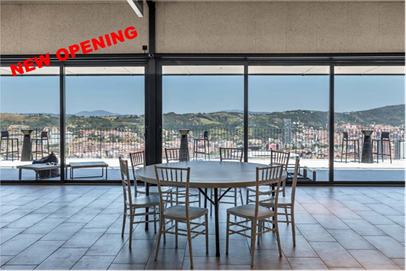
Brand new! A minimalist space with an area of 400 m2 that offers breath taking views of Bilbao.
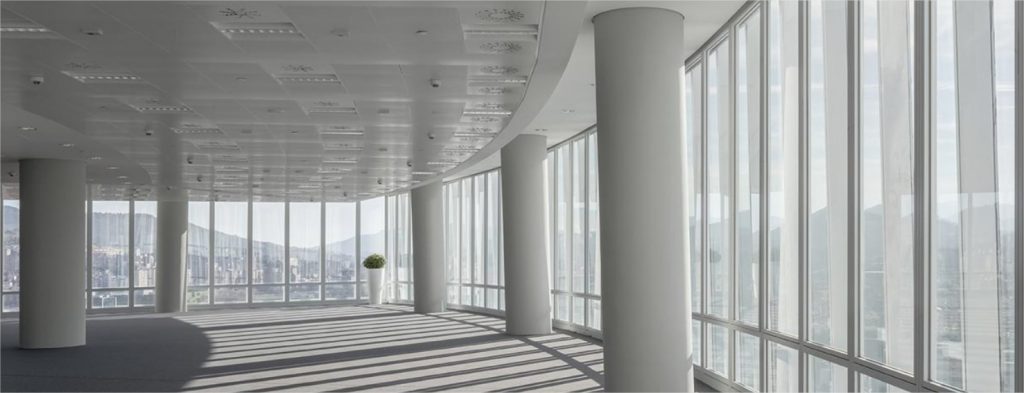
A 24th floor (111 m above ground level) with 1,000 m2 of open-plan floor that offers spectacular views of the city.
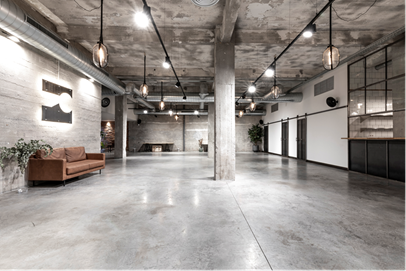
An old coffee factory converted into a multi-functional space ideal for hosting all kinds of events. It offers 400 m², high ceilings, large windows, natural light and a terrace on the riverfront.

Bringing Agents and Venues together for EDGE Venues Marketing Summit

On Friday 1st November, EDGE Venues brought together Agents and Venues who use the global venue sourcing platform for a Marketing Summit, helping users and licensees maximise the site’s potential.

The event attracted more than 100 delegates to the De Vere East Midlands Conference Centre in Nottingham and is the third Marketing Masterclass that EDGE Venues has run since its December 2018 launch. This was the first time Agents who use the platform, and Venues who are licensed, came together to learn about the latest developments of the site, industry trends and how they can maximise the benefits available to them.

Aimee Richardson from Allianz Park, home of the Saracens, attended the EDGE Venues Marketing Summit commented: “It was a wonderfully insightful morning at the EDGE Venues Marketing Summit in Nottingham! With discussions covering relevant industry trends, real-time developments and a true collaborative meeting with lots of wonderful agencies and venues in one room discussing the future of the MICE industry! It’s events such as this, with the collaborative approach, that demonstrates the passion and value the team at EDGE provide.”

To enhance its service offering, and increase the exposure of the platform, EDGE Venues has recently appointed digital marketing agency, Anicca Digital. As part of the educational process, Anicca was invited to the Marketing Summit to share insight into the benefits of paid social advertising and what this would mean to EDGE Venues. Ann Stanley, Managing Director commented on the recent appointment: “We are thrilled to welcome EDGE Venues to the Anicca Digital family, and look forward to delivering their paid digital media services over the coming months as part of their exciting growth plans. EDGE Venues, with its cutting-edge technology and global vision, is a perfect addition to our existing events sector client portfolio, and we are eager to be a part of their future journey.”

Jacqui Kavanagh, CEO of EDGE Venues was delighted by the response of the Marketing Summit: “We had a fantastic turnout for our Marketing Summit with more than 100 attendees. The event keeps on growing and demonstrates how the industry wants to work together for the benefit of corporate clients. After nearly a year of continued development, we’re now able to invest further with our marketing strategy and the appointment of Anicca Digital, alongside our existing strategy partners, will support with our overall growth strategy.”

On 1st December EDGE Venues will celebrate its one-year anniversary with plans to release further developments to the platform in the coming months.

The next EDGE Venues Marketing Summit will be held on 17th January 2020 in London.

Park Plaza sees increased revenue thanks to strong UK growth

Park Plaza hotels (PPHE) has reported a 6% increase in like-for-like revenue in the nine months to 30 September 2019, driven by strong growth in the UK.

Total revenue reached £276.3m, with occupancy of 80.6% and revenue per available room (revpar) of £102.

Boris Ivesha, president and chief executive of PPHE, said: ”We are pleased to report a solid performance during the quarter, with continued revenue growth and an increase in group revpar of 4.3%, as we benefited from the recent completion of several major repositioning projects and maturing properties across our portfolio and strong trading in the United Kingdom.

“Following several years of investment and disruption to operations, all hotels across our UK and NL portfolio are now open and contributing to the group’s performance. Strong trading at Park Plaza Victoria Amsterdam in the Netherlands and Holmes Hotel London demonstrate our investment programme continuing to bear fruit, and we look forward to trading continuing to mature across other recently repositioned hotels in the coming months.

“We expect to invest approximately £300 million on our development pipeline, which includes exciting projects such as art’otel London Hoxton and an art’otel at Hudson Yards in New York City.

“Based on our results to September and our outlook for the remainder of the financial year, the Board anticipates the full year results will be in line with its previous expectations.”

The group reported it is making progress at the Art’otel London Hoxton development, with the demolition of the existing structure on the site having commenced.

Sustainability – how ‘green’ is your conference venue?

CSR is a hot topic at the moment and every day there’s something on the news about greater environmental responsibility. There’s a trend for sustainable venues to attract more business than those that haven’t incorporated new features and venues are now realising that the need to incorporate ‘green’ design in to their way of life, for example switching to LED lights, using water dispensers instead of bottles and cutting the plastic. For an event organiser, it is difficult to hold a sustainable event without the help of the venue and they are asking more questions about the venue’s recycling policy, disposal of food waste and sourcing of local products.

Check the standards

If you are looking for a venue that actively works toward sustainable practices, check whether it is LEED or ISO 20121 certified.

LEED, Leadership in Energy and Environmental Design, is the most frequently used organisation to certify the ecological sustainability of buildings.

ISO 20121 sets environmental guidelines and monitors compliance within the events industry.

Increasingly venues are taking the following steps to become more sustainable:

  • Using renewable energy to power buildings
  • Compensating for emissions with carbon offsetting
  • Using their roof to generate solar power
  • Installing a ‘green roof’ and install beehives
  • Harvesting rainwater and recycling grey water
  • New buildings sourcing local materials to reduce their carbon footprint

Transport

Transport accounts for a high percentage of an event’s CO2 emissions, but there are some steps you can take to reduce it.

  • See if electric or hydrogen-powered buses are available for moving delegates around
  • Use hotels and venues that are linked to public transport systems or are within walking distance of each other
  • There may be a discounted travel card which gives delegates use of the public transport system

Renewable energy

Solar power is one of the fastest growing forms of green energy and many venues have large roofs that can hold solar panels. As well as generating electricity, there are also systems for heating water by using solar systems.

A venue with ample natural daylight will use less power than one that needs lighting everywhere and is generally more pleasant for attendees.

Gardens and open spaces

Increasingly venues are using their rooftops and garden areas to grow their own produce for the kitchens. They can’t be completely self-sufficient but cultivating their own vegetables has started the process and more venues are now sourcing from local suppliers and reducing the environmental impact of food miles. Installing beehives gives the venue the option to supply local honey and encourage endangered bee populations.

Venues are also finding that planting a green roof can reduce the rooftop temperature and therefore reduce power used in air conditioning the building.

Reducing the use of water

Collecting rainwater collection and reusing waste water is frequently found in conference venues, whether that is for use on plants or to flush lavatories. Most venues now have sensors on taps to turn them off and limit the use of water.

Sustainable catering

You might have to use the venue’s caterer or may be able to use your own, but you can check the catering to avoid unnecessary waste and try to plan meals using seasonal local produce.

Fish and meat can be sourced from suppliers who use accreditation schemes, such as the Sustainable catering Marine Stewardship Council and Red Tractor Scheme in the UK. Fairtrade products, particularly drinks are also available.

Minimise individually packaged food and drink items – for example by providing milk or cream in jugs rather than individual plastic cartons, and use reusable crockery, glassware and cutlery. It is now possible to bottle water onsite and provide glasses, rather than using plastic bottles.

Many venues publish their environmental policies or are happy to make them available to event organisers. They will help clients, suppliers and partners to minimise the impact of their activities on the environment and follow sustainable practices.

Experience the delights of Dublin

The Doyle Collection are offering a fantastic opportunity for Agents to experience the delights of Dublin. This is a mixed MICE agency FAM trip and they have two spaces available for next weekend.

The River Lee and The Croke Park have under gone huge renovations in the last year so well worth seeing.

Flights and transfers are also included.

See the agenda below and if you’re interested, contact Danielle Argent, Global Account Manager MICE for The Doyle Collection.

Friday 8th November

Arrive in Dublin for latest 12:00pm

Afternoon activity with Croke Park Stadium

Evening dinner at The Croke Park

Head into town for an evening event – TBC

Saturday 9th November

Breakfast at leisure

10:00 Coach pick up

Stop off at Guinness/Jameson distillery

Take train to Cork

14:00 – Check in to The River Lee in Cork

Cork foodie trail

Leisure time

Pre theatre drinks

Night at The Opera house – Swan Lake Ballet

Sunday 10th November

Breakfast at leisure

Departures