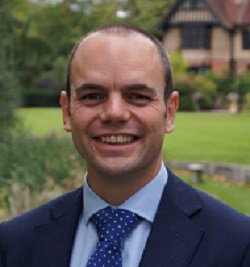
New HBAA Executive Committee train to be Mental Health First Aiders

As the first step in the HBAA’s 2019 major initiative to encourage action on mental health issues in the event industry, the new HBAA Executive Committee members have been trained to be Mental Health First Aiders.

The two-day course at Wyboston Lakes Resort gave the Committee members many valuable practical skills and increased their awareness and understanding of what affects mental wellbeing. The course taught them how to spot triggers and signs of mental health issues and gave them enhanced non-judgemental interpersonal skills. They also learnt how to reassure and support a person in distress and how to help someone recover their health.

The HBAA is arranging for this course to be available to members, setting up open courses to take place in April and June.

After completing the course Angie Mason, HBAA Chair said: “The last two days have been so enlightening. It totally reinforced in my mind what a vital issue this is and how important our campaign is. There is so much that most of us don’t know about mental health issues so we want as many people as possible to sign up for these courses. Anyone could save a life.”

The HBAA Executive Committee, which comprises the Committee Chairs and Past Chairs, has three new members for 2019.

Alexis Moreau is the new HBAA Tech & Innovation Chair and Lex Butler is the new HBAA Events Committee Chair for 2019 while Nick Scott of ArrangeMY now chairs the Business Accommodation Committee.

Nick Scott joined ArrangeMY in 2004 and has been Managing Director since 2008.

Alexis Moreau - Head of Conference and Catering Services at Robinson College at the University of Cambridge.

Alexis Moreau is the Head of Conference and Catering Services at Robinson College at the University of Cambridge.
Lex Butler - Creative Director and Owner of Wolf & White.

Lex Butler is the Creative Director and Owner of Wolf & White.

Challenges ahead warns Millennium & Copthorne

Millennium and Copthorne Hotels has warned investors that the hospitality industry faces ‘intensifying’ challenges in the near future in the form of staff shortages and competition from the growth of Airbnb and serviced apartments.

The company’s chairman Kwek Leng Beng made the comments as it revealed a drop in pre-tax profit for 2018 to £106 million – down 28 per cent on 2017 in constant currency. The fourth quarter was particularly hard, with profits falling 76 per cent to £7 million.

Beng blamed “a range of geopolitical and global economic headwinds”, including US and China trade relations, Brexit and increasing minimum wage levels in several markets.

The company also saw revenue per available room fall 7.4 per cent in London, mostly driven by the closure of its Mayfair hotel for refurbishment. Excluding that property, revenue grew 3.3 per cent. The hotel is set to reopen as the Biltmore, Mayfair in the second quarter of this year (new bedroom pictured).

Millennium and Copthorne says a particular challenge in the UK is the effect of Brexit. It claims to be struggling to recruit EU workers, “which currently comprise more than half of the London workforce”. Minimum wage increases in the UK have also reportedly added to cost pressures for the group.

Looking ahead, Beng said: “The board’s priority is to evaluate and develop new and innovative strategic plans to meet the challenges facing our fast-changing operating environment. The shortage of talent – from rank and file to senior management – is intensifying with many new hotels being built around the world, not to mention the growth of Airbnb and serviced apartments. Any hospitality business that wants to progress will need to evolve and embrace these changes to stay relevant and profitable in the immediate and medium term. Restoring profitability in our New York hotels also remains at the top of the board’s objectives.

“Meanwhile, we continue to invest in and reposition our hotels. We look forward to our Mayfair hotel being rebranded and opened as the Biltmore, Mayfair in the second quarter of this year. This is the first opening under Hilton’s new LXR Hotels & Resorts collection in Europe. This also will mark the group’s debut in the London five-star deluxe market and it is our aim to fast-track our lost earnings growth at this hotel after it re-opens.

“2019 will be another challenging year for the group, with significant capital projects underway and several large hotels earmarked for major renovations. These investments will be carefully managed and phased to deliver the right returns to shareholder and underline the group’s intention to maintain strict control of costs throughout the business.”

Millennium and Copthorne Hotels operates the Leng’s Collection, M Social, Studio M, Millennium, Grand Millennium, M Hotel, Copthorne and Kingsgate brands.

In September 2018, the group’s CEO Jennifer Fox stepped down after just three months in the role.

RBH properties boosted by customer service recognition

Several properties operated by UK independent hotel management company, RBH, have been given the BVA BDRC seal of approval following glowing customer service feedback.

Nine hotels within the RBH portfolio were named among BVA BDRC’s VenueVerdict Gold Standard Accreditations, with a further nine properties commended for their performance in 2018.

The recognition comes from the only meetings accreditation programme driven solely by the voice of the customer, with scores generated following event feedback from meeting bookers and event hosts between January and December 2018.

The hotels which have achieved BVA BDRC Gold Standard Accreditations for 2018 are:

Ashford International Hotel, Chesford Grange Hotel, Crowne Plaza London – Docklands, Crowne Plaza Reading, DoubleTree by Hilton Glasgow Westerwood Spa & Golf Resort, Dunston Hall, The Cheltenham Chase Hotel, Doubletree by Hilton Oxford Belfry and The Queens.

Rob Ledson, group director of Sales at RBH, said: “Our properties have consistently produced exceptional VenueVerdict scores over recent years, and 2018 was no exception.

“It goes without saying that we’re thrilled to see our teams’ hard work and commitment to providing first class service and facilities for meetings and events clients recognised. Our focus is to ensure these standards are maintained in 2019.”

BVA BDRC is the UK’s largest independent research consultancy and BVA BDRC VenueVerdict accreditations are based entirely on genuine, verified customer feedback, reflecting the cream of the nation’s meetings providers.

Proposed cuts by City Council to Convention Bureau budget condemned by Edinburgh’s academic leaders

More than 75 of Edinburgh’s most respected academics and researchers have united in their condemnation of the proposed 2019/20 budget cuts to Marketing Edinburgh, as drafted by the City of Edinburgh Council last month.

Speaking in support of Convention Edinburgh, the business tourism arm of Marketing Edinburgh, leaders from across fields including medical sciences, paediatrics, ecology and data sciences, have voiced their concern that the cuts would not only damage the city’s future as a superior conference and meeting destination, but the ‘world-leading academic ecosystem’ Edinburgh is renowned for.

More than 75 members of the ‘Edinburgh Ambassador’ Programme, managed by Convention Edinburgh, have voiced their concerns through letters to councillors or by submitting their views through the City of Edinburgh Council consultation hub. Between them, they represent some ofEdinburgh’s most respected business, scientific and academic institutions, including all four of the city’s universities, Roslin Innovation Centre and Edinburgh Royal Infirmary. They have all worked or are currently working closely with Convention Edinburgh to bring prestigious and valuable conferences to the city, which have a lasting legacy for the Scottish Capital. From research collaboration to driving forward innovation, hosting conferences in Edinburgh benefits the city in the long term through economic and social progress.

With Marketing Edinburgh facing 89% budget cuts over the next two years, a reduction of £790,000, the future of the organisation and the Edinburgh Ambassador Programme is in jeopardy. This is a group of more than 540 academics and industry leaders who Convention Edinburgh support to bring conferences to Edinburgh.  Since 1998, Edinburgh Ambassadors have secured 1,348 conferences with 528,605 delegates to Edinburgh which resulted in an economic impact of £900M for the city. 

Felicity Mehendale, honorary senior clinical lecturer at the University of Edinburgh, said: “Without the professional expertise and help from Marketing Edinburgh, I would not have been successful in winning the bid for the four-yearly International Cleft Conference in 2021 – this will be the first time it has ever been held in the UK.

“Winning bids for prestigious international congresses brings significant business to Edinburgh and many repeat visitors. However, bidding is now extremely competitive, and we simply cannot rely solely upon the academic reputation of Edinburgh – we absolutely need an organisation like Marketing Edinburgh to help with the many aspects of conference bidding which is beyond our remit as academics.”

In a letter to City of Edinburgh Council, Dr Richard Reardon, senior lecturer in Equine Surgery, The University of Edinburgh University said: “Removing more than £0.5M from Marketing Edinburgh’s financial plans would leave Scotland’s Capital as the only major city in the developed world without a Convention Bureau. Who else will champion Edinburgh on a national and global scale as a conference destination? Who else will act as the critical lynchpin between academia and the city, leading on city bids and persuading associations to hold their conferences in Edinburgh? As plans currently stand, no-one will. I would ask that all Councillors play your part in ensuring their survival.”

Professor Jessie Kennedy Dean, research and innovation office, Edinburgh Napier University said: “Convention Edinburgh has assisted me in bringing several conferences to the city, without their help this would have been less likely to happen. Running conferences is work over and above normal academic duties, which brings esteem to the University, in addition to the economic benefits to the city and therefore plays a vital role in the success of Edinburgh’s institutions.”

Brian Corcoran, CEO, Turing Festival said: “Turing Fest brings many business visitors into Edinburgh every year. Our mission is to take that number – of investors, entrepreneurs, start-ups, global tech companies, technical talent, customers – up to 10,000 over the next few years, which will help establish Edinburgh internationally as one of Europe’s best tech hubs. Marketing Edinburgh has been a great support to us in our journey so far – helping source venues and hotels and creating synergies by connecting us to other operators in the city.

“Frankly, we are much more likely to be successful in creating the UK’s flagship tech conference in Edinburgh if there are resources like Marketing Edinburgh in place to help us.”

Amanda Ferguson, head of business tourism, Convention Edinburgh said: “Conferences foster knowledge exchange, innovation and networking, attracting world-leading specialists as delegates and speakers. As host city, this is a unique opportunity to showcase their research and Edinburgh’s strength in that field. This results in collaborative research, investment and ultimately jobs.

“Reducing our budget by such a large amount means we would no longer be able to support our ambassadors to bring conferences to the city and thereby deny the city important economic impact and opportunity to show case the strength of our knowledge economy.

“Without a body that unites public and private sectors in the city’s promotion and economic development, we will severely compromise Edinburgh’s ability to attract conferences. I would ask that Edinburgh’s Councillors work with us to find an alternative solution that will not jeopardise the good work underway by Marketing Edinburgh and our ambassadors.”

Business tourism is a significant contributor to the Edinburgh economy with delegates spending double that of a typical leisure tourist and critically coming out with the busy summer months. This helps sustain a year-round tourism sector in Edinburgh.  In 17/18 Convention Edinburgh confirmed 108 conferences, meetings and other corporate events with a total economic impact of £72m.

Edinburgh Councillors will vote on the city’s 2019/20 proposed budget on 21 February.

New partnership between London and Paris for joint incentive experience

The official convention bureau for London and Paris have announced a new partnership which they claim will see the two cities working together for the first time to deliver a “unique two-in-one incentive trip”.

The agreement is aimed at inspiring North American incentive buyers to book a 2-in-1 trip for their clients. 

The itineraries have been curated to showcase how easy it is to enjoy both cities in one incentive trip and includes an official partnership with Eurostar.

Joshua Novick, VP Business Tourism at London Convention Bureau said: “London and Paris are two of the world’s top business and leisure travel destinations, making this a really powerful offer for incentive planners. With so many great hotels, cultural attractions, parks, restaurants and experiences, we are excited to be able to bring such a unique incentive offering to the market. London is open to collaboration with other likeminded, global cities and by working together as we are doing in this way, we can offer a once-in-a-lifetime incentive travel experience that allows delegates to experience two amazing cities in one epic trip.”

Corinne Menegaux, general manager of the Paris Convention and Visitors Bureau added: “Paris & London are an ideal 2-in-1 destination to hold a conference or an incentive. These cities are internationally renowned for numerous reasons such as the quality of their infrastructures, their trendy hotels and innovative activities. Both cities combine leisure & business attractions that are the keys to successful events and they have a constantly evolving offer to make the ‘Old World’ very attractive! If you’re looking for an unusual place to organize a meeting or a dinner, the two capitals are available for private hire, with a wide range of venues ranging from iconic museums to cutting-edge galleries and revolutionary conference centres.”

Inge Bauwens, lead sales manager, Eurostar concluded: “It’s easy to fit the best of London and Paris in to a single trip, with a seamless Eurostar journey between the two cities in just over two hours. For those looking to make the journey even more enjoyable, groups that have booked an entire coach can add an exclusive experience on board, with themes ranging from food and drink to arts and culture available to entertain guests whilst they travel.”

Tourism industry confident despite Brexit, says UKinbound research

The research, which was collected by Qa Research, found that 59% of UKinbound members stated they were confident about business in the upcoming 12 months. This was the highest rate recorded since October 2017.

The increase in confidence was influenced by an influx of forward bookings, the value of the pound, and increased interest from North American and Asian markets.

Business also signalled that the number one activity they’re expecting to be most in demand from inbound tourists are cultural experiences, followed by ‘bespoke activities’.

However, businesses also stated the industry faces a number of problems in the upcoming months, notably the uncertainty around Brexit.

Staff recruitment and retention, improving the UK’s product offering and offers for visitors, attracting visitors from new markets, and currency fluctuations were also cited as general concerns.

A review of 2018 found a few interesting statistics:

  • Throughout 2018 China and the US remained the two top growth markets
  • Less than a third (28%) of members felt that over-tourism has a negative impact on their business
  • A key challenge for many members continued to be the reduction of available EU workers

UKinbound CEO Joss Croft commented: “It is encouraging that even with the uncertainty surrounding Brexit, our latest Business Barometer shows that forward bookings are strong and that there is an increase in confidence levels amongst some of our members.

“However, we remain concerned about the Government’s proposed immigration strategy post-Brexit, which will look to restrict employing EU nationals to those only earning over £30k. 

“Recruitment and retention of staff in the industry is already a challenge – due in part to Brexit, and this proposed restriction could have a real impact on the industry, which relies heavily on its EU employees due to their language and customer service skills.”

RFPs next discussion for EventHuddle February edition

Industry discussion forum EventHuddle will be looking at requests for proposal (RFP) at its next edition.

EventHuddle CEO Kirk Thomas said: “Receiving a RFP should be a joyous occasion; someone out there has expressed an interest in potentially working with your company. But for hundreds of event venues and suppliers up and down the country, the RFP has become a torturous process. 

​”The explosion in agencies over the last decade has lead to many businesses receiving 50-100 RFPs a day, many with 24 hour response deadlines, some with as little as one hour. As if that isn’t daunting enough, they then need to contend with incompatible software, blanket RFPs which could be classed as spam, speculative RFPs (where the agency hasn’t won the business yet), duplicate RFPs (multiple agencies sending the same request),  etc. All while trying to manage the many other responsibilities of your job.”

The event takes place on Tuesday 28 February, from 8.15-10.30am at 1 Wimpole Street, London and will include breakfast.

The panel will look at the RFP process, discuss what needs to change, offer tips on how to handle the overwhelming task and answer questions. 

For more information and to sign up visit the EventHuddle site.

The January edition of EventHuddle saw a discussion of what would happen to the events industry post-Brexit.

Former MP and Rapiergroup MD Nick de Bois told attendees it was important for the industry to prepare for a no-deal Brexit. The former chief of staff to former Brexit secretary Dominic Raab said that no deal would be challenging, but not the end of the world, and advised event professionals to prepare for it by reading the government’s technical advice.

Cutting the use of plastic at Events

Plastic bottles

Reducing our use of plastic, particularly single use plastic, is a hot topic at the moment and we all know that there is a lot of waste created by events and exhibitions. Recycling has increased, but it’s probably best to stop the problem at the source. So, we’ve taken a look at a few things that can be changed to reduce our use of plastic at our events.

  • Plan from Day One

Talk to all the stakeholders and clients to see what is important to them. Do they have a sustainability policy? If so this should be shared at the earliest possible stage of planning.

Think about what will be thrown away at the end of the event and try to find an alternative from the start.

  • Venue finding

Ask the prospective venues questions about their use of plastic items and recycling policy and find solutions that are easy to implement. If you want a plastic-free event, then the best way to start is to find a venue and destination that matches your requirements. That’s far easier than introducing a new way of working to a venue that’s not set up for it.

name badge
  • Name badges

There are lots of alternatives to the plastic badge holder. The simple solution is just to clip the badge straight on to the lanyard and it’s easier to reuse the lanyards at another event afterwards.

  • Ban plastic water bottles and single use coffee cups

Ask your venue to provide alternatives. If there’s a goodie bag, how about putting a keep cup or reusable bottle in there for the event attendees to use. Lots of people have their own already and are happy to use them. They also carry water bottles, so water dispensers can be used, with ice and fruit, instead of bottles of water.

  • Straws

Ir’s now quite unusual to be given a drink with a plastic straw. Lots of venues are now using paper straws, but consider if you need straws at all.

  • Signage

Can the signage be re-used, or if not can it be recycled? Try not to laminate any paper, as this can’t be recycled.

  • Conference bags and incentive items

Make sure they are environmentally friendly and of value or they will be discarded during the event.

  • Recycling

The recycling bins need to be obvious and have clear labels of what can be recycled in which bin.

This week Excel has announced a ‘No Plastic’ campaign and all plastic straws have been removed by retailers in the central boulevard. They also offer a discount to customers who have a reusable cup. Permanent water fountains have been installed to provide free chilled water to visitors, exhibitors and organisers who bring a reusable container. They’ve also introduced new waste bins to enable visitors to sort their rubbish more easily.

Scandic Hotels decided to stop using plastic straws and cocktail sticks in all of its hotels and are working to remove all single-use disposable items made of plastic. They were using approximately 1.3 million straws and 120 000 cocktail sticks every year. The plastic lids for take away coffee mugs have been replaced with biodegradable ones. This group has provided toiletries in large dispensers for many years.

IHG has already removed plastic straws from around 1,000 hotels in Europe, Middle East and Africa and they’ve announced that plastic straws will be removed from all hotels by the end of 2019, which is more than 5,400 hotels in nearly 100 countries. They are also are introducing bulk-size bathroom amenities to several hotel brands in the Americas, as part of broader efforts to reduce waste.

Conference and meeting venues urged to take part in UKCAMS 2019

Conference and meeting venues are being urged to take part in the 2019 UK Conference and Meeting Survey (UKCAMS), now in its 26th year.

Sponsored by VisitBritain, the UKCAMS 2019 report is scheduled for publication in June and has a specific focus on the value and volume of the market and the performance of meeting venues. It also highlights key market trends identified by venues.

The 2018 research found that the conference and meetings sector was worth an estimated £18.1 billion to the UK economy, with some 1.29 million meetings taking place in 2017.

Kerrin MacPhie, head of business events at VisitBritain, said: “We are pleased to be supporting the Conference and Meeting Survey to enhance our understanding of the work and activity undertaken by UK venues in the international business events market. We are also keen on using the survey to discover how UK venues and destinations are performing in securing international events.

“Industry initiatives such as this are great for encouraging as many UK venues to get involved in contributing to the research, which helps to ensure Britain remains a competitive destination in the global business events marketplace.”

The 2019 survey asks UK venues to provide data on their conference and meeting business during the calendar year 2018. It includes questions on the number of events hosted, rates achieved, event duration and size, client type, levels of residential and non-residential business, origins of business, and investment plans. UKCAMS 2019 also includes a section on the targeting and securing of international events by UK venues.

Participating venues will receive a complimentary, personalised summary report enabling them to benchmark their performance against other comparable venues. The research is being carried out by Tony Rogers of Tony Rogers Conference & Event Services and Richard Smith of RJS Associates via an online survey.

Tony Rogers said: “The UKCAMS research has a proven track record as a source of reliable and robust information and market intelligence. It helps venues and destinations, as well as other industry stakeholders, to understand the latest and emerging trends in order to target their marketing and investment decisions to greatest effect. UKCAMS also plays a key role in highlighting the significance and value of the conference and meetings sector to the national economy.”

Despite uncertainty, mia reveals delegate day rate growth up ten per cent

Meetings venues across the UK have overcome a challenging economy to experience a 10 per cent rise in delegate day rates (DDR) over the last four years, according to figures gathered by the Meetings Industry Association (mia).

Despite the ongoing economic uncertainty and a slowdown in the rate of GDP growth, the average DDR among mia members rose by 2 per cent in 2018 to £43.48, continuing the steady upward trend noted since miaTouchstone started tracking rates in 2015.

The outlook for the year ahead is also promising, according to results of the miaTouchstone survey. Overall enquiry levels were up by over 10 per cent in 2018 indicating the industry’s positive growth could continue into 2019.

Venues in the South West and East Midlands were among those with the highest rate rises. Both regions saw an increase of 20 per cent in their DDR rates in 2018 while residential rates rose around 25 per cent

Average 24-hour residential rates reported by the mia member venues to the online benchmarking tool also rose by 2 per cent in 2018 compared to those in 2017 with the latter months showing a bigger uplift.

While rates rose, so too did the average number of meetings. Despite an immediate drop off in activity levels following the EU Referendum in 2016, the industry bounced back to experience 12 per cent growth in 2018.

Mia chief executive Jane Longhurst said: “The miaTouchstone results indicate that 2018 was a good year for most participating mia members. To see growth in many areas, particularly DDR, is testament to the hard work of mia venue members in providing an excellent service to their customers and is especially noteworthy against the backdrop of a challenging economy.

“It is also heartening to see that confidence in the business meetings and events market is high for the year ahead, although everyone is aware that the UK’s proposed exit from the EU at the end of March could change that.

“MiaTouchstone’s review of enquiry levels is always a key indicator of prospects going forward, particularly in the current volatile climate, and this will be a key measure for mia members to watch over the next six months as the UK economy adjusts to a ‘post-Brexit’ world.”