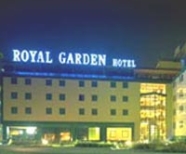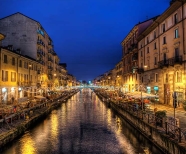
Ata Hotels have now fully joined up to Great Hotels Of The World, meaning they have a number of venues across Italy including a 3* venue in Milan.


Hotels, Venues & Event news
Ata Hotels have now fully joined up to Great Hotels Of The World, meaning they have a number of venues across Italy including a 3* venue in Milan.

The Austrian capital has won second place among the 30 cities in the world with the best reputation, according to the annual City Rep Trak report by the Reputation Institute consultancy. 18,000 people from the G8 countries (United States, Russia, Japan, Germany, UK, France, Italy and Canada) took part in the survey and it aims to assess variables such as emotional attachment (trust, admiration, taste and esteem) felt by the general public, relative to 100 cities from 59 countries.
Highlights of the report include:
• Vancouver is the city with the world’s best reputation, and Sydney was in third place.
• Europe is dominating the top 10– with 7 cities from this region
• High ranking cities are dominated by small to medium sized, safe, environmentally friendly and sporty cities. Mega cities tend to have a harder time contending due to the increased challenging of managing their reputation.
• Most cities are able to overcome national associations and build better reputations than their home countries
• New York doesn’t make it to the Top 20–The city is not considered a safe place
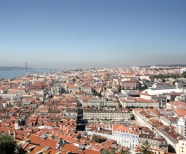
Lisbon is in the Top 30 Cities in the World with the best reputation
The Portuguese capital is among the 30 cities in the world with the best reputation, according to the annual City Rep Trak report by the Reputation Institute consultancy. Lisbon stands out for its natural beauty and “offers a variety of attractive experiences such as food, sports, architecture and entertainment.” In the 2012 report, Lisbon ranked alongside cities such as Tokyo, Helsinki, Montreal, Prague, Berlin and Toronto.
18,000 people from the G8 countries (United States, Russia, Japan, Germany, UK, France, Italy and Canada) took part in the survey and it aims to assess variables such as emotional attachment (trust, admiration, taste and esteem) felt by the general public, relative to 100 cities from 59 countries.
Highlights of the report include:
• Vancouver is the city with the world’s best reputation – it beat Vienna and Sydney in a close competition for the top spot
• Europe is dominating the top 10– with 7 cities from this region
• High ranking cities are dominated by small to medium sized, safe, environmentally friendly and sporty cities. Mega cities tend to have a harder time contending due to the increased challenging of managing their reputation.
• Most cities are able to overcome national associations and build better reputations than their home countries
• New York doesn’t make it to the Top 20–The city is not considered a safe place

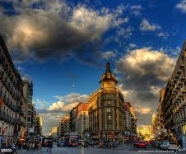

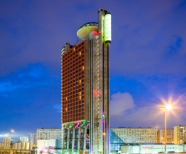

The economic situation in Portugal has had an effect on Lisbon, as well as most other cities in the world. However, Lisbon remains one of the best value-for-money destinations in Europe. There are numerous new hotels planned, such as Cais de Sandarem (91 bedrooms), Hyatt Regency (86 bedrooms), Olissippo Oceanos (397 bedrooms) and Olissippo Royal (106 bedrooms). Sana Hotels are due to open the Sana Myriad (186 bedrooms) shortly and the Sana Epic (311 bedrooms) next year.
Transport has been improved with new and additional flights from Amsterdam, Copenhagen, Venice, Bordeaux, Berlin, Turin and Dubai added in 2012 and the new metro line from the airport takes visitors straight to the city centre.

Malta will be trying to lure elderly tourists and people with disabilities from European countries to boost the tourism low season between November and March.
Social tourism – a concept which aims to entice the young, the elderly, people with reduced mobility and no-income families – is the focus of an EU-funded project called Accessible Culture For All. Undertaken by the Malta Tourism Authority, it will raise awareness and identify ways how to help the tourism industry to target the social tourist. “There is an opportunity for social tourism on our shores. The aim is to attract more people with access needs to choose Malta as their holiday destination,” Tourism Minister Mario de Marco said.
Generally, people with needs of access did not travel alone, were big spenders and were more likely to return again, he said during a seminar, entitled Growth Opportunities For Tourism In The Low Season, in Valletta. Demographics indicate an ageing population and increasing access needs. Statistics show that more than eight million citizens in Europe have long-standing health problems and disabilities. “Therefore, accessibility should be the norm rather than the exception,” Dr de Marco added.
Globally, the number of those aged 65 and over, who would benefit from accessible tourism, continues to grow. “We are aware that social tourists have to face barriers. We need to make it possible for everyone to go on holiday and we need to ensure everyone has access to travel,” he said. The project includes the voluntary review of the level of accessibility of facilities within the tourism industry and the creation of an online portal to market the information.
Dr de Marco stressed that accessibility was a major concern for the elderly and disabled people.
Referring to the positive results of the last four record years – tourist arrivals in 2011 grew by 31 per cent when compared to the equivalent off-shoulder arrivals in 2006 – Dr de Marco said the Government, MTA and stakeholders would be working together to implement a strategy that “strengthens our tourism product”.
Lynn Minnaert from the University of Surrey said: “We need to be more clever and strategic and sophisticated and treat social tourism more like a mainstream market.” Marie-Louise Mangion, from the MTA, said that another EU-funded project in the pipeline was aimed specifically at the catering and accommodation sector.
Fact box
• The number of tourists aged 65 years visiting Malta has been increasing steadily over the years. In 2011, 12.3 per cent of tourists were 65+.
• 48 per cent of disabled tourists in Germany would travel more often if services were more accessible. Their travelling companions spend over €2 billion each year in England alone.