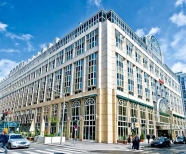
The Vienna Marriott Hotel invested in an exclusive renovation of its meeting space under the leadership of the famous Swiss architectural office Carbone this summer. State-of-the-art equipment combined with professional service will make each event to a mere success. With new wall elements out of wood and elegant carpets the hotel stays innovative in order to transform our rooms into a new, modern and comfortable business and event location.
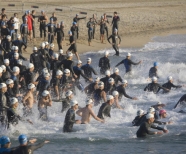
On 7th October, Barcelona once again plays host to one of Europe’s biggest triathlons. More than 6,000 sportsmen and women and 36,000 spectators took part in the 2011 triathlon and this year’s event expects to attract even greater numbers.
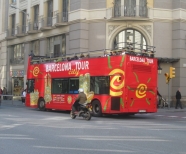
Barcelona’s official city sightseeing tour celebrates its quarter century. More than 21,000,000 visitors have discovered the city on the landmark double-decker buses that offer discounts at the main places of interest.
Park Inn Prague Hotel has received the prestigious Certificate of Excellence from the leading travel portal TripAdvisor, which confirms long-term, above-average rating of Park Inn Prague hotel services by both tourists and corporate guests.
VisitBerlin strikes a positive half-year balance for the tourism and convention business of the German capital: 5,058,677 visitors (+ 10.8 %) travelled to Berlin from January to June 2012, and spent 11,332,553 nights (+ 10.9 %) in the German capital during that period*. About one fourth of the room nights were generated by participants in meetings and conventions. They attended 57,800 meetings and conventions (+ 8.1%) during the first half-year 2012.
“The growth during the first half-year has exceeded our expectations by far”, says visitBerlin CEO Burkhard Kieker. “Despite a difficult economic environment outside Germany, the international guests are remarkable growth drivers in Berlin. Berlin’s special attraction appears to be unbroken.”
Berlin continues its uptrend: significant growth is recorded by the numbers of international visitors. 1,822,042 foreign guests travelled to Berlin during the first half-year 2012 (+ 12.8 %). They spent 4,646,376 nights in the city; this likewise corresponds to a 12.8 percent increase. The metropolis was particularly popular during the first six months of this year with guests from France (+ 19 %), Italy (+ 13.6 %) and Spain (+ 6.7 %). The growth rates on the European foreign markets as well as in the BRIC states are consistent with the marketing focus of visitBerlin.
The 781 accommodation providers of the city made available a total of 125,743 beds (June 2012). The average length of stay amounted to 2.2 days during the first half-year. Strong demand for Berlin’s event locations
Event organisers decide increasingly in favour of Berlin and stage more and more meetings and conventions in the city. The 57,800 events during the first half-year 2012 were attended by 4.6 million participants. These are seven percent more than during the comparable prior year period or 300,000 additional guests in absolute numbers. They spent 3.1 million nights in Berlin (+ 3%).
“The stepping up of our convention acquisition efforts is paying off. Berlin is number four on the international level amongst the cities with the highest number of association congresses, and for medical congresses Berlin is even number one”, says Kieker.
A central role is played by Berlin’s convention hotels: at the 50,300 events (+ 8%) staged there, 2.8 million participants (+ 3 %) were recorded. The highest growth rate was accounted for by special locations, such as bcc, Tempodrom or Kalkscheune. 200,000 or 20 percent more participants than last year were counted there.
Medical conventions and meetings (18 %) top the list, followed by political events (16%) and events in the fields of “banks, commerce, insurance” (14 %).
* Source: Berlin-Brandenburg Statistics Office ** Source: Convention Statistics Half-Year Report 2012, prepared by the independent market research company ghh consult GmbH on behalf of the Berlin Convention Office of visitBerlin
How many inhabitants does Berlin have? How large is the city? All numbers and facts concerning the German capital.
The capital city of the Federal Republic of Germany has a population of 3.5 million. Covering an area of 892 square kilometres, Berlin is the Goliath among German cities. By international comparison, the German capital is the second largest city in the European Union in terms of its population and the fifth largest in terms of its area.
The population density in Berlin is well above average. Statistically speaking, there are 3,809 Berliners to every square kilometre, the highest figure for any German city. The most densely populated area within Berlin is Friedrichshain-Kreuzberg, with 12,400 people to a square kilometre (1,400 in Treptow-Köpenick). By comparison, Mecklenburg-Western Pomerania has an average of 74 people per square kilometre.
With 175 museums, Berlin has more museums than rainy days. It also boasts more than 50 theatres and around 300 cinemas. The city has 4,650 restaurants, around 900 bars and 190 clubs and discotheques. It also has more doner kebab shops than Istanbul! The streets that meander through the German capital cover a distance of 5,350km (70km of which is autobahn) and these are lined with more than 400,000 trees. There are around 1.2 million cars registered in the city.
Berlin has been the German capital on several occasions throughout its history. Starting out as the capital of the margraviate and electorate of Brandenburg, this city on the River Spree later became the capital of the kingdom of Prussia and then the German Empire. East Berlin was the capital of the German Democratic Republic. Since German reunification in 1990, Berlin has been the capital of Germany once more.
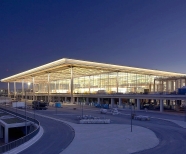
The lights are on, but there won’t be any flights from Berlin Brandenburg International airport until at least October 2013. Berlin city officials are likely to set a new opening date for Berlin’s long-delayed airport later this week. After embarrassing setbacks, the first flights will take off and land from Berlin Brandenburg International in October 2013, according to media reports.
Setting a date for the opening of Berlin’s glitzy new international airport has been nothing less than an odyssey, with city officials announcing one delay after the next for a hub that was supposed to swing open its gates to international travellers in November 2011. Recently, however, the mass-circulation Bild newspaper reported that after months of embarrassment, the city appears set to select a new date this week: 27th October, 2013 — two years later than the original date.
Citing an unnamed city official, the paper wrote that the airport’s supervisory board is expected to announce the new date imminently. The airport would open the morning after the closure of the existing Tegel and Schönefeld airports.
However, the new opening date remains contingent on getting the approval the airport’s highly complicated smoke extraction system by officials in the state of Brandenburg. The system is supposed to pump out toxic smoke in the event of a fire in order to protect passengers inside the terminal. Officials implemented the rules following a deadly fire at the Düsseldorf airport in 1996, which result in the deaths of 17 and caused hundreds of millions in damage.
Initially, the airport had been scheduled to open on 1st November, 2011, but it was then delayed to 3rd June, 2012. Only weeks before the planned opening, city officials pulled the plug. The extended delays have created massive cost overruns and financial problems not only for the airport’s operating company, but also for the airlines that plan to operate at the facility, including hard-hit Air Berlin.
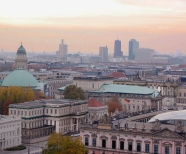
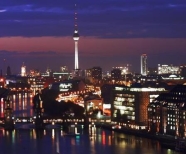
Berlin is the capital city of Germany and one of the 16 states of Germany. With a population of 3.5 million people, Berlin is Germany’s largest city and is the second most populous city proper and the seventh most populous urban area in the European Union. Located in northeastern Germany on the River Spree, it is the center of the Berlin-Brandenburg Metropolitan Region, which has 6 million residents from over 180 nations. Due to its location in the European Plains, Berlin is influenced by a temperate seasonal climate. Around one third of the city’s area is composed of forests, parks, gardens, rivers and lakes.
First documented in the 13th century, Berlin was the capital of the Kingdom of Prussia (1701–1918), the German Empire (1871–1918), the Weimar Republic (1919–1933) and the Third Reich (1933–1945). Berlin in the 1920s was the third largest municipality in the world. After World War II, the city became divided into East Berlin—the capital of East Germany—and West Berlin, a West German exclave surrounded by the Berlin Wall (1961–1989). Following German reunification in 1990, the city regained its status as the capital of Germany, hosting 147 foreign embassies.
Berlin is a world city of culture, politics, media, and science. Its economy is primarily based on the service sector, encompassing a diverse range of creative industries, media corporations, and convention venues. Berlin also serves as a continental hub for air and rail transport, and is a popular tourist destination. Significant industries include IT, pharmaceuticals, biomedical engineering, biotechnology, electronics, traffic engineering, and renewable energy.
Berlin is home to renowned universities, research institutes, orchestras, museums, and celebrities, as well as host of many sporting events. Its urban settings and historical legacy have made it a popular location for international film productions. The city is well known for its festivals, diverse architecture, nightlife, contemporary arts, public transportation networks and a high quality of living
Trinity agent Alex Jarvis has just returned from visiting Vienna for Access Austria. The tour included site visits of Viennese hotels, venues, and museums, a high proportion of which are available for private hire. Access Austria is an annual industry event located in the Hofburg, the former palace of the Hapsburgs.