

Marbella Celebrates Luxury Festival

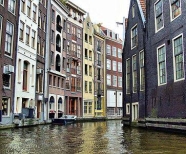
In May 2012, the new Harbour Club Amsterdam opened its doors. After the success of the Harbour Club in Scheveningen and Rotterdam, branching out in Amsterdam was a logical step. The restaurant-bar with a private club is located in an old wine terminal where the wine used to be bottled. The location has a total of 2,200 square meters and it has several sections, including a sushi bar and a restaurant with an open kitchen. Next to that, there is a bar and club. The club has a large surface area which is suitable for events such as parties, weddings and business meetings.

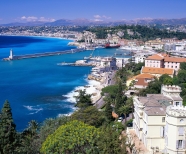
With 59 scheduled airlines and 104 direct destinations, including 65 European cities, Nice Côte d’Azur Airport continues to develop and is constantly introducing new direct air services. Find out all about them now.
Nice Côte d’Azur is France’s second biggest airport with 10.4 million passengers in 2011. It is also the only regional airport to offer a daily flight to New York and Dubai and the leading provincial low-cost airport, with over 3.4 million passengers and 17 airlines. It also accommodates a large business aviation clientele (Europe’s 3rd biggest airport after Le Bourget and Geneva) in a dedicated terminal.
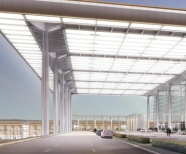
The capital’s new airport, Berlin Brandenburg (BER) will now open on 17 March 2013 after the opening scheduled for 3 June 2012 was postponed due to technical problems in the field of fire protection engineering.
The delayed opening will not have a foreseeable impact on the existing tourism and congress business. However, visitBerlin fears that it could have an adverse effect on future longhaul destinations. The postponement of the opening of BER could also lead to delays in airlines committing to new intercontinental routes which are of great importance to Berlin as a congress location. Until the opening of the new airport all flights will operate through the existing airports, Schönefeld and Tegel as before. The extended summer flight schedules of the three largest airlines airberlin, Deutsche Lufthansa and EasyJet are being maintained.
“The ten-month postponement of the opening date is surprising and annoying,” says Burkhard Kieker, CEO of visitBerlin. “It is now top priority to ensure that the airport is well prepared for the launch. We look forward to the opening of BER as it will greatly improve the accessibility of our city.
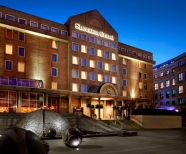
Passengers flying from Dublin Airport will face additional security measures for a number of months after an EU audit identified two deficiencies in security. The European Commission has taken formal proceedings to get Dublin Airport to address the problems, and it will temporarily impose additional restrictions on flights out of the airport.
One of the two matters has already been addressed, but the Dublin Airport Authority said the second would take about two months to address due to its “technical” nature. The commission is imposing additional security procedures on aircraft leaving Dublin and arriving into other EU airports in the meantime, Minister for Transport Leo Varadkar confirmed. “These additional procedures are not expected to have any significant impact on passengers at Dublin Airport unless they are transferring through another EU airport en route to their final destination, in which case they will be required to undergo screening again,” he said. “This does not impact on other airports in the State.”
Mr Varadkar said he had taken steps to ensure any deficiencies were rectified swiftly, including by visiting officials at the airport on Monday. Neither the Minister nor the airport authority would give details of the nature of the problems for security reasons.
A spokeswoman for the European Commission said inspectors made 35-40 visits a year to member states’ airports to ensure they were abiding by the common security standard put in place in the wake of the September 11th, 2001, attacks on the United States.
Common EU rules allow passengers to move freely because the different airport authorities recognise each other as applying the same security standards, the spokeswoman said.
It was not unusual to find deficiencies during such an audit, but it was perhaps “a little bit unusual” that the commission had to issue formal proceedings in order to get the issues in Dublin addressed. She said this would mean “minor inconvenience” for passengers but also “reputational damage” for Ireland vis-a-vis the other airport authorities that would have to be informed.
A spokeswoman for the Dublin Airport Authority insisted that passengers initially flying out of Dublin would not be affected by the change and that it would not add to waiting times at security screening for these travellers and their luggage. “Passengers transferring through other European airports may be required to undergo further security screening,” the DAA said.
Ryanair chief executive Michael O’Leary said it was “unacceptable” that there had not been an “open, transparent and honest answer” about the security issues from either the Department of Transport or the Dublin Airport Authority. He said it had been confirmed that the authority knew of the security failure for more than a month, and it was “so serious that Dublin-originating aircraft will now be treated as the same security risk as flights originating from Afghanistan and Somalia”.
Aer Lingus said that while it was concerned at the “potential inconvenience” the issues may cause to its customers, its initial assessment was that such inconvenience could be minimised and it would “work closely with the relevant authorities to achieve this”.