

Brexit and its impact on the events and hospitality sector

Brexit’s impact is creating business opportunities and issues as well as recruitment problems according to HBAA members.

The HBAA has gathered opinions from a cross-section of agency and venue members on how Brexit is impacting the events and hospitality industry.

Brexit’s impact on business

Over the past 12 months, the effects of Brexit on the hospitality and events industry have been mixed.

It has been largely positive for etc venues as the topic, rather like GDPR, has boosted the need to meet. Tiernan Redmond, sales manager at etc. venues says: “In the last 12 months, around 150 meetings were held in our venues to discuss and plan for the consequences and opportunities of Brexit. Reviewing the titles of events on our schedule in the coming months, we have many more bookings that are likely to address it.”

The HBAA annual Brexit survey in June 2019 revealed that 78 per cent of the sector believed Brexit had slightly affected business. This is up from 36 per cent in the previous year.

This is in line with what Julie Shorrock, managing director of HTS, has seen. She says: “During early 2019 we saw a decline in our clients’ requirements, with many indicating their businesses were experiencing delays in commitments of new projects or contracts.

“Yet from mid-August 2019, HTS saw a significant uplift in clients’ business, with many saying it was ‘time to just get on with business,’ and this growth has continued into 2020.”

The snap general election in December caused some negative reverberations across the industry. Andrew Deakin, director, Conference Care, revealed: “Demand for events dropped by around 20 per cent. Reducing costs is high on the agenda for corporate planners. There is a tendency for utilising internal meeting space before going externally, as well as a trend towards smaller events that can be easily signed off without board-level approval. With Brexit looming, the trading conditions are challenging. We want an end to the uncertainty.”

Brexit has presented added challenges for venues, too. Steve Jones, managing director of Wyboston Lakes Resort, explains: “The combination of Brexit and rising costs is a challenging prospect for our industry. The devaluation of the pound, trade tariffs and delays with supplies due to border disruption could all occur after 31 January so we have to be as ready as possible and quick to respond depending on what happens.”

Future business outlook

On prospects for 2020 and beyond, the industry is cautiously optimistic. Nick Scott, managing director of arrangeMY, says: “Brexit has been a huge concern over the last three years mainly due to the uncertainty and fear mongering in the national press. As Brexit now appears to be coming to a conclusion, there is a noticeable feel-good factor and positivity.

“Looking ahead, the general consensus is we will experience some short-term pain for long-term gain. At the risk of sounding too optimistic the reduction in red tape, rules and bad policy dictated from Brussels/Strasbourg may be a really good thing for our industry and provide new opportunities.”

Tiernan Redmond, sales manager at etc.venues, has a positive outlook, too. He adds: “The full impact is still unclear but, looking at future business prospects, we believe international markets will continue to offer good opportunities for UK businesses.”

Andrew Deakin adds: “Of course, there will be challenges ahead, but people will still need events, and business will find a way.”

Brexit’s impact on recruitment

Recruitment is an ongoing challenge for the industry, which has been exacerbated by Brexit.

According to the 2019 HBAA annual Brexit survey, 18.7 per cent of the industry had seen a major impact on recruitment as a result of Brexit. 19.3 per cent had changed their recruitment policies.

Recruitment and retention is a particular problem for hotels and venues. Steve Jones, managing director of Wyboston Lakes Resort, says: “We’ve already seen team members from mainland Europe drop from almost 25 per cent of our workforce to less than 15 per cent. It’s difficult to replace them as the quantity of applicants has reduced. However we have now got schemes in place, such as People 1st, which we believe will help us with recruitment and retaining staff.”

For events and travel agencies, recruitment has been static. Andrew Deakin says: “Employees are nervous and reluctant to move elsewhere because the economic market conditions are quite volatile. Recruitment is an ongoing challenge in our industry. There is a skills shortage and, as an industry, we do not do enough to attract top quality graduates.”

TOMS

One aspect of the industry that will not change immediately is the Tour Operators Margin Scheme (TOMS).

HBAA Chair Lex Butler says: “We’ve been advised that during the 11-month transition period until 31 January 2020, EU VAT rules will continue to apply. Therefore the current TOMS will continue during this period. We don’t know what will happen at the end of the transition. One distinct possibility, as far as TOMS is concerned, is the adoption from the start of 2021 of the new TOMS Order prepared for a no-deal Brexit. This would introduce a new UK version of the scheme mirroring the current UK implementation of the EU scheme but with one large difference, namely that the margin on travel in the EU27 would be zero rated.

Lex Butler concluded “After more than three years of uncertainty, we now hope that the greater clarity will help everyone to move forward more positively. While recruitment will remain an issue, the recent announcement that the £30,000 salary threshold for migrants might be reduced is encouraging.”
Former Brexit day sees steep decline in London hotel performance

STR have released preliminary performance figures suggesting that the Brexit day that never was saw a steep decline in occupancy and revenue per available room (revpar) rates across London hotels.

Occupancy and revpar fell by 11.2% and 11.7% respectively on 31 October, the Brexit deadline until the date for the UK’s departure from the EU was moved until 31 January 2020.

The performance of London hotel across the rest of the month showed a 1.9% drop in occupancy to 87.6%, while average daily rate increased by 1.7% to £162.07 and revpar was largely flat, down 0.3% to £141.97.

The supply of new rooms to the market was up by 1.6%, ahead of a 0.3% decrease in demand from guests.

STR will release the full results for October later this month.

GlobalData research find Brexit not deterring UK outbound travellers

Despite the uncertainty surrounding Brexit, a new report by GlobalData, a data and analytics company, has revealed UK departures to Europe are set to grow 2.88 per cent in 2019.

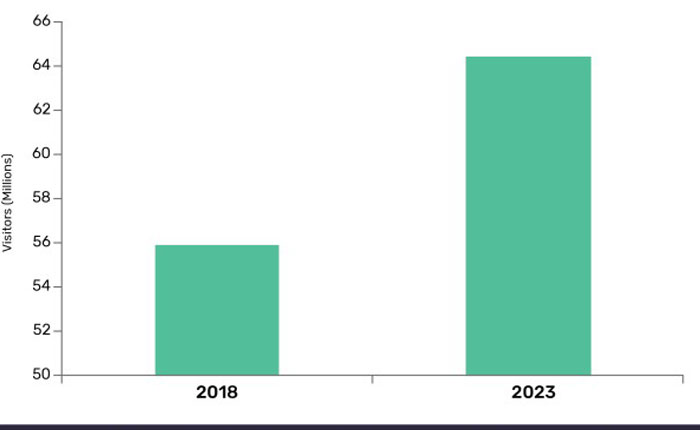
In 2018, 55.9 million UK residents travelled to European destinations. However, GlobalData expects this number to increase to 64.4 million in 2019.

The report, “Tourism Source Market Insight: United Kingdom” also identified that Spain and Eastern European nations will continue to see growth as travellers seek sunshine and city breaks with a smaller price tag.

Laura Beaton, travel and tourism analyst at GlobalData, said: “Of course Brexit has impacted the UK’s outbound tourism industry but the reality is not likely to be as bad as we might have been led to believe, at least in terms of visitor numbers.”

The UK’s longstanding relationship with Spain is not set to be affected by a Brexit deal or no-deal either. In 2017 the then Spanish deputy minister for European affairs, Jorge Toledo, stated that Spain would have a backup plan to shield the country’s tourism industry from Brexit consequences.


GlobalData graph showing an increase in UK outbound travellers.

“Tourism from the UK is an important part of many European countries’ economies and Spain, France, and Italy are going to remain the top destinations for UK travellers for the foreseeable future so it is important that ties are not severed,” added Beaton.

The report also identified destinations such as Hungary, Czech Republic and Romania as places UK travellers would be increasingly travelling to in the future. This is partly because their currencies currently remain weaker than the pound and untapped natural beauty, history and culture is also enticing travellers to visit these countries.

“The depreciation of the pound has had a big impact on expenditure, however, and travellers have had to spend more to match the same experiences they had a few years ago. As a result, cheaper locations are highly sought after by UK travellers.”

“Western Europe is only truly becoming aware of the other offerings of Eastern Europe and this helps to explain how each country has rapidly grown its UK visitor numbers in recent years,” said Beaton.

“Vilnius in Lithuania is a UNESCO World Heritage site and Budapest has many buildings that have won European Heritage Awards so Eastern Europe has plenty to entice travellers away from the traditional city breaks of Paris and Rome.”

Brexit not deterring business travellers in the UK

Advantage Travel Partnership, the UK’s largest independent travel agent and travel management company (TMC) consortium, revealed the findings of its 2018 Hotels Market Report which shows that the UK regional capitals are performing strongly with overall room nights booked growing by 8% across the top 250 UK cities.

London continues to be business travellers’ favourite capital for work trips with 663,000 room nights booked in 2018, an increase of 5% when compared to 2017. But Edinburgh experienced the highest level of growth in 2018 with room nights booked increasing by 16%, Belfast was up 13% and Cardiff up 5%.

The 2018 Hotels Market Report analyses data from corporate hotel bookings made between January and December 2018 by Advantage’s TMC members, who represent around 40% of the UK business travel sector, highlighting business travel trends and booking behaviour.

The report also shows significant growth for cities in the Midlands and North East, with Derby seeing the highest growth with 31% more booked room nights compared to 2017, while York, Nottingham and Gateshead also saw double-digit percentage increases.

Top Ten UK Cities – Booked Room Night Percentage Increase (year-on-year), January – December 2018

Derby – 31%
York – 22%
Plymouth – 21%
Inverness – 20%
Nottingham – 18%
Edinburgh – 16%
Reading – 15%
Belfast – 13%
Norwich – 11%
Gateshead – 10%
Global Results

The business world continues to travel widely, with the 2018 Hotels Report recording that hotel demand remains strong in many international cities with New York, Auckland, Wellington, Houston, Paris and Sydney topping the Advantage Top Cities list. In total, worldwide volume grew by over 393,000 room nights, a total increase of 8.74% compared to 2017, indicating that SME (Small and Medium Enterprise) corporate accounts continue to perform strongly.

The total number of bookings made by Advantage business travel members in 2018 saw similar growth – up 8.76% – while the average length of stay remained constant, at 1.87 nights. Increased demand and higher occupancy globally meant hotel rates have increased by US$2 to an average daily rate (ADR) of US$169.41.

The report also looks at trends on bookings and ADR for cities and locations around the world, with New York once again topping the list as the highest volume worldwide city outside the UK, with 90,799 room nights booked at an average rate of US$395.97 per night. Increases were also seen in Bangalore (up 54%), Kuala Lumpur (up 36%) and Boston (up 27%).

Neil Armorgie, Global Product Director at Advantage, commented: “It is clear that the corporate hotel sector continues to grow, with another significant increase in bookings year-on-year, made by independent TMCs. Despite continued uncertainty in both the global and UK economies including Brexit, hotel room night demand is at record levels in many destinations, providing a welcome boost for our members.”

“Although not all destinations in Britain saw an increase in room nights booked, ADR remained strong. It is also positive to see particularly good performance in both major cities and regions such as the East Midlands and North East.”

The report is representative of hotel bookings made across most of the major international and independent hotel groups including: Accor, Apex Hotels, Choice Hotels, Citadines, Clayton Hotels, Design Hotels, The Doyle Collection, Edwardian Hotels, glh Hotels, Hallmark Hotels, Hilton, HotelREZ, Hyatt, House of Daniel Thwaites, IHG, Jurys Inn & Leonardo Hotels, Loews Hotels, Macdonald Hotels, Maldron Hotels, Melia Hotels International, Millennium Hotels & Resorts, The Montcalm Hotels, NH Hotels, O’Callaghan Collection, Omni, Park Plaza, Pegasus, QHotels, Quest, Rotana, Radisson Hotel Group, Sabre Hospitality, Small Luxury Hotels, TravelClick, Travelodge, Village Hotels Club, WorldHotels Collection and Wyndham Hotel Group.

Brexit – the good news for London City venues

Nearly 77% of London City venues, according to a recent survey, are expecting an increase in revenue in the next 12 months, in spite of the uncertainty caused by Brexit.

The survey, carried out by London City Selection (LCS) – a consortium of City venues and suppliers – uncovered several other positive findings. Notably, that 70% of respondents are optimistic about the coming year and 70% have seen no movement or an increase in confirmed booking when comparing 2018 to 2019.

The State of the Industry survey was sent to LCS members to explore the affect Brexit has been having on the events industry in 2019. “Brexit is something everyone across every industry in the City is speculating about,” says Sarah McQueen, Venues & Hospitality Manager at the London Museum, “We wanted to go out there and pull together some facts so we could give our members, and the industry, some clarity about what’s really going on.”

Although the results of the survey look as though 2019 is going to be a good year for the events industry in the City, there are a few areas that may cause some concern including customer spend. Nearly 70% of those surveyed said they felt “client budget is becoming an issue in the face of Brexit”.

It also appears that more venues have seen a dip in overseas bookings (15.38%) compared to only 7.9% enjoying an increase and that venues are concerned about recruiting and maintaining staff in the future. “Brexit is definitely playing a role in recruitment and staff retention,” one respondent said. “The recruitment pool seems to be smaller and overall time to fill a position is longer.” Over half (53.85%) of individuals completing the survey were concerned about this area.

Paul Martins, LCS Chair says: “There’s no doubt that the uncertainty of Brexit is going to affect us all but it’s encouraging to see that, certainly in the short term, LCS member venues are generally optimistic about the next 12 months.”

mia to debate AI and Brexit at Future Fit Conference

The Meetings Industry Association (mia) is planning a giant leap into the future with expert-led discussions on sustainability, AI and Brexit at its upcoming Future Fit Conference.

On Monday 11 March the mia, which has more than 800 members, will host a day of expert-led insights into the future of the meetings industry.

Held at America Square in London, the Future Fit Conference will hear from keynote speakers on issues such as artificial intelligence (AI) and augmented reality, sustainability and the potential opportunities posed by Brexit.

With nearly 40 years of industry experience, expert speaker at the event Richard Lewis believes it’s important to be prepared for the positive impact technological advances will have on the business meetings and events industry.

He said: “Without a doubt, disruption will continue at a faster pace than ever before and our industry will not be immune from change.

“In fact, it is about time we woke up. AI, AGI, robotics, blockchain, AR and Infotech will positively impact almost every aspect of travel and tourism.

“Disruptors will disrupt the disruptors. New entrants will challenge legacy operators and we have seen nothing yet.”

Delegates will hear speakers scrutinise AI as a money saving tool, address issues surrounding single-use plastics in the industry and discuss the current economic forecast.

Jane Longhurst, chief executive of mia, said: “Future Fit will offer delegates the enviable chance to discover what the future holds for our industry.

“The fantastic programme is designed to engage, educate and perhaps even make delegates feel a little bit uncomfortable.

“As a sector we have the opportunity to be bold and develop new and innovative plans to drive business growth by embracing and taking advantage of both the technological advances set to occur over the coming years and the opportunities presented by Brexit.

“At the same time, we have a huge responsibility to ensure that the sector takes its social responsibility seriously and how small steps can be made for larger gains by reducing our reliance on single-use plastic.”

Opening the conference is veteran broadcaster and journalist Declan Curry who will discuss the current economy and the challenges and opportunities for a post-Brexit UK.

Mia chair Kay England will tell delegates how the association is championing best practice with its #20PercentLess campaign.

The #20Percentless campaign is supported by the Zoological Society of London’s project officer Rachel Shairp, who is a leader of #OneLess.

Their sessions will highlight the necessary steps the industry should be taking to change its behaviour and safeguard our future.

Atsushi Ishii and keynote speaker Azeem Azhar will take to the stage to reveal the opportunities presented by AI.

Giraffe Innovation’s Rob Holdway will be looking at plastics and packaging alternatives and 15Hatfield’s Warren Campbell will be quizzed by conference chair Peter Hancock about best practice and the steps they are currently putting in place.

Professor David Russell, will discuss the importance of ecological consciousness amid cleaning and waste, food procurement, food logistics and guest services ahead of Expo 2020 Dubai.

Challenges ahead warns Millennium & Copthorne

Millennium and Copthorne Hotels has warned investors that the hospitality industry faces ‘intensifying’ challenges in the near future in the form of staff shortages and competition from the growth of Airbnb and serviced apartments.

The company’s chairman Kwek Leng Beng made the comments as it revealed a drop in pre-tax profit for 2018 to £106 million – down 28 per cent on 2017 in constant currency. The fourth quarter was particularly hard, with profits falling 76 per cent to £7 million.

Beng blamed “a range of geopolitical and global economic headwinds”, including US and China trade relations, Brexit and increasing minimum wage levels in several markets.

The company also saw revenue per available room fall 7.4 per cent in London, mostly driven by the closure of its Mayfair hotel for refurbishment. Excluding that property, revenue grew 3.3 per cent. The hotel is set to reopen as the Biltmore, Mayfair in the second quarter of this year (new bedroom pictured).

Millennium and Copthorne says a particular challenge in the UK is the effect of Brexit. It claims to be struggling to recruit EU workers, “which currently comprise more than half of the London workforce”. Minimum wage increases in the UK have also reportedly added to cost pressures for the group.

Looking ahead, Beng said: “The board’s priority is to evaluate and develop new and innovative strategic plans to meet the challenges facing our fast-changing operating environment. The shortage of talent – from rank and file to senior management – is intensifying with many new hotels being built around the world, not to mention the growth of Airbnb and serviced apartments. Any hospitality business that wants to progress will need to evolve and embrace these changes to stay relevant and profitable in the immediate and medium term. Restoring profitability in our New York hotels also remains at the top of the board’s objectives.

“Meanwhile, we continue to invest in and reposition our hotels. We look forward to our Mayfair hotel being rebranded and opened as the Biltmore, Mayfair in the second quarter of this year. This is the first opening under Hilton’s new LXR Hotels & Resorts collection in Europe. This also will mark the group’s debut in the London five-star deluxe market and it is our aim to fast-track our lost earnings growth at this hotel after it re-opens.

“2019 will be another challenging year for the group, with significant capital projects underway and several large hotels earmarked for major renovations. These investments will be carefully managed and phased to deliver the right returns to shareholder and underline the group’s intention to maintain strict control of costs throughout the business.”

Millennium and Copthorne Hotels operates the Leng’s Collection, M Social, Studio M, Millennium, Grand Millennium, M Hotel, Copthorne and Kingsgate brands.

In September 2018, the group’s CEO Jennifer Fox stepped down after just three months in the role.

Tourism industry confident despite Brexit, says UKinbound research

The research, which was collected by Qa Research, found that 59% of UKinbound members stated they were confident about business in the upcoming 12 months. This was the highest rate recorded since October 2017.

The increase in confidence was influenced by an influx of forward bookings, the value of the pound, and increased interest from North American and Asian markets.

Business also signalled that the number one activity they’re expecting to be most in demand from inbound tourists are cultural experiences, followed by ‘bespoke activities’.

However, businesses also stated the industry faces a number of problems in the upcoming months, notably the uncertainty around Brexit.

Staff recruitment and retention, improving the UK’s product offering and offers for visitors, attracting visitors from new markets, and currency fluctuations were also cited as general concerns.

A review of 2018 found a few interesting statistics:

  • Throughout 2018 China and the US remained the two top growth markets
  • Less than a third (28%) of members felt that over-tourism has a negative impact on their business
  • A key challenge for many members continued to be the reduction of available EU workers

UKinbound CEO Joss Croft commented: “It is encouraging that even with the uncertainty surrounding Brexit, our latest Business Barometer shows that forward bookings are strong and that there is an increase in confidence levels amongst some of our members.

“However, we remain concerned about the Government’s proposed immigration strategy post-Brexit, which will look to restrict employing EU nationals to those only earning over £30k. 

“Recruitment and retention of staff in the industry is already a challenge – due in part to Brexit, and this proposed restriction could have a real impact on the industry, which relies heavily on its EU employees due to their language and customer service skills.”

Despite uncertainty, mia reveals delegate day rate growth up ten per cent

Meetings venues across the UK have overcome a challenging economy to experience a 10 per cent rise in delegate day rates (DDR) over the last four years, according to figures gathered by the Meetings Industry Association (mia).

Despite the ongoing economic uncertainty and a slowdown in the rate of GDP growth, the average DDR among mia members rose by 2 per cent in 2018 to £43.48, continuing the steady upward trend noted since miaTouchstone started tracking rates in 2015.

The outlook for the year ahead is also promising, according to results of the miaTouchstone survey. Overall enquiry levels were up by over 10 per cent in 2018 indicating the industry’s positive growth could continue into 2019.

Venues in the South West and East Midlands were among those with the highest rate rises. Both regions saw an increase of 20 per cent in their DDR rates in 2018 while residential rates rose around 25 per cent

Average 24-hour residential rates reported by the mia member venues to the online benchmarking tool also rose by 2 per cent in 2018 compared to those in 2017 with the latter months showing a bigger uplift.

While rates rose, so too did the average number of meetings. Despite an immediate drop off in activity levels following the EU Referendum in 2016, the industry bounced back to experience 12 per cent growth in 2018.

Mia chief executive Jane Longhurst said: “The miaTouchstone results indicate that 2018 was a good year for most participating mia members. To see growth in many areas, particularly DDR, is testament to the hard work of mia venue members in providing an excellent service to their customers and is especially noteworthy against the backdrop of a challenging economy.

“It is also heartening to see that confidence in the business meetings and events market is high for the year ahead, although everyone is aware that the UK’s proposed exit from the EU at the end of March could change that.

“MiaTouchstone’s review of enquiry levels is always a key indicator of prospects going forward, particularly in the current volatile climate, and this will be a key measure for mia members to watch over the next six months as the UK economy adjusts to a ‘post-Brexit’ world.”

76% of companies optimistic of growth, despite Brexit uncertainty

New research by SAP Concur has revealed that 31% of UK businesses consider growth during 2019 to be critical. 

In addition, 96% reported that their company is planning to grow, with it being 25 months, on average, until they anticipate to reach their fastest rate of growth.

Importantly, companies demonstrated notable optimism about growth with 76% saying that they were very or extremely optimistic that their business would grow in the next two years, despite uncertainty surrounding Brexit. 

Dafydd Llewellyn, managing director SMB UK and France, SAP Concur said: “That UK decision makers are so positive about their growth prospects makes for encouraging reading. 

“To prosper in the midst of so much uncertainty will require resilience, determination and an adaptable mindset, in order to create a nimbleness to their operations that doesn’t hinder growth, stifle innovation or negatively impact their ability to retain and hire staff. 

“Rather than fearing the unknown, UK businesses are up for the challenge. In line with this, they’re increasingly seeing finance as an innovative role that can equip them with the data and insight they need to make informed decisions that enable the growth by protecting their bottom line, investments and employees.”

Indeed, 96% said that finance was imperative to their organisation achieving its growth goals. 3 in 10 of those surveyed said that finance reporting and insights are critical to setting growth priorities, suggesting a clear link between finance and company ambition. 

Llewellyn continued: “2019 is going to be a year where the ability to quickly change course is key to survival. With the right processes, transparency and tech in place, UK firms can give themselves the best chance of adapting to changing market conditions and realising those growth ambitions – because if they do the boost to society and the wider economy will be most welcome.”