We’re back! And we’re delivering events once again.
Well, to be honest, we didn’t go anywhere; we’ve been busy making improvements
to our technology and ensuring our team remains focused on enhancing their product
knowledge.
We appreciate how truly tough it has been for all
our hotel and venues partners, and we know you are still on the road to
recovery. So, with enquiries starting to return to pre-pandemic levels, it’s
time to help you start converting!
Events have been on hold for nearly two years, and
the wonderful people we had to deliver events have sadly moved on to other
industries. Venues and are agencies are facing the challenges of working with
inexperienced people. They may be eager to learn, but there is also a lack of
training resources to quickly bring them up to speed to meet current deadlines.
With our own event delivery experiences, we’re
feeling the knock-on effects first-hand, and we’re experiencing the negative
feedback; it’s the current climate we’re all in. With new or no
conference/event staff, lack of experience in turning around enquiries and even
delivering events themselves is taking its toll.
We know this is widespread across the industry, and
we understand there is a long road to recovery for us all. And that’s where you
need to let us help you help our clients and ultimately turn these enquiries
into conversions.
In her latest video, Jacqui shares some of her market insights and tips for
helping improve internal processes. If there’s anything more we can do to
support you in turning around enquiries, please get in touch. We want to ensure
communication channels are wide open and for you to know we’re here to help.
Thoughts from the Business of Events Senior Leadership Forum on the UK Events Industry
The forum took place on Friday 26 October at the QEII Centre in Westminster and a wide variety of attendees from different sectors of the conference, meeting and events industry attended. The objective was to discuss challenges and opportunities, as well as their relationship with government to future proof the UK events industry.
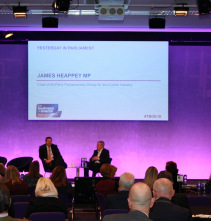
The morning started with an interview with James Heappey MP, chair of the All Party Parliamentary Group for the Events Industry, who talked about using events to build communities. He brought up the idea of raising funds for the UK’s tourism industry with a bed tax on hotel stays. This was a controversial initiative amongst the attendees on the same table as me, because the UK’s air passenger duty is already higher than other European countries and an additional tax might be a disincentive to bringing an event to the UK.
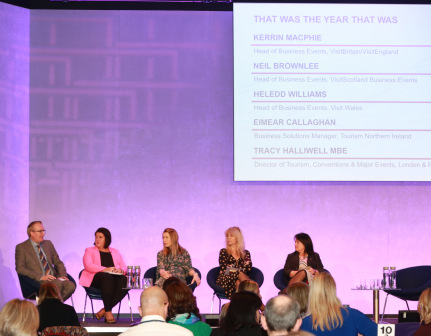
A panel presentation followed with the Heads of Visit Scotland, Visit Wales, Tourism Northern Ireland, London & Partners, and Visit Britain. They outlined the challenges and achievements that their organisations have faced over the last 12 months. The value of events to the UK’s economy is thought to be £33bn and the country has experienced 8 years of increasing tourism visits, since the 2012 Olympics in London. It is 3rd in the world in attracting association events and one of the objectives is to make the UK the 1st country of choice for associations.
The Event Management Apprenticeship Programme
Sarah Wright, chair of the Events Industry Board Talent Taskforce explained the Event Management Apprenticeship Programme, which has set up 85 apprenticeships and will expand the programme further. She also announced the results of the EIB Talent Taskforce, which surveyed 265 people representing c34,000 employees:
61% of respondents identified a skills shortage
54% reported vacancies, 40% of which in mid-level roles
The skills gaps are in sales and business development; project management; creative (suppliers); technical (venues); management and leadership (agencies); client handling (venues and agencies)
6% of employees are offered no training
23% of the workforce is classified as freelance or temporary
Future fit working lunch
This session was an opportunity to discuss topics that government could help with to develop the events industry. Issuing of Chinese visas is slower in the UK than Europe and only gives the visitor access to the UK, but a European visa gives access to all Schengen countries. The speed of issuing a visa to a Chinese citizen is under review, but the UK only access means that the visitor will stay longer in the UK and therefore spend more here. However, a Schengen visa encourages the visitor to move around more easily and encourages a ‘whistle-stop visit’ to each country.
Training and development was seen as key, with discussion around an industry-wide qualification that could be achieved whilst working. 64% of entry level employees move to a new job within two years, which is not very different from other industries. They often stay within the industry, but it does cause a high staff turnover at lower levels.
The day was rounded off by Kerrin MacPhee explaining her key objectives for Visit Britain; and Future focus – what happens next from Simon Hughes, Vice Chair BVEP.
A couple of things to think about
During the day we were asked to line up around the room in order of the years that we had worked in the events industry. The amount of knowledge in the room came to a total of 3,788 years, nine months and five days. With this amount of experience, we must be able to ensure that the events industry has a bright future?
Attendance at events is a problem across the board. There were 140 registered attendees, but only around 100 were there on the day, so getting people who’ve committed to actually turn up happens to us all!