
Next steps for the events industry

As of today, we are on Step 2 of the roadmap out Coronavirus restrictions. I expect will all remember 12th April as the day that the following businesses are re-opening:

  • Hospitality venues with outside space
  • Self-contained accommodation in England
  • Outdoor attractions including zoos, theme parks, and drive-in performances (such as cinemas and concerts)
  • Non-essential retail
  • And we can finally get a haircut!

At the moment, the key date for conferences, meetings and events is 17 May, when conference centres and exhibition halls can open again subject to the capacity limits. They will need to comply with Covid-Secure guidance.

The Department of Culture Media and Sport allowed site visits to take place after Monday, 29th March. These are now allowed at a business event venue, even if it is closed. The purpose must be a future booking for a work-based event, if the inspection cannot be carried out remotely.

How EDGEvenues is helping you

At EDGEvenues we have made sure that venues are able to let you know that they are COVID Secure, by publishing their policies. There’s a Health and Safety Section with information about their procedures and accreditations, so you can be sure that you’re booking a venue that complies with the Coronavirus regulations.

Also, we are committed to making sure that your event will fit the space with correct social distancing. We’ve added a link to check that capacities are correct under the current guidelines and your group will have enough room to be safe.

The Events Research Programme

The Events Research Programme will explore different approaches to social distancing, ventilation, test-on-entry protocols and COVID-status certification.

It will carry out pilots in a series of venues to gather evidence on the transmission risks associated with different settings, and potential approaches to managing and mitigating transmission risks. The pilots will use the domestic COVID-status certification standards.

Early pilots will focus on demonstrating COVID-status through testing alone, while later pilots will seek to incorporate data on vaccination and acquired immunity.

The Programme will examine the extent to which COVID-status certification would help towards the return of crowds to mass events and closed settings, from football matches to theatre performances, and the reopening of nightclubs.

The programme will be run across a range of venue and activity types, including the World Snooker Championship at the Crucible in Sheffield and the Circus nightclub in Liverpool, with the aim of admitting a crowd of up to 20,000 to Wembley for the FA Cup final on 15 May.

A second phase of pilots will take place from the end of May.

Social Distancing Review

There is also a review in to Social Distancing, which is looking at whether existing rules, designed to limit virus transmission, could be relaxed in different settings.

The review is looking at key baseline measures, including how and when to safely lift or amend the 1m+ rule and related COVID-secure measures, as well as guidance on working from home.

The extent of any relaxation in social distancing measures is linked to the questions being explored by the COVID-Status Certification Review – including whether COVID-status certification can enable changes to social distancing.

Back to normal?

The final key date 21 June, when hopefully we will be able to get back to a more normal life and the following. It is expect that:

  • Larger events can resume
  • Night clubs can reopen
  • No legal limits on social contact

COVID-Status Certification Review

The Government is currently carrying out a review of COVID-status certification, which could have a role to play both domestically and internationally, as a temporary measure.

There are some settings (such as essential public services, public transport and essential shops) where COVID-status certification should never be required, in order to ensure access for all.

However, COVID-status certification could play a role in settings such as theatres, nightclubs, and mass events such as festivals or sports events to help manage risks where large numbers of people are brought together in close proximity.

The Government will begin to trial COVID-status certification in certain settings, including large events, through the Events Research Programme.

It is possible that COVID-status certification could also play a role in reducing social distancing requirements in settings which people tend to visit more frequently, for example hospitality. This has significant implications for businesses and their customers, so this will be further considered in consultation with the hospitality industry, as part of the review of social distancing rules.

Global Travel Taskforce

The Government wants to see a return to non-essential international travel as soon as possible, while still managing the risk from imported cases and variants of concern.

Given the state of the pandemic abroad, and the progress of vaccination programmes in other countries and varients, the Government has not yet confirmed that non-essential international travel can resume from 17 May.

When non-essential international travel does return it will do so with a risk-based “traffic light” system.

This will add a new green category to the current system, which means no isolation requirement on return to the UK – although pre-departure and post-arrival tests would still be needed.

Search on EDGEvenues for the perfect Covid-19 secure venue.

Or if you would like to promote your venue here, call us on 01780 484051.

Travelling around the world – who’s holding events?

Globe with flight paths

Last week we looked at how our European neighbours are managing Covid-19, what restrictions there are on travellers and whether they can hold conferences, meetings and events. This week we’re looking at some popular destinations which require long-haul flights from the UK.

Travel corridors were suspended 4am this morning, 18 January 2021. This means that if you arrive in England from anywhere outside the UK, Ireland, the Channel Islands or the Isle of Man, you will need to self-isolate for 10 days.

Travellers must have proof of a negative coronavirus test to travel to England.

Mexico and Canada have closed their land borders with the United States until 21st February. Japan has brought in a state of emergency in Tokyo since Covid-19 cases have risen to record levels. But what’s happening elsewhere?

Australia

The regulations vary state by state and there are restrictions on moving between states. Before travelling to Australia, you need to have a negative Covid-19 test. On arrival all international travellers are escorted to a designated facility (hotel) and must quarantine for 14 days. State and Territory governments. The traveller must pay a fee to cover the cost ($3,000 for an adult in New South Wales).

However, once in Australia the rules have been relaxed with Melbourne allowing meetings for 150 people indoors and 300 outdoors, in New South Wales the limit is 20 people and 50 in Queensland.

Canada

From 7th January, all international arrivals to Canada must have received a negative Covid-19 test result before boarding the plane. Then there is a mandatory 14-day quarantine period.

The regulations do vary from state to state, but gatherings are banned where social distancing is not possible. There is a curfew or closure of bars and restaurants in some places. The limit on the amount of people allowed to meet inside and out varies according to tiers.

China

All direct flights between the UK and China have been suspended. There are restrictions on movement around the country and there are quarantine requirements for internal travellers. The rules vary depending on the risk level in that region.

Hong Kong

Hong Kong and Singapore have delayed a planned air-travel bubble for the time being. This would have allowed travellers between the cities to avoid a quarantine by presenting a negative Covid-19 prior to their journeys. Flights from the UK were suspended on 23 December.

Gatherings are limited to two people, who aren’t from the same household.

Japan

Tokyo currently has its highest level of Covid-19 since the pandemic started. It has declared a state of emergency and the measures will be in place until 7th February. Residents are advised to leave their homes only for essential reasons and must avoid gatherings. Restaurants have been ordered to close by 8 p.m.

Mexico

The US land border will be closed until 21st February. Some hotels and restaurants are open, depending on the area and quarantine is not required on arrival in the country.

New Zealand

New Zealand’s border has almost been completely closed to international travellers and as a result the country has light restrictions. The meeting regulations are governed by tiers. In Level 3 the rules are a maximum of 10 people, Level 2 a maximum of 100 people. In Level 1 there are few restrictions on businesses.

Singapore

Visitors to Singapore who have been in the UK for 14 days prior to travel are not permitted to enter or transit Singapore.

The country has a plan called Connect@Singapore which will allow a few business travellers at the end of January. They will need to apply in advance and take multiple Covid-19 tests prior to and during their visit.

Currently, business events of up to 250 people are allowed, with permission from the Singapore Tourism Board. Attendees must be distanced between five zones of 50 people.

South Korea

All direct flights between the UK and North Korea have been suspended. The current rules on gatherings are a maximum of 50 people indoors and 100 people outside.

United Arab Emirates

Each Emirates has different regulations and airlines are still flying between Dubai, Abu Dhabi and the UK. A negative Covid test is required prior to travelling. Quarantine for 14 days is required on arrival but can be carried out at a hotel or private residence.

Hotels, restaurants and tourist attractions are open. Conferences and meetings are permitted in Dubai.

This information is subject to change and we advise you to check the regulations before booking, check your insurance cover before booking.

18 January 2021

Venues collaborate to promote Medical City

Venues colloborate

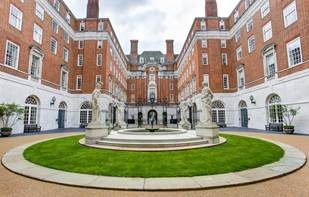
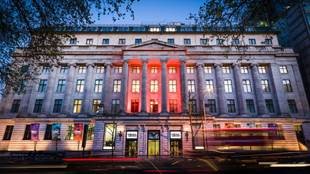
Three leading venues in the Euston area of London are joining forces to promote the area as a prime location for events linked to healthcare.  BMA House, RCP and Wellcome Collection all use their profits to help larger medical organisations achieve their mission.  During this challenging time, they wanted to demonstrate their unity through a common goal.

Often described as the Medical Mile, the area around Euston is a hub of leading venues with strong links to local hospitals, practitioners and research institutes.  It is an ideal place for any form of meeting or event linked to not just medicine but also the wider healthcare and pharmaceutical sectors.  Specifically, the three venues will be collaborating, referring opportunities, supporting each other’s events and providing multi-site spaces for meetings as necessary.  Together they offer a wide range of delegate packages, hourly rates, digital and hybrid solutions, ensuring all client needs are met.

After an extremely challenging year with lots of industry changes, all 3 venues have successfully received the MIA AIM Secure Accreditation and Visit Britain Good to Go Accreditation making them COVID safe venues for the future.

Kat Winfield, Venue Manager, BMA House comments: “Medical and healthcare workers have continually showed their strength, resolve and professionalism throughout the COVID-19 pandemic and we are all extremely grateful for their dedication and commitment.  At the moment the greatest support we can offer is to stay at home and refrain from hosting events.  However, in time that will change and we are exploring all opportunities to support our clients.”

Fairouz Grzyb, Business Development Manager, Royal College of Physicians “When appropriate, we intend to come back stronger than ever, working as a collective to deliver the best possible experience for delegates and organisers alike.  In the meantime, we all offer extensive digital and hybrid packages to ensure that events continue and vital education, knowledge transfer and networking take place.”

Diana West, Sales Manager, Wellcome Collection concludes: “As a group, we offer a wide variety of event options.  We can work individually or across multiple sites and want above all to demonstrate our unity in challenging times.  We have extensive links into all areas of medicine, pharmaceuticals and the wider healthcare market, making us the ideal first call for any event across these sectors.”

About the venues:

BMA House 

BMA House is located in the heart of London, just a short walk from Kings Cross, Euston and St Pancras stations as well as a variety of underground lines and key bus routes.  With sustainability and wellbeing at the heart of its offering, delegates can also benefit from the use of a clean air walking route – taking them off the major roads onto quieter, picturesque, less polluted local streets.  Their clean air walking route from Kings Cross for example, is 57% less polluted than a trip down Euston Road and has the benefit of being 1,000 steps – 10% of the recommended 10,000 a day.

BMA recognises the growing and vital need for digital and hybrid event solutions.  With this in mind they were one of the first venues to launch such an offering, as far back as June.  Including options for webcasting, breakouts, speaker only conferences and exhibitor/sponsor packages, the offering reflects both the challenges presented by COVID-19 and the future needs of event organisers.

Wellcome Collection is the free museum and library exploring health and human experience. Located in central London just steps away from Euston and King’s Cross/St Pancras station. Their venue hire offers thought-provoking event spaces in both the conference centre and the unique exhibition galleries.  Whatever the client’s needs, they can offer flexible and inspiring backdrops for all types of events, from seminars and training sessions, to film screenings and AGMs, their capacities range from two people to 300 people.

Wellcome Collection 

The venue hire team at Wellcome Collection is dedicated to helping clients adapt to the current realities of meetings and conferencing. Whether they require video conferencing, live streaming or a more bespoke offering, the team is ready to deliver streamlined hybrid events.

All profits made from events held in Wellcome Collection are gift aided to Wellcome, a charitable organisation who support researchers, take on big health challenges, campaign for better science, and help everyone get involved with science and health research.

The Royal of Physicians

The Royal College of Physicians was founded in 1518 by Royal Charter from King Henry VIII.  It is the oldest medical college in England. The venue offers highly versatile facilities, with 12 meeting spaces, including tiered auditoriums, conference, meeting, exhibition and dining spaces, with contrasting old and new styles to suit all tastes, giving clients a range of possibilities to create an unforgettable event.

They have a dedicated in-house audio visual and media services team. In addition to supporting physical events, they have a range of hybrid and virtual meeting solutions to enhance events including, filming, editing, streaming, live Q&A polling, webinars, virtual break out rooms and much more.

Seven new vaccination centres in England have been announced.

Vaccination Centres

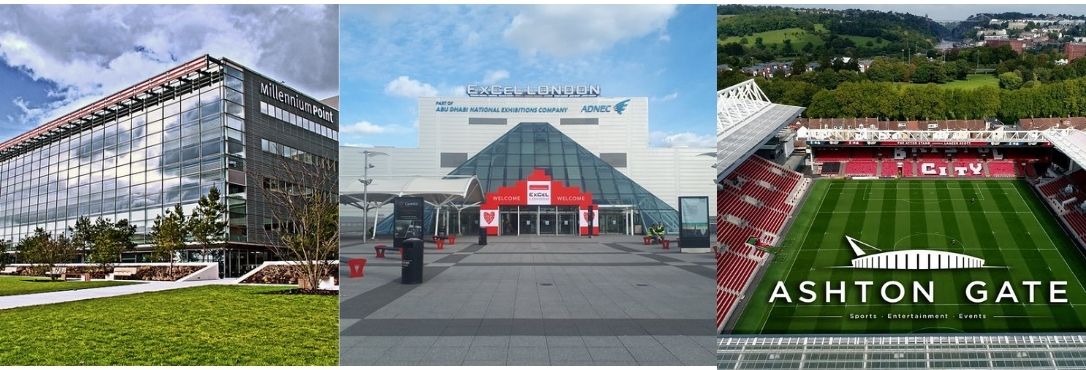
EDGE Venues is proud to announce that three of the venues on their platform, ExCel London, Ashton Stadium Bristol, and Millennium Point Birmingham are to be turned into temporary Vaccination Centres as the Government and the NHS roll out their plans and timetable to vaccinate the top four priority groups by mid-February.

All three venues usually host a variety of meetings, conferences, exhibitions, and sporting events, however due to the current pandemic, they have been selected with four other venues to become vaccination centres and should be up and running early next week.

The UK is the first country in the world to approve mass use of COVID-19 vaccines, with immunisation with the Pfizer BioNTech beginning back in December and the Oxford-AstraZeneca started on Monday 4th January.

Jacqui Kavanagh, CEO of EDGE Venues was really pleased to hear the news and how so many venues have been supporting the country during the COVID-19 crisis and said “We are part of a fantastic industry and despite these difficult times it is great to see we have a role to play. I wish all the teams the best of luck and I know that as event professionals if anyone can step up to this challenge they can.”

Jacqui went on to add “The rapid spread of coronavirus has taken its toll on the events industry but it’s great to see that during the last 10 months we have seen many hotels and venues helping in these exceptional times.  Opening to Key Workers, transforming into Nightingale Hospitals and quarantine venues to name just a few.”

Keep up to date with ALL latest Industry News and Insights by reading our EDGE News Section

Who is meeting and how are they doing it?

Corporates planning face to face meetings in 2021 should think about small events and local venues, according to the latest report from the PCMA. Event attendees are saying that they are not likely to attend a regional or global meeting or conference unless they’ve received a Covid-19 vaccine or there is very significant herd immunity. However, they are much more likely to attend small, local events that have clear health and safety guidelines.

What is the future for the large city-wide congress or association meeting?

Pre covid-19 there were already issues around flying and sustainability and with hybrid events does everyone need to be in the same place at the same time?

Where can we consider booking events when the conditions are right?

Travel bubbles are gradually opening, for example there are no quarantine restrictions between Australia and New Zealand, but there are from other countries. Singapore and Hong Kong are working on a similar arrangement.

Singapore held Travel Revive, 25 – 26 November 2020, at Sands Expo & Convention Centre to bring delegates and businesses together to exchange ideas, bridge knowledge gaps, and reimagine how the future of travel will look like. There were conference sessions, an exhibition and one-on-one buyer-seller appointments, with virtual conference sessions for global audience to connect with the regional travel businesses.

The German Convention Bureau recently held BOCOM, Experience Borderless Communication, to explore the characteristics, benefits and limitations of the different elements of virtual, hybrid and live audiences. The main stage was in Berlin, with an audience of 50 people as well as hubs with live sessions in Amsterdam, Vienna and Essen and a live stream for remote attendees. The event incorporated workshops, remote speakers and virtual meetings.

Unsurprisingly, the event found that networking was more important for those attending in person, but also:

  • Half day duration is better for remote participants, any longer and their attention span is poor
  • The event delivered increased reach, by offering different locations and virtual
  • Improved ecological sustainability (less travel, less paper etc)
  • More flexibility for participants and organizers
  • The event had a longer lasting effect
  • Smarter use of the content, during and after the event
  • The offer of different attendance pricing models
  • Time saving for attendees (particularly travel)The ability to trace participants behaviour

To attract events in the future a destination will need to market itself in a different way install confidence with event organisers and consider the following:

  • Introduction of safety protocols
  • Ensure the protocols are widely adopted and checked
  • Communicate the compliance through campaigns
  • Develop a culture of compliance in the destination (eg co-operation with mask wearing)

There will be more focus on the city as a destination, what it can provide or add to a meeting in terms of health and safety.

Earlier this year, The WHO has published a document, Key planning recommendations for mass gatherings in the context of COVID-19 for governments, health authorities and national or international organizers to contain risks of transmission associated with large events.

For more information and guidelines, it’s advisable check the WHO website, as well as the Foreign and Commonwealth travel advice.

The UK has established travel corridors and visiting these countries you do not need to self-isolate on your return, but you must have spent the last 14 days in one of these places, or in the UK. A passenger locator form needs to be completed before entering the UK. These are some of the current countries on the travel corridor and possible destinations for events.

  • Australia
  • The Azores
  • Bahrain
  • Barbados
  • Bermuda
  • Cambodia
  • The Canary Islands
  • Cayman Islands
  • The Channel Islands
  • Chile
  • Cuba
  • Finland
  • Gibraltar
  • Greek islands: Corfu, Crete, Kos, Rhodes, Zakynthos
  • Hong Kong
  • Iceland
  • Ireland
  • The Isle of Man
  • Israel and Jerusalem
  • Japan
  • Madeira
  • Malaysia
  • Maldives
  • New Zealand
  • Norway
  • Qatar
  • Singapore
  • South Korea
  • Sri Lanka
  • Thailand
  • United Arab Emirates
  • Vietnam

On 15 December a new scheme will be introduced, Test to Release, which allows you to pay for a private COVID-19 test. The earliest you can take the test is 5 days after you left a destination that’s not on the travel corridor list. If the result is negative, you can stop self-isolating.

For more information check https://www.gov.uk/guidance/coronavirus-covid-19-travel-corridors#countries-territories-and-regions-on-the-travel-corridor-list

Information correct on 7 December 2020

How to hold safer meetings in the world of Covid-19

Covid-19 has changed the normal practice of business meetings, conferences, conventions and exhibitions and the ones that take place have been scaled down and are far fewer. However, one of the things to look forward to is holding larger events and getting together again and this article looks at some of the things we need to consider.

Hopefully, some of these measures will be a thing of the past, once the vaccines are rolled out. However, the events industry needs to recover confidence and trust, including the readiness of participants to travel and mix with each other and for their employers to feel comfortable about travelling and sending them to meetings. It is important to recognise that there is a shared responsibility between event organisers, venues, suppliers and attendees in terms of adhering to guidance from government and public health organizations. Wherever possible we need to minimise contact between event staff and attendees to reduce risk of Covid transmission. So, what should we be checking, as well as the usual items on a site visit

Venue finding

There is no doubt that more space will be needed to hold an event to enable social distancing, consider all elements, including where to put people if there is a bottleneck:

  • Meeting rooms (layout and capacity)
  • Catering spaces
  • Registration area
  • Corridors, staircases and elevators
  • Entrances and exits
  • Public areas, lavatories, business centres

Carry out a risk assessment of the venue against set criteria, both before confirming with the venue and again before the event takes place.

Site visit

There is no substitute for carrying out a site visit to the venue, but venues are making much more information available and have new floorplans and capacity charts. Many are offering virtual site visits which will means you can evaluate more venues.

Venue equipment

Find out what the venue can provide, for example, you may need:

  • Perspex screens
  • Directional signage and distance marking on the floor
  • Barriers or one-way systems and the ability to restrict the number of entrances
  • Hand sanitizing stations
  • Mask stations
  • A separate area if you going to check temperatures of people arriving, or even on a daily basis
  • Drop off and collection points to sanitize equipment
  • Does the venue have fogging equipment to sterilize the space and how often is it used

Venue Accreditation

Check the venue’s accreditations. The two main accreditations in the UK are Visit Britain’s We’re Good to Go and AIM Secure. In addition, there are many others such as the HBAA and Quality in Tourism’s Safe Clean & Legal, AIPC, ICCA and UFI’s Good Practice Guide, COVID-19 Certify, COVID-19 Control, COVID-19 Aware and AA’s COVID-19 Confident. Hotel groups have introduced their own standards and best practices such as such as Hilton’s CleanStay programme and Marriott International’s Global Cleanliness Council.

Ventilation

Agree the air conditioning and ventilation settings with the venue for the duration of the event and do not allow anyone to alter the settings. Airborne transmission is one of the ways that Covid-19 is spread and ventilation needs to be excellent to make event spaces safe. Venues need to have a good airflow, HEPA or MERV-13 air filters (check when were they last cleaned or replaced?). Negative-pressure systems or portable filters should be used in enclosed spaces or areas which don’t have windows to open, these will pull air away from people and filter it before it is inhaled again. Ceiling fans and air vents should be directed away from people. Humidity should be between 40-60% to minimise transmission.

Doors and windows can be kept open to improve ventilation, particularly in public and catering areas, using plants or partitioning to make the area private.

Registration

  • There are various options for minimising contact at registration:
  • Send the badge in advance (mail or email) and the attendee assembles it themselves
  • Send a QR code or information to go in a digital wallet
  • Self-service touchless kiosks
  • Use an event app, which can have an individual barcode

It’s a good idea to spread the arrival time to avoid people queuing, so find out how people are travelling and when to manage the area.

Social distancing

Wristbands are available to alert people they get too close. You can set the distance to whatever the local requirement is or your own setting if preferred. It works on Bluetooth and the wristband vibrates, buzzes or flashes when two people are too close. These will also retain data on where attendees are and who they are close too, if contact tracing is needed at a later date.

If you’re not going to use a technology solution, think about who is going to be responsible for enforcing social distancing onsite and how they are going to do it.

The programme

Stagger the timing of meeting sessions, so everyone isn’t in the corridors or swapping meeting rooms at the same time causing a bottleneck. Allow enough time for meeting rooms to be cleaned between sessions, disinfecting of tables, chairs, a/v equipment etc.

Think about whether the presenters can change rooms instead of the audience. Can speakers take microphones with them rather than changing them if they go to another room?

Ask attendees to book breakout sessions, so that you can manage the capacity, make sure the room isn’t overcrowded and you know who is in which room in case contact tracing is needed.
Could attendees book a track of breakouts, rather than select individual sessions? Maybe breakout sessions need to be repeated to cover all attendees.

How are you going to manage questions in a session? Can you use the event app or other software, rather than passing a microphone around the room.

Water – there won’t be a group of attendees around one table, so it won’t be possible to give them bottles or a jug of water to share. They will need one each, or do they bring their own in? What about the waste in our world of social responsibility?

Contactless scanning can be used to monitor numbers in different areas of the venue and control access if meeting or catering areas are full.

Consider using semi-outdoor or outdoor space, weather providing. Venues are creating different spaces such as using terraces, lawns or marquees.

Stagger the timing of breaks and meals, to avoid too many people in the area at one time. Are you going to serve a box or plated meal? Buffets are still an option, if they are served by staff behind a Perspex screen, one server per dish and the attendee holds the plate under the screen. More food stations will be needed to get people through quickly. However, this requires extra staff from the venue, so make sure they plan accordingly.

Without a doubt more space will be needed to make sure everyone is socially distanced, for seated meals you should only place 3 people on a 6” round table to keep them separate. Also, everything will take longer than previously to maintain social distancing, so build this into the programme.

Have a back up team of staff available in case one or more of the members of staff onsite comes in to contact with someone who has Covid or needs to self-isolate. Different people will need to take over immediately.

Communications

Communication is more important than ever.

Agree the safety protocol and let everyone know what it is beforehand. Issue a clear Code of Conduct, which makes the rules clear and who is responsible for making sure they are adhered to. The venue will have a protocol in place, but you will also need them for your event. Things to include are:

  • Mask wearing (you might want to provide masks, to make sure they are the same standard)
  • Social distancing
  • Use of sanitizer and hygiene measures
  • Temperature checks
  • Social bubbles

Onsite, an app is an easy way to distribute information and attendees need to know how important it is to read notifications. It is also a safe and private way to exchange information.

Are you going to ask attendees to sign a Covid waiver before they attend? Take legal advice about this and understand your liability.

Covid screening and sick attendees

Consider whether you are going to have a medical professional onsite. Do you want to take people’s temperatures on arrival or at the start of every day? Or do you want them to bring a clear test result, as some countries immigration now require? Or would you consider bringing in a private medical company to test onsite?

Abbott Labs have developed a Covid test, BinaxNOW that costs about $10 and will give results in around 15 minutes. The priority is to issue this to health professionals in the US first, but it could be made commercially available in 2021.

The event organiser needs to have a procedure if someone has Covid. A hotel will have a quarantine protocol, but an attendee needs to be informed in advance how a quarantine experience in the hotel room will work, such as medical services, food and beverage and any additional cost. If they need to go to hospital, how will this be organised.

Make sure you have excellent attendee records so contact tracing can be carried out and have a communication plan to inform all attendees if there’s a problem. Ask people inform you if they fall ill within two weeks after the event too, so that you can let everyone know.

Give aways

Free gifts are an event favourite, but how do you make them safe? You might want to send them to the attendee before or after the event. Consider the purpose of the item, is it to generate excitement or interest, do they need to bring it with them? Or maybe it’s a follow up or thank you.

This is by no means a comprehensive checklist, but just to help when planning future conferences, meetings and events. For more information or help to find a venue, contact enquiries@edgevenues.com

How hotels are introducing new hygiene standards post COVID-19

Hilton's CleanStay door seal

One of the most important factors in the recovery of the events industry is confidence of attendees, post COVID-19. How soon are they going to want to travel, mix in groups and stay away from home?

All the major hotel groups are introducing new hygiene standards to reassure their guests, but these will also provide proof to governments considering loosening lockdown restrictions that safety measures have been put in place.

Hilton Hotels

Hilton has taken advice from the Mayo Clinic and is collaborating with RB, makers of Lysol and Dettol, to rise the standards of housekeeping and hygiene in their hotels. The programme is called Hilton CleanStay which uses infrared and electrostatically charged disinfectant mists. Hilton is focusing on cleanliness that will be visible to guests throughout their entire stay, in the bedrooms, restaurants, gyms and other public areas.

Guests will also be encouraged to use the Digital Key contactless check in system. It works with the Hilton Honors mobile app. Guests can choose a bedroom, access it with a digital room key and check-out using a mobile device.

The CleanStay programme includes:

  • A room seal on the bedroom door to indicate to guests that their room has not been accessed since being thoroughly cleaned.
  • Extra disinfection on the most frequently touched guests room areas – light switches, door handles, TV remotes, thermostats etc.
  • Removal of pen, paper and guest directory and replacing them with digital information.
  • Improved disinfecting of the hotel gym, possibly closing for cleaning multiple times daily and limiting the number of guests allowed in at one time.
  • Increase the frequency of cleaning public areas.
  • Disinfecting stations at primary entrances and high traffic areas, eg a station to allow guests to wipe the elevator button before pressing.
  • Hotel staff will be provided with personal protective equipment and better training designed to protect themselves.

Marriott International

Marriott has created the Marriott Global Cleanliness Council to develop a programme to minimize risk and enhance safety for guests and staff. In the next few months, the hotels will introduce electrostatic sprayers with hospital-grade disinfectant to sanitize surfaces in bedrooms, lobbies, gyms and other public areas. Also, the company is testing ultraviolet light technology for sanitizing keys for guests and devices which are shared by staff.

Marriott’s new policy includes:

  • Disinfectant wipes in each room for guests’ personal use.
  • Signage in the Lobby to remind guests to maintain social distancing and removing or re-arranging of furniture to allow more space.
  • Partitions at front desks to provide an extra level of distancing and making masks and gloves available to staff.
  • Hand sanitizing stations at the hotel entrances, near the front desk, elevator banks and fitness and meeting spaces.
  • Check-in and access to the bedroom by phone.
  • Specially packaged food for room service which is delivered to the door without contact.
  • Changes in food safety and service in restaurants and alternatives to a buffet.

Accor

Accor, which is Europe’s largest hotel group has entered into partnership with Bureau Veritas, a testing and inspection company. They will provide third-party testing of the hygiene certification programmes in each of Accor’s 4,800 hotels. The standards will cover accommodation as well as catering and will be introduced in France and then rolled out worldwide.

Once each property has passed an inspection by Bureau Veritas, it will be awarded a certificate of safe hygiene. The operational guidelines for cleaning and staff training were developed in conjunction with epidemiologists and sanitation experts. These procedures will also be made available to any hotel, meeting venue, or restaurant looking for best practices or who would like to enrol in the certification program. Clients will be able to check if a property has been certified by going to the Bureau Veritas website.

For more information on these hotel groups’ hygiene programmes follow the links to Hilton Hotels, Marriott International and Accor.

When will the events industry recover?

Coronavirus COVID-19 has highlighted the benefit of face-to face meetings and the rules about staying at home had a huge and immediate impact on the events industry. Not knowing what the future holds, how and when the events industry will recover is the big question for all of us.

The first thing that we need is for businesses to recover, as soon as they have confidence then the conferences and meetings will return. However, there will be a long-term economic impact from the measures that the government has taken. The attendees will need to feel comfortable to meeting in groups and to feel save travelling. So, until there is a vaccine and reduction in social distancing, they may not be willing to attend events.

Opinion

Jacqui Kavanagh, CEO of EDGEvenues, thinks that smaller meetings in the UK will be organised first, but then it will take at least nine months for the larger International events to recover.

The venues will also need to play their part to get the industry going again and make their Terms and Conditions very clear, particularly if there are more waves of Coronavirus COVID-19. Jacqui said, “Venues need to make their policies transparent and part of the selection process. There needs to be clearer communication of when the cancellation charges kick in and the payment schedules. Venues need to look at their Terms and Conditions now, because they will need to me more flexible to win business. The quicker they do this, the more likely they are to gain the booking from the client.”

what do the surveys say?

There have been several surveys recently which have asked event organisers when they are rescheduling postponed events and when they are planning to organise new conferences and meetings. We’ve looked at three polls which have come out in the last week and give an prediction of the trends.

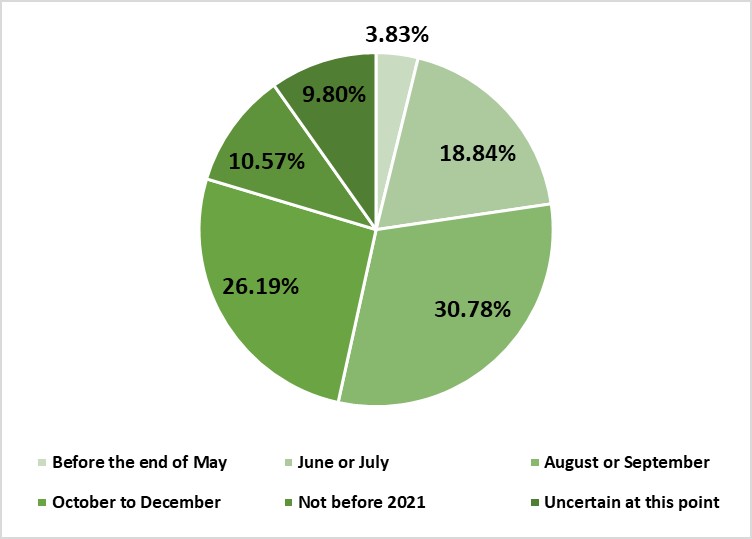
  • I-meet do a weekly survey of more than 900 event planners, which are made up of 33% corporates, 20% associations, 31% 3rd party organisers and 16% others. The results of this on 20 April, were 50% anticipate returning this summer and 76% before the end of this year. This was a slight increase in the number of events being planned for Q4 of 2020 and in 2021 compared with the same survey the week before.graph of data conference organisers
Before the end of May 3.83%
June or July 18.84%
August or September 30.78%
October to December 26.19%
Not before 2021 10.57%
Uncertain at this point 9.80%
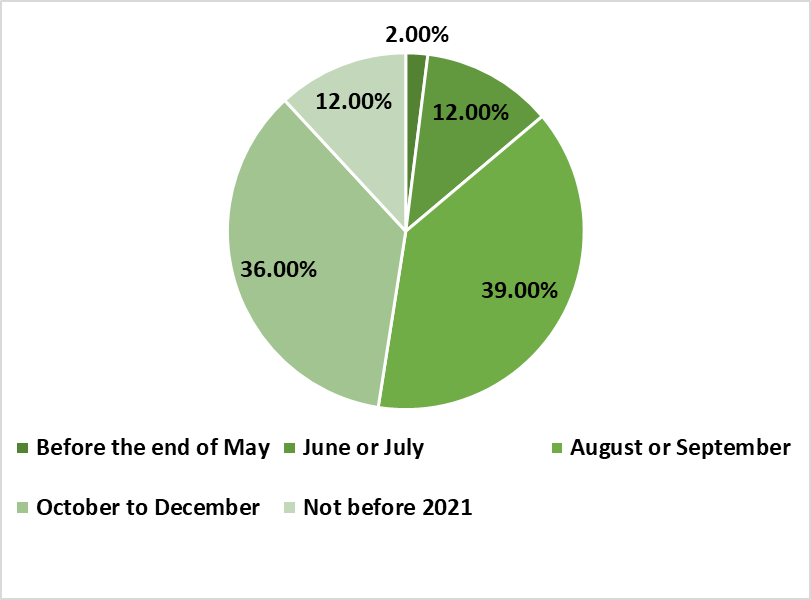
  • On 15th April MeetingsNet did a poll of organisers who had dialled in to a webinar. The quantity of responses isn’t known, but similarly 50% are planning to return to events this summer and 87% by the end of this year. Graph of event organiser confidence
Before the end of May 2.00%
June or July 12.00%
August or September 39.00%
October to December 36.00%
Not before 2021 12.00%
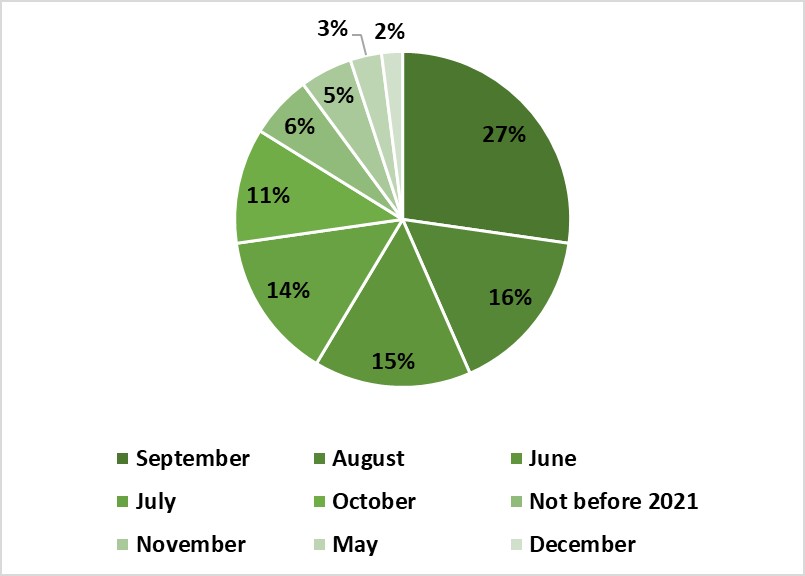
  • MPI’s held Global Meeting Industry Day online on 14th April and they asked more than 6,200 attendees when they were planning to resume events. This is by far the largest survey and was from MPI members throughout the world. It found that 72% are planning to return to events this summer and 90% by the end of this year.

graph of user confidence

September 27%
August 16%
June 15%
July 14%
October 11%
Not before 2021 6%
November 5%
May 3%
December 2%

We all hope for a swift recovery to events and hopefully we will come out of it soon, but the feeling is that the world will be a different place and we will have to adapt accordingly. As we said at the beginning, not knowing what the future holds, how and when this situation is going to end is the big question for all of us and one we can’t answer at the moment.

For more industry insights, take a look at Edgevenues.com.

Countrywide Hotels are open for key workers and to assist Government projects

Countrywide Hotels have sadly announced the temporary closure of all their properties to help prevent the spread of Coronavirus. However, they are open for any NHS workers, key workers, and Government projects throughout unprecedented times.

Jason Gutteridge, Head of Agency Sales comments “Countrywide Hotels are committed to preventing the spread of Coronavirus which is why we have taken the step to close our venues. However, we realise that our properties could be an asset in helping to combat this virus by providing accommodation for key workers or converting into distribution centres or hospitals.”

Their sales team remain on hand to answer any queries about their hotels and how they can be used for distribution centres or government projects. You can contact them on 07502 612 073 or Jason.gutteridge@countrywidehotels.co.uk to discuss how they can help the fight against Coronavirus.

If you are working on any Government projects and need any support from Countrywide Hotels, please see their website www.countrywidehotels.co.uk for further information about their properties or view the PDF which details the UK locations.

Marketing in challenging times. Be visible in front of your target audiences

Even during challenging times it is essential to be visible to your target audiences, they may not be in a position to purchase services or goods from you but being seen will increase your brand awareness which means when your audience is ready to purchase they are more likely to approach you as you have captured their attention.

Update your evergreen website content

Your website will be holding a number of past articles that are still relevant to your industry now and is still of value. Revisit your content, update with any new information and republish with the aim of improving your search engine rankings and gaining valuable backlinks.

Social media

Social media is 24/7 on every device, meaning that your brand is visible 24/7. Does your social media reflect your brand identity? Produce high quality and visually engaging content that works on different platforms.  This will ensure you are staying visible – even in slower times. Research your follower’s optimum viewing times and make sure your posts are going live then. Create a content plan that aligns with your overall marketing strategy use scheduling software such as Hootsuite to get ahead of the game, this will help free up time to allow you to post reactive posts as the news and industry developments occur.

We are engaging with our audience on our LinkedIn, Twitter and Facebook and will continue to do so.

Active presence

Encourage your employees to share and comment on company posts. Other people are more likely to engage if there are additional comments to read rather than just further shares. Engaging with others who are posting news that aligns with your industry will also help in attracting new followers to your accounts and potentially drive new traffic to your website.