
Do you make it easy for attendees with sensory issues to attend your events?

Some disabilities are obvious and some not. When choosing a venue for a conference or meeting, we can check whether the building has wheelchair access to all meeting rooms, catering and social areas, has purpose-built accessible toilets, a hearing loop system and allows guide dogs.

But not all meeting attendees’ issues are obvious. People with sensory issues, such as to light and noise will find large events difficult because of the volume of people in the room, loud music and flashing lights when the keynote speaker arrives. This can include people with ADHD, autism, Downs syndrome, early-onset dementia and post-traumatic stress syndrome.

Here are some ideas that you can implement to help event attendees who might find the environment challenging:

  • Allocate a ‘quiet room’, so that anyone who needs some peace has a comfortable place to take a break away from the busy conference or exhibition environment.
  • Take some noise cancelling headphones that you can lend to attendees to help them cross loud areas, such as the exhibition floor or areas where lunch and breaks are being served.
  • Offer stress balls, that attendees can play with to keep their hands occupied and stop fidgeting.
  • Give non-verbal attendees a visual thermometer. It’s just a card they can use to ask for help and to indicate how they are feeling, if they are confused or lost.
  • Issue a slightly different lanyard to indicate to event staff attendees who may require sensory help, but don’t make it different enough to stand out from other attendees.
  • Provide some weighted lap pads to help attendees sit still during long presentations and speeches. This replicates deep-touch pressure therapy, which has a calming effect.

All these items can be cleaned with disinfectant and used at multiple events. Some venues are putting together a bag which includes the items above, or an organsier can put the tools together themselves and take them onsite.

The American organisation Kulturecity runs training courses for staff at venues to understand the problems and help organisers run events which include attendees who find it difficult to participate because of sensory challenges.

Accessibility – what you can expect from a Scandic Hotel

Staying away from home when you have accessibility needs is definitely challenging and not all hotels are able to offer the same standards when it comes to making spaces welcoming to everyone. However, Scandic Hotels has worked to make their properties accessible to people with disabilities. This is good business sense as people with disabilities are travelling more and no longer constitute a niche group. And since there are about 80 million people with some kind of disability in Europe alone, the market is huge.

Scandic is the leading hotel company in the Nordic countries with 57,000 rooms in more than 280 hotels. The group is a leader when it comes to accessibility and appointed an Accessibility Director, Magnus Berglund, who has been an ambassador for the company since 2003. They were the first group to develop an Accessibility Standard which was developed in cooperation with guests with special needs, employees and associations representing people with disabilities. It was created by carefully following people as they move from the parking lot and through Scandic’s hotels.

Guests enjoy solutions from vibrating alarm clocks/smoke detectors, safety info in Braille at reception, desks, peepholes and doorbells at wheelchair height and hearing loops to mobile lifts at some hotels. As a result, the Scandic Hamburg Emporio in Germany, for example, was able to host 300 athletes who use wheelchairs during the 2018 Wheelchair Basketball World Championships.

Today, the standard covers 159 points, 105 of which are mandatory at all hotels. New this year are Scandic’s “allergy rooms” with wood flooring rather than carpet, hypo-allergenic skincare products, bedding made from synthetic materials and special laundry and cleaning procedures. Scandic’s allergy standard is the next step, following the successful ‘Breakfast for All’ concept.

Information about accessibility is on the individual hotel website so it’s easy to see what facilities are available at each property.

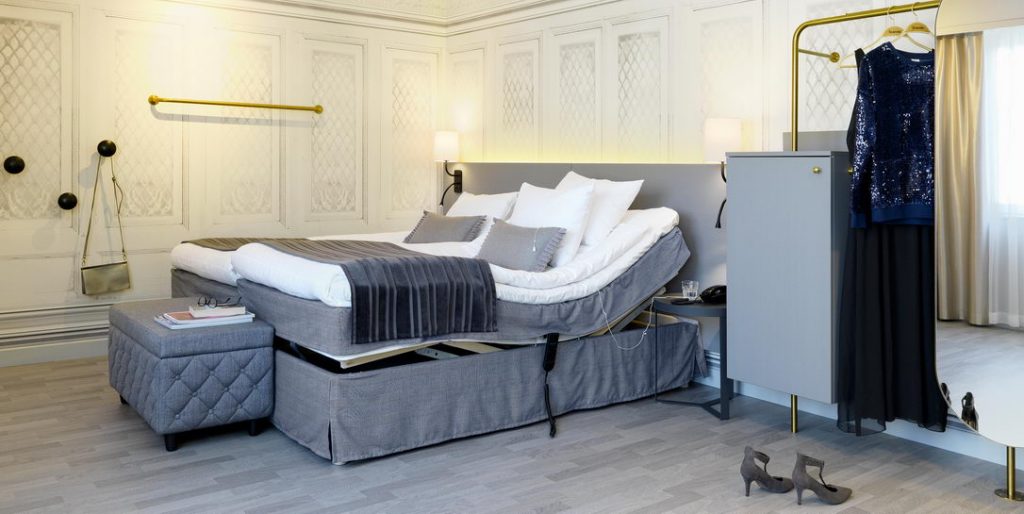
Not so long ago, hotel rooms for guests with disabilities looked like hospital rooms, Scandic’s “Design for All” means that an accessible room is designed just as well as any other room, with smart solutions that are barely noticeable except to the people who need them. “Making hotels accessible to more people needn’t be expensive or compromise good design,” says Berglund.

The company regularly carries out accessibility training for its 18,000 staff, through practical exercises and online courses. As a result the company has won numerous awards in recent years. Scandic was recognized for “Best accommodation for disability access” at the World Responsible Tourism Awards 2015 and for having “one of the most innovative practices” in the Zero Project 2018.

“Some 70 percent of all disabilities are invisible, which we take into consideration when developing accessibility solutions at our hotels,” says Berglund. “Our goal is to create fantastic hotel experiences for everyone. What makes us most proud is when guests say that when they stay at Scandic, they’re treated as hotel guests, not people with special needs. We are constantly developing accessibility at our hotels since it’s such a complex issue. We never consider our work to be done.” he concludes.

Fun fact about accessibility at Scandic:

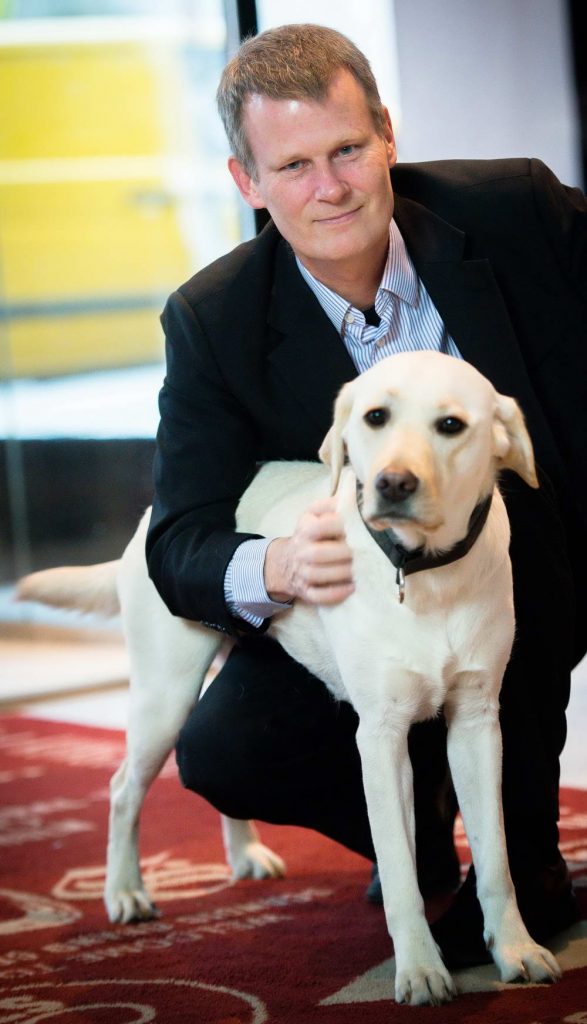
Four-legged friends are always welcome at Scandic and the hotel also has its own service dog, Dixi. Dixi is well-loved and very popular on Scandic’s social channels and on Instagram @dogatwork.

For more information about special needs at Scandic Hotels: https://www.scandichotels.com/specialneeds