
Is enough happening to support mental health and wellbeing training?

A panel of industry experts has emphasised the importance of business leaders taking responsibility for their staff and undergoing more mental health and wellbeing training.

The three-person panel discussed wellness and mental health within the meetings industry at International Confex 2019. The panel consisted of Jenner Carter, head of marketing at Lime Venue Portfolio and marketing chair at the HBAA, James Hitchen, GM of the Event Marketers Association (EMA), and Laila Datoo, a mindful business coach.

Carter, who recently picked up a qualification in Mental Health First Aid through the HBAA, spoke about the importance of leadership in addressing mental health in the work place.

“The industry has discussed at length the level of stress and anxiety found within event professionals, and awareness has been driven by some really great initiatives,” she said. “However, to turn awareness into action, leaders need to be trained to both spot staff showing signs of illness, and to intervene where possible.

“One of the things we learn through mental health first aid is the early warning signs, and how to handle intervening in a sensitive but professional manner.”

Hitchen said that the events industry needs to think about prevention rather than “just managing the symptoms of poor mental health”.

He said: “Leaders in business need to support their teams in improving their mental fitness. I believe it is a company’s responsibility to create conditions that supports living well.

“A company with a culture of wellbeing is happier, healthier, more productive and more profitable.”

The Mental Health Foundation estimate that 70 million work days are lost each year due to mental health problems in the UK, costing employers approximately £2.4bn per year.

The panel shared tips with the audience and emphasised the importance of the right level of training and awareness from senior leadership.

Datoo said: “Business leaders need to start equating wellbeing with performance and productivity. The happier and healthier your people, the better your bottom line.

“We shouldn’t wait for absenteeism figures to rise, people to leave or burnout or the culture to become toxic to address this.”

The HBAA runs a Mental Health First Aid (MHFA) accredited course that gives participants a recognised qualification to be a mental health first aider.

Future proofing the UK Events Industry, together

Thoughts from the Business of Events Senior Leadership Forum on the UK Events Industry

The forum took place on Friday 26 October at the QEII Centre in Westminster and a wide variety of attendees from different sectors of the conference, meeting and events industry attended. The objective was to discuss challenges and opportunities, as well as their relationship with government to future proof the UK events industry.

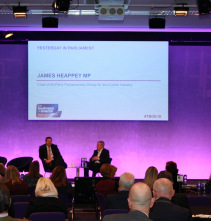
James Heappey MP being interviewed on stage

The morning started with an interview with James Heappey MP, chair of the All Party Parliamentary Group for the Events Industry, who talked about using events to build communities. He brought up the idea of raising funds for the UK’s tourism industry with a bed tax on hotel stays. This was a controversial initiative amongst the attendees on the same table as me, because the UK’s air passenger duty is already higher than other European countries and an additional tax might be a disincentive to bringing an event to the UK.

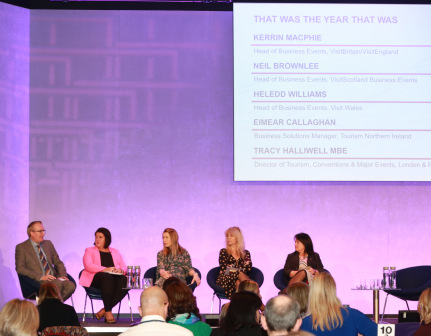
Panel discussion at the Business of Events

A panel presentation followed with the Heads of Visit Scotland, Visit Wales, Tourism Northern Ireland, London & Partners, and Visit Britain. They outlined the challenges and achievements that their organisations have faced over the last 12 months. The value of events to the UK’s economy is thought to be £33bn and the country has experienced 8 years of increasing tourism visits, since the 2012 Olympics in London. It is 3rd in the world in attracting association events and one of the objectives is to make the UK the 1st country of choice for associations.

The Event Management Apprenticeship Programme

Sarah Wright, chair of the Events Industry Board Talent Taskforce explained the Event Management Apprenticeship Programme, which has set up 85 apprenticeships and will expand the programme further. She also announced the results of the EIB Talent Taskforce, which surveyed 265 people representing c34,000 employees:

  • 61% of respondents identified a skills shortage
  • 54% reported vacancies, 40% of which in mid-level roles
  • The skills gaps are in sales and business development; project management; creative (suppliers); technical (venues); management and leadership (agencies); client handling (venues and agencies)
  • 6% of employees are offered no training
  • 23% of the workforce is classified as freelance or temporary

Future fit working lunch

This session was an opportunity to discuss topics that government could help with to develop the events industry. Issuing of Chinese visas is slower in the UK than Europe and only gives the visitor access to the UK, but a European visa gives access to all Schengen countries. The speed of issuing a visa to a Chinese citizen is under review, but the UK only access means that the visitor will stay longer in the UK and therefore spend more here. However, a Schengen visa encourages the visitor to move around more easily and encourages a ‘whistle-stop visit’ to each country.

Training and development was seen as key, with discussion around an industry-wide qualification that could be achieved whilst working. 64% of entry level employees move to a new job within two years, which is not very different from other industries. They often stay within the industry, but it does cause a high staff turnover at lower levels.

The day was rounded off by Kerrin MacPhee explaining her key objectives for Visit Britain; and Future focus – what happens next from Simon Hughes, Vice Chair BVEP.

A couple of things to think about

All attendees lined up according to years worked in the events industry

During the day we were asked to line up around the room in order of the years that we had worked in the events industry. The amount of knowledge in the room came to a total of 3,788 years, nine months and five days. With this amount of experience, we must be able to ensure that the events industry has a bright future?

Attendance at events is a problem across the board. There were 140 registered attendees, but only around 100 were there on the day, so getting people who’ve committed to actually turn up happens to us all!

Photo credits Ben Lister Photography