
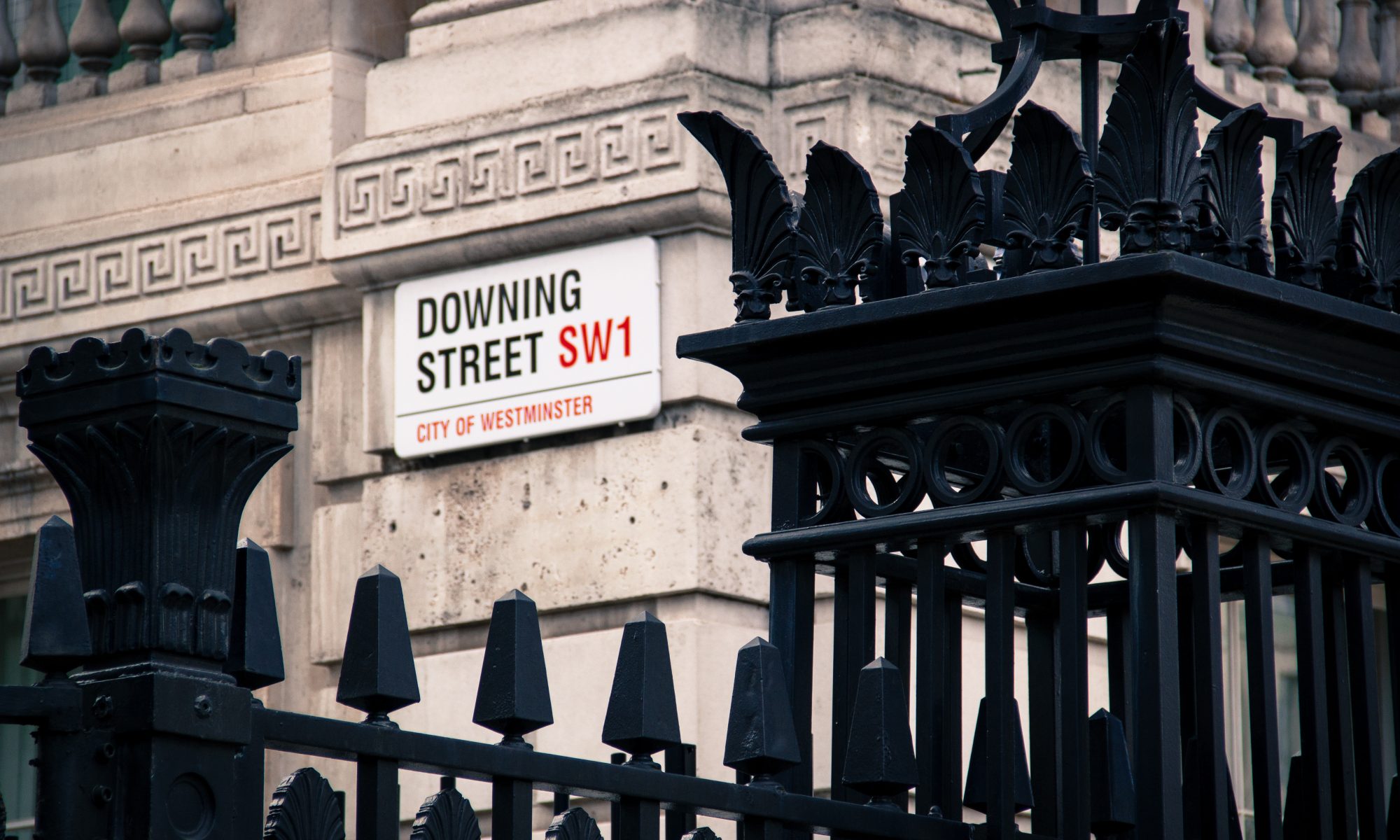
Spring Statement – what impact does it have on our industry?

Spring Statement

Jacqui Kavanagh

This week, Chancellor Rishi Sunak revealed his Spring Statement – an update on the current state, and future expectations of the nation’s finances and it confirmed that we should brace ourselves for things getting more expensive at a faster rate later in the year.

Within the Spring Statement he announced some new policies that will affect our personal budgets in the coming months and years. But what impact will there really be and how will it affect our industry as a whole?

Rising fuel costs

Let’s start with fuel costs. We’ve all seen fuel prices soar these last few months, even before the horrific ongoings in Ukraine. As a result, the average price of petrol has risen by more than 40p per litre since last year’s Spring Statement.

But don’t worry, the chancellor announced a 5p a litre reduction in fuel duty for the next year, which apparently takes some of the sting out of rising prices. If you ask me, that’s a drop in the ocean as it would only knock approximately £3.30 off the cost of filling a typical 55-litre family car.

However, when you compare it with the ongoing rise in rail fares, you have to think about what the most cost-effective, and sustainable way to travel moving forwards is.

Taxes and NI

In September, the government announced that employees will pay 1.25p more in the pound from their pay packet in National Insurance contributions. In a significant move, he has now said that the earnings threshold at which people start to pay National Insurance will rise.

As it stands, most workers start paying National Insurance contributions when their income hits £9,568. They pay 12% of earnings between £9,568 and £50,270, then 2% on any earnings above £50,270.

From July, the chancellor has said that National Insurance will be paid on income over £12,570 a year – the same level as income tax starts being paid.

But what does this really mean?

Simply, anyone earning less than £35,000 a year will pay less for National Insurance. That is about 70% of all workers. Those who earn more will see a tax rise, albeit smaller than they would have expected.

This could be of benefit the majority of workers in our industry. For example, an employee who earns around £20,000 a year, will see an annual National Insurance cut of £180 in 2022-23, instead of an £89 rise expected before the announcement.

In addition to this, the Employment Allowance, which gives relief to smaller businesses’ National Insurance payments, will increase from £4,000 to £5,000 from April.

Unemployment rate dropped

The unemployment rate is now predicted to be lower over the next few years than in the OBR’s previous forecast in October. But I ask this? Where are all the workers? Our industry is crying out for people. My LinkedIn feed is full of people recruiting. Our industry is coming back, and it’s coming back stronger, and we need workers to fill the demand.

With all the refugees coming over from Ukraine, now is the time to fast track visas and make these people employable. The jobs are out there, we just need the people to fill them.

Looking to the future

In reflection, we look at what has been announced, and many are questioning if this is enough. Is the government holding back for an election year to then swoop in with amazing cuts? Possibly so, but that doesn’t help us now as there is a continued cry for help from individuals and businesses for the support needed for survival.

We will remain positive about the future of our industry – because that’s just what we do. But it’s a time when we must remain supportive of one another as we continue to fight the challenges we all face ahead as our industry continues to fight back.

HBAA unveils a new identity -beam


The new face of HBAA has been announced by the association board today, 14 October 2021.

The next few months will see this repositioning take effect, ready for 2022.

beam is a name, not an acronym, but it has its roots firmly based in business events, accommodation and meetings, and shines a light on our industry.

Our principles remain the same. Built on best practice in business, and supported by the four pillars of Resilience, Innovation, Ethics and Quality, our HBAA heritage will provide the springboard for an exciting and ambitious strategy which will be developed with our members.

beam will become our new association name as it enters its 25th year: representing the membership of today and helping us create a wider community for the future with a greater voice, beam will take us into sustainable growth and longevity.

Through becoming beam, we will be truly future fit.

For more information head over to the HBBA https://www.hbaa.org.uk/content/hbaa-unveils-new-identity-%E2%80%93-beam

IMEX Frankfurt 2021 cancelled

IMEX

Events industry affected by Coronavirus – Major industry trade show cancelled for second year

EDGE Venues have just been made aware that IMEX Frankfurt 2021 has been cancelled for the second year.

It is a disappointing blow to the events industry and we would like to express our heartfelt thoughts to the IMEX team.

The IMEX event is a major industry trade show that brings together our industry to network and generate business.

Jacqui Kavanagh, CEO of Trinity EDGE Holdings Ltd comments ” I personally wish to thank Ray, Carina and all the great IMEX team for their continued support. Our industry is a community that supports our clients in an everchanging world. It is a shame that this key event for our industry has been cancelled.”

EDGE Venues will continue to publish articles on the coronavirus situation and how this affects the event industry.

Keep up to date with all the latest news here

Seven new vaccination centres in England have been announced.

Vaccination Centres

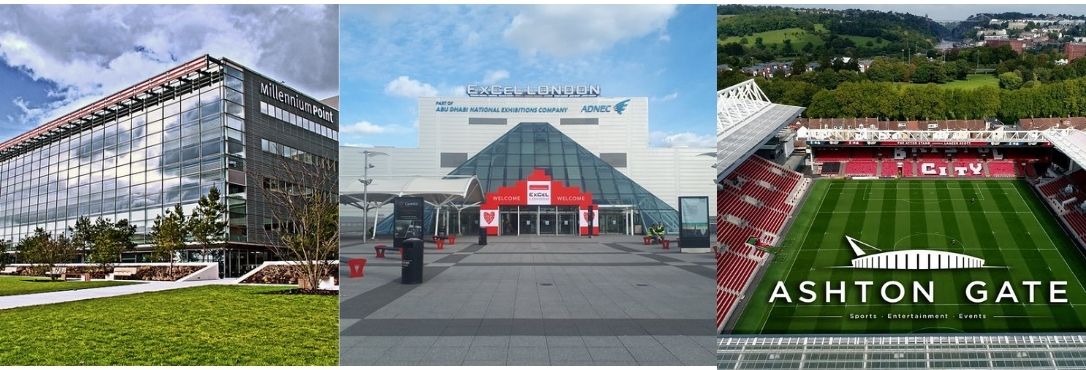
EDGE Venues is proud to announce that three of the venues on their platform, ExCel London, Ashton Stadium Bristol, and Millennium Point Birmingham are to be turned into temporary Vaccination Centres as the Government and the NHS roll out their plans and timetable to vaccinate the top four priority groups by mid-February.

All three venues usually host a variety of meetings, conferences, exhibitions, and sporting events, however due to the current pandemic, they have been selected with four other venues to become vaccination centres and should be up and running early next week.

The UK is the first country in the world to approve mass use of COVID-19 vaccines, with immunisation with the Pfizer BioNTech beginning back in December and the Oxford-AstraZeneca started on Monday 4th January.

Jacqui Kavanagh, CEO of EDGE Venues was really pleased to hear the news and how so many venues have been supporting the country during the COVID-19 crisis and said “We are part of a fantastic industry and despite these difficult times it is great to see we have a role to play. I wish all the teams the best of luck and I know that as event professionals if anyone can step up to this challenge they can.”

Jacqui went on to add “The rapid spread of coronavirus has taken its toll on the events industry but it’s great to see that during the last 10 months we have seen many hotels and venues helping in these exceptional times.  Opening to Key Workers, transforming into Nightingale Hospitals and quarantine venues to name just a few.”

Keep up to date with ALL latest Industry News and Insights by reading our EDGE News Section

When will the events industry recover?

Coronavirus COVID-19 has highlighted the benefit of face-to face meetings and the rules about staying at home had a huge and immediate impact on the events industry. Not knowing what the future holds, how and when the events industry will recover is the big question for all of us.

The first thing that we need is for businesses to recover, as soon as they have confidence then the conferences and meetings will return. However, there will be a long-term economic impact from the measures that the government has taken. The attendees will need to feel comfortable to meeting in groups and to feel save travelling. So, until there is a vaccine and reduction in social distancing, they may not be willing to attend events.

Opinion

Jacqui Kavanagh, CEO of EDGEvenues, thinks that smaller meetings in the UK will be organised first, but then it will take at least nine months for the larger International events to recover.

The venues will also need to play their part to get the industry going again and make their Terms and Conditions very clear, particularly if there are more waves of Coronavirus COVID-19. Jacqui said, “Venues need to make their policies transparent and part of the selection process. There needs to be clearer communication of when the cancellation charges kick in and the payment schedules. Venues need to look at their Terms and Conditions now, because they will need to me more flexible to win business. The quicker they do this, the more likely they are to gain the booking from the client.”

what do the surveys say?

There have been several surveys recently which have asked event organisers when they are rescheduling postponed events and when they are planning to organise new conferences and meetings. We’ve looked at three polls which have come out in the last week and give an prediction of the trends.

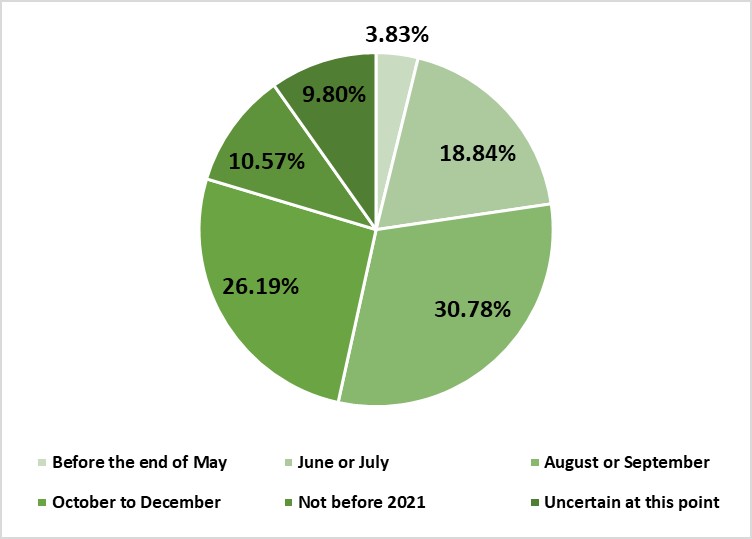
  • I-meet do a weekly survey of more than 900 event planners, which are made up of 33% corporates, 20% associations, 31% 3rd party organisers and 16% others. The results of this on 20 April, were 50% anticipate returning this summer and 76% before the end of this year. This was a slight increase in the number of events being planned for Q4 of 2020 and in 2021 compared with the same survey the week before.graph of data conference organisers
Before the end of May 3.83%
June or July 18.84%
August or September 30.78%
October to December 26.19%
Not before 2021 10.57%
Uncertain at this point 9.80%
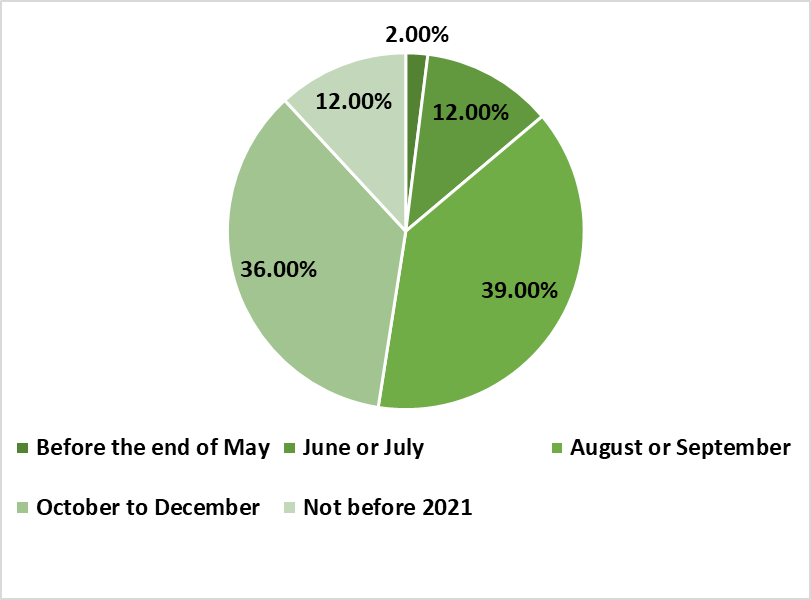
  • On 15th April MeetingsNet did a poll of organisers who had dialled in to a webinar. The quantity of responses isn’t known, but similarly 50% are planning to return to events this summer and 87% by the end of this year. Graph of event organiser confidence
Before the end of May 2.00%
June or July 12.00%
August or September 39.00%
October to December 36.00%
Not before 2021 12.00%
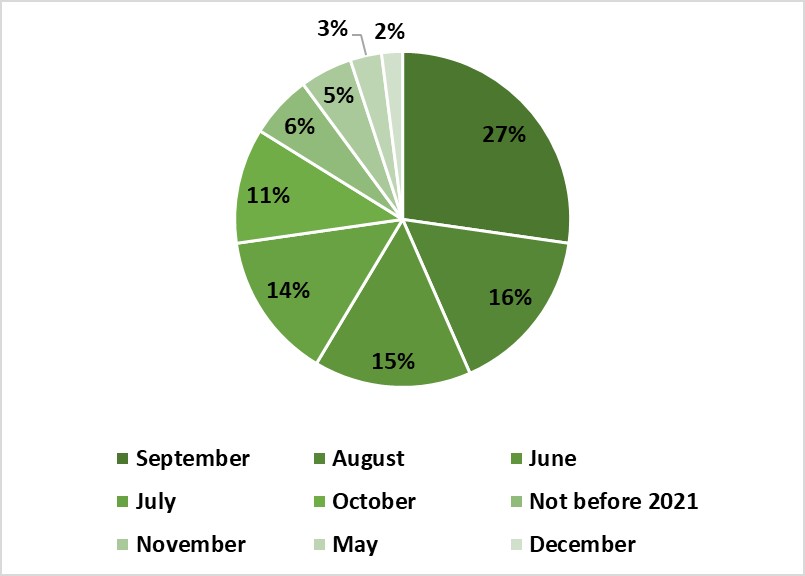
  • MPI’s held Global Meeting Industry Day online on 14th April and they asked more than 6,200 attendees when they were planning to resume events. This is by far the largest survey and was from MPI members throughout the world. It found that 72% are planning to return to events this summer and 90% by the end of this year.

graph of user confidence

September 27%
August 16%
June 15%
July 14%
October 11%
Not before 2021 6%
November 5%
May 3%
December 2%

We all hope for a swift recovery to events and hopefully we will come out of it soon, but the feeling is that the world will be a different place and we will have to adapt accordingly. As we said at the beginning, not knowing what the future holds, how and when this situation is going to end is the big question for all of us and one we can’t answer at the moment.

For more industry insights, take a look at Edgevenues.com.

Planning your Crisis Communication Plan

Crisis Communication PR Plan for events industry

With the events industry currently facing uncertain times trying to plan for the future is not as straight forward as we once enjoyed. However, we will come out of this situation and now is the time to ensure that we are better equipped to deal with unprecedented changes in the future. We have put together advice to help shape your Crisis Communication Plan for the events industry.

Knowing what to do at a time of crisis has never been more relevant. If you are an event planner you may already have your own crisis management policy to follow, and the venues you use for events will have their own crisis plans and health and safety policies to adhere to. But what is equally important, now more than ever before is having a carefully prepared crisis communication plan. 

A crisis communication plan is critical to aid in any incident from terrorist attacks, to fire outbreaks, illness, natural disasters or incidents such as the Coronavirus outbreak that we are facing currently. As the virus has spread over the past few weeks causing mass cancellations and uncertainty about how businesses have communicated has varied significantly. The ones that have done it best have been well prepared and rehearsed, so we shouldn’t leave it to chance. Putting the work into your crisis communication plan now will serve you well in the future and it should be a crucial part of your overall event strategy. 

Who are your key audiences

Firstly, when thinking about drawing up your plan think about the different audiences you will be dealing with including on-site suppliers, security, speakers, exhibitors as well as press and attendees. Once you have identified the groups assign one of your staff to relationship manage these so they are then responsible for communicating to them in the event of a crisis – this ensures that you will not leave anyone out if it is an emergency. These key audiences should have the contact information which needs to regularly updated. 

Communication channels

How will you communicate with your audience? Quick access to concise information is vital in a crisis and will protect your reputation if you are seen to respond quickly. Social media is at the touch of a button 24/7 and is great to communicate with but you need to bear in mind that although your reach may be wide, it may not reach YOUR specific audience so other forms of communication are required such as phone calls, emails, and your website. Ensure you have access to any display screens at the event itself so you can communicate immediately to your event attendees. For PR, your website and social media is the best method to reach journalists who will be able to spread your messages widely. In the event of a terrorist attack or natural disaster, mobile networks may be down so it is crucial to identify alternative communication channels and have contingency plans in place for every potential situation. 

Your crisis communication plan 

Once you have done your research into what is going to work, now is the time to put your plan together. In such fast-paced and changing times, there is no way to predict what challenges you will face so have your crisis communications plans pre-approved for each potential situation. For each situation collate the key messages that you need to communicate with each audience and how you are going to do it. 

Lastly, build these scenarios into your team training by getting them to rehearse real-life simulations of the different crisis situations outlined in your plan. This will help your staff be prepared to act calmly and confidently if the situation arises in the future and will help you grow together as a team. 

Keep up-to-date with all the latest industry insights and news by reading our EDGE news section.

Government is not advising to ban events at this stage

EDGE Venues learns that IMEX 2020 has been cancelled due to Coronavirus

Update on the coronavirus issue following today’s COBRA meeting

Following todays COBRA meeting the government is now moving to a ‘delay’ phase against coronavirus which has now been classed as a global pandemic. PM Boris Johnson has said that banning events will have little effect on containing the spread of the virus. He also commented that ” All stages we are guided by the science.”

There is not yet a national reason to distance people socially according to the Chief Medical Officer.

IMEX Frankfurt 2020 is cancelled

EDGE Venues learns that IMEX 2020 has been cancelled due to Coronavirus

Events industry affected by Coronavirus – Major industry trade show cancelled.

EDGE Venues has just been made aware that IMEX Frankfurt 2020 has been cancelled which has resulted in the events industry again being affected by Coronavirus. This is a disappointing blow to the events industry and we would like to express our heartfelt thoughts to the IMEX team.

The IMEX event is a major industry trade show that brings together our industry to network and generate business. It is a great shame that this event has now been cancelled.

Jacqui Kavanagh, CEO of Trinity EDGE Holdings Ltd comments, “The cancellation of any event is very sad news. These events are business-critical as our professional industry needs to network, discover new products and ideas and build relationships.

Our industry is a community that supports our clients in an everchanging world. Meetings and events, whether local, regional or global are a point of change delivering a positive impact, return on investment and a return on business. It is of great sadness that this key event delivering into our industry has been cancelled.”

EDGE Venues will continue to publish articles on the coronavirus situation and how this affects the event industry. Daily articles are published which can be read here.

If you would like to contact us regarding this subject or any other articles we have published our contact details can be found here.

Coronavirus risks long term damage to the events industry

The rapid spread of coronavirus around the world is taking its toll on the events industry and the vast supply chain that supports it. The virus is presenting the industry with an unprecedented global challenge that could be longer lasting than the lifespan of the virus itself.

As the number of coronavirus cases climbs around the world, event organisers face the risk that the disruption will last for several months with people being overcautious to attend future events and the knock-on effect of events that have recently been cancelled.

At this point, it’s hard to know how fast it will spread or what the accurate fatality rate is so we can only learn as the situation develops. With the unknown, it therefore becomes very difficult to predict what the impact of the coronavirus outbreak will be but within the events industry. We are already experiencing consequences that will undoubtedly have a long term effect on certain businesses with the fear that a number will not be able to survive.

Public transport more likely to be a source of transmission than any events

The UK events industry is worth £43 billion and is suffering from many attendees or event organisers either postponing or cancelling outright, which goes against the advice that has been published. The Deputy Chief Medical Officer, Jonathan Van-Tam has stated that ‘There will be no ban on live events and other large-scale mass gatherings across the UK in the near future.’ He also adds that with the virus having a small radius of infection of two metres, pubs and public transport are more likely to be a source of transmission than any events.

Cancelling events will not only have a devastating impact on the supply chain but also on the local and wider economy. The current situation which is panic-driven rather than fact-driven is creating a negative impact on the industry and must be taking a toll on the mental wellbeing of all staff involved.

The events industry should set a positive example and not overreact

As an industry that is at the forefront of public and media attention, we should be setting a positive example in light of the coronavirus outbreak and not overreact. We have a duty of care to look after the large supply chain connected to the industry and until there is evidence or guidance stating events should be cancelled, we should continue with planned events.

Martin Fullard of Mash Media recently told the BBC cancelling events should be a last resort. He also commented that “The events industry is famously resilient and that through collaboration it has a duty to look after its supply chain, which in some cases could see businesses losing out.”

For more articles around the Coronavirus, including top tips for event organisers, check out our industry insights.

Food and beverage outlets and dining – what’s happening in the events industry

All hotels are looking at their space and seeing what they can do with it to make as much revenue as possible. The static destination restaurant may become a thing of the past as a lot of diners tend to visit once only for the experience, then tick it off the list and move on. Generation Z no longer has a meal to catch up with friends, as they already know what they’ve been doing from social media, so they are more interested in having an experience and socialising at the same time, hence the increase in unusual venues with activities, such as Swingers offering mini golf, Bounce (ping pong), Ballie Ballerson (ball pit), Flight Club (darts) and even axe throwing. This trend is termed ‘competitive socialising’.

Hotels are incorporating more food and beverage offerings, so as well as the usual bar and restaurant, there will be a ‘grab and go’ outlet and roof top used as bar, restaurant and leisure space. Rooftops are now the most profitable areas of venues. Hotels need to offer something to make people leave home and deliver everything in the one building: rooftop restaurant and bar, members’ lounge, public lounge, wellness, competitive socialising, experiential space and independent retail outlets in the same place. Put that offering in a ‘cool’ environment, with excellent connectivity and the customers will stay all day. Everyone is conscious of their physical and mental wellbeing, so wellness is a key part of the offering, providing leisure alongside the work and social environments.

The Ned is a good example of an aspirational venue with a variety of F&B offerings, which encourages repeat business. The Hoxton, Ace Hotel and Citizen M in Shoreditch have all become community hubs, because the brands know their customer and the area, so create the ‘buzz’ to make themselves into cool hotels. With an increase in independent workers, they’ve all realised there’s a need for these individuals to work and socialise, so created spaces for them to mix.

So, what can we expect in hotel and event space in the future? Food halls, either inside or outside with multiple kitchens. These venues can then add films, educational lectures and business training, sound studios, a lounge bar with a DJ and a community support element. Restaurants are collaborating with local organisations (using food waste, offering local apprenticeships and training) and conscious of their environmental footprint. We’ve already seen an increase in street food and food markets, where there are multiple choices from micro-diners in the same area. Street Feast’s venues are a good example, open to the public and offering venues for exclusive use for up to 3,000 people for all sorts of events.