
More meetings, but smaller and shorter, finds ECM report

Meetings in Europe are increasing in number, but becoming shorter and smaller, according to a new report by European Cities Marketing.

The ninth edition of ECM Meetings Statistics Report reveals that European cities hosted more meetings in 2018, but with fewer participants and shorter duration. With statistics drawn from a sample of 41 cities, ECM’s new report is recorded more than 56,000 meetings in 2018.

Overall, there is a growth of 2.9 per cent in the number of meetings between 2017 and 2018. However, the number of participants decreases by 3 per cent and number of participant days goes down by 5 per cent. This implies that, in average, there were more meetings in 2018, but welcoming fewer participants and lasting less time.

This year’s report shows a similar division of national and international events among the two segments (corporate and non-corporate). Compared to 2017, there is a slight decrease in the number of corporate meetings and a 12 per cent decrease in terms of participants whereas the non-corporate segment demonstrates an increase in number of meetings (10 per cent) and participants (5 per cent). Trends this year also show that smaller corporate meetings are increasing and unusual venues are becoming more popular.

Petra Stusek, European Cities Marketing President, said: “In the bigger picture, international meetings and events have become instrumental for destinations – cities and nations – to manifest their business clusters, their science and research communities and their cultural scene for global audiences. Meetings do give much more to our cities and the greatest value arising from meetings is not only numbers but also the benefits beyond simply spending-based impacts: the quality of the professional, business, academic outcomes they deliver. It is no longer just about the hotel bednights that the meetings generate. It is about hosting the meetings with purpose and legacy. It is about connecting the destination to the world.”

The ECM Meetings Statistics Report 2018-2019 is the culmination of the collective effort of industry representatives who have pooled resources, collected data, shared information and provided case studies during conferences, meetings and through ECM research newsletters. Some cities started to collect meetings statistics as a direct result of this ECM initiative. ECM and its Research & Statistics Knowledge Group is committed to using this project as a way of continuously improving the collection and analysis of meetings statistics.

Published yearly, the report is a result of the cooperation between European Cities Marketing and its member cities. The main goal of the study is to go further than the current rankings published by the International Congress and Convention Association (ICCA) and the Union of International Associations (UIA), which focus only on international non-corporate meetings with specific criteria. The ECM Meetings Statistics Report presents figures on corporate and non-corporate meetings whether they are national or international events.

GlobalData research find Brexit not deterring UK outbound travellers

Despite the uncertainty surrounding Brexit, a new report by GlobalData, a data and analytics company, has revealed UK departures to Europe are set to grow 2.88 per cent in 2019.

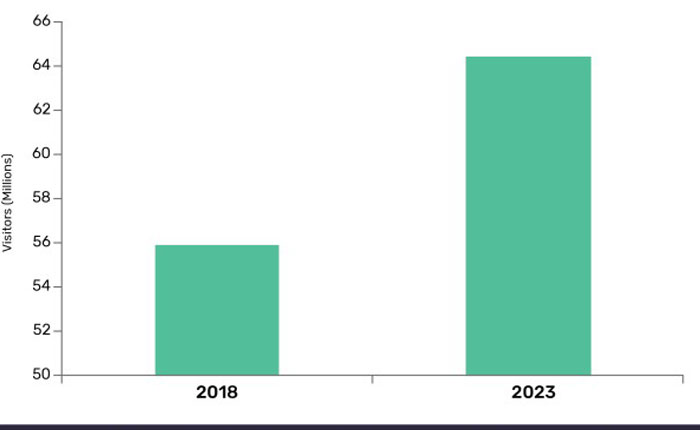
In 2018, 55.9 million UK residents travelled to European destinations. However, GlobalData expects this number to increase to 64.4 million in 2019.

The report, “Tourism Source Market Insight: United Kingdom” also identified that Spain and Eastern European nations will continue to see growth as travellers seek sunshine and city breaks with a smaller price tag.

Laura Beaton, travel and tourism analyst at GlobalData, said: “Of course Brexit has impacted the UK’s outbound tourism industry but the reality is not likely to be as bad as we might have been led to believe, at least in terms of visitor numbers.”

The UK’s longstanding relationship with Spain is not set to be affected by a Brexit deal or no-deal either. In 2017 the then Spanish deputy minister for European affairs, Jorge Toledo, stated that Spain would have a backup plan to shield the country’s tourism industry from Brexit consequences.


GlobalData graph showing an increase in UK outbound travellers.

“Tourism from the UK is an important part of many European countries’ economies and Spain, France, and Italy are going to remain the top destinations for UK travellers for the foreseeable future so it is important that ties are not severed,” added Beaton.

The report also identified destinations such as Hungary, Czech Republic and Romania as places UK travellers would be increasingly travelling to in the future. This is partly because their currencies currently remain weaker than the pound and untapped natural beauty, history and culture is also enticing travellers to visit these countries.

“The depreciation of the pound has had a big impact on expenditure, however, and travellers have had to spend more to match the same experiences they had a few years ago. As a result, cheaper locations are highly sought after by UK travellers.”

“Western Europe is only truly becoming aware of the other offerings of Eastern Europe and this helps to explain how each country has rapidly grown its UK visitor numbers in recent years,” said Beaton.

“Vilnius in Lithuania is a UNESCO World Heritage site and Budapest has many buildings that have won European Heritage Awards so Eastern Europe has plenty to entice travellers away from the traditional city breaks of Paris and Rome.”

Brexit not deterring business travellers in the UK

Advantage Travel Partnership, the UK’s largest independent travel agent and travel management company (TMC) consortium, revealed the findings of its 2018 Hotels Market Report which shows that the UK regional capitals are performing strongly with overall room nights booked growing by 8% across the top 250 UK cities.

London continues to be business travellers’ favourite capital for work trips with 663,000 room nights booked in 2018, an increase of 5% when compared to 2017. But Edinburgh experienced the highest level of growth in 2018 with room nights booked increasing by 16%, Belfast was up 13% and Cardiff up 5%.

The 2018 Hotels Market Report analyses data from corporate hotel bookings made between January and December 2018 by Advantage’s TMC members, who represent around 40% of the UK business travel sector, highlighting business travel trends and booking behaviour.

The report also shows significant growth for cities in the Midlands and North East, with Derby seeing the highest growth with 31% more booked room nights compared to 2017, while York, Nottingham and Gateshead also saw double-digit percentage increases.

Top Ten UK Cities – Booked Room Night Percentage Increase (year-on-year), January – December 2018

Derby – 31%
York – 22%
Plymouth – 21%
Inverness – 20%
Nottingham – 18%
Edinburgh – 16%
Reading – 15%
Belfast – 13%
Norwich – 11%
Gateshead – 10%
Global Results

The business world continues to travel widely, with the 2018 Hotels Report recording that hotel demand remains strong in many international cities with New York, Auckland, Wellington, Houston, Paris and Sydney topping the Advantage Top Cities list. In total, worldwide volume grew by over 393,000 room nights, a total increase of 8.74% compared to 2017, indicating that SME (Small and Medium Enterprise) corporate accounts continue to perform strongly.

The total number of bookings made by Advantage business travel members in 2018 saw similar growth – up 8.76% – while the average length of stay remained constant, at 1.87 nights. Increased demand and higher occupancy globally meant hotel rates have increased by US$2 to an average daily rate (ADR) of US$169.41.

The report also looks at trends on bookings and ADR for cities and locations around the world, with New York once again topping the list as the highest volume worldwide city outside the UK, with 90,799 room nights booked at an average rate of US$395.97 per night. Increases were also seen in Bangalore (up 54%), Kuala Lumpur (up 36%) and Boston (up 27%).

Neil Armorgie, Global Product Director at Advantage, commented: “It is clear that the corporate hotel sector continues to grow, with another significant increase in bookings year-on-year, made by independent TMCs. Despite continued uncertainty in both the global and UK economies including Brexit, hotel room night demand is at record levels in many destinations, providing a welcome boost for our members.”

“Although not all destinations in Britain saw an increase in room nights booked, ADR remained strong. It is also positive to see particularly good performance in both major cities and regions such as the East Midlands and North East.”

The report is representative of hotel bookings made across most of the major international and independent hotel groups including: Accor, Apex Hotels, Choice Hotels, Citadines, Clayton Hotels, Design Hotels, The Doyle Collection, Edwardian Hotels, glh Hotels, Hallmark Hotels, Hilton, HotelREZ, Hyatt, House of Daniel Thwaites, IHG, Jurys Inn & Leonardo Hotels, Loews Hotels, Macdonald Hotels, Maldron Hotels, Melia Hotels International, Millennium Hotels & Resorts, The Montcalm Hotels, NH Hotels, O’Callaghan Collection, Omni, Park Plaza, Pegasus, QHotels, Quest, Rotana, Radisson Hotel Group, Sabre Hospitality, Small Luxury Hotels, TravelClick, Travelodge, Village Hotels Club, WorldHotels Collection and Wyndham Hotel Group.

New data reveals £1.9bn spend generated by academic conferences

Richard Smith of RJS Associates and Tony Rogers Conference & Event Service have released new research into the university and academic conference market.

Among the key findings are that academic conferences generated £1.9bn of in-destination spend during 2017, as well as an estimated 15 million delegate days.

The new report, entitled ‘University and Academic Conference Market Trends’, represents the first in a series of reports examining the developments, changes and trends in different types of conference and meeting venue over the past decade. 

It is based on the huge volumes of data that have been collected in this period via the annual ‘UK Conference and Meetings Survey’ (UKCAMS) research. It is designed to complement the national UKCAMS data by providing an in-depth analysis of different venue types on a sector by sector basis.

This report provides a more detailed focus on universities. It looks at the supply of such venues and their different characteristics, as well as the size, value and performance of the academic venue sector by different sub-categories of venue.

The report also contains a number of insights from university conference sales representatives, summarising their current market experiences, and reflecting on changes experienced over recent years.

Some other key findings from the research include:

 The annual average number of conferences has fluctuated since 2009. Academic venues experienced an increase in 2010 and 2011 but fell back in 2013 and 2014.  They have witnessed some growth in the last couple of years.

This trend appears to have been driven by business from the corporate sector which has also fluctuated since 2009 but has shown an increase from 2013.

Levels of overnight conference business have also increased from 2013 – reaching a peak in 2017.

Tony Rogers commented: “Academic venues, principally universities, have a long history of staging meetings and training events, but it is really only in the past two to three decades that serious investment has taken place to provide facilities for, and the marketing of, dedicated meeting and conference spaces for hire by external organisations.”

Authors Richard Smith and Tony Rogers also undertake the annual UKCAMS research. Copies of the report are available priced £250 + VAT. Visit http://www.ukcams.org.uk to order.

IBTM World Trends Watch Report – summary

virtual reality viewer

IBTM World published their Trends Watch Report 2018 last week. Its objective is to look at the state of the industry now and predict what it will look like in 12 months’ time. The report is compiled from various sources, and the part that we’ve summarised here is the section on trends for 2019:

Wellness

Health and wellness was a growing area in 2018, with growing awareness around the issue of mental health and providing support for employees. This will continue to be of interest in 2019 and beyond.

Experience

The experiential sector of the meetings and events industry is moving to evaluating their events’ strategic and creative thinking, above their operational efficacy. It’s thought that industry growth will be driven by the creation of strategic experiences for brands, as much as efficient production.

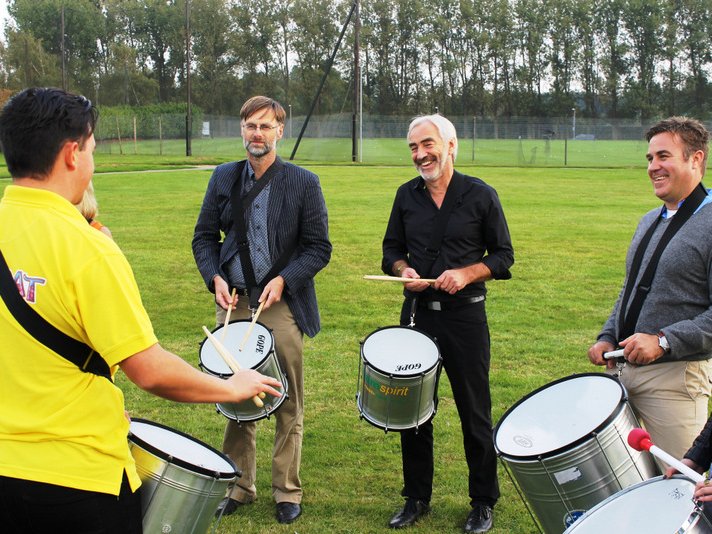
drumming team building

The Role of the Millennials

The millennial meeting attendee has been found to be more demanding, with a shorter attention span and with increased needs around technology, sustainability and connectivity. MPI’s research shows that event organisers believe that sessions will becoming more specialist and individual session times will go down as the attendees’ attention span drops.

Safety and Security

There will be increasing focus around ‘Duty of Care Initiatives for Delegates’. This is because of high profile incidents in 2017 and 2018, from terror attacks to ecological threats. Whilst other trends, from sustainability to wellness, are often perceived as ‘luxury’, according to MPI this trend will be a ‘necessity’ for at least the forthcoming year. Last year MPI reported that fewer than 50 per cent of meeting planners had security threats in their contingency planning, but they feel this number will rise.

Technology

Technology is changing the way we work, but this will also have an impact on the way business events are planned and the participants experience them. That starts from the moment attendees provide their details at registration. Their data, powered by artificial intelligence, can be used to decide which sessions to attend and which attendees they should connect with to get the best return on their investment.

According to World Finance, the five fastest-growing industries in the world are all technology related: renewable energy, cybersecurity, biotechnology, virtual reality, and artificial intelligence. These industry sectors give us opportunity for growth as their exhibitions, meetings and conferences grow.

The Economic Outlook

The theme seems to be ‘Growth out of Uncertainty’ as economists are concerned about the trade dispute between the U.S. and China, Canada, and the European Union. The economic and political situation is uncertain in all parts of the world. However, technology could create a more dynamic business world in the future. The global meetings and events industry, which relies heavily on industrial dynamism, could benefit from these conditions.

The conclusion of the report is that although everything changes, everything stays the same. Two photographs are often used in marketing presentations, one taken in the 1900s, the second one hundred years later. They both show queuing commuters, waiting on a platform. The first shows a predominantly male audience, waiting for a train, everyone looking down at a newspaper. The second shows a more diverse audience, in more contemporary dress, but still waiting for a tube, still with their heads down but in this case towards a phone or tablet. This picture describes the changes in our working environment.

Summary

Despite new technology, there is still high demand for live events and face-to-face meetings. Experiences add value to events and leave lasting impressions.

The meetings and events industry is driven by the success of other industries, investments from cities and regions, the growth of businesses, and also by the organisers’ belief in the investment quality of a meeting or event.

There is evidence of dynamism within business, which is good news for the meetings and events industry, as it drives communication, exchange of knowledge, education, networking, conferences, exhibitions and product launches.

The IBTM World Trends Report is available in full online.

Considering North America for your event?

Photo of Katharine Jordan
by Katharine Jordan, Marketing Director, Trinity Event Solutions

The Watkins Research Group produces a report every 2-years about destinations in North America. This year, as well as in 2016, Vancouver topped the poll of the most likely city that organisers would recommend to a business associate or colleague for an important meeting. I’ve just visited Vancouver and can endorse the findings. The city has a quick transfer from the airport to the centre, the hotel stock is excellent and accommodation is close to the convention centre, which is on the waterfront with beautiful views and it offers good value for money.

The survey was completed by almost 1,000 event organisers and the destinations with the best hotels for large meetings are as follows:

photo of Orlando, Florida
  1. Orlando
  2. San Diego
  3. Las Vegas
  4. Chicago
  5. Seattle
  6. Vancouver
  7. Indy
  8. San Antonio
  9. Houston
  10. Toronto

This is based on:

•  Proximity of hotels to the convention centre
•  Rational convention rates
•  Close coordination between the convention bureau and hotels
•  Making sure adequate room blocks are available
•  Attractively furnished meeting rooms

The top 10 easiest destinations to fly to:

Photo of Chicago
  1. Chicago
  2. New York
  3. Washington
  4. Atlanta
  5. Las Vegas
  6. Orlando
  7. Los Angeles
  8. Dallas
  9. San Francisco
  10. Boston

Top 10 cities that feel “safest”:

Photo of Vancouver
  1. Vancouver
  2. Salt Lake
  3. Montreal
  4. Toronto
  5. San Diego
  6. Nashville
  7. Minneapolis
  8. San Antonio
  9. Phoenix
  10. Austin

5 tips to consider when you’re planning an event in North America:

  • Think about transfer time to the destination, as well as the flight time, compare this with the length of stay and make sure everything is in proportion. No-one will thank you for a flight, followed by a lengthy transfer, which results in limited time at the destination. Also look at whether the transfer is by coach, train, boat or taxi and think about what the possible problems are – then try to pre-empt them.
  • Check the nationalities of the attendees and what passport they travel on. Make sure that any visas or visa waivers are organised well in advance – you don’t want people dropping out because they are unable to enter the country.
  • Speak to the Conference Bureau – a good conference bureau will help with contacts at Convention Centres and hotels, give you suggestions for off-site dinners, recommend DMCs and can assist with site visits.
  • Check the rates, as pricing is structured differently in North America. The meeting space is allocated depending on the quantity of bedrooms and is included in the bedroom rate, but syndicate rooms will be chargeable. Usually breakfast, dinner, lunches and breaks are priced separately and there will be a minimum food and beverage spend.
  • Rates are usually quoted excluding tax and the rates may be different on different items eg bedrooms, meeting rooms, food and beverage etc. The local tax and state tax vary, depending on the destination and they will also add a gratuity charge which is taxable. There can be a tourist tax per night or for the whole stay. A rate that initially looks great can be less attractive once the taxes are added.

For more information about venue finding and planning an event in North America, contact enquiries@edgevenues.com