
Choosing a safe destination for your event

When we’re organising an event abroad, we need our attendees to be as safe as they can be while they are travelling, when they are there and when they go out to see the city. The Economist Intelligence Unit has published the 2019 Safe Cities Index, which ranks 60 cities across 57 indicators covering digital security, health security, infrastructure security and personal security.

Cities in the Asia-Pacific region make up six of the top ten destination, although the region does not have any bearing on the results. The top twenty cities are as follows:

  1. Tokyo
  2. Singapore
  3. Osaka
  4. Amsterdam
  5. Sydney
  6. Toronto
  7. Washington DC
  8. = Copenhagen
  9. = Seoul
  10. Melbourne
  11. Chicago
  12. Stockholm
  13. San Francisco
  14. London
  15. New York
  16. Frankfurt
  17. Los Angeles
  18. = Wellington
  19. = Zurich
  20. Hong Kong

Paris is ranked at 23, with Brussels 24, Madrid 25, Barcelona 26 and Rome at 30. Abu Dhabi and Dubai are 27 and 28.

Health Security

The top cities in this sector are Osaka, Tokyo, Seoul, Amsterdam and Stockholm, which have good access to high-quality healthcare, safe food, water and air, and speed of emergency services.

Infrastructure Security

The top cities in this sector are Singapore, Osaka, Barcelona, Tokyo and Madrid. These cities have good continuity management plans, pedestrian friendliness, institutional capacity and disaster-risk informed development.

Personal Security

The top cities in this sector are Singapore, Copenhagen, Hong Kong, Tokyo and Wellington, which have strong personal security policies, community-based patrolling and low levels of violent and petty crime, illegal drug use, corruption and organised crime.

Digital Security

The top cities in this sector are Tokyo, Singapore, Chicago, Washington DC, Los Angeles and San Francisco. They have low levels of infection by computer viruses and malware and a high level of knowledge about privacy policies, awareness of cybersecurity and dedicated cyber-security teams.

Crime, a natural disaster or terrorism can happen anywhere, but if a destination is prepared to deal with it efficiently and has a good emergency service, then that makes it a safer city for a conference or meeting. The recent riots in Hong Kong have had a significant impact on the attractiveness of the destination for business travellers, who are switching to Singapore and other Asian destinations to avoid disruption.

Security and Risk – Six top tips to select a venue

With the security related events of London and Manchester at the forefront of everyone’s minds, keeping event attendees as safe as possible has become another topic that corporate event professionals need to be expert in.  There are also natural hazards, such as the earthquake in Mexico, fires in California and floods.  Trinity Event Solutions holds regular Meetings Voice Summits for clients and potential clients to network and learn, and a recent event focused on these issues.

If your event attracts attention, because of the topic, political situation, has VIPs or is high-profile, such as an awards event, then these can be more vulnerable.

Venue selection can have a considerable impact on the security of an event, so here are six tips to consider:

  1. Consider the venue’s location – is it set back from the road or does it have a private entrance? Venues that are set back will be harder to attack in a vehicle, and less likely to suffer from criminal surveillance too.
  2. Check that the venue has CCTV on all entrance points so that they can monitor everyone who enters or leaves the venue. If they have CCTV then this is a great indication of a well designed security plan.
  3. Does the venue have the ability to close off access to the building? Also is there an alternate route out of the building should one road be cordoned off?
  4. Ask the venue about safe havens and evacuation. Do they have enough capacity for everyone attending and are these areas spread around the property?
  5. Prepare your own simple security and emergency plan. Brief key staff and give them a printed copy. Don’t rely on an electronic copy, as mobile networks could be taken down.  Discuss your plan with the venue and ask to see their security and emergency plan. They should be happy to share their plans with you.  
  6. Make sure you have the contact details and location of the nearest police stations, hospitals and if you’re abroad, the British Embassy.

What you can do in advance

When you are at the initial stage of venue selection, ask the venue: 

  • What are their emergency procedures
  • How do they keep non attendees out of your area
  • What is their record of criminal activity
  • What is their record of cyber attacks

For more information about organising your events and selecting the appropriate venue, call 01780 484051 or email enquiries@edgevenues.com

What behaviour is and isn’t acceptable at your event?

group of delegates drinking

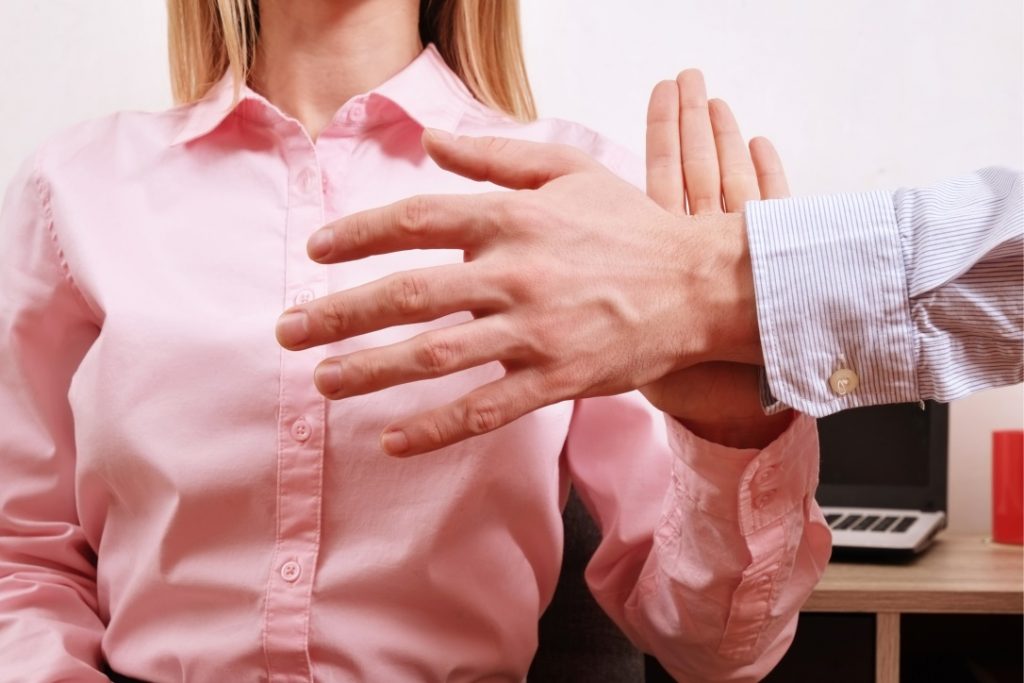
There’s been a lot of publicity about sexual harassment and the #metoo movement in the last year, but how would you handle a complaint of this sort if it happened at your event?  What about a conference attendee smoking, vaping, carrying a gun or taking marijuana? In some places, this behaviour is permitted and it is important that we all know how to deal with these situations if they arise.

Sexual harassment is not unique to the meetings industry, but meetings do offer opportunities for abusive behaviour. You could get a complaint about any activity that an individual or group considers inappropriate and at meetings people often present themselves differently, as they are away from home, family and in unusual circumstances outside the office environment. Other issues which could offend are social media postings, suitable clothing and verbal comments, such as racist, anti-lgbt etc

inappropriate behaviour

Marijuana is now legal in Canada, as well as in 10 states in the US: California, Colorado, Massachusetts, Maine, Vermont, Michigan, Washington, Oregon and Alaska. If you are holding an event here, you need to anticipate that attendees may want to use and what can be done to make sure that it is done safely. As this is a relatively recent development the liability laws have not been developed, as has been the case with alcohol.

EDGE Venues has looked at some items that you might want to consider when planning your event.  If you’re organising an internal conference, then your company standards may cover some of these items, but if it is an external event then there are additional things to consider.

Checklist:

  • Outline what behaviour is unacceptable at meetings and events
  • Do attendees have a clear understanding of what is permitted and not permitted eg harassment, excessive drinking and other conduct
  • Issue instructions for an attendee to report improper conduct
  • Set up procedures for how you will investigate and respond if a complaint or allegation is made
  • If misconduct is found, plan what corrective action will be taken
  • Document all reported incidents, investigations and results
  • Check your insurance cover and any policy issues
  • Check your suppliers’ insurance cover and make sure these are adequate
  • Check national and state laws and regulations, make sure they are enforced
  • Have adequate security
  • Minimize opportunities for attendees to cause harassment, injuries or damage.

Accusations may be as harmful as proved bad conduct, as the perception of a badly managed event or one with a reputation for inappropriate behaviour will deter delegates from attending and will have a long term detrimental effect.