Site Inspection Checklist: What to Look Out For

A site inspection is your opportunity to understand how your event will work at the venue, so arm yourself with our site inspection checklist to make sure nothing is missed.

We’ve compiled a list of our most important questions to ask yourself, or the venue when conducting a site visit.

Remember to ask searching questions until you get the answers you need. After all you’ll be paying the bill! Here are some of the things you need to consider:

Site Inspection checklist

Event Location

Is the venue easy to find? Is the signage clear?

How far away is the nearest airport and railway station by taxi or bus?

Is there sufficient parking?

Is it in a safe area? If security is required, can the venue meet these needs?

The Venue

Does the venue look welcoming, attractive and clean?

Are there plenty of staff in the reception area to check-in or help and direct guests?

Is it clear where the meeting rooms are and how will they be signed?

Registration Area

Where will this be located and is there adequate storage?

Is there enough space for staff and attendees? Is it a private area or will people attending other events be passing through?

Do you need a telephone, power points and internet connection?

The Meeting Room(s)

Which floor is it on and how will attendees get there?

Does it meet the size and layout requirements?

Are the breakout rooms close to the main meeting room?

What equipment is in the room and is there space for additional production equipment to be brought in?

How easy is the access to bring equipment into the meeting rooms?

Are the chairs comfortable, what size are the tables?

Is water provided for the delegates and what is included in the package?

Where do attendees leave their coats and bags?

Where are the nearest toilets?

Is the venue fully accessible for disabled delegates?

Check extra facilities such as lighting, soundproofing, air conditioning, power supply, wi-fi, ceiling height, door aperture and if there are any pillars to get in the way.

Catering

How many tea/coffee breaks are there and where will they be served?

Where will lunch be served and how easy is it for the attendees to get there?

Are the corridors an adequate size for the delegates to move around?

Is the standard of food good, is there a choice of menu? (Top Tip: Have a meal and try different dishes before committing to a delicious dish for the event)

What options are there for special diets?

Can the restaurant accommodate special dietary requirements?

Are drinks included in the menu price or extra?

Are there plenty of staff to serve the food quickly?

How many food stations will there be?

Bedrooms

How many are there and what sizing options are on offer??

Are they clean and well-maintained? Is there disabled access?

Are there designated smoking and non-smoking rooms?

What time can attendees check in and out?

Are the lifts, fire exits, and stairs all in order?

Technology

Is the Wi-Fi able to cope with everyone bringing 2-3 devices with them?

Will the speakers do any live streaming and what do you need to make sure you have a fast, reliable connection?

Other

Are the staff friendly and helpful?

When were the venue/meeting room/bedrooms last renovated?

Are there any refurbishments due?

Have any of your competitors booked a meeting at the venue on the same date?

Is there a gym/swimming pool/golf course or other leisure facilities and are there additional charges to use them?

Is there a business centre and what other services are available for guests?

Who is trained in First Aid and where are the nearest medical and dental facilities?

What are the venue’s insurance and crisis management procedures? Take a look at our article on Security and Risk for more information.

What are the venue’s standards of service? (Top Tip: make sure that these are incorporated in the contract)

Remember the venue represents your organisation and you need to make sure it upholds your standards and reputation. A well-run and enjoyable event can only enhance your company’s image. Ensuring you have done all of these checks before booking will streamline your event’s planning process, and save you time overall.

We’re always happy to help with venue procurement and advice to make your event a success, so contact us.

How to hold safer meetings in the world of Covid-19

Covid-19 has changed the normal practice of business meetings, conferences, conventions and exhibitions and the ones that take place have been scaled down and are far fewer. However, one of the things to look forward to is holding larger events and getting together again and this article looks at some of the things we need to consider.

Hopefully, some of these measures will be a thing of the past, once the vaccines are rolled out. However, the events industry needs to recover confidence and trust, including the readiness of participants to travel and mix with each other and for their employers to feel comfortable about travelling and sending them to meetings. It is important to recognise that there is a shared responsibility between event organisers, venues, suppliers and attendees in terms of adhering to guidance from government and public health organizations. Wherever possible we need to minimise contact between event staff and attendees to reduce risk of Covid transmission. So, what should we be checking, as well as the usual items on a site visit

Venue finding

There is no doubt that more space will be needed to hold an event to enable social distancing, consider all elements, including where to put people if there is a bottleneck:

  • Meeting rooms (layout and capacity)
  • Catering spaces
  • Registration area
  • Corridors, staircases and elevators
  • Entrances and exits
  • Public areas, lavatories, business centres

Carry out a risk assessment of the venue against set criteria, both before confirming with the venue and again before the event takes place.

Site visit

There is no substitute for carrying out a site visit to the venue, but venues are making much more information available and have new floorplans and capacity charts. Many are offering virtual site visits which will means you can evaluate more venues.

Venue equipment

Find out what the venue can provide, for example, you may need:

  • Perspex screens
  • Directional signage and distance marking on the floor
  • Barriers or one-way systems and the ability to restrict the number of entrances
  • Hand sanitizing stations
  • Mask stations
  • A separate area if you going to check temperatures of people arriving, or even on a daily basis
  • Drop off and collection points to sanitize equipment
  • Does the venue have fogging equipment to sterilize the space and how often is it used

Venue Accreditation

Check the venue’s accreditations. The two main accreditations in the UK are Visit Britain’s We’re Good to Go and AIM Secure. In addition, there are many others such as the HBAA and Quality in Tourism’s Safe Clean & Legal, AIPC, ICCA and UFI’s Good Practice Guide, COVID-19 Certify, COVID-19 Control, COVID-19 Aware and AA’s COVID-19 Confident. Hotel groups have introduced their own standards and best practices such as such as Hilton’s CleanStay programme and Marriott International’s Global Cleanliness Council.

Ventilation

Agree the air conditioning and ventilation settings with the venue for the duration of the event and do not allow anyone to alter the settings. Airborne transmission is one of the ways that Covid-19 is spread and ventilation needs to be excellent to make event spaces safe. Venues need to have a good airflow, HEPA or MERV-13 air filters (check when were they last cleaned or replaced?). Negative-pressure systems or portable filters should be used in enclosed spaces or areas which don’t have windows to open, these will pull air away from people and filter it before it is inhaled again. Ceiling fans and air vents should be directed away from people. Humidity should be between 40-60% to minimise transmission.

Doors and windows can be kept open to improve ventilation, particularly in public and catering areas, using plants or partitioning to make the area private.

Registration

  • There are various options for minimising contact at registration:
  • Send the badge in advance (mail or email) and the attendee assembles it themselves
  • Send a QR code or information to go in a digital wallet
  • Self-service touchless kiosks
  • Use an event app, which can have an individual barcode

It’s a good idea to spread the arrival time to avoid people queuing, so find out how people are travelling and when to manage the area.

Social distancing

Wristbands are available to alert people they get too close. You can set the distance to whatever the local requirement is or your own setting if preferred. It works on Bluetooth and the wristband vibrates, buzzes or flashes when two people are too close. These will also retain data on where attendees are and who they are close too, if contact tracing is needed at a later date.

If you’re not going to use a technology solution, think about who is going to be responsible for enforcing social distancing onsite and how they are going to do it.

The programme

Stagger the timing of meeting sessions, so everyone isn’t in the corridors or swapping meeting rooms at the same time causing a bottleneck. Allow enough time for meeting rooms to be cleaned between sessions, disinfecting of tables, chairs, a/v equipment etc.

Think about whether the presenters can change rooms instead of the audience. Can speakers take microphones with them rather than changing them if they go to another room?

Ask attendees to book breakout sessions, so that you can manage the capacity, make sure the room isn’t overcrowded and you know who is in which room in case contact tracing is needed.
Could attendees book a track of breakouts, rather than select individual sessions? Maybe breakout sessions need to be repeated to cover all attendees.

How are you going to manage questions in a session? Can you use the event app or other software, rather than passing a microphone around the room.

Water – there won’t be a group of attendees around one table, so it won’t be possible to give them bottles or a jug of water to share. They will need one each, or do they bring their own in? What about the waste in our world of social responsibility?

Contactless scanning can be used to monitor numbers in different areas of the venue and control access if meeting or catering areas are full.

Consider using semi-outdoor or outdoor space, weather providing. Venues are creating different spaces such as using terraces, lawns or marquees.

Stagger the timing of breaks and meals, to avoid too many people in the area at one time. Are you going to serve a box or plated meal? Buffets are still an option, if they are served by staff behind a Perspex screen, one server per dish and the attendee holds the plate under the screen. More food stations will be needed to get people through quickly. However, this requires extra staff from the venue, so make sure they plan accordingly.

Without a doubt more space will be needed to make sure everyone is socially distanced, for seated meals you should only place 3 people on a 6” round table to keep them separate. Also, everything will take longer than previously to maintain social distancing, so build this into the programme.

Have a back up team of staff available in case one or more of the members of staff onsite comes in to contact with someone who has Covid or needs to self-isolate. Different people will need to take over immediately.

Communications

Communication is more important than ever.

Agree the safety protocol and let everyone know what it is beforehand. Issue a clear Code of Conduct, which makes the rules clear and who is responsible for making sure they are adhered to. The venue will have a protocol in place, but you will also need them for your event. Things to include are:

  • Mask wearing (you might want to provide masks, to make sure they are the same standard)
  • Social distancing
  • Use of sanitizer and hygiene measures
  • Temperature checks
  • Social bubbles

Onsite, an app is an easy way to distribute information and attendees need to know how important it is to read notifications. It is also a safe and private way to exchange information.

Are you going to ask attendees to sign a Covid waiver before they attend? Take legal advice about this and understand your liability.

Covid screening and sick attendees

Consider whether you are going to have a medical professional onsite. Do you want to take people’s temperatures on arrival or at the start of every day? Or do you want them to bring a clear test result, as some countries immigration now require? Or would you consider bringing in a private medical company to test onsite?

Abbott Labs have developed a Covid test, BinaxNOW that costs about $10 and will give results in around 15 minutes. The priority is to issue this to health professionals in the US first, but it could be made commercially available in 2021.

The event organiser needs to have a procedure if someone has Covid. A hotel will have a quarantine protocol, but an attendee needs to be informed in advance how a quarantine experience in the hotel room will work, such as medical services, food and beverage and any additional cost. If they need to go to hospital, how will this be organised.

Make sure you have excellent attendee records so contact tracing can be carried out and have a communication plan to inform all attendees if there’s a problem. Ask people inform you if they fall ill within two weeks after the event too, so that you can let everyone know.

Give aways

Free gifts are an event favourite, but how do you make them safe? You might want to send them to the attendee before or after the event. Consider the purpose of the item, is it to generate excitement or interest, do they need to bring it with them? Or maybe it’s a follow up or thank you.

This is by no means a comprehensive checklist, but just to help when planning future conferences, meetings and events. For more information or help to find a venue, contact enquiries@edgevenues.com

Event design and production – some ideas for a successful event

In this world of more digital communication the need for personal engagements has also increased. People need to connect and the event organisers who are linking event design to experience and behavioural science in to a strategy to achieve objectives are running very successful events. Here are some ideas that you might want to think about when setting objectives and planning your next conference or meeting.

Don’t give the delegates too many choices

Some events have grown over the years and multiple concurrent breakouts have been added to please everyone or more networking sessions to satisfy sponsors. However, giving attendees too many choices makes them think they are missing out or need to be in two places at once and the result is that they are dissatisfied. It’s like looking at a restaurant menu and there’s too much on it and it’s overwhelming and if your choice isn’t excellent then you wish you’d chosen something else. If the attendees are overloaded then they’ll skip sessions and attendance will decline. What the delegate wants is value for their time (and money), then time to review, reflect and respond to the content.

You don’t need a huge budget to deliver a successful event – all you need is an idea

Do something different, as new experiences trigger a new way of thinking. Incorporate novelty and interest through narrative and this will help the listeners to retain key messages.

Create a shared identity, values and purpose and this will strengthen the bond between delegates and the organiser.

Do something memorable at the end of the event as that’s the last thing that people will remember. If you make the peak of the event the finish or farewell, then they will leave on a high.

Production – check the venue

When you’re planning the event there are four key pieces of information that a production company will need to know:

What is the available access into the meeting space?
When will it be available?
The dimensions of the meeting room or area
The power distribution in the meeting room

Access

It’s very simple for you to walk to the function room from the catering area or reception but find out how the production company brings its equipment in to the meeting space. There is a large variety of equipment which could be needed depending on the requirements and particularly if layouts are being changed during the event.

Dimensions

Assessing this information has improved dramatically with the internet, as venues now have websites with downloadable floorplans. Look out for pillars that don’t appear on the floorplan and also the accuracy of dimensions. Make sure you check the height and width of doors and ceiling and beware of chandeliers. The screen needs to be the correct size for the audience and this will have an impact on the capacity of the room.

Power

Most events will need addition lighting, check what needs to be hired it and whether you’ll incur a bill to hire alternative power options.

Timings

This can become complicated if the venue has multiple bookings with different companies setting up and de-rigging. The time it will take can only be estimated once the venue has been checked and the technical equipment has been booked. There is also the issue of booking the crew, based on budget and the amount of time allowed to set up for the event.

The main objective is to find the right venue and to do this the organiser needs to talk to everyone involved, so they all understand the requirements before the venue search can start. Site inspections are important so make sure you ask the right questions.

In conclusion, the best event will deliver the message by creating the greatest interest and least amount of effort. More isn’t necessarily better, and you can’t be all things to all people.

The Floating Hotel – The Good Hotel

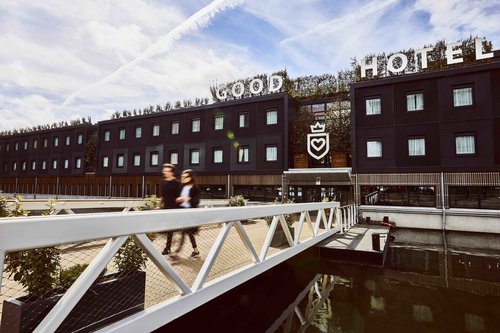
We’ve recently visited The Good Hotel – a floating hotel, situated on a fixed mooring close to the London ExCel Centre and London City Airport. Here’s an insight from Alex Jarvis into the hotel and what you can expect following his latest site inspection…

The Floating Hotel close to London ExCel Centre

Floating Hotel location

The hotel is a short walk from Royal Victoria DLR, and is also a very short walk from the Emirates cable car over the Thames to the Millennium Dome if you fancy a different mode of transport for the day. 

Situated on a lovely site on the former docks with views of the surrounding areas, which lends a charming peaceful atmosphere to the place.

Floating Hotel offerings

The hotel opens onto a large open lobby, with informal seating merging into a bar, lounge and restaurant. The Good Hotel’s meeting rooms are located off a corridor on the same floor, with four meeting rooms available and are all decorated in quite a minimalistic way. All meeting rooms have views across the water, and are small to medium-sized.

The hotel also offers a rooftop bar which can either be completely privatised, or partially privatised. There’s fantastic views across the water and the nearby developments. There is also direct access to avoid entering through the hotel should you wish.


I thought the location and nature of the hotel (being a floating hotel) are two great draws for the property. Albeit it was a lovely sunny day when I visited, but the area around the hotel was nice and pleasant. The large docks and the Thames nearby created a charming scene. I thought the hotel could work well for London-based companies perhaps looking for a change of scene whilst still being within close reach of Zone 1 & 2.

The Good Hotel also has a key focus on CSR (the origin of the hotel’s name). A great drawing point for some customers. 

Visit their website to find out more.

Tour of London – site inspection extravaganza

Alex Jarvis from our team took on the challenge to visit eight London hotels in one day and report back on his findings. From his comprehensive sites inspections, take a read of his full report… 

Radisson Blu Edwardian New Providence Wharf

The next stop on Alex’s tour of London was the Radisson Blu Edwardian New Providence Wharf – a purpose-built hotel a short walk from Blackwall DLR station, and also about a 10-15 minute walk from Canary Wharf. The hotel is also almost opposite the Thames from the Millennium Dome.

The hotel has a nice airy lobby, with the meeting rooms located upstairs to the right as one enters the property. The meeting rooms are fresh and functional, without any bold colours, and most enjoy natural daylight. The meeting rooms (and the hotel as a whole) is decorated in a sleek corporate style, with the bedrooms of a similar feel. Some of the bedrooms have lovely views across the Thames.

“I enjoyed my visit to the hotel, as it is a nice modern property that appears to be well maintained, in a pleasant modern redeveloped area relatively close to Canary Wharf. I thought the hotel could work well for a mix of events, as well as supporting with accommodation for events at the ExCel centre.”

The Crystal

Continuing on his tour of London, Alex has shared his experience on The Crystal – the home of a permanent exhibition on environmentally-friendly urban development, in a purpose-built property that is one of the most sustainable event venues in the UK, having won several awards.

The Crystal houses dedicated meeting/function rooms, as well as a fixed auditorium. The building itself opens onto a large airy atrium space with lots of glass, called The Street, which is utilised as a catering area for the largest meeting spaces, and also works well for either drinks receptions or sit-down dinners.

Having entered the building, the meeting rooms are to the left of this area, the exhibition space is to the right. The auditorium was nice and fully furnished, while some of the meeting rooms on the first floor have great views over the area (including views of the cable car across the Thames). The exhibition space can also be used for drinks receptions, although this would be with the attendees dispersed through the exhibition rather than all in one space.

Despite being a fixed exhibition, part of the features can be personalised with corporate messages or a particular colour scheme, which is a nice touch for some events. Being close to the ExCel means there are lots of accommodation options within an easy walk of the venue too, which can be a key selling point.

Hilton Canary Wharf

The Hilton Canary Wharf is a modern purpose-built hotel just a short walk (5 minutes) from Canary Wharf, although the closest DLR is South Quay, just a little further down from the hotel. The hotel is a tower, with the meeting rooms located on the first floor, most of which have natural daylight. 

The meeting rooms (and the public spaces too) are decorated in an inoffensively corporate manner. The largest meeting room does not have natural daylight, but has a large dedicated pre-function area, that can be used for registration, catering or exhibitions, that has lots of natural light. The bedrooms are nice and spacious too.

Although the hotel is located in a busy area, and has a branch of the DLR running directly outside, the hotel has double glazing on all of their windows so that there is very little to no noise disruption.

Novotel Canary Wharf

A very recent newly-built skyscraper hotel, the Novotel is the tallest hotel-only building in London, at 39 stories. On his tour of London, Alex stopped by to report back on his thoughts on the hotel…

The hotel doesn’t resemble a typical Novotel, it has been decorated throughout with a strong boutique theme to reflect the maritime trading heritage of its location. Throughout the hotel there are touches like photographs of the former Docklands, chains and ropes used as decorations etc. 

The nine or so meeting rooms are all located on the first and second floor, all but one are of a small size, and all of these smaller rooms have fixed layouts (mostly boardrooms, a few informal layouts), and all have been decorated to fit a particular theme. E.g. the Logs room with wooden furniture. The largest meeting room, the East India, does have a more flexible layout and is of a medium size. The bedrooms are lovely, and mostly have fantastic views (as you can guess; the higher up the better the view), and have been decorated in the same fashion.

The hotel’s best feature is the Bokan restaurant, located on the 37th, 38th and 39th floors of the hotel (the top floors), with fantastic views over London. Parts of the restaurant can be hired for events, down to small semi-private areas, to a total buy-out. The 39th floor also enjoys a medium-sized outside terrace that can be hired for dinners & drinks receptions.


I visited eight venues in total on the day I visited the Novotel, and I would happily say the Novotel was my personal favourite of the day. I very much enjoyed the views, the restaurant is lovely, and the boutique meeting rooms which have a lot of personality, but still possess all the corporate gadgets that you would expect for a modern hotel.

De Vere Canary Wharf

Stop 6 of his tour of London and Canary Wharf, Alex took in more of the corporate experience that De Vere Canary Wharf has to offer meeting planners…

The De Vere Canary Wharf is located about a 5 minute walk from Canary Wharf, off of Westferry Circus. The venue is also a short walk from Westferry DLR, and is also close to Canary Wharf Pier for Thames Riverboat services. 

The venue is very corporate, clean and functional, and is built around a large central atrium which provides all of the meeting rooms with lots of natural daylight. All of the meeting rooms I saw where very white and modern (as is the venue as a whole).

The venue is very much a ‘it is what it says on the tin’ venue – it is well designed for day-time corporate events looking to be close to Canary Wharf in a nice, modern, corporate style venue with a large capacity and lots of breakout rooms if required.

The Doubletree – Tower Hill

Coming away from Canary Wharf, Alex headed over to Tower Bridge to see what the hotels here had to offer. First stop – The Doubletree Tower Bridge. Here’s his take on property…

The Doubletree Tower Bridge is a modern purpose-built hotel less than a five minute walk from Tower Hill station, and Tower Gateway DLR station, and the Tower of London itself. The hotel opens onto a large spacious atrium which is about two/three stories high, with a large glass skyroof flooding the area with natural daylight. 

The meeting rooms are located upstairs with a large mezzanine area overlooking the atrium. This mezzanine area is used for catering (either set times or free-flowing) and registration if needs be, there is also some soft seating for informal breakouts. The meeting rooms are nice and fresh, with lots of natural daylight, overlooking the neighbouring streets. The bedrooms are decorated in a nice corporate manner, and are of a decent size.

Perhaps the hotel’s nicest feature is the Savage Garden Restaurant, located at the top of the hotel on the 12th floor, with views towards the Thames, the Tower of London, and the Shard. The restaurant has several areas that can be completely privatised (including two private rooms), either for daytime meetings, or more typically for drinks receptions, dinners and parties. The views are lovely, and include some iconic London sights.

Qbic London

Heading over to Aldgate, Alex stopped of at the Qbic London and here’s his take on the hotel…

The Qbic London is located just off Altab Ali Park in the Aldgate/Brick Lane area of the City of London. For fashionistas, the hotel is a very short walk from the famous Brick Lane Market, and is less than a five minute walk from either Aldgate East or Aldgate Stations. 

The hotel opens onto a cosy informal reception area, which is also a lounge, bar and the hotel’s main restaurant. The hotel has just three meeting rooms, two of which are directly off the restaurant (and can be combined with each other), both enjoy natural daylight. They are of a small size, together they can fit around 30 delegates. There is also a smaller meeting room downstairs on the lower ground floor that does not have natural daylight, this is the hotel’s last-let room for meetings. 

The hotel as a whole is decorated in a stylish modern way with lots of colour and informal touches, the design is to not be a typical corporate-feeling hotel, and instead to be more orientated towards a creative, youthful atmosphere. The bedrooms are slightly unique, they all have a pod built inside them that encompasses the bed and bathroom, these pods are placed into empty bedrooms and built from the inside.

The hotel is one of London’s most sustainable hotels, and has a key focus on being as green-friendly as possible. A lot of hotels pay lip-service to being green, but the Qbic is one of the most consistently environmentally friendly properties I have visited, which is impressive for a densely urban location. The décor is very modern, funky, and youthful, and is well suited for clients looking for a venue which reflects those attributes.

The Clapham Grand – the final stop

As Alex’s tour nears the end, his final stop was to see The Grand Clapham. Here’s his thoughts on what the venue has to offer…

The Clapham Grand is a traditional theatre over one hundred years old, and now operates as a nightclub, live music venue, cinema, and also takes bookings for private hire events. The theatre is directly opposite Clapham Junction station for National Rail and London Overground Services. The venue has a large stalls on the ground floor, with a balcony and boxes overlooking, as well as a private bar that can be hired separately. The venue has been decorated in a modern manner, albeit in a traditional building. 

I enjoyed visiting the venue, although the lack of a nearby Underground Station may make it relatively difficult to access by London’s standards. The venue could work well for clients looking for something unusual, or a corporate away-day or creative team building style activities.