Report from Warwick Conference indicates that the conference and events market is on a rise

The UK conferencing and events market is growing as a whole, despite the conference and meetings segment suffering decline for a third consecutive year, according to an in-depth analysis of 11 industry reports by Warwick Conferences.

The analysis, by Warwick Conferences found that the number of events being held in the UK is falling, while continued scrutiny on meeting spend and return on investment (ROI) is driving a shift towards a more strategic meeting management approach.

While indications are that the decline is set to recover and achieve a growth of 3.6 per cent by 2022, the increased importance on ROI means the average number of events being organised is down. However, despite the industry seeing these lower numbers, Warwick Conferences has announced that it has seen a strong start to its financial year.

Paul Bartlett at Warwick Conferences said: “As event organisers attempt to stretch their budgets and deliver the greatest ROI, it’s no real surprise that we are subject to more scrutiny than ever before. However, at Warwick Conferences, we have seen increased numbers of our 24-hour rates, as well as our bigger event spaces continuing to perform well.”

Other findings from Warwick Conferences’ analysis include how venues must take on the role as a strategic consultant to deliver truly memorable meeting experiences, with catering to play an ever-important role.

According to the analysis, the quality of the Wi-Fi will play an important factor for successful meetings, while mobile app use is expected to grow, too, showing how technology is going to play an increasing role in the event experience.

Another expected trend is the wellness of delegates, as Bartlett concluded: “We have already announced positive changes to our wellness offering, thanks to the upcoming opening of the University of Warwick’s Sport and Wellness Hub, while our creative spaces ensure that truly memorable events can be easily and affordably organised.

“Our analysis ensures that we are best placed to support event planners maximise their ROI in 2019 and beyond.”

Good news for future of unique style venues?

Deloitte’s US report could mean greater options for meetings and event bookers.

2019 US Travel and Hospitality Industry Outlook talks of key trends powering growth in a technology-driven industry. A strong economy, rising global consumer purchasing power, and digital innovation have all fuelled record growth in the travel and hospitality industry. But there are still several challenges that could throw the industry off course in 2019.

So Deloitte’s report looks at the biggest trends likely to shape hospitality, airlines, cruises, and ground transportation in the year ahead. And in a section titled ‘Hospitality: Sustaining momentum’, it’s made clear that hoteliers need to plan for the longer term and be prepared for any potential downturns, even if they’re short-lived.

The report claims that those [hoteliers] able to weather any potential storm without drastic reductions in service quality and rates will be better positioned for profitability when the bull market returns. How hoteliers and venue operators achieve the balance will be for their strategists to decide!

And while competition is always good news on rates for meetings and event bookers, it could be positive for unusual venue and accommodation choices too…

“Hotels will likely continue to introduce innovative concepts, products, and loyalty strategies to cut through the noise of the more than 270 trademarked brands (and virtually innumerable independents) that currently exist worldwide. The rollout of new lifestyle, boutique, and contemporary brands in recent years demonstrates the sector’s unrelenting willingness to adapt to an evolving traveler. However, given that traveler preferences are ever-changing, opportunities will always remain.”

Hospitality bucks December consumer spending trend

Spend dropped 1.0% overall, yet hotels, restaurants & bars boosted by 7.6% increase.

Visa’s UK Consumer Spending Index, compiled by IHS Markit, showed that overall expenditure continued to decline at the end of 2018. The -1.0% year-on-year reduction seen in December was the fastest seen since April, having accelerated from a -0.7% decline in November.

Looking over 2018 as a whole, expenditure has fallen in eight months of the year, underscoring a relatively weak overall picture of household spending. Lower expenditure was largely driven by a disappointing performance by the High Street, as Face-to-Face spending fell -1.6% on an annual basis in December.

This confidence in the currently resilient hospitality sector confirms previous reports of strong spending.

Speaking specifically about the sector’s spending increase from consumers, Adolfo Laurenti, European Principal Economist, Visa, commented:

“An acceleration in spending at hotels, restaurants and bars (+7.6% year-on-year) suggests that some categories of discretionary spending are holding up better than the market as a whole. And the modest pickup in ecommerce point to the resilience of digital channels of distribution, a favorable long-term trend that recent woes have not derailed.”

Buyers fear long haul brexit challenges

A Business Travel Show survey has revealed that Brexit is not only the biggest challenge facing buyers next year, it will continue to cause them problems as far ahead as 2022.

For the first time in four years, cost-cutting was knocked off the top spot of the list of forthcoming challenges to be replaced by Brexit, which shot up from fourth place –its home for the last two years. Airbus UK travel manager Geoff Allwright even admitted that Brexit is the one thing that ‘keeps him awake at night’. However, our poll of 134 European buyers showed that 65 per cent of travel managers don’t have a post-Brexit plan in place.

While pricing, the value of sterling, globalisation and technology also make the 2019 top ten, duty of care and traveller risk have dropped out of the chart completely after taking the second slot for the last two years.

In line with the Business Travel Show’s Travel 2022 theme for 2019, buyers were also asked what they expect to be the biggest challenges facing them in three years’ time. Similarly, to the 12-month forecast, Brexit and cost-cutting topped the table. Visas also made an appearance at number seven, mirroring the general concern about the impact that Brexit will have on the free and easy movement of people across borders.

“Whether for or against the UK leaving the Europe Union, the last few months have been particularly frustrating and baffling for both sides leaving everyone possibly even more uncertain about any potential outcomes than they were a year or two ago. Because of that, I think our poll captures the Zeitgeist perfectly and it doesn’t surprise me that –right now –buyers are more concerned about Brexit than cost cutting.”


Business Travel Show group event director David Chapple

Additionally, when asked the follow up question, “What will the biggest change in the way you buy/manage travel in the next 12 months be?” buyers responded as follows, with ‘no change’ firmly at number one.

The Business Travel Show is the leading event in Europe for corporate travel professionals, taking place 20-21 February 2019 at Olympia London. Buyers can register for a free visitor pass here.

IBTM World Trends Watch Report – summary

virtual reality viewer

IBTM World published their Trends Watch Report 2018 last week. Its objective is to look at the state of the industry now and predict what it will look like in 12 months’ time. The report is compiled from various sources, and the part that we’ve summarised here is the section on trends for 2019:

Wellness

Health and wellness was a growing area in 2018, with growing awareness around the issue of mental health and providing support for employees. This will continue to be of interest in 2019 and beyond.

Experience

The experiential sector of the meetings and events industry is moving to evaluating their events’ strategic and creative thinking, above their operational efficacy. It’s thought that industry growth will be driven by the creation of strategic experiences for brands, as much as efficient production.

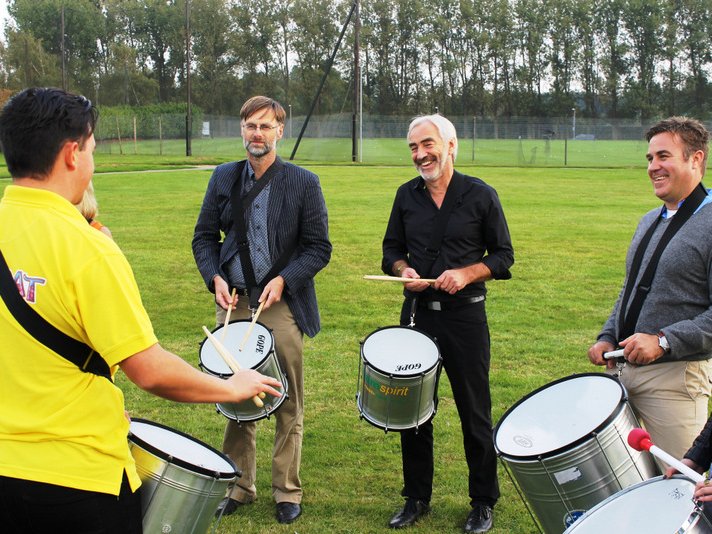
drumming team building

The Role of the Millennials

The millennial meeting attendee has been found to be more demanding, with a shorter attention span and with increased needs around technology, sustainability and connectivity. MPI’s research shows that event organisers believe that sessions will becoming more specialist and individual session times will go down as the attendees’ attention span drops.

Safety and Security

There will be increasing focus around ‘Duty of Care Initiatives for Delegates’. This is because of high profile incidents in 2017 and 2018, from terror attacks to ecological threats. Whilst other trends, from sustainability to wellness, are often perceived as ‘luxury’, according to MPI this trend will be a ‘necessity’ for at least the forthcoming year. Last year MPI reported that fewer than 50 per cent of meeting planners had security threats in their contingency planning, but they feel this number will rise.

Technology

Technology is changing the way we work, but this will also have an impact on the way business events are planned and the participants experience them. That starts from the moment attendees provide their details at registration. Their data, powered by artificial intelligence, can be used to decide which sessions to attend and which attendees they should connect with to get the best return on their investment.

According to World Finance, the five fastest-growing industries in the world are all technology related: renewable energy, cybersecurity, biotechnology, virtual reality, and artificial intelligence. These industry sectors give us opportunity for growth as their exhibitions, meetings and conferences grow.

The Economic Outlook

The theme seems to be ‘Growth out of Uncertainty’ as economists are concerned about the trade dispute between the U.S. and China, Canada, and the European Union. The economic and political situation is uncertain in all parts of the world. However, technology could create a more dynamic business world in the future. The global meetings and events industry, which relies heavily on industrial dynamism, could benefit from these conditions.

The conclusion of the report is that although everything changes, everything stays the same. Two photographs are often used in marketing presentations, one taken in the 1900s, the second one hundred years later. They both show queuing commuters, waiting on a platform. The first shows a predominantly male audience, waiting for a train, everyone looking down at a newspaper. The second shows a more diverse audience, in more contemporary dress, but still waiting for a tube, still with their heads down but in this case towards a phone or tablet. This picture describes the changes in our working environment.

Summary

Despite new technology, there is still high demand for live events and face-to-face meetings. Experiences add value to events and leave lasting impressions.

The meetings and events industry is driven by the success of other industries, investments from cities and regions, the growth of businesses, and also by the organisers’ belief in the investment quality of a meeting or event.

There is evidence of dynamism within business, which is good news for the meetings and events industry, as it drives communication, exchange of knowledge, education, networking, conferences, exhibitions and product launches.

The IBTM World Trends Report is available in full online.

International destinations – what’s hot for 2019

Global DMC Partners, the largest global network of independent Destination Management Companies has released their 2018 Global Destination Index which presents the most popular meeting and incentive destinations around the world for 2018 and identifies up-and-coming markets that are already trending for 2019. The data was compiled based on analysing data from more than 6,000 meeting and incentive programmes across 2018 and 2019 in over 500 destinations that Global DMC Partners represents.

Top 10 International Cities for 2018

  • Paris
  • Amsterdam
  • Munich
  • Stockholm
  • Vienna
  • London
  • Barcelona
  • Berlin
  • Prague
  • Rome

Additionally, the 2018 Global Destination Index highlights data about newer markets to watch in 2019. Destinations identified on this list are already seeing a boost in interest from meeting planners for programs operating in 2019 compared to the interest that was shown for the destination for meetings or incentives operating in 2018.

Volcano in Costa Rica

2019 Meeting & Incentive Destination Hot List

  • Costa Rica
  • Bahamas
  • Malta
  • Puerto Rico
  • Morocco
  • Croatia
  • St. Lucia
  • Denver/Colorado Springs
  • South Africa
  • Thailand

President of Global DMC Partners, Catherine Chaulet commented, “Part of our responsibility is to open up the world to our clients, so that they can encounter different cultures and experience something extraordinary. Identifying destinations for this list helps us present secondary markets and those intriguing destinations that our clients will soon discover are also perfect for meetings and incentives. Flight lift patterns, cost-effective local options, and a wide range of unique activities are just a few of the reasons why these destinations are already showing popularity for 2019.”

For more information about booking your conferences and meetings and for help finding a venue call 01780 484051 or email us now!