Rate Check – How much can you expect to pay?

It’s great news that events are starting again, so we thought it would be interesting to look at the rates that are being quoted by venues in different parts of the country.

There is demand, but event bookers are reluctant to confirm the booking until the government guidelines are clear about social distancing and the pilot events have been completed.

As usual rates are higher in months where there is less availability and they are lower outside London.

For example, we’ve looking at a 3-day event for 350 people in February 2021 and comparing various locations around the country. The rates vary, as follows:

Location Catering B&B
Liverpool £32.00-£39.00 £75.00-£105.00
Manchester £27.50-£36.00 £125.00-£146.00
Birmingham £32.00-£38.00 £96.00-£121.00
East Midlands £37.00-£44.00 £87.00
South Wales £53.00-£60.00 £120.00

However, the rates are higher for 2021. This is for a mid-week one day event for 30 people, where we’ve been quoted daily delegate rates of:

Location Date DDR
Hertfordshire June £55.00
Leeds July £36.00-£40.00
Milton Keynes July £35.00
London September £55.00-60.00
London November £65.00-£85.00

Some venues are sticking to previous rates, some venues are increasing rates to take account of fewer people in the same space. Pricing isn’t consistent at the moment, with some venues requesting supplements or additional room hire costs.

Social distancing is a big problem for venues and both they and the event bookers need to know what they can do in terms of capacity. It’s not just for the meeting rooms, but moving around the venue, catering and restrooms. Venues with outside space definitely have an advantage. After a turbulent year, the venues will need to be confident that they can operate at a profit when they open.

The Meetings Industry Association carried out a survey into social distancing in May 2020 and found that:

  • The majority (82%) of venues confirmed they can operate with social distancing measures in place.
  • Nearly half (46%) of respondents identified that their venue’s capacity would have to be more than halved, with 27% highlighting a reduction of between 41-50% would be required.
  • As a result of these reduced capacities, 59% of venues would not break even.
  • Over 80% expect to lose more than half of their turnover per month.
  • 17.5% of venue operators say it would be ‘impossible’ to open their venue while adhering to social distancing measures, both on commercial and operations grounds.

It will take some time for things to settle down. We will continue to review rates and report on trends as the bookings increase and report.

For more information and advice on booking venues for conferences, meetings and events, call us on 01780 484051 or email enquiries@edgevenues.com

Destinations where events are taking place

In the past few weeks, we’ve seen some experimental conference in meetings in destinations around the world. So, what’s happening abroad and how does that compare to the UK?

The Netherlands

In Holland there’s an organisation called Fieldlab Events, which is a collaboration between the Dutch government with companies, interest groups and the public. They are running an experimental programme to test different events (business and public) and situations (inside and outside, seated, standing, different social distancing and capacities etc.) to see how the Coronavirus limitations can be eased.

On 15th February, there was a test conference for 500 people, called Back to Live. The venue was the purpose-built Beatrix Theatre in Utrecht. Various measures were put in place:

  • Everyone had to have a negative Covid test before attending
  • Temperatures were taken on arrival
  • They were divided into separate groups, using different entrances and washrooms
  • They were fitted with movement sensors
  • Some had to wear a mask, some sat behind screens
  • All have to take another Covid test 5-days afterwards

The event was a success and the result from this event was that one person tested positive for Covid after the event, but it wasn’t traced back to attendance.

There are more events in the pipeline over the next 8 months, with Covid-19 prevention measures in place to test:

  • 50% capacity with 75% sitting/25% standing
  • 100% capacity with 50% sitting/50% standing
  • 100% capacity with 25% sitting/75% standing
  • 100% capacity with a mixture of sitting/standing
  • 100% capacity with no measures

There was also a Dutch Music Festival experiment on the 20th of March, 2021 for 1,500 people.

All attendees were tested for COVID-19 48-hours before entering the grounds, while 150 rapid tests were also randomly administered at the entrance. 26 people who tested positive were not admitted. In the event everyone had to wear a motion tracker and download a location-tracking app to monitor their movements and contact moments. Face masks were mandatory, however, everyone took them off minutes after the party started and no one stopped them.

Singapore

Singapore has recently held two experimental events:

1. The PCMA Convening Leaders 2021 conference

This conference was held at Marina Bay Sands as a hybrid event, 11th-15th January 2021. Usually there are around 4,000 attendees, but this time there were 300 delegates at the live event and 3,000 joined virtually.

The Marina Bay Sands created a Global Broadcast Centre for keynote speakers, expert panels and face-to-face experiences and local cultural tours. Delegates had to test negative for Covid before departure, on arrival and they were tested on-site before entering. Other safety measures included limits on crowd density; social distancing; ensuring a safe and clean environment; and preparing for emergencies relating to Covid-19.

2. Travel Revive

Travel Revive was Singapore’s first trade show during Covid-19 and took place at Singapore’s Sands Expo & Convention Centre in November 2020. It was also a hybrid event

This was a two-day exhibition with almost 1,000 local and international delegates, both local and international. The safety measures also focused on crowd density; grouping attendees; contact tracing; meeting booths with screens and a diary app to book meetings between buyers and exhibitors.

United Arab Emirates

The UAE has been open to visitors since July 2020 and business events recommenced in October 2020. Staff at venues taking a PCR test every week. Attendees will have to have a test with a negative result within 48-hours of the event. The capacity for business events is 50% of previous attendance.

To set the health and safety protocols, Dubai firstly held a half day event with 600 attendees from a local audience. They looked at what worked and this enabled them to put a set of guidelines in place, resulting is several international association events taking place at the end of 2020.

  • Expo 2020 Dubai

This event has been postponed for a year and will now take place from 1st October 2021 to 31st March 2021. Some areas of the site are already open. About 190 countries are participating and the UK will have a pavilion at the event. International exhibitors and visitors are expected, with strict Covid-19 measures in place.

Conferences, meetings and exhibitions have been taking place since summer 2020, with social distancing, wearing masks, reduced capacities, improved cleaning and sanitation.

Spain – Barcelona

On 20th March, there was a music event for 5,000 people in Barcelona. They all had to test for Covid and have a negative result. Temperatures and IDs were checked on arrival. Attendees did not have to keep physically apart, but they still wore masks. Rapid testing was carried out onsite. Everyone will be retested on 25th and 26th March. The results have yet to be announced

UK

The events research programme has planned a series of up to 15 test events in April and May.  The first ones will are:

  • World Snooker Championship at the Crucible in Sheffield on 17 April
  • FA Cup Semi Final, Wembley Stadium on 17 April
  • World Snooker Championship, Sheffield Crucible Theatre
  • Luna Cinema, Liverpool
  • League Cup Final
  • ACC Business Event, Liverpool
  • Circus Nightclub, Liverpool
  • FA Cup Final, Wembley Stadium
  • Outdoor gig, Sefton Park Liverpool

The pilots will be run across a range of settings, venues, and activities with the intention of full reopening of similar settings in multiple sectors later in the summer. The World Snooker Championship reported no Covid-19 cases afterwards.

As we receive information about the success of these events we will publish further articles.

Next steps for the events industry

As of today, we are on Step 2 of the roadmap out Coronavirus restrictions. I expect will all remember 12th April as the day that the following businesses are re-opening:

  • Hospitality venues with outside space
  • Self-contained accommodation in England
  • Outdoor attractions including zoos, theme parks, and drive-in performances (such as cinemas and concerts)
  • Non-essential retail
  • And we can finally get a haircut!

At the moment, the key date for conferences, meetings and events is 17 May, when conference centres and exhibition halls can open again subject to the capacity limits. They will need to comply with Covid-Secure guidance.

The Department of Culture Media and Sport allowed site visits to take place after Monday, 29th March. These are now allowed at a business event venue, even if it is closed. The purpose must be a future booking for a work-based event, if the inspection cannot be carried out remotely.

How EDGEvenues is helping you

At EDGEvenues we have made sure that venues are able to let you know that they are COVID Secure, by publishing their policies. There’s a Health and Safety Section with information about their procedures and accreditations, so you can be sure that you’re booking a venue that complies with the Coronavirus regulations.

Also, we are committed to making sure that your event will fit the space with correct social distancing. We’ve added a link to check that capacities are correct under the current guidelines and your group will have enough room to be safe.

The Events Research Programme

The Events Research Programme will explore different approaches to social distancing, ventilation, test-on-entry protocols and COVID-status certification.

It will carry out pilots in a series of venues to gather evidence on the transmission risks associated with different settings, and potential approaches to managing and mitigating transmission risks. The pilots will use the domestic COVID-status certification standards.

Early pilots will focus on demonstrating COVID-status through testing alone, while later pilots will seek to incorporate data on vaccination and acquired immunity.

The Programme will examine the extent to which COVID-status certification would help towards the return of crowds to mass events and closed settings, from football matches to theatre performances, and the reopening of nightclubs.

The programme will be run across a range of venue and activity types, including the World Snooker Championship at the Crucible in Sheffield and the Circus nightclub in Liverpool, with the aim of admitting a crowd of up to 20,000 to Wembley for the FA Cup final on 15 May.

A second phase of pilots will take place from the end of May.

Social Distancing Review

There is also a review in to Social Distancing, which is looking at whether existing rules, designed to limit virus transmission, could be relaxed in different settings.

The review is looking at key baseline measures, including how and when to safely lift or amend the 1m+ rule and related COVID-secure measures, as well as guidance on working from home.

The extent of any relaxation in social distancing measures is linked to the questions being explored by the COVID-Status Certification Review – including whether COVID-status certification can enable changes to social distancing.

Back to normal?

The final key date 21 June, when hopefully we will be able to get back to a more normal life and the following. It is expect that:

  • Larger events can resume
  • Night clubs can reopen
  • No legal limits on social contact

COVID-Status Certification Review

The Government is currently carrying out a review of COVID-status certification, which could have a role to play both domestically and internationally, as a temporary measure.

There are some settings (such as essential public services, public transport and essential shops) where COVID-status certification should never be required, in order to ensure access for all.

However, COVID-status certification could play a role in settings such as theatres, nightclubs, and mass events such as festivals or sports events to help manage risks where large numbers of people are brought together in close proximity.

The Government will begin to trial COVID-status certification in certain settings, including large events, through the Events Research Programme.

It is possible that COVID-status certification could also play a role in reducing social distancing requirements in settings which people tend to visit more frequently, for example hospitality. This has significant implications for businesses and their customers, so this will be further considered in consultation with the hospitality industry, as part of the review of social distancing rules.

Global Travel Taskforce

The Government wants to see a return to non-essential international travel as soon as possible, while still managing the risk from imported cases and variants of concern.

Given the state of the pandemic abroad, and the progress of vaccination programmes in other countries and varients, the Government has not yet confirmed that non-essential international travel can resume from 17 May.

When non-essential international travel does return it will do so with a risk-based “traffic light” system.

This will add a new green category to the current system, which means no isolation requirement on return to the UK – although pre-departure and post-arrival tests would still be needed.

Search on EDGEvenues for the perfect Covid-19 secure venue.

Or if you would like to promote your venue here, call us on 01780 484051.

Event organisers are keen to meet again

Northstar Meetings Group’s published their latest PULSE Survey on 9th March. The research was carried out between 18th February – 2nd March and is mainly focussed on the North American events industry, although event organsiers from around the world are included.

It found that 81% of meeting planners will hold their next live event during this year. Only 19% percent will hold their next live event in 2022 or later.

The i-Meet survey is similar with 78% or planners holding their next live event this year, 82% are contracting and 79% happy to travel.

The Northstar survey says that event organisers in the UK and Europe are more cautious, with 71% holding their first live event this year and they are relying more on virtual and hybrid meetings.

Recovery

A complete recovery will take some time, it is predicted that by the end of 2022 the events industry will be around 75% of pre-coronavirus levels. The vaccine rollout is essential to this.

Market segments

  • Associations

Associations are the industry segment leading the recovery, followed by independent organisers and sports. They are more likely to hold live events in the second quarter of 2021 and planning hybrid meetings rather than virtual ones. These segments are also twice as likely to attend an event in person themselves in the next three months.

One of the reasons seems to be that associations don’t have the same liability issues that corporations have in place.

  • Corporate Meetings

Corporate meetings will be slower to return because many companies have travel restrictions in place and will do for some time to come. Again, the vaccine programme is essential to recovery and companies’ liability to employees means that they are waiting for a safer environment before easing restraints. We will see if companies wait until herd immunity is achieved or whether they limit travel to employees who have been vaccinated.

Some companies feel that they haven’t suffered significantly from not attending meetings, so they are holding on to their budgets until they can see a clear return on investment.

COVID-19 safety protocols

More event organisers in the US will require attendees adhere to safety protocols at live events, as they know that attendees need to feel safe:

  • 73% of event organisers will make attendees wear masks
  • About 20% will require proof of a negative Covid test to attend
  • 20% plan to carry out rapid tests on-site
  • 19% will require proof of Covid-19 vaccination

Fewer British and European organisers will mandate mask-wearing and general safety protocols for their future in-person events, as they plan to rely on testing and proof of vaccinations. This is in line with them returning to live meetings at a later date, when the threat of the virus is reduced.

Hybrid and Virtual events

The survey has seen a regular decline in confidence in virtual events since it was started last year. The more planners produce virtual events (or attend them), the less they think they’ll be successful from a business perspective.

However, hybrid events are seen as a viable option with 54% of organisers in North America planning them (up from 48% in January). The figure is higher in the UK, with 69% of organisers planning hybrid events

Consequences

Some American organisers are concerned that the US is relaxing restrictions too quickly, but others feel that it’s time self-regulation ie if you are worried then stay at home, but allow those who want to get back to work do so.

Canada, in particular, has stricter regulations and is not in a hurry to resume events. Canada has prevented Americans from entering the country at the moment and they want to see greater compliance with mask wearing and safety protocols before international travel resumes.

Hotels and Venues

Again, this information is from America, where it is reported that the travel, leisure and hospitality industry increased employment by 355,000 jobs in February. But, the sector is still down more than 20% on last year.

STR reported that occupancy rates for U.S. hotels has improved to 48%, the highest it has been since October. It is predicted that employment is unlikely to reach pre-Covid levels until 2023, according to the American Hotel and Lodging Association’s 2021 State of the Industry report.

Hotels which had closed temporarily are now re-opening and seeing interest from leisure travellers, particularly theme park and gaming resorts.

However, in New York, which was particularly hard hit by the pandemic, only around 42% of hotels are open because of the lack of business travel. It is estimated that around 20% of hotels in New York state will not re-open, such as the Omni Berkshire Place, Times Square Edition, Hilton Westchester, W New York Downtown, Hilton Hotel Times Square, Courtyard by Marriott in Herald Square, AKA Wall Street and the Roosevelt Hotel.

We are waiting to see what will happen in Europe, which is experiencing an increase in Covid cases and lockdowns are being introduced in various countries.

It’s good to see that the conference, meeting and events industry is getting ready to return and that there is positivity. If you need any help with venue finding, please email enquiries@edgevenues.com.

If you are a venue and would like to promote your venue on www.edgevenues.com, call us now on 01780 484051.

2021: what does the future hold for conferences, meetings & events?

The ‘new normal’ is a term that we often hear, but what can we expect to happen to conferences and meetings this year and in the future?

We all want to get back to socialising and meeting again, but there is concern about safety.

The question ‘is this meeting necessary’ will become normal. Some people are fed up with virtual meetings, but others have got used to working from home, are more productive and don’t want to spend time travelling.

The Talk Talk Group has done some research in to home working productivity and discovered:

  • 58% of workers in the UK said they had been more productive because of working from home, while over half (52%) said they never expect to return to a five-day working week in the office
  • A quarter (24%) have started to learn a language over lockdown, while a nearly a fifth (18%) worked on their IT & digital skills
  • When business leaders were asked to select what the most important factors are in enabling effective working from home, 81% identified a safe, fast and reliable broadband connection
  • 40% of business leaders said they expect to invest in digital skills and training more in the future, while almost a quarter (23%) named home broadband

Large meetings -v- small meetings

So, does this mean that there will be fewer smaller meetings? Maybe not, as people do want a different experience to meeting via their phone, laptop or pc. But there are other options, such as group whiteboarding using a touchscreen or draw-on-screen computer.

Large meetings are expected to be popular, despite increasing costs. Air fares will go up as the airlines revise their timetables and plan for financial stability.

The bigger the event, the easier and more cost-effective it will be to offer the flexibility of live or virtual attendance. International attendees will have the choice of travelling or dialing in to sessions in their own time. This is likely to boost overall attendance. It also gives organisers the ability to extend the event by sharing content beforehand, during and afterwards.

Technology

We’ve all improved our technology skills in the last year and technology is a huge growth area. The tools that event organisers are using will be very different in the future to the ones they are using now.

Designers are working to improve the event experience. There’s a lot to learn about using cameras and microphones to engage the audience. Rehearsals are essential, as well as a guide to technical requirements and an emergency-backup plan.

Health, Safety and Hygiene Protocols

The hospitality industry was quick to adopt higher standards and will continue to improve their programmes. The two main accreditations in the UK are Visit Britain’s We’re Good to Go and AIM Secure. In addition, there are many others such as the HBAA and Quality in Tourism’s Safe Clean & Legal, AIPC, ICCA and UFI’s Good Practice Guide, COVID-19 Certify, COVID-19 Control, COVID-19 Aware and AA’s COVID-19 Confident. Hotel groups have introduced their own standards and best practices such as such as Hilton’s CleanStay programme, Accor’s ALLSAFE and Marriott International’s Global Cleanliness Council.

Longer hotel bookings

Hotels have introduced extended stay programs as they expect travellers to take longer, but fewer trips. It’s a case of travellers taking the opportunity when then can, rather than risking several shorter trips which could be cancelled.

Improved working facilities and technology

Hotels are expecting visitors to combine business with pleasure, so are introducing dedicated spaces (other than Business Centres or bedrooms with better working facilities and faster WIFI.

Technology is being used to reduce human contact, with online check-ins, mobile keys and room settings controlled by touchless tech.

There will be more use QR codes or scannable menus to order food and beverage. The grab-and-go options, or room service leaving a meal at the bedroom door are expected to increase.

Space and Privacy

Guests are requesting more space and privacy, so that travellers can avoid contact with strangers and relax in their own environment.

There is more demand for outside space, whether it is for meetings and events, dining, coffee breaks or leisure.

Sustainability

This trend continues as guests and event attendees want to reduce their impact on the environment. Reducing waste, the use of water and sourcing local products are all important factors.

What will we eat in 2021?

The expectation is that, more than ever, when they go to conferences, meetings and events, people will be looking for food that they haven’t been able to make at home. Travel is an opportunity to try new dishes and the whilst we’ve been locked down there has been a following for comfort food. Nostalgic dishes will still be popular, but with a twist, still comforting, but stimulating too.

This time last year we looked at what we can expect to eat at events. Overwhelmingly the trend was for healthy choices:

  • more plant-based choices
  • healthier snacks
  • alternative milks
  • brightly coloured food
  • simple and natural dishes
  • a focus on sustainability

So what can we expect for 2021?

The catering industry expects to see more of:

  • Yuzu – a sharp citrus flavour which that tastes like a mixture of grapefruit and mandarin.
  • Cherry Blossom – used in cocktails, cakes and puddings
  • Honeycomb Toffee – a mixture of two well known tastes
  • Smoked herbs and spices – the regular ingredients have been given an extra dimension
  • Chillies – more varieties with different levels of heat and flavour
  • Tempero Baiano seasoning – from Brazil. It’s a mixture of herbs and spices to use in casseroles and vegetables
  • Mexican Recados – a citrus paste to use in marinades for meat
  • Dukkah – North African toasted nuts and seeds to sprinkle over dips, meat and vegetable dishes
  • Izakaya – a mixture of small plates (like tapas) but from Japan
  • Pinoy with banana ketchup – meat kebabs from the Philippines, with sweet and savoury flavours

Intolerances and special diets

There has already been an increase in special diets over the last few years, but expect more use of alternative flours and milks, as well as seeds, grains, pulses and oils. The use of chickpeas has grown massively, but in the future, they will be used in more unusual ways including puddings.

Cocktails

Cocktails have also grown in popularity alongside specialist bars for specific spirits. When lockdown is over, expect people to indulge in exciting cocktails and unusual drinks.

Fermented food and plant-based options

Kimchi, kombucha, sauerkraut – all contain probiotics and are a popular choice for the healthy eater.

Alternatives to traditional protein will be on the menu as well as fresh vegetables. Food that is high offers health benefits and boosts immunity will be popular choices.

For example, fermented foods contribute to positive gut health, seafood is high in Omega 3 fatty acids which offer a wide range of health benefits, and plant-based menus obviously offer up a lot of nutrients and vitamins.

Toast with different toppings

We’re all familiar with avocado toast and hummus on toast , but what about mashed squash or sweet potato, mushrooms, beetroot, tapenade or peppers to go with eggs or a salad topping?

Coffee

Coffee flavoured products are expected to increase, so you can expect to see it in snack bars, granola, smoothies, yogurt and many more dishes.

Our conclusion is that following from 2020, we will see more of the same trends – healthy choices, but also some reward for all the months that we haven’t been out.

Travelling around the world – who’s holding events?

Globe with flight paths

Last week we looked at how our European neighbours are managing Covid-19, what restrictions there are on travellers and whether they can hold conferences, meetings and events. This week we’re looking at some popular destinations which require long-haul flights from the UK.

Travel corridors were suspended 4am this morning, 18 January 2021. This means that if you arrive in England from anywhere outside the UK, Ireland, the Channel Islands or the Isle of Man, you will need to self-isolate for 10 days.

Travellers must have proof of a negative coronavirus test to travel to England.

Mexico and Canada have closed their land borders with the United States until 21st February. Japan has brought in a state of emergency in Tokyo since Covid-19 cases have risen to record levels. But what’s happening elsewhere?

Australia

The regulations vary state by state and there are restrictions on moving between states. Before travelling to Australia, you need to have a negative Covid-19 test. On arrival all international travellers are escorted to a designated facility (hotel) and must quarantine for 14 days. State and Territory governments. The traveller must pay a fee to cover the cost ($3,000 for an adult in New South Wales).

However, once in Australia the rules have been relaxed with Melbourne allowing meetings for 150 people indoors and 300 outdoors, in New South Wales the limit is 20 people and 50 in Queensland.

Canada

From 7th January, all international arrivals to Canada must have received a negative Covid-19 test result before boarding the plane. Then there is a mandatory 14-day quarantine period.

The regulations do vary from state to state, but gatherings are banned where social distancing is not possible. There is a curfew or closure of bars and restaurants in some places. The limit on the amount of people allowed to meet inside and out varies according to tiers.

China

All direct flights between the UK and China have been suspended. There are restrictions on movement around the country and there are quarantine requirements for internal travellers. The rules vary depending on the risk level in that region.

Hong Kong

Hong Kong and Singapore have delayed a planned air-travel bubble for the time being. This would have allowed travellers between the cities to avoid a quarantine by presenting a negative Covid-19 prior to their journeys. Flights from the UK were suspended on 23 December.

Gatherings are limited to two people, who aren’t from the same household.

Japan

Tokyo currently has its highest level of Covid-19 since the pandemic started. It has declared a state of emergency and the measures will be in place until 7th February. Residents are advised to leave their homes only for essential reasons and must avoid gatherings. Restaurants have been ordered to close by 8 p.m.

Mexico

The US land border will be closed until 21st February. Some hotels and restaurants are open, depending on the area and quarantine is not required on arrival in the country.

New Zealand

New Zealand’s border has almost been completely closed to international travellers and as a result the country has light restrictions. The meeting regulations are governed by tiers. In Level 3 the rules are a maximum of 10 people, Level 2 a maximum of 100 people. In Level 1 there are few restrictions on businesses.

Singapore

Visitors to Singapore who have been in the UK for 14 days prior to travel are not permitted to enter or transit Singapore.

The country has a plan called Connect@Singapore which will allow a few business travellers at the end of January. They will need to apply in advance and take multiple Covid-19 tests prior to and during their visit.

Currently, business events of up to 250 people are allowed, with permission from the Singapore Tourism Board. Attendees must be distanced between five zones of 50 people.

South Korea

All direct flights between the UK and North Korea have been suspended. The current rules on gatherings are a maximum of 50 people indoors and 100 people outside.

United Arab Emirates

Each Emirates has different regulations and airlines are still flying between Dubai, Abu Dhabi and the UK. A negative Covid test is required prior to travelling. Quarantine for 14 days is required on arrival but can be carried out at a hotel or private residence.

Hotels, restaurants and tourist attractions are open. Conferences and meetings are permitted in Dubai.

This information is subject to change and we advise you to check the regulations before booking, check your insurance cover before booking.

18 January 2021

IMEX Frankfurt 2021 cancelled

IMEX

Events industry affected by Coronavirus – Major industry trade show cancelled for second year

EDGE Venues have just been made aware that IMEX Frankfurt 2021 has been cancelled for the second year.

It is a disappointing blow to the events industry and we would like to express our heartfelt thoughts to the IMEX team.

The IMEX event is a major industry trade show that brings together our industry to network and generate business.

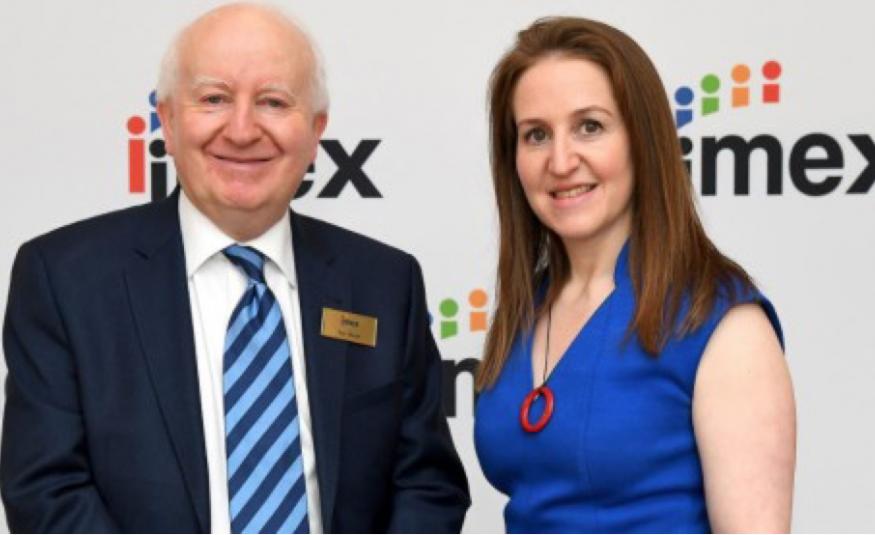
Jacqui Kavanagh, CEO of Trinity EDGE Holdings Ltd comments ” I personally wish to thank Ray, Carina and all the great IMEX team for their continued support. Our industry is a community that supports our clients in an everchanging world. It is a shame that this key event for our industry has been cancelled.”

EDGE Venues will continue to publish articles on the coronavirus situation and how this affects the event industry.

Keep up to date with all the latest news here

Venues collaborate to promote Medical City

Venues colloborate

Three leading venues in the Euston area of London are joining forces to promote the area as a prime location for events linked to healthcare.  BMA House, RCP and Wellcome Collection all use their profits to help larger medical organisations achieve their mission.  During this challenging time, they wanted to demonstrate their unity through a common goal.

Often described as the Medical Mile, the area around Euston is a hub of leading venues with strong links to local hospitals, practitioners and research institutes.  It is an ideal place for any form of meeting or event linked to not just medicine but also the wider healthcare and pharmaceutical sectors.  Specifically, the three venues will be collaborating, referring opportunities, supporting each other’s events and providing multi-site spaces for meetings as necessary.  Together they offer a wide range of delegate packages, hourly rates, digital and hybrid solutions, ensuring all client needs are met.

After an extremely challenging year with lots of industry changes, all 3 venues have successfully received the MIA AIM Secure Accreditation and Visit Britain Good to Go Accreditation making them COVID safe venues for the future.

Kat Winfield, Venue Manager, BMA House comments: “Medical and healthcare workers have continually showed their strength, resolve and professionalism throughout the COVID-19 pandemic and we are all extremely grateful for their dedication and commitment.  At the moment the greatest support we can offer is to stay at home and refrain from hosting events.  However, in time that will change and we are exploring all opportunities to support our clients.”

Fairouz Grzyb, Business Development Manager, Royal College of Physicians “When appropriate, we intend to come back stronger than ever, working as a collective to deliver the best possible experience for delegates and organisers alike.  In the meantime, we all offer extensive digital and hybrid packages to ensure that events continue and vital education, knowledge transfer and networking take place.”

Diana West, Sales Manager, Wellcome Collection concludes: “As a group, we offer a wide variety of event options.  We can work individually or across multiple sites and want above all to demonstrate our unity in challenging times.  We have extensive links into all areas of medicine, pharmaceuticals and the wider healthcare market, making us the ideal first call for any event across these sectors.”

About the venues:

BMA House 

BMA House is located in the heart of London, just a short walk from Kings Cross, Euston and St Pancras stations as well as a variety of underground lines and key bus routes.  With sustainability and wellbeing at the heart of its offering, delegates can also benefit from the use of a clean air walking route – taking them off the major roads onto quieter, picturesque, less polluted local streets.  Their clean air walking route from Kings Cross for example, is 57% less polluted than a trip down Euston Road and has the benefit of being 1,000 steps – 10% of the recommended 10,000 a day.

BMA recognises the growing and vital need for digital and hybrid event solutions.  With this in mind they were one of the first venues to launch such an offering, as far back as June.  Including options for webcasting, breakouts, speaker only conferences and exhibitor/sponsor packages, the offering reflects both the challenges presented by COVID-19 and the future needs of event organisers.

Wellcome Collection is the free museum and library exploring health and human experience. Located in central London just steps away from Euston and King’s Cross/St Pancras station. Their venue hire offers thought-provoking event spaces in both the conference centre and the unique exhibition galleries.  Whatever the client’s needs, they can offer flexible and inspiring backdrops for all types of events, from seminars and training sessions, to film screenings and AGMs, their capacities range from two people to 300 people.

Wellcome Collection 

The venue hire team at Wellcome Collection is dedicated to helping clients adapt to the current realities of meetings and conferencing. Whether they require video conferencing, live streaming or a more bespoke offering, the team is ready to deliver streamlined hybrid events.

All profits made from events held in Wellcome Collection are gift aided to Wellcome, a charitable organisation who support researchers, take on big health challenges, campaign for better science, and help everyone get involved with science and health research.

The Royal of Physicians

The Royal College of Physicians was founded in 1518 by Royal Charter from King Henry VIII.  It is the oldest medical college in England. The venue offers highly versatile facilities, with 12 meeting spaces, including tiered auditoriums, conference, meeting, exhibition and dining spaces, with contrasting old and new styles to suit all tastes, giving clients a range of possibilities to create an unforgettable event.

They have a dedicated in-house audio visual and media services team. In addition to supporting physical events, they have a range of hybrid and virtual meeting solutions to enhance events including, filming, editing, streaming, live Q&A polling, webinars, virtual break out rooms and much more.

Seven new vaccination centres in England have been announced.

Vaccination Centres

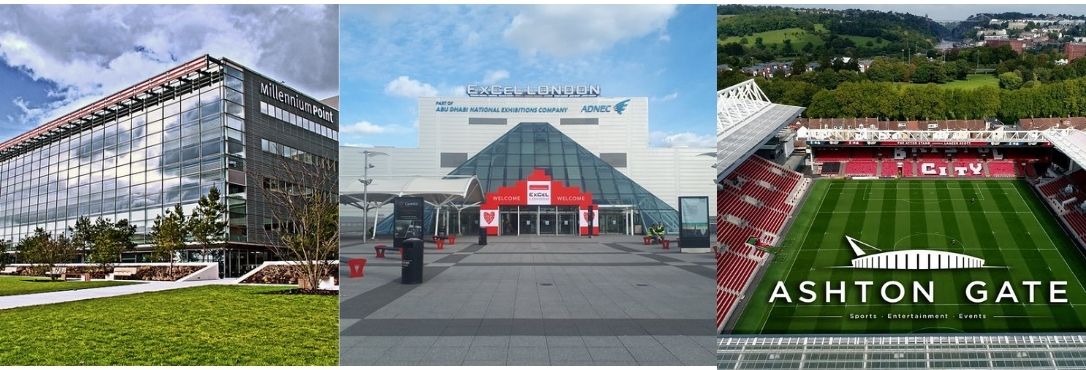
EDGE Venues is proud to announce that three of the venues on their platform, ExCel London, Ashton Stadium Bristol, and Millennium Point Birmingham are to be turned into temporary Vaccination Centres as the Government and the NHS roll out their plans and timetable to vaccinate the top four priority groups by mid-February.

All three venues usually host a variety of meetings, conferences, exhibitions, and sporting events, however due to the current pandemic, they have been selected with four other venues to become vaccination centres and should be up and running early next week.

The UK is the first country in the world to approve mass use of COVID-19 vaccines, with immunisation with the Pfizer BioNTech beginning back in December and the Oxford-AstraZeneca started on Monday 4th January.

Jacqui Kavanagh, CEO of EDGE Venues was really pleased to hear the news and how so many venues have been supporting the country during the COVID-19 crisis and said “We are part of a fantastic industry and despite these difficult times it is great to see we have a role to play. I wish all the teams the best of luck and I know that as event professionals if anyone can step up to this challenge they can.”

Jacqui went on to add “The rapid spread of coronavirus has taken its toll on the events industry but it’s great to see that during the last 10 months we have seen many hotels and venues helping in these exceptional times.  Opening to Key Workers, transforming into Nightingale Hospitals and quarantine venues to name just a few.”

Keep up to date with ALL latest Industry News and Insights by reading our EDGE News Section