Do you make it easy for attendees with sensory issues to attend your events?

Some disabilities are obvious and some not. When choosing a venue for a conference or meeting, we can check whether the building has wheelchair access to all meeting rooms, catering and social areas, has purpose-built accessible toilets, a hearing loop system and allows guide dogs.

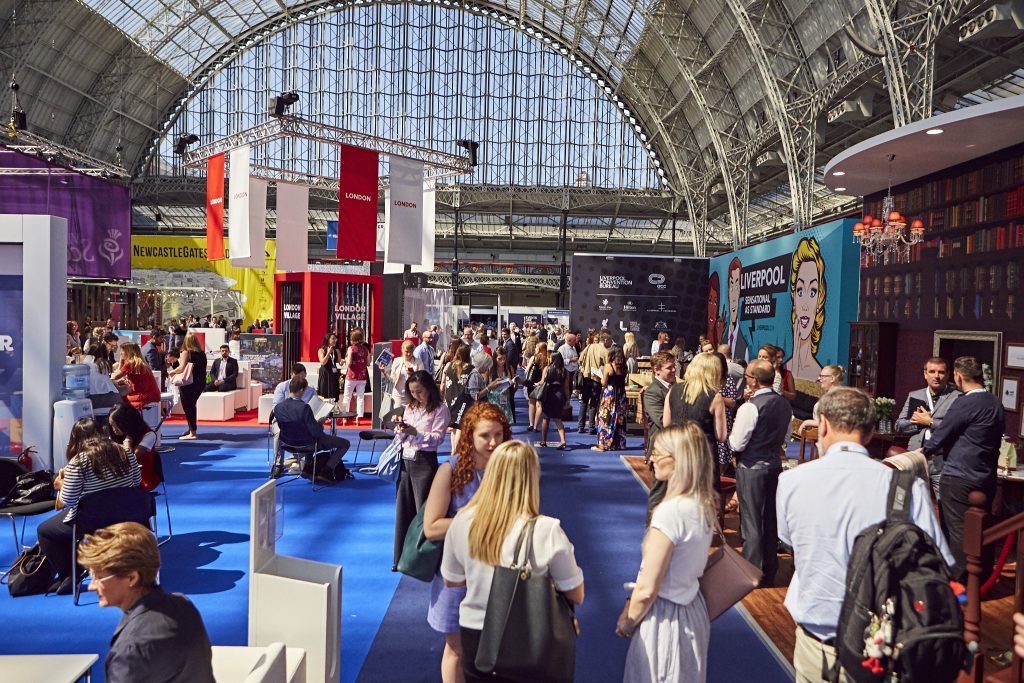
But not all meeting attendees’ issues are obvious. People with sensory issues, such as to light and noise will find large events difficult because of the volume of people in the room, loud music and flashing lights when the keynote speaker arrives. This can include people with ADHD, autism, Downs syndrome, early-onset dementia and post-traumatic stress syndrome.

Here are some ideas that you can implement to help event attendees who might find the environment challenging:

  • Allocate a ‘quiet room’, so that anyone who needs some peace has a comfortable place to take a break away from the busy conference or exhibition environment.
  • Take some noise cancelling headphones that you can lend to attendees to help them cross loud areas, such as the exhibition floor or areas where lunch and breaks are being served.
  • Offer stress balls, that attendees can play with to keep their hands occupied and stop fidgeting.
  • Give non-verbal attendees a visual thermometer. It’s just a card they can use to ask for help and to indicate how they are feeling, if they are confused or lost.
  • Issue a slightly different lanyard to indicate to event staff attendees who may require sensory help, but don’t make it different enough to stand out from other attendees.
  • Provide some weighted lap pads to help attendees sit still during long presentations and speeches. This replicates deep-touch pressure therapy, which has a calming effect.

All these items can be cleaned with disinfectant and used at multiple events. Some venues are putting together a bag which includes the items above, or an organsier can put the tools together themselves and take them onsite.

The American organisation Kulturecity runs training courses for staff at venues to understand the problems and help organisers run events which include attendees who find it difficult to participate because of sensory challenges.

Booking accommodation – do you get the best rates?

When booking a large event, where attendees are paying themselves, it is standard practice to book a block of rooms at the hotel the event is taking place, or if it is a venue that doesn’t have bedrooms, then take some rooms at nearby hotels for attendees to use.

As an organiser, we expect that these rooms will be cheaper than the advertised rates because of the volume of bedrooms we are booking and if the event is in the same hotel, there is the overall benefit to them of profitability from the meeting space, food and beverage and additional attendee spend.

Taking a room block is a substantial undertaking for an event organiser. They will probably have to guarantee a minimum number of bedrooms, there will be a cut-off date and attrition. Bookings need to be closely monitored to avoid penalties.

Transparency is essential from the hotel. It’s quick for an attendee to look online, at the hotel’s website or a 3rd party accommodation booking site and if the rooms are offered more cheaply then they will book elsewhere and there will be a complaint. Also, it’s easy to compare rates with hotels nearby. Increasingly event attendees are looking elsewhere for accommodation to obtain better value for money, particularly in cities where Airbnb has plenty of options of a comparable standard. So, what can you do to secure accommodation at the best rate and make sure attendees use it?

  • A large event or an event on less popular days of the week or in low season will get better rates than a small event at a peak time. The hotel will need the booking more if it fits in well with their other bookings (business and leisure) Using the hotel for multiple events will improve your ability to negotiate
  • Ask for a guaranteed, better-negotiated rates and make sure this is in the contract
  • If your event is at a Congress Centre, then they can help, particularly if there are several hotels involved
  • Similarly, for a city-wide event the Convention Bureau will be able to help
  • Monitor the bookings closely to make sure you achieve the required numbers
  • Keep checking the hotel rates offered on their website and through 3rd party sites to make sure they rates haven’t been reduced lower than your agreement
  • Be aware that nearby hotels can and will offer discounted rates on the date of your event

Of course, there will always be delegates who want to book the hotel where the event is being held, particularly if there is a dinner and drinking. Securing and holding accommodation is less of a problem to the event organiser in a large city, where there are more hotels in walking distance or a quick taxi ride from the event venue.

If you would like help or EDGEvenues to book accommodation on your behalf, please call 01780 484051 or email enquiries@edgevenues.com.

Using video to promote an event, have you tried it yet?

Videos on social media are users’ favourite content and are twice as popular as photos and four times more popular than text posts. A report from the US video company Animoto has revealed that video content has the best return on investment for marketers on social media. 88% of people surveyed were pleased with the ROI of their video marketing efforts and 93% percent said that they gained a new customer or client thanks to a video on social media.

Many event organisers still haven’t tried video, but it’s a good idea to build it in to the marketing strategy, in the following ways:

  • Launch video: this will drive awareness and create excitement – let everyone know what is happening and when.
  • Run-up to the event: share details of speakers, the programme, exhibitors and any additions to the event
  • About the event: answer the key basics – what time is the event starting, where is it and how to get there, what they should expect, things to remember or bring
  • Afterwards: relive the excitement and successes for attendees and let people who didn’t attend know that they missed out. Invite people back next year and thank everyone involved.

Video formats

In social media feeds, square videos are most popular as they take up to 78% more space in a mobile feed than horizontal shots. Instagram stories uses a vertical format of Instagram Stories and as a result vertical video is growing. So, make your news feed videos are square to get the most screen coverage. Also look at Instagram Stories for tips. Instagram is deisgned to be instant and personal, so it’s not necessary to have expensive, professional videos and content filmed on a phone works fine.

Video is getting shorter and shorter, because of the power of Instagram Stories which encourages stories to be told in moments. By making a video short, viewers are most likely to watch all of it. Between 10-30 seconds is ideal, using 2 second clips to get the message across quickly. There’s only a second or two to capture a viewer’s attention as they are scrolling down a page.

Check for news about your event, industry information, the speakers, attendees and react to it quickly. Use anything relevant in a video summary to keep promoting your messages.

Use a mobile phone to collect quick clips immediately and try to get the right shots, some of the ones you’ll need are:

Close-up shots that capture emotion — people having fun, cheering, concentrating, networking
Crowd shots – showing the volume of people, as well as the venue and what’s happening
Shots of performers, speakers, presenters on stage — try to capture questions, applause or laughter from the audience
Testimonials and soundbites from attendees sharing what they get out of your event
Shots from the stage, showing the audience from the presenter’s view
Use a drone to capture aerial shots of the entire event, but make sure you are insured if you are flying over people.
Product and merchandise clips, which can be used to set the scene

Create the video

You can either use a template or create the video from scratch. Firstly, decide the order of the clips, but don’t use a logo at the beginning. Use the first few seconds to capture the viewer’s attention with something exciting and stop them scrolling further.

Tests show that text at the top of the video clip work best on opening clips. Think about asking a question to keep people watching. Put your call to action in the middle of the video, as well as other places, in case viewers don’t get to the end.

Build your video promotion strategy

Facebook and Instagram prioritise video in their algorithm, which means that your organic posts will reach a greater audience. If you are paying for ads it should result in more sales.

Facebook

There are more than 1.47 billion daily users of Facebook and can be used successfully if you:

  • Target a defined market
  • Have a Facebook Events page
  • Use Facebook’s targeted advertising options
  • Avoid a hard sell because Facebook is a personal space for friends, conversation, not sales pitches
  • Create square videos, which appear bigger in the news feed
  • Make videos that work without sound, because 85% of viewers scroll through their feeds with sound disabled

Instagram

This site is about images and stunning visuals to build your brand. It’s good if:

  • Your audience is young and your event imagery visually enticing
  • You can work with influencers who have a big following on this platform and can help you cross-promote
  • You have more than 10,000 followers, which means that you can use the “swipe up” function of Instagram Stories to connect to your registration page
  • Include a call to action button to convert interest to sales.

As well as the social media platforms, videos can be used elsewhere too …

  • On email: if you use the word “video” in a subject line it will increase open rates.
  • Website: make sure the latest video is embedded on your Home Page.
  • YouTube: it’s the world’s second-largest search engine (after Google), so posting a video there increases your chances of being seen with little effort.

WiFi. What to think about when planning your event

WiFi is a difficult topic for event organisers for several reasons: technology is continually changing; the terminology isn’t easy and we don’t know how attendees will behave at our events. So, we’ve looked at some of the things to consider and ask the venue when you’re on a site visit and at the time of planning your event.

WiFi Terminology

These terms are probably the most important things to understand:

  • Average speed provided – ask the venue for this information and do a speed test to check but remember this will differ depending on the users at the venue.
  • Bandwidth – this is the amount of data that can be transmitted (uploaded) or received (downloaded) per second. Every action will remove capacity from the network, so the more users the slower it will be.
  • Bandwidth Utilization Report – a document issued by a network service provider that shows the amount of bandwidth used by a specific event. Ask for this report to cover the duration of your event, to show how many connections you had at peak period and how much is being used.
  • Latency – the time (in milliseconds) it takes for Internet traffic to travel from a device to a server. Higher latency is an indication of a poorer quality network.
  • Shared Bandwidth – a set amount of bandwidth distributed among all devices on a network. If you don’t have your own network, then the capacity will be shared by everyone in the venue.
  • Wireless Density – the theoretical number of wireless connections that can be supported at a specific bandwidth within a specific space. This is particularly important if you want everyone to be on their devices at the same time.
  • Wireless Access Point (WAP) – a device that allows a connection to a wired network from a wireless device.

Considerations

  • Think about what you need to accomplish and the delegates behaviour. Will they use the WiFi for polling, downloading an app, social media, checking emails in breaks. If everyone is doing the same thing at the same time it is going to create peaks in usage.
  • Is the venue’s WiFi a shared medium? Is there bandwidth dedicated to the conference area, which you would share with other event organisers who are running events at the same time. Or is the bandwidth shared throughout the whole venue (accommodation, restaurants, offices, venue staff etc).
  • Find out if there are other events running at the same time and what they are going to be doing, if they have heavy usage, then it will affect your service.
  • Can you bring in your own bandwidth? This will give your security of service and encrypted servers. Check whether it is directly from a mobile provider or whether it is additional hardware using the venue’s bandwidth. Who will you pay for this and what is the pricing model?
  • If you are bringing your own, find out if the venue can turn of their service in your area to make sure you don’t have competing networks in the same area, as this will reduce the performance.
  • What model Wireless Access Points does the venue have? This will tell you how recently they have been upgraded. Look for 802.11 b/g/n/a/c which are the newest. 802.11 with a b and/or g are quite old now. Find out when the WiFi was last upgraded, whether it was part of all of it, or whether there are plans to do so before your event. You definitely don’t want an upgrade going on while you are onsite.
  • As you walk through a venue, the WiFi will hand over from one Wireless Access Point to another and there shouldn’t be an interruption in the service. You can test this by connecting and walking around to see if the connection is stable.
  • Find out how the network handles mobiles that connect automatically but aren’t active. Will the network kick them off? If the network is running at capacity will someone who isn’t using their device be kicked off so someone else can connect?
  • Can the network balance the load to manage heavy use in certain areas, if extra capacity is needed in a meeting room or the moment everyone rushes out at a break? Make sure the network can sense this and send capacity where it is needed.
  • Are you buying total bandwidth or per connection and what happens when you reach your limit? Try and negotiate a 5% over capacity, just in case you exceed the planned requirements. These might just be for a short period of time, so maybe a period of 15 minutes would be enough to cover this.
  • Ask for usage reports whilst the event is running and whether you will be able to make changes to the network there and then.
  • The venue should be able to give you room coverage maps to show where the Wireless Access Points are, find out which areas are covered, particularly if you are using outside space.
  • Think about putting critical technology on a hard-line, such as registration computers, the speakers’ laptop, organisers office etc
  • Check whether there is a team on site who can support you throughout the event and what hours are they available.
  • Advise attendees of the network they should use on site as there will probably be various to choose from. Don’t just download any free connection from a mobile hotspot as there is no guarantee of security, particularly at exhibitions.

It’s important to engage with the venue as early as possible, they need to understand your requirements and what both sides need to do to fulfil them. The conference staff won’t have all the answers, so engage with the venue’s IT team and take advice from your IT team too.

Keeping fit while you’re travelling

We all know how difficult it is to keep fit and healthy when we are travelling and in the events’ industry we are always on the move. The small hotel gym isn’t very appealing and it’s easy to eat and drink more than you would at home. However, there are some exercises that are simple, effective and don’t require much equipment. Some hotel groups are now helping with improved facilities and fitness equipment in the bedroom. At the moment, this seems to be more in North America than Europe, but like most trends it should spread here in time. Here are a few of the hotel groups that make it easier for you to keep fit while you’re away from home.

Fairmont Hotels & Resorts offers guests Adidas training gear through their Fairmont Fit progamme. Loyalty club members can have workout clothing, trainers and fitness equipment delivered to their guestrooms for use in the room, gym or outdoors, free of charge.

Yoga gear is easy to pack but the mats and other equipment is not. Kimpton Hotels have yoga mats in bedrooms and they provide extra towels, water, fruit, and on-demand fitness TV programming. Omni Hotels offer a complimentary Get Fit Kit that contains a yoga mat plus weights, a muscle therapy foam roller and push-up bars. Even Hotels, IHG’s wellness brand has four hotels and the group is growing. The bedrooms have a yoga mat and block, foam roller, core exercise ball, mounted fitness wall with resistance bands and an in-room training guide

Scandic Hotels, particularly in Scandinavia, often have bicycles to borrow free of charge and it’s a great way of getting to see the area too. Village Hotels, in the UK, usually have good leisure facilities with group exercise classes, gyms and swimming pools.

Hilton has launched a Five Feet to Fitness concept, where guest bedrooms have guided workout routines on a fitness kiosk, an indoor spin bike, suspension accessories, resistance bands, exercise balls, yoga mats and sports performance flooring. The plan is to introduce this programme to more than 560 of Hilton’s Doubletree hotels by 2020.

Many hotels now offer stationary bikes in-room and Westin has designed WestinWORKOUT rooms in over 50 hotels across the USA, where guests can work out on Peloton bikes.

Mirror, is a digital personal trainer that works though a screen on the wall and instructs on different fitness routines, from yoga and Pilates to boxing and cardio. This technology has been introduced at Mandarin Oriental Hotels’ suites in properties in America.

With a bit of motivation, we can all go back to basics and some squats, sit-ups, press-ups, planks and jacks can all be done in the comfort of a hotel room. A fitness band doesn’t take up any space of weight in your suitcase or there’s always the option of going for a run, walk, or swim. That’s if we have the time!

Networking is key to success in events, The Meetings Show reports

A survey of meeting and event planners carried out by The Meetings Show has found that the majority of event planners think networking is vital in their jobs, with millennials valuing it the most highly.

Overall, 59% of participants in the survey regarded networking events as an important part of their job, but this figure rose to 85% among 18-30-year-olds, who cited making new contacts (80%) and raising their profile in the industry (71%) as the key reasons for attending.

While the younger generation clearly see the value in networking, the majority – 85% – were averse to attending on their own, preferring to go with a colleague or group of colleagues.

More experienced event planners were happier to go it alone, with over a third (36.4%) of 31-45-year-olds preferring to attend by themselves.

Motivations for attending differed among the older generations too, with generating new business leads and meeting with existing industry contacts and friends being cited as key drivers by more than 50% of respondents over 30.

The survey also looked at the logistics which make the ‘perfect’ networking event and found that midweek events were most popular, with 69% preferring events held on Wednesdays, while more than half (52.2%) said they would be willing to travel no more than an hour to attend an event.

When it comes to the format of events, paired or group activities was the most popular option, chosen by 53% of respondents, although for the 31-45 age group appointment-based networking was preferred, while for planners aged 46 and over, seat rotation at a dinner was chosen by 70%.

David Chapple, group event director of The Meetings Show, said: “Networking is one of the core pillars of The Meetings Show, and so we are always reviewing the way we facilitate networking to make sure it’s of the most benefit to our exhibitors and visitors. The findings of the survey have reinforced just how important it is, especially for younger event professionals looking to grow their networks and raise their profile within the industry.

“Walking into a room full of people you don’t know can be daunting, which is why this year we have introduced a new initiative specifically aimed at helping junior event planners. If they have a senior colleague who is attending the show as a hosted buyer, then on the second day of the show the junior colleague will be able to join them for all of their appointments, as well as having access to the hosted buyer lounge, for a less intimidating introduction to the industry.

“With networking at The Meetings Show being provided in a number of different formats, all either on the show floor or within easy reach of Olympia, we hope that all of our attendees will benefit from the opportunity to come together at the show.”

The Meetings Show

Throughout The Meetings Show, networking opportunities will take place in a variety of locations and formats, making it the ideal opportunity to meet new contacts as well as catch up with industry friends.

For hosted buyers, the networking will get off to a swinging start with the Hosted Buyer Welcome Reception on Tuesday 25 June. This year attendees will have the chance to tee off at one of London’s top alternative venues, Puttshack, where a friendly – or ever so slightly competitive – round of mini golf will help to break the ice.

When the doors open to the show on Wednesday 26, networking opportunities will be on offer throughout the show, including on-stand receptions hosted by exhibitors, a charity party hosted by MPI and dedicated networking for young event professionals.

Hosted buyers will also have exclusive chances to network in the Hosted Buyer Lounge at the show, and can apply to join post-show fam trips to the West Midlands, Aberdeen, Brighton, Bristol or Paris to discover all the destinations have to offer on a fully-hosted tour, departing when The Meetings Show closes on Thursday 27.

For more information about The Meetings Show’s hosted buyer programme, which offers one, two and three-day attendance options, visit https://www.themeetingsshow.com/visit/hosted-buyer-programme.

The Meetings Show takes place on Wednesday 26 and Thursday 27 June at Olympia London. To register, visit www.themeetingsshow.com/register.

How to design an appropriate Code of Conduct for your event

We’ve all seen the rise of the #MeToo movement in the last few years, so how do you make sure your event or meeting is not the next news item?

The answer is to have a Code of Conduct. In the USA, a survey has found that 60% of respondents experienced harassment while attending a conference. Most of them did not report the problem to anyone. About one third of meeting planners have had to manage a situation where an attendee reported being sexually harassed.

This is an area that you need to get right, not only to address the behaviour and make sure it doesn’t happen again. But if you don’t, then there are legal implication, reputational harm and loss of staff morale. It’s important to have a Code of Conduct in place to set the tone of the event and behavioural expectations and make sure that everyone operates in an environment of respect. It will also help to avoid complaints.

Here are some pointers of how to write your Code of Conduct:

  • Incorporate your company’s values, principles and mission
  • Keep it simple, straightforward, and concise
  • Include a statement of values
  • The emphasis should be on respect
  • Set out expectations of appropriate behaviour
  • Explain what behaviour will not be tolerated
  • Make clear how to report inappropriate behaviour
  • Lay out the consequences or sanctions
  • Here’s an example that will help you draft your own policy

The Code is meaningless unless attendees know about it – think about putting it on your event website or app, or you could make it part of the registration process, put it in the conference materials or it could be mentioned in the introduction to the event.

If you have a meeting code of conduct, then you need to be prepared to enforce it. That means that you need to educate those tasked with receiving complaints and put sound investigation practices in place

  • Make sure someone has been nominated to receive complaints
  • Communication – ensure everyone knows who go to and how to report an issue
  • Appoint a neutral investigator – this could be someone internal or external as long as they are objective and knowledgeable, whilst being able to demonstrate that they want to find out the truth Have a full understanding of the code and the complaint process
  • Ensure that there is confidentiality and discretion. Other people within the business will need to know about it, but ensure it is as few as possible
  • Undertake any investigation immediately
  • Make the investigation thorough, from both sides and talk to any witnesses

Do you still investigate if the complainant changes their mind? Yes – if you want to make sure it doesn’t happen again, and you need to be seen to be taking this seriously.

And remember, this doesn’t just apply to attendees, but also speakers, sponsors, contractors and everyone involved in your event.

Accessibility – what you can expect from a Scandic Hotel

Staying away from home when you have accessibility needs is definitely challenging and not all hotels are able to offer the same standards when it comes to making spaces welcoming to everyone. However, Scandic Hotels has worked to make their properties accessible to people with disabilities. This is good business sense as people with disabilities are travelling more and no longer constitute a niche group. And since there are about 80 million people with some kind of disability in Europe alone, the market is huge.

Scandic is the leading hotel company in the Nordic countries with 57,000 rooms in more than 280 hotels. The group is a leader when it comes to accessibility and appointed an Accessibility Director, Magnus Berglund, who has been an ambassador for the company since 2003. They were the first group to develop an Accessibility Standard which was developed in cooperation with guests with special needs, employees and associations representing people with disabilities. It was created by carefully following people as they move from the parking lot and through Scandic’s hotels.

Guests enjoy solutions from vibrating alarm clocks/smoke detectors, safety info in Braille at reception, desks, peepholes and doorbells at wheelchair height and hearing loops to mobile lifts at some hotels. As a result, the Scandic Hamburg Emporio in Germany, for example, was able to host 300 athletes who use wheelchairs during the 2018 Wheelchair Basketball World Championships.

Today, the standard covers 159 points, 105 of which are mandatory at all hotels. New this year are Scandic’s “allergy rooms” with wood flooring rather than carpet, hypo-allergenic skincare products, bedding made from synthetic materials and special laundry and cleaning procedures. Scandic’s allergy standard is the next step, following the successful ‘Breakfast for All’ concept.

Information about accessibility is on the individual hotel website so it’s easy to see what facilities are available at each property.

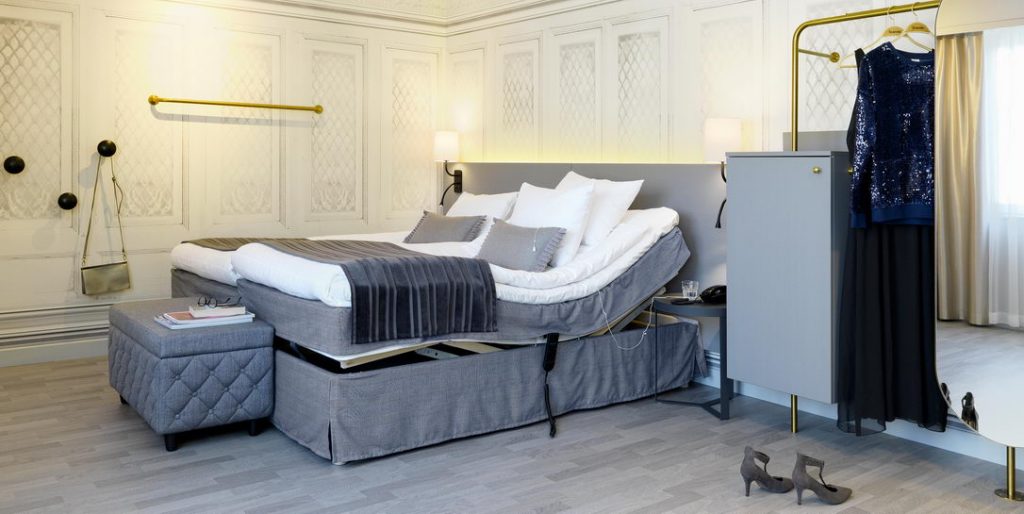
Not so long ago, hotel rooms for guests with disabilities looked like hospital rooms, Scandic’s “Design for All” means that an accessible room is designed just as well as any other room, with smart solutions that are barely noticeable except to the people who need them. “Making hotels accessible to more people needn’t be expensive or compromise good design,” says Berglund.

The company regularly carries out accessibility training for its 18,000 staff, through practical exercises and online courses. As a result the company has won numerous awards in recent years. Scandic was recognized for “Best accommodation for disability access” at the World Responsible Tourism Awards 2015 and for having “one of the most innovative practices” in the Zero Project 2018.

“Some 70 percent of all disabilities are invisible, which we take into consideration when developing accessibility solutions at our hotels,” says Berglund. “Our goal is to create fantastic hotel experiences for everyone. What makes us most proud is when guests say that when they stay at Scandic, they’re treated as hotel guests, not people with special needs. We are constantly developing accessibility at our hotels since it’s such a complex issue. We never consider our work to be done.” he concludes.

Fun fact about accessibility at Scandic:

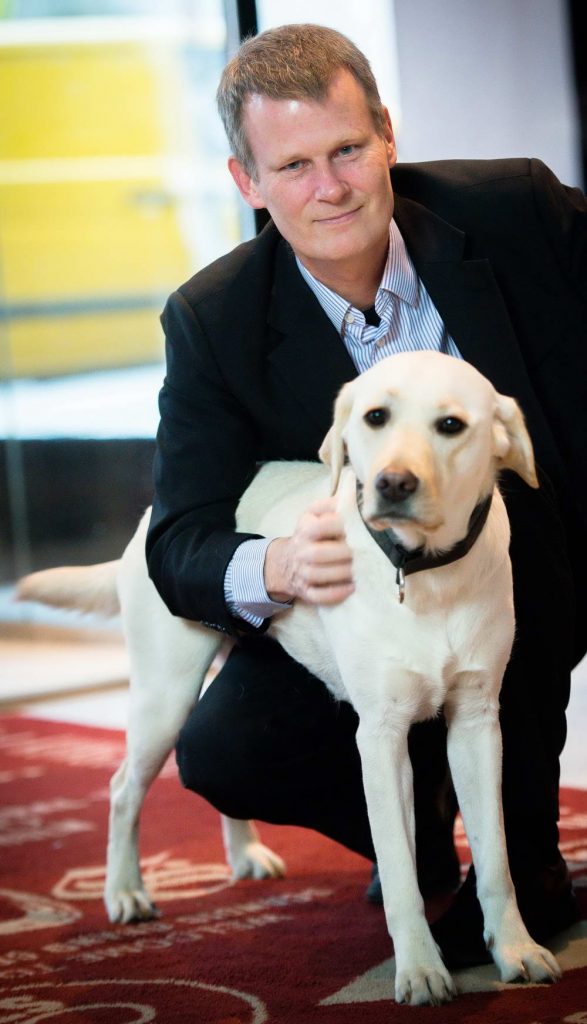
Four-legged friends are always welcome at Scandic and the hotel also has its own service dog, Dixi. Dixi is well-loved and very popular on Scandic’s social channels and on Instagram @dogatwork.

For more information about special needs at Scandic Hotels: https://www.scandichotels.com/specialneeds

Crisis Management

A ‘crisis’ is an incident which, because of its scale or impact, is beyond the scope of resolution by normal mechanism or decision making authority within acceptable time scales.

Ever since the volcano ash cloud crisis of 2010, which directly threatened the success of my first core professional conference organiser (PCO) event for our major European Association client, I have been fascinated with event crisis management and am responsible for creating a crisis management group within my agency PCO Bioscientifica, but also for each client event we manage.

As a professional conference organiser, I have experienced my fair share of crises in my 20 year career. Some crises, fortunately not many, were major incidents that, considering the definition above, threatened the success of the event. I term these the ‘great white sharks’ as they are very frightening, but they only actually kill six people a year. Others, which are more commonplace, have been less impactful and can be managed without major disruption however they can cause just as much pain in the short term. I term these the ‘mosquitoes’, much more common (killing over 650,000 people a year), we’ve all been bitten by them and they are terribly irritating. What all such incidents have in common though, is that they were unexpected and needed dedicated management by a team made up of the right people in the right place with the right information to ensure they could make the best decisions.

Sharks vs. Mosquitoes

Major incidents that threaten the success, or even the continuation of your event are, thankfully, very few and far between. An events manager may experience one or two in their career, they include the terrorist attack, the burning down of the venue, the ash cloud that cancels all flights, a major political situation in your host city, a demonstration that will make the national news.

Major incidents that threaten the success, or even the continuation of your event are, thankfully, very few and far between. An events manager may experience one or two in their career, they include the terrorist attack, the burning down of the venue, the ash cloud that cancels all flights, a major political situation in your host city, a demonstration that will make the national news.

More common place incidents that threaten the success of your event, are often overlooked and not considered a ‘crisis’. However, they should be. Such incidents can be just as dangerous, as damaging and cause the same pain to event managers as a major incident, certainly in the short term and you will experience these far more often. These common, more troublesome incidents include the speaker that doesn’t show, the aircon in the venue that is broken, the power cut, the caterer going bankrupt. They are the minor problems that, if you are not prepared for them, will be as difficult to manage, and as devastating as a major crisis – if not handled with precision and confidence.

It is of course important to be prepared for these ‘shark’ incidents, however they are unpredictable and infrequent, so how can you gain experience of managing such crises and build an appropriate plan? Ultimately a good crisis plan is built on the foundations of how your crisis team will approach the tasks involved in managing the crisis and its impact on your event. These foundations will be the same for a shark or mosquito and will have the ability to be scaled to deal with the type of incident in question. I categorise different types of crises into three types of response required:

  1. Be aware
  2. Be prepared
  3. Take action

Where do you start?

When we consider the priorities during a crisis the following list describes what is important:

  • Protect Human Life – is there a credible threat to human life. Are you onsite, has something happened?
  • How are you going to manage the crisis, who is going to be in that room, who are you going to call – Ghostbusters? I don’t think so.
  • Can you maintain business continuity today, tomorrow, next week?
  • What steps are you taking to protect the client’s reputation – if they continue to run the event, how will this look to delegate, members, sponsors, speakers?
  • Same question for the professional conference organiser’s reputation, will you be considered supportive and knowledgeable, do you have their trust, do you have the experience, who are they talking to?
  • When will things return to normal? What will normal look / feel like?

Crisis management is about being prepared, but not over preparing. It is not helpful to spend time walking through the scenario of every conceivable incident that could threaten an event. You cannot estimate how any given audience will react, nor can you anticipate your own reaction, or those of the suppliers on whom you will rely; the venue for example. A good crisis management plan will outline:

  • What is considered a crisis, and the different levels of severity of an incident;
  • What trigger will activate the group of people who will come together to make the decisions and manage the crisis;
  • Who will be in that group, where and how they will gather;
  • What responsibility each member of the group will have.

A good crisis management plan will be continuously updated and kept in multiple places to ensure it is accessible event if the computer systems are down, or you are travelling. I have a copy of mine on the local hard drive of my laptop and a printed copy in my work bag. The crisis team will annually be refreshed on the details of the plan and whilst we have a standard master plan for our PCO agency, we also create a condensed plan for the individual events which identifies the individuals from the client’s organisation that would also be involved in the crisis management plans. The agency plan would be activated first, and the client plan would cascade down from this.

The crisis team will be made up of the individuals who are able to step away from the business as usual and the operational responsibility for the event in question, they will also be those with the power to make decisions, including authorising additional expenditure. It is crucial that the crisis team can be mobilised quickly, which may not be possible for the onsite lead event manager to free up time to join an unplanned meeting. It’s equally as important that the tasks involved in managing a crisis are removed from the team on the ground trying to continue to deliver the event. In separating out the responsibilities of the events team and the crisis team, you will benefit from the dedication of the crisis team to the tasks at hand whilst being safe in the knowledge that the operational requirements of the event will not be neglected. This is important as once the situation returns to ‘normal’, the event can continue without further delay.

This article was written by Kate Sargent, Deputy Managing Director, Bioscientifica Ltd

Is enough happening to support mental health and wellbeing training?

A panel of industry experts has emphasised the importance of business leaders taking responsibility for their staff and undergoing more mental health and wellbeing training.

The three-person panel discussed wellness and mental health within the meetings industry at International Confex 2019. The panel consisted of Jenner Carter, head of marketing at Lime Venue Portfolio and marketing chair at the HBAA, James Hitchen, GM of the Event Marketers Association (EMA), and Laila Datoo, a mindful business coach.

Carter, who recently picked up a qualification in Mental Health First Aid through the HBAA, spoke about the importance of leadership in addressing mental health in the work place.

“The industry has discussed at length the level of stress and anxiety found within event professionals, and awareness has been driven by some really great initiatives,” she said. “However, to turn awareness into action, leaders need to be trained to both spot staff showing signs of illness, and to intervene where possible.

“One of the things we learn through mental health first aid is the early warning signs, and how to handle intervening in a sensitive but professional manner.”

Hitchen said that the events industry needs to think about prevention rather than “just managing the symptoms of poor mental health”.

He said: “Leaders in business need to support their teams in improving their mental fitness. I believe it is a company’s responsibility to create conditions that supports living well.

“A company with a culture of wellbeing is happier, healthier, more productive and more profitable.”

The Mental Health Foundation estimate that 70 million work days are lost each year due to mental health problems in the UK, costing employers approximately £2.4bn per year.

The panel shared tips with the audience and emphasised the importance of the right level of training and awareness from senior leadership.

Datoo said: “Business leaders need to start equating wellbeing with performance and productivity. The happier and healthier your people, the better your bottom line.

“We shouldn’t wait for absenteeism figures to rise, people to leave or burnout or the culture to become toxic to address this.”

The HBAA runs a Mental Health First Aid (MHFA) accredited course that gives participants a recognised qualification to be a mental health first aider.