Hilton Birmingham Metropole unveils new Conference & Event Spaces

One of the UK’s most expansive overnight meetings and events destinations – has opened its new-look and highly flexible conference and events facilities.

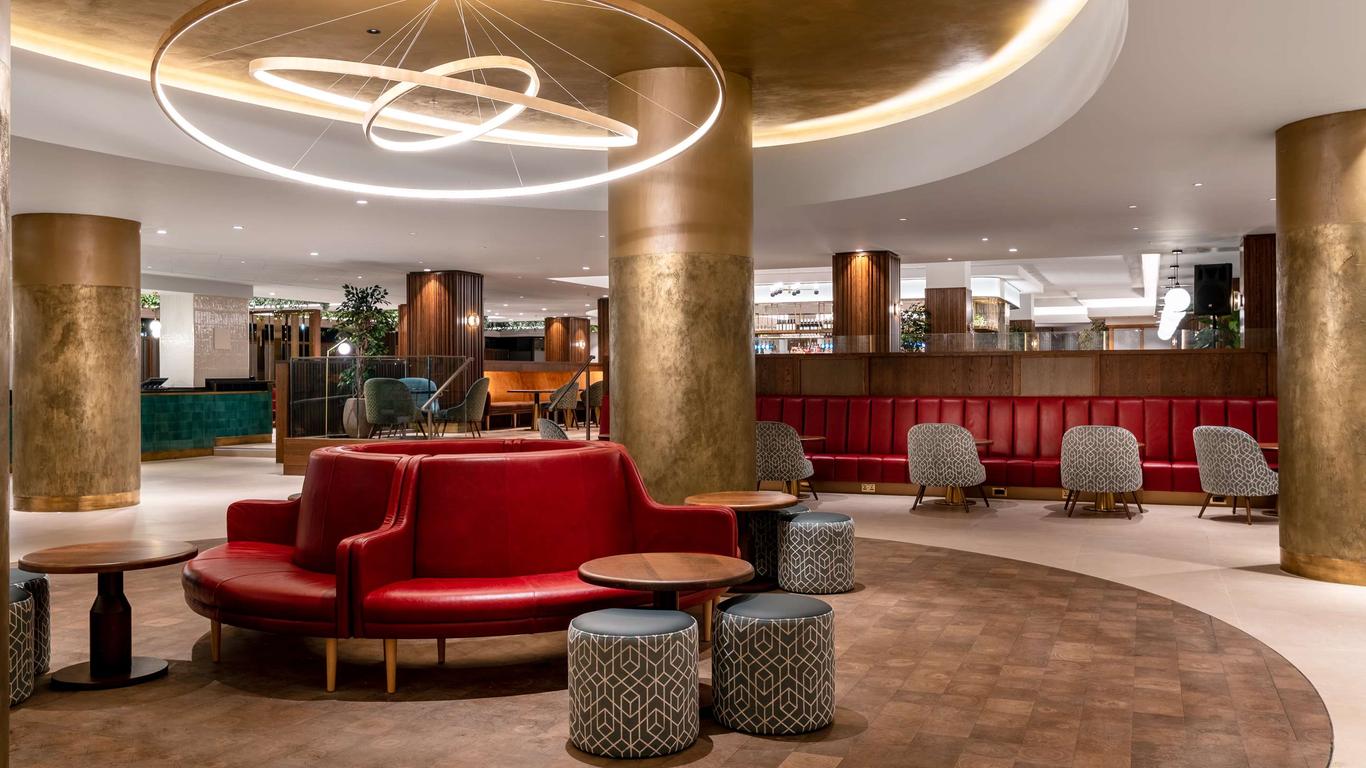
The new spaces are now fully operational and once again ready to accommodate some of the most recognised events in the UK. The new look is visible throughout the hotel’s 6,000sqm of meeting and events facilities, with all 31 event spaces receiving a contemporary facelift that belies the venue’s 45-year tenure.

The hotel’s bedrooms and three new bar and restaurant concepts complete the package, creating environments that celebrate Birmingham’s rich heritage and embrace its culture.

The refurbishment has also underlined one of Hilton Birmingham Metropole’s key selling points; one of exclusivity. The conference and event space is easily divided into three separate and distinctive areas allowing guests exclusive use of sections of the property. The hotel’s event and conference offering also remains diverse, ranging from intimate boardrooms to expansive ballrooms, the largest of which can host up to 2,000 guests.

Leading the project is Nicola Underhill, who joined as general manager in September 2021 from Hilton St George’s Park Hotel.

She said: “This project has been many years in the making, and we sense the anticipation from our guests who know and love the hotel; they really have been on this journey with us. We want to ensure that we can meet the returning industry demand, while remaining focused on delivering outstanding guest experiences within our refreshed hotel environment.

“We have invested hugely in talking to our clients and working with all our stakeholders to ensure the new and improved space not only met with their objectives, but also exceeded their expectations. During its 45-year history, the hotel has secured an enviable reputation and we want to build on that by offering a new contemporary face to the brand.”

HBAA unveils a new identity -beam


The new face of HBAA has been announced by the association board today, 14 October 2021.

The next few months will see this repositioning take effect, ready for 2022.

beam is a name, not an acronym, but it has its roots firmly based in business events, accommodation and meetings, and shines a light on our industry.

Our principles remain the same. Built on best practice in business, and supported by the four pillars of Resilience, Innovation, Ethics and Quality, our HBAA heritage will provide the springboard for an exciting and ambitious strategy which will be developed with our members.

beam will become our new association name as it enters its 25th year: representing the membership of today and helping us create a wider community for the future with a greater voice, beam will take us into sustainable growth and longevity.

Through becoming beam, we will be truly future fit.

For more information head over to the HBBA https://www.hbaa.org.uk/content/hbaa-unveils-new-identity-%E2%80%93-beam

Networking at events – skills refresher

The idea of throwing yourself into a room of people you don’t know is a daunting prospect for most people, especially as most of us have been out of face-to-face contact for the last 18 months. However, networking is one of the best things that you can do to learn about what’s happening in the industry and develop your career.

It’s easier to do to do business with people you know or by recommendation and industry events, forums, educationals and exhibitions are a good way to make connections. But it’s not just about face-to-face meetings, there are networking opportunities online and social media sites give everyone access to a global community.

Practice

It can be hard to start a conversation with a stranger, so start in the office, at the gym or when you’re out and about by talking to people you don’t know. Just begin with small talk and see where the conversation goes.

Prepare

Spend a little time thinking about what you want to achieve from the networking event and have a few questions ready to ask new people. Also think about what you want to tell them about yourself, as it’s a two-way process. What news can you give them or place business or share contacts that will help.

Relax

Try not to worry about what to say next or what the other person is thinking. Focus on the person you’re talking to. Smile and look as open and approachable as you can, if you look friendly then someone will come and have a conversation with you.

Focus

Give the person you are talking to your complete attention. It’s off-putting if you’re looking for someone new to talk to. Build a rapport by asking questions and listening carefully. When the conversation has finished then move around the room.

Pick your events

There are so many opportunities but going to everything is time-consuming and exhausting. It’s better to be strategic and plan which events are most likely to be worthwhile.

Find a friend

If you’re going to an event alone, try and make at least one connection as this will make everything much easier. A lot of people in the room will be feeling the same way as you and don’t know anyone else either, so look for other people on their own and see how you can make them feel more comfortable.

Or, if you can, take a colleague this will make you comfortable until you gain confidence and find some new contacts of your own.

Keep in touch

Maintaining a relationship with a new contact is crucial to networking. Follow up with an email, connect on LinkedIn or another social media platform. Share ongoing news from time to time and find out what other events they are going to attend and catch up with them again there

We’ve all walked in to a room where everyone seems to know each other and are in groups, but remember that those confident people were in your shoes once. Even the ones who have been attending networking events for years still may not really enjoy it, but can hide it through years of practice and experience.

Using gamification – education, fun or both?

One of the biggest challenges for event organisers at the moment is how to improve engagement at their conferences, meetings and events. Gamification is increasing being used, but what are the benefits, particularly in this hybrid world that we now find ourselves in?

As always, objectives need to be set and the programme designed accordingly, but why not make learning fun and different. The goals need to connect with the content and collect relevant data, as well as improving the user experience.

One organiser who tested their audience’s knowledge before the event and then afterwards, found that 97% of people who started the gamification session finished it, and 30 days later 90%+ of the knowledge was retained. This was far higher than when gamification hadn’t been used.

Particularly successful examples of the use of gamification are for sales training and product launches.

The gamification element can be played individually or in teams, so attendees connect and network with other people. It could be used to encourage attendance at future or recurring events as an ongoing competition or ‘re-match’ if scoring is used.

Planners who have introduced gamification say that there are many advantages to using a game format that is designed specifically for the audience:

  • Improved learning experience
  • Higher attendance
  • Different learning environment
  • Measurement of impact
  • Interaction, either face-to-face or via online comments and discussions
  • Instant feedback of data
  • It can be used as an incentive or booking discount tool

Measurements can be in place to assess the success of introducing gamification:

  • Any increase in participation
  • Knowledge on a specific topic
  • Response rates
  • Improved post-event assessments
  • To identify new opportunities

The data that gamification can provide:

  • Who participated
  • How they participated
  • Educational gaps
  • What they liked and disliked

And this can be used for:

  • Future programme design
  • Using profiles to target the right people appropriate marketing
  • Encouraging post-event feedback

Considerations

  • The presenter or moderator needs to be happy and confident to use gamification, which can be done by using a previous example, showing audience participation, their response and the data gained.
  • Different cultures may prefer individual or team exercises
  • Some groups will be happy with a competition, but others will not be comfortable with a public scoring system or leader board
  • Think about whether the results should be published at the time or afterwards, or whether individuals should just receive their own results

Introducing gaming strategies and techniques to conferences, meetings and events does have advantages, particularly data collection and insights in to delegate behaviour, but the key is that it has a well defined strategy behind it and it improves the user experience.

For more information about planning your conference, please call 01780 484051 or email enquiries@edgevenues.com

Venue concessions: negotiating what’s best for your event

venue concessions

In this blog, we look at some venue concessions you can request to make a contract more attractive and possibly save you money, too.

An event planner knows exactly what they need to make it happen, but on low budgets, not everything is possible. Negotiating with your venue can help make the most out of your event while achieving a few discounts. 

Of course, the more attractive your business is to the venue, the more likely they will negotiate with you. And it can be reassuring to know that the attractiveness of your business is not necessarily because of its value, or the size of your group. It might be because it fits well with other bookings, is on a less popular day of the week, or time of the year. Or it’s an event type that can support the venue in attracting similar business.

A good venue procurement specialist such as Trinity Event Solutions will negotiate on your behalf. So let them know what’s important to you and they will help. The results can often be better by using an agent that negotiates directly.

It’s always worth asking for the important things and being brave, the venue can only say no, meet you halfway or agree! So, what venue concessions can you consider negotiating?

Venue concessions: The hotel or venue

  • Extend the bedroom rate three days before and three days after the meeting dates, in case attendees are travelling from afar and need to arrive early or stay late.
  • Hotels often offer a complimentary bedroom for a certain quantity of bedroom nights. Try to negotiate an additional free room.
  • Enquire about a complimentary or reduced rate accommodation for the event organisers and any individuals needed for set up.
  • Ask if there are any suite upgrades available last-minute free of charge.
  • Request complimentary room nights or dinner for a site visit and planning visits.
  • Ask for a proportion of early check-ins or late check-outs.
  • Request a private luggage storage or cloakroom for attendees to leave bags if the meeting doesn’t match the hotel’s check-out time.
  • Ensure your group has complimentary use of the health club, spa, pool, and any other leisure facilities.
  • Ask the venue if they can offer any free or discounted transfers from the airport or train station.
  • Ask the venue if they have any discounts on leisure facilities, spa treatments or golf for attendees. It is also worth asking whether they can offer discounts for local attractions.
  • If there is a resort fee, ask for it to be waived or discounted.
  • If there is a parking charge? The hotel should be willing to discount it or allocate several complimentary spaces.

Contracting and invoicing

  • Agree with the hotel well in advance on which charges they will post to the master account and which charges attendees will pay. Communicate this to attendees too, so they are fully aware of any charges they may face.
  • Check the minimum delegate numbers with the venue and negotiate, if applicable to your event.
  • Check whether there is a food and beverage minimum spend. If there is, and you are wary your event might not reach it, ask if the venue can lower it.
  • Negotiate a percentage of guest room attrition on the original contracted block.
  • Negotiate on the rates and confirm whether they include service and tax.

The event/ meeting

  • Check the Wi-Fi will support the quantity of attendees. If it is unsuitable, ask the venue to upgrade it free of charge. It needs to cover all meeting rooms, registration areas and catering areas. The capacity of the Wi-Fi is important as many people have multiple devices.
  • If you need to use the venue’s AV equipment, ask if they can make a deal to incorporate it into your event package.
  • Find out what equipment is included and ask for anything else you need. If the venue has it in stock, it may be complimentary.
  • Consider if you need early access, late breakdown, or overnight hold of the meeting rooms. If so, check the venue can do this free of charge for you.
  • Check if the venue provides paper, pens, stationery, water and sweets in the meeting rooms. If not, ask for a discounted rate or complimentary stationery for your event.
  • One of the most popular requests is morning breakfast rolls on arrival. The venue may be willing to add these free of charge as they are not expensive to produce but are great for delegates, especially at early morning events.
  • Ask the venue to include a re-booking clause in the contract. The clause can mitigate the cost if you need to cancel and re-book.
  • Enquire if the venue will offer a multi-year deal at a set rate and/or hold dates for future years. If the event works at the venue and you want to re-book then the negotiation has already been done.

Venue concessions rules for negotiation

  • Only ask for items that are important to you. It’s better to focus on these than a long list.
  • Be fair and realistic. If the venue team understands why you are asking for something, it will be more likely to try and make it work.
  • Remember that the venue has costs too. Don’t negotiate on anything that will negatively affect your meeting, the service, or quality.
  • Think about where the venue makes its profit – that’s where they will most likely be able to reduce costs.
  • Negotiations will be much quicker if you can deal directly with the decision-maker.
  • Be kind. The venue staff will do their best to make your event perfect. But if they can’t offer exactly what you want, be kind and thank them for what they can do.
  • Make sure everything is put in the contract. Ask a colleague or legal adviser to check it before you sign. Trinity Event Solutions Your event specialists should be able to do this for you – you just need to ask!

Remember, you want to be on good terms with everyone to ensure they deliver a successful event. So all parties need to be happy with the venue concessions agreement.

If you would like any help with venue concessions, or more information or advice about booking a venue please call us on 01780 484051 or email enquiries@edgevenues.com

Conference Content: How to engage an audience

Event organisers have lots to consider when they are planning events, and conference content is a big one! 

Planners must get across their clients’ messaging through captivating meeting or conference content. That point is true whether it the event is live, a webinar, hybrid/virtual, workshops, training, exhibitions and so on. 

Engaging and exciting content will entice delegates to pay attention, understand, and retain the message.

So, how do you get your message across and keep your audience engaged? And if it’s a non-compulsory event, how do you make it attractive enough to ensure bookings?

Here, we look at things you should consider in the planning of your conference content to ensure event success:

  • Who is the audience?
  • What are your objectives?
  • What are the attendee’s objectives?
  • Your messages – that do you need to convey?
  • The key is to offer a solution to their problems or fill gaps in their knowledge.

Choosing the right speaker is essential! Whether it is someone external from inside your business they must have the right skills to deliver the message. 

Ensure they have experience presenting using your chosen medium; they need different skills for face-to-face, virtual or hybrid events. 

Your speaker must be someone people look up to and can learn from. This clout will encourage people to book and turn up.

If it’s a live event, consider the room set-up. Do you need theatre-style, cabaret-style, or classroom-style? Consider whether the attendees need to engage with each other and whether the seating arrangement will achieve the desired outcome. 

Still unsure? Our handy room layout guide can help you decide what will work best for your event.

Whether it’s a hybrid, virtual or live event, think creatively and use production experts who can bring the best skills. Consider the following elements:

Branding. 

Know your brand and follow through with the signage, graphics and colours. Make sure it is easily recognisable throughout the event.

Culture.

Understanding the attendees and their social behaviour can allow you to predict what they will like and not. This understanding and consideration limits the chance of errors and unpopular choices.

Scripts. 

Manage the introductions, cues and prompts, and check in with your speakers about what they intend to discuss. Ensure all of these align with each other, alongside the event goals.

Design. 

Consider using frames, graphics, videos, growing text, animations, images, and filters. How should the session look and feel? Do you want a pre-recorded slide deck, or would it be better without? 

Remember, sometimes a virtual audience has a better or closer view than a live audience. So, if you use video, it might be better at full screen rather than behind the speaker.

Speakers. 

Do they understand the software? Give them coaching to prepare and rehearse. The production company will have ideas about camera angles, roving cameras, microphones, lighting and audio.

Interaction. 

Do you want to include networking, quizzes, demos, competitions, and entertainment? Consider what elements delegates will respond to.

Targeted sessions. 

Think about who you are targeting, their culture, and whether there should be different sessions for live and virtual audiences.

Social media. 

Integrate activity with the content, encourage and remind attendees to join in. Use content from the event to continue to promote the sessions even after the event ends.

Sponsors. 

Do you want to include branded promotions? If these are screened at a live coffee break or networking, how can you successfully deliver them virtually? Ad packages must be captivating, so you might need different media for live and hybrid.

It’s a good idea to have a different person or teams to look after the live and virtual attendees. They can each focus on the best delivery and outcome for their audience. 

Decide in advance whether to use the same or separate content and delivery method in each session. A planner and production team for each segment will be able to meet the goals for their audience.

Overall, understanding the delegates and considering every aspect of the event will allow you to create a captivating event. If you’re still stuck, ask delegates for feedback after the event to identify aspects to improve on.


For help with your conference, meeting or any event, just call EDGE Venues on 01780 484051 or email enquiries@edgevenues.com


Edwardian Hotels vision for a sustainable future

Edwardian Hotels have let us know how they promote and achieve sustainability at their hotels in London and their vision for the future.

It’s not an easy task, but they continuously review and evolve their practices, partnerships and behaviour with the aim of creating a better future. It’s also in the best interest of guests, conference delegates and staff. As a result, in 2018, all Edwardian Hotels London properties were certified Gold Standard by Green Tourism Award.

Their four key initiatives look at:

  • Reduction in the use of energy
  • Minimise the carbon footprint
  • Decrease the use of water
  • Lessen food wastage

Carbon Emissions

Edwardian Hotels’ targets in this area are:

  • Between 2009 and 2016 the group reduced carbon emissions by 26.7%, against a target of 20%
  • Between 2016 and 2018 that figure increased to 30.7%, an increase of 4%
  • The company has a partnership with Tesla, promoting electric cars. Electric charging points have been installed at the Heathrow and New Providence Wharf properties, offering complimentary charging to guests

Reducing Single-Use

  • Edwardian Hotels London was one of the first hotel groups to introduce refillable shampoo, conditioner and soap in bedrooms, public and staff areas to reduce single use plastic
  • They are looking at alternative products and packaging to reduce plastic further
  • Most items in the event areas are re-usable and any items which can be recycled are done so automatically
  • Any polystyrene is sent to recycling and used to create insulation

In the wake of COVID-19, products are being reviewed to ensure they are hygienic as well as environmentally friendly wherever possible.

Reducing Waste

  • General waste has been reduced by 20% compared with 2016 and each property is aiming to reduce water use by 4% against 2018 consumption
  • The target set by the Mayor of London is to recycle 75% by 2025 and card, paper, cans, plastic bottles, glass and mixed plastics are recycled. Food waste is collected separately
  • Edwardian Hotels use Globechain, a marketplace for unneeded items.
  • The group uses GSC certified paper

Food and Beverage

  • Produce and food waste is constantly reviewed
  • Local products are used where possible
  • Coffee beans are collected and Nespresso machine pods are recycled
  • Meetings, conferences and events
  • Delegates are encouraged to use public transport
  • Items in the meeting rooms are re-usable or recyclable
  • Menus use locally sourced ingredients where possible

Charities

Cancer Research UK is the group’s corporate charity. In addition, the bars and restaurants support Springboard and each hotel has local charity partnerships.

The Londoner

  • When this hotel opens in Leicester Square, it will have achieved:
  • 30% less carbon usage that the regulations demand
  • CHP and LED lighting
  • A £175m Green Loan from HSBC. This is the first loan in this sector to encourage and facilitate environmentally friendly activity
  • ‘Excellent’ Building Research Establishment Environmental Assessment Method rating, to sent high standards for the procurement, design, construction and operation of new developments
  • And it will have a liquid film that reduces evaporation and energy loss from the swimming pool

For more information about the individual Edwardian Hotels, search on www.edgevenues.com.

Rate Check – How much can you expect to pay?

It’s great news that events are starting again, so we thought it would be interesting to look at the rates that are being quoted by venues in different parts of the country.

There is demand, but event bookers are reluctant to confirm the booking until the government guidelines are clear about social distancing and the pilot events have been completed.

As usual rates are higher in months where there is less availability and they are lower outside London.

For example, we’ve looking at a 3-day event for 350 people in February 2021 and comparing various locations around the country. The rates vary, as follows:

Location Catering B&B
Liverpool £32.00-£39.00 £75.00-£105.00
Manchester £27.50-£36.00 £125.00-£146.00
Birmingham £32.00-£38.00 £96.00-£121.00
East Midlands £37.00-£44.00 £87.00
South Wales £53.00-£60.00 £120.00

However, the rates are higher for 2021. This is for a mid-week one day event for 30 people, where we’ve been quoted daily delegate rates of:

Location Date DDR
Hertfordshire June £55.00
Leeds July £36.00-£40.00
Milton Keynes July £35.00
London September £55.00-60.00
London November £65.00-£85.00

Some venues are sticking to previous rates, some venues are increasing rates to take account of fewer people in the same space. Pricing isn’t consistent at the moment, with some venues requesting supplements or additional room hire costs.

Social distancing is a big problem for venues and both they and the event bookers need to know what they can do in terms of capacity. It’s not just for the meeting rooms, but moving around the venue, catering and restrooms. Venues with outside space definitely have an advantage. After a turbulent year, the venues will need to be confident that they can operate at a profit when they open.

The Meetings Industry Association carried out a survey into social distancing in May 2020 and found that:

  • The majority (82%) of venues confirmed they can operate with social distancing measures in place.
  • Nearly half (46%) of respondents identified that their venue’s capacity would have to be more than halved, with 27% highlighting a reduction of between 41-50% would be required.
  • As a result of these reduced capacities, 59% of venues would not break even.
  • Over 80% expect to lose more than half of their turnover per month.
  • 17.5% of venue operators say it would be ‘impossible’ to open their venue while adhering to social distancing measures, both on commercial and operations grounds.

It will take some time for things to settle down. We will continue to review rates and report on trends as the bookings increase and report.

For more information and advice on booking venues for conferences, meetings and events, call us on 01780 484051 or email enquiries@edgevenues.com
What will we eat in 2021?

The expectation is that, more than ever, when they go to conferences, meetings and events, people will be looking for food that they haven’t been able to make at home. Travel is an opportunity to try new dishes and the whilst we’ve been locked down there has been a following for comfort food. Nostalgic dishes will still be popular, but with a twist, still comforting, but stimulating too.

This time last year we looked at what we can expect to eat at events. Overwhelmingly the trend was for healthy choices:

  • more plant-based choices
  • healthier snacks
  • alternative milks
  • brightly coloured food
  • simple and natural dishes
  • a focus on sustainability

So what can we expect for 2021?

The catering industry expects to see more of:

  • Yuzu – a sharp citrus flavour which that tastes like a mixture of grapefruit and mandarin.
  • Cherry Blossom – used in cocktails, cakes and puddings
  • Honeycomb Toffee – a mixture of two well known tastes
  • Smoked herbs and spices – the regular ingredients have been given an extra dimension
  • Chillies – more varieties with different levels of heat and flavour
  • Tempero Baiano seasoning – from Brazil. It’s a mixture of herbs and spices to use in casseroles and vegetables
  • Mexican Recados – a citrus paste to use in marinades for meat
  • Dukkah – North African toasted nuts and seeds to sprinkle over dips, meat and vegetable dishes
  • Izakaya – a mixture of small plates (like tapas) but from Japan
  • Pinoy with banana ketchup – meat kebabs from the Philippines, with sweet and savoury flavours

Intolerances and special diets

There has already been an increase in special diets over the last few years, but expect more use of alternative flours and milks, as well as seeds, grains, pulses and oils. The use of chickpeas has grown massively, but in the future, they will be used in more unusual ways including puddings.

Cocktails

Cocktails have also grown in popularity alongside specialist bars for specific spirits. When lockdown is over, expect people to indulge in exciting cocktails and unusual drinks.

Fermented food and plant-based options

Kimchi, kombucha, sauerkraut – all contain probiotics and are a popular choice for the healthy eater.

Alternatives to traditional protein will be on the menu as well as fresh vegetables. Food that is high offers health benefits and boosts immunity will be popular choices.

For example, fermented foods contribute to positive gut health, seafood is high in Omega 3 fatty acids which offer a wide range of health benefits, and plant-based menus obviously offer up a lot of nutrients and vitamins.

Toast with different toppings

We’re all familiar with avocado toast and hummus on toast , but what about mashed squash or sweet potato, mushrooms, beetroot, tapenade or peppers to go with eggs or a salad topping?

Coffee

Coffee flavoured products are expected to increase, so you can expect to see it in snack bars, granola, smoothies, yogurt and many more dishes.

Our conclusion is that following from 2020, we will see more of the same trends – healthy choices, but also some reward for all the months that we haven’t been out.

Travelling around the world – who’s holding events?

Globe with flight paths

Last week we looked at how our European neighbours are managing Covid-19, what restrictions there are on travellers and whether they can hold conferences, meetings and events. This week we’re looking at some popular destinations which require long-haul flights from the UK.

Travel corridors were suspended 4am this morning, 18 January 2021. This means that if you arrive in England from anywhere outside the UK, Ireland, the Channel Islands or the Isle of Man, you will need to self-isolate for 10 days.

Travellers must have proof of a negative coronavirus test to travel to England.

Mexico and Canada have closed their land borders with the United States until 21st February. Japan has brought in a state of emergency in Tokyo since Covid-19 cases have risen to record levels. But what’s happening elsewhere?

Australia

The regulations vary state by state and there are restrictions on moving between states. Before travelling to Australia, you need to have a negative Covid-19 test. On arrival all international travellers are escorted to a designated facility (hotel) and must quarantine for 14 days. State and Territory governments. The traveller must pay a fee to cover the cost ($3,000 for an adult in New South Wales).

However, once in Australia the rules have been relaxed with Melbourne allowing meetings for 150 people indoors and 300 outdoors, in New South Wales the limit is 20 people and 50 in Queensland.

Canada

From 7th January, all international arrivals to Canada must have received a negative Covid-19 test result before boarding the plane. Then there is a mandatory 14-day quarantine period.

The regulations do vary from state to state, but gatherings are banned where social distancing is not possible. There is a curfew or closure of bars and restaurants in some places. The limit on the amount of people allowed to meet inside and out varies according to tiers.

China

All direct flights between the UK and China have been suspended. There are restrictions on movement around the country and there are quarantine requirements for internal travellers. The rules vary depending on the risk level in that region.

Hong Kong

Hong Kong and Singapore have delayed a planned air-travel bubble for the time being. This would have allowed travellers between the cities to avoid a quarantine by presenting a negative Covid-19 prior to their journeys. Flights from the UK were suspended on 23 December.

Gatherings are limited to two people, who aren’t from the same household.

Japan

Tokyo currently has its highest level of Covid-19 since the pandemic started. It has declared a state of emergency and the measures will be in place until 7th February. Residents are advised to leave their homes only for essential reasons and must avoid gatherings. Restaurants have been ordered to close by 8 p.m.

Mexico

The US land border will be closed until 21st February. Some hotels and restaurants are open, depending on the area and quarantine is not required on arrival in the country.

New Zealand

New Zealand’s border has almost been completely closed to international travellers and as a result the country has light restrictions. The meeting regulations are governed by tiers. In Level 3 the rules are a maximum of 10 people, Level 2 a maximum of 100 people. In Level 1 there are few restrictions on businesses.

Singapore

Visitors to Singapore who have been in the UK for 14 days prior to travel are not permitted to enter or transit Singapore.

The country has a plan called Connect@Singapore which will allow a few business travellers at the end of January. They will need to apply in advance and take multiple Covid-19 tests prior to and during their visit.

Currently, business events of up to 250 people are allowed, with permission from the Singapore Tourism Board. Attendees must be distanced between five zones of 50 people.

South Korea

All direct flights between the UK and North Korea have been suspended. The current rules on gatherings are a maximum of 50 people indoors and 100 people outside.

United Arab Emirates

Each Emirates has different regulations and airlines are still flying between Dubai, Abu Dhabi and the UK. A negative Covid test is required prior to travelling. Quarantine for 14 days is required on arrival but can be carried out at a hotel or private residence.

Hotels, restaurants and tourist attractions are open. Conferences and meetings are permitted in Dubai.

This information is subject to change and we advise you to check the regulations before booking, check your insurance cover before booking.

18 January 2021