Record-breaking revenue per available room rates for August were achieved by London hotels, according to preliminary figures released by data company STR.
Alongside a 4.5% year-on-year increase in revpar to £131.39, average daily rate also showed a healthy rise over the same month last year of 4.8% to £151.58.
While occupancy was marginally down by 0.3% to 86.7%, London climbed above 90% across 11 nights throughout the month. STR analysts said that this could be due to “the devaluation of the pound attracting international visitors to the capital”.
New room supply, up 1.5%, was slightly ahead of demand for accommodation, which increased by 1.2%.
STR will release is full August results later this month.
Copenhagen – the capital of Denmark, is a compact country, meaning it is easy to get around and make trips to the country and back again in a very short space of time. The city, which originated as a fishing village and grew to be capital of the Danish Empire, is typified by palaces, copper-roofed town houses and atmospheric cobbled squares.
Paula Calton shares her insight into this destination and the different venues you might want to consider for future events…
The International Congress and Convention Association (ICCA), recently ranked Copenhagen as the 7th largest conference city and the city is not just doing well its also expanding quickly.
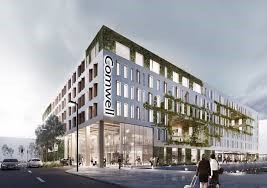
Comwell Copenhagen Portside
Comwell Copenhagen Portside
In Nordhavn, Copenhagen’s newest dockland neighbourhood, the Comwell Copenhagen Portside is set to open next year. The new conference hotel will be designed to complement the existing marina environment and will offer sea views. The hotel will feature 484 rooms in addition to 18 conference and meeting facilities. There will also be a bar and restaurant on the ground floor facing the water and there are plans to establish a water taxi service to bring visitors into town via the waterways. The new conference hotel will be designed to complement the existing marina environment and will offer sea views.
Villa Copenhagen – new 5-star hotel
Copenhagen’s former central post office is set to be transformed
into a five-star hotel.
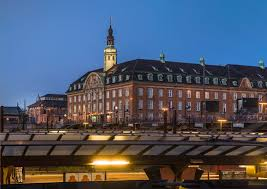
Villa Copenhagen
The heritage building from 1912 will offer 390 rooms and suites, fitness centre and relax areas with pool, 5 different restaurant and bar concepts in addition to a modern conference hall seating up to 1200 delegates and eight executive meeting rooms. The philosophy of Villa Copenhagen is “sustainable luxury” with an emphasis on curbing food waste and single-use plastics. The hotel therefore seeks to offer a different kind of informal service than regular 5-star hotels. Set to open in early 2020 the hotel is a neighbour to Tivoli Gardens, one of Copenhagen’s major tourist attractions. Also with its location next to the Copenhagen Central Station, the hotel can be reached by direct shuttle train from the airport.
Copenhagen has two of the world’s top five best restaurants
When the World’s Best Restaurants were recently announced, Denmark’s capital placed not just one but TWO restaurants in the top five.
Restaurant Alchemist
Restaurant Alchemist
After spending 50,000 chef hours preparing the menus and re-purposing a former shipyard production facility using 200 tons of steel, Restaurant Alchemist is ready to launch what is rumoured to be the biggest culinary sensation in Copenhagen in years.
Headed by chef Rasmus Munch, the gourmet restaurant is described an artistic/theatrical experience that invites diners to experience a 50-dish menu described as “holistic cuisine” created by 4 different kitchens, including their dedicated chocolate kitchen. A total of 30 chefs and 20 waiters will tend to 40 guests during the evening sitting. Headed by chef Rasmus Munch, the gourmet restaurant is described an artistic/theatrical experience that invites diners to experience a 50-dish menu described as “holistic cuisine” created by 4 different kitchens, including their dedicated chocolate kitchen. A total of 30 chefs and 20 waiters will tend to 40 guests during the evening sitting.
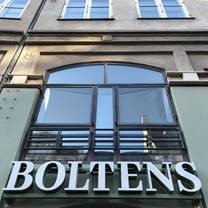
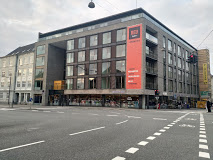
Boltens Food Court
A new player has been added to Copenhagen’s street food market. Boltens Gård (a historic and cosy courtyard near the King’s New Square) opened its doors in April, offering both Danish and international dishes from 19 different stalls.
Boltens Food Court
Buildings in a historic courtyard from the 1700s next to Kongens Nytorv square have been re-adapted to create the city’s largest food court, featuring 19 food stalls in addition to bars on several floors, totalling 4,000 m2 of indoor space. In addition, there is a cobble stoned courtyard (1,500m2) with 1,000 seatings. Three of the food stalls will serve Danish cuisine and the remaining will serve food from around the world.
Beyond the Capital
Not only Copenhagen is having a growth spurt. In Aarhus, Denmark’s second city, new hotels and restaurants are rapidly shooting up.
Radisson RED
Scandinavia’s first hotel under the Radisson RED label is set to open in central Aarhus, offering 78 rooms, meeting and event facilities, a restaurant, and a gym.
Radisson RED
The new brand by Radisson Hospitality AB seeks to appeal to
Millennial and Gen Z generations, offering small but comfortable rooms, select
services and a playful design.
As a novelty, guests will be able to check in and out – and
even open their hotel room doors – using the Radisson RED hotel app. Radisson RED
is the latest addition to the Radisson Hotel Group brand portfolio.
Radisson RED Aarhus will be located by the City Hall Square within easy walking distance of the Aarhus Central Station, the Scandinavian Centre.
Restaurant KP5 opens in Aarhus
Aarhus’ new harbour front is rapidly developing into a new designer dockland. Among the newcomers is the KP5 brasserie, which is located by the marina.
Restaurant KP5 opens Aarhus
Events can be hosted in combination with their Vin Danmark and Hantwerk facilities, which along with the brasserie boast a max capacity of seats 300 outside. The restaurant offers French inspired dishes in newly renovated rooms. The food is seasonal and focuses on high quality produce. From the restaurant you have a unique view of the marina and harbour life.
Restaurant Ghrelin
One of the latest gourmet offerings to open in Aarhus, Restaurant Ghrelin is named after the human “hunger hormone”. Located in the city’s new dockland developments on Aarhus Ø, Ghrelin is headed by two of the city’s most celebrated chefs, Anders Kuk Kristensen and Nicklas Friis Nielsen.
Restaurant Ghrelin
The 30-seat gourmet restaurant is described in the Michelin
Guide as “A sleek, modern two-roomed restaurant with a semi-open kitchen and
confident friendly service.” Ghrelin offers 3, 5 and 7-course tasting menus
with an emphasis on organic produce.
Increased costs have dented profit margins at UK hotels in May, despite RevPAR (revenue per available room) growth.
The UK hotel business now has a year-over-year decrease in profits in each month of 2019, according to the new data from HotStats Hotels.
In June, the YOY decline in GOPPAR (gross operating profit per available room) was at three per cent, with a slight increase of 0.3 per cent in RevPAR to £93.84.
More positive news reveals that revenue levels have stayed buoyant, with YOY increase in revenue streams such as food and beverage (a 3.5 per cent rise) and conference and banqueting figures up by 5.6 per cent. This contributed to a one per cent rise in TRevPAR (total revenue per available room) to £145.13.
Despite this upturn, revenue growth was whittled away by increased costs such as a 4.5 per cent YOY rise in payroll to £41.71, and a 2.3 per cent jump in overheads to £31.29.
More promisingly, profit conversion stayed constant at 37 per cent of total revenue.
There were some UK cities that bucked the trend, such as Newcastle hotels, which saw a 17.2 per cent YOY increase in profit per room to £30.72. A number of events in the northern city attributed to this hike including the Great Exhibition of the North, the Heineken Champions Cup and the European Rugby Challenge Cup finals.
This was the strongest GOPPAR performance in Newcastle since September and recorded a high for 2019, which saw a decline in profit since 2018, due to an increase in supply.
The region will receive a further boost from Gateshead Quays, which is expected to cost around £260m, and will be completed by 2023, with the addition of new hotels.
Peter Udall, Gateshead Council’s service director told M&IT: “The Quays is a catalyst which will raise the profile of the region and make it worthy of coming to. It is the start of an urban regeneration and somewhere people want to invest in.”
Aberdeen hotels have not fared so well, with an ongoing decline in YOY profit per room, which dropped by 7.8 per cent in June to £17.00 and contributed to the 22.9 per cent YOY decline for 2019.
The average room rate fell by five per cent in the month to £57.52 and has now dropped by almost £25 since 2016.
Profit & Loss Key Performance Indicators – Newcastle (in GBP)
KPI May 2019 v. May 2018 RevPAR +10.2% to £64.97 TRevPAR +3.8% to £93.84 Payroll -7.2% to £24.68 GOPPAR +17.2% to £30.72
We all know how difficult it is to keep fit and healthy when we are travelling and in the events’ industry we are always on the move. The small hotel gym isn’t very appealing and it’s easy to eat and drink more than you would at home. However, there are some exercises that are simple, effective and don’t require much equipment. Some hotel groups are now helping with improved facilities and fitness equipment in the bedroom. At the moment, this seems to be more in North America than Europe, but like most trends it should spread here in time. Here are a few of the hotel groups that make it easier for you to keep fit while you’re away from home.
Fairmont Hotels & Resorts offers guests Adidas training gear through their Fairmont Fit progamme. Loyalty club members can have workout clothing, trainers and fitness equipment delivered to their guestrooms for use in the room, gym or outdoors, free of charge.
Yoga gear is easy to pack but the mats and other equipment is not. Kimpton Hotels have yoga mats in bedrooms and they provide extra towels, water, fruit, and on-demand fitness TV programming. Omni Hotels offer a complimentary Get Fit Kit that contains a yoga mat plus weights, a muscle therapy foam roller and push-up bars. Even Hotels, IHG’s wellness brand has four hotels and the group is growing. The bedrooms have a yoga mat and block, foam roller, core exercise ball, mounted fitness wall with resistance bands and an in-room training guide
Scandic Hotels, particularly in Scandinavia, often have bicycles to borrow free of charge and it’s a great way of getting to see the area too. Village Hotels, in the UK, usually have good leisure facilities with group exercise classes, gyms and swimming pools.
Hilton has launched a Five Feet to Fitness concept, where guest bedrooms have guided workout routines on a fitness kiosk, an indoor spin bike, suspension accessories, resistance bands, exercise balls, yoga mats and sports performance flooring. The plan is to introduce this programme to more than 560 of Hilton’s Doubletree hotels by 2020.
Many hotels now offer stationary bikes in-room and Westin has designed WestinWORKOUT rooms in over 50 hotels across the USA, where guests can work out on Peloton bikes.
Mirror, is a digital personal trainer that works though a screen on the wall and instructs on different fitness routines, from yoga and Pilates to boxing and cardio. This technology has been introduced at Mandarin Oriental Hotels’ suites in properties in America.
With a bit of motivation, we can all go back to basics and some squats, sit-ups, press-ups, planks and jacks can all be done in the comfort of a hotel room. A fitness band doesn’t take up any space of weight in your suitcase or there’s always the option of going for a run, walk, or swim. That’s if we have the time!
The London Hilton on Park Lane celebrates 100 Years of Hilton, today which marks a century since founder, Conrad Hilton, opened the first hotel back in Cisco Texas.
Celebrating 100 years of firsts, today is a special milestone for the London Hilton on Park Lane, as it was the first Hilton hotel to open in the UK back in 1963. A specially curated retrospective has been exhibited in the hotel’s lobby taking visitors on a journey of Hilton, both as a global empire and the London Hilton on Park Lane as a London institution, the exhibition closes this Sunday 2 June.
Part of the exhibition looks at the hotels position in Mayfair, both physically right on the doorstep of Hyde Park, but also as a hub for the local community including the economic and cultural impact the UK’s first Hilton has had. The London Hilton on Park Lane is proud to have been the height of glamour when it opened, and continues to pioneer the hospitality and travel industry as we know it.
Celebrations today culminate in the hotel where guests and team members will gather along with Hilton’s President for EMEA, Mr. Simon Vincent OBE and Mr. Jon Scott, Area Vice President London, to cut a special birthday cake, created by Executive Chef Anthony Marshall, and to toast to the next 100 years of Hilton hospitality.
The LXR Biltmore Mayfair is due to open in June 2019. It is the first in Europe from Hilton’s new brand LXR, the first hotel in this group was the Habtoor Palace in Dubai. The hotel is located on Grosvenor Square and will have 257 bedrooms and 51 suites. It was previously the Millennium Mayfair Hotel, but following the multi-million-pound refurbishment, it was decided to re-brand as the luxury LXR. For events, the hotel has a 500 sqm ballroom and various smaller meeting rooms for up to 100 attendees.
The Doubletree by Hilton Birmingham has an opening date of October 2019. This property was previously the Royal Angus Hotel in the Snow Hill area of the city. It will have 186 bedrooms and the size of the meeting space is yet to be confirmed. However, two extra floors and a rooftop terrace will be added.
Hilton is introducing another new brand to London, with the Motto by Hilton London Marlebone, which is due to open in the summer of 2020. This property will have about 100 bedrooms and is located in the Old Marlebone Road. Motto Hotels will have ‘an urban vibe in prime global locations’ and will be small. The ‘micro-hotels’ will have multi-functional, rooms that can be customised (pictured above). The concept is aimed at friends and family groups wanting more than a hostel and guests can book multiple connecting rooms with wall beds, lofted beds and multi-functional furniture that can be put away when not required.
Burleigh Court, described as a ‘forgotten gem’, on the edge of the Cotswolds has been sold to management consultants Corinna and James Rae. They have partnered with Simon Austin, formerly with the Royal Crescent Hotel in Bath, to buy the 18-bedrrom Georgian hotel from Louise Noble.
Corinna has said that the new owners’ philosophy would be
based on the motto ‘eat well, sleep well, feel well.’ She continued: “We
promise a haven of heaven with captivating warmth and a splash of luxury served
by a highly skilled team.
“The three of us share a great passion for hospitality
and knowledge of what good hosting looks and feels like. At Burleigh Court we
now have the opportunity to create a place of intimate hospitality that will be
truly special.”
The Raes will be taking on the established business with
business partner Simon Austin at the helm after he recently left his management
role at the Royal Crescent in Bath.
Burleigh Court was built around 1800 and remodelled 100
years later by Sir Clough Williams-Ellis – who created the famous coastal
village of Portmeirion in North Wales. It stands in three acres of grounds and
has excellent views over the Golden Valley.
The sale was brokered by real estate advisor Colliers
International. Peter Brunt, a hotels director at
Colliers, said: “It is quite rare to be able to offer a small country
house hotel in the Cotswolds to the market and, predictably, interest levels
were strong.
“Burleigh Court is in the heart of the Stroud Valleys, once the
woollen mill capital of the Cotswolds.
“It makes an excellent place to stay for visitors attending
National Hunt Racing at Cheltenham and the Badminton Horse Trials.”
Room to Reward has announced that De Vere hotel group is the latest group to join its unique hospitality charity. All properties in the group’s portfolio, with locations from Surrey to the Cotswolds, will donate a percentage of unsold rooms in order to give a ‘thank you’ break to some of society’s Hidden Heroes.
“We are very proud to join Room to Reward,” said Gail Hunter, Group Human Resources Director for De Vere. “It’s a brilliant initiative that enables us to recognise the extraordinary dedication of these wonderful volunteers and give back just a bit of the time they have selflessly dedicated to helping others.”
Founded in 2015 by Nicolas J. Roach – Chairman of Harbour Hotels – Room to Reward works on a simple premise. Hotels across the U.K donate their anticipated unsold rooms, charities and voluntary groups nominate their Hidden Heroes for a break, Room to Reward makes it happen.
“We are absolutely thrilled to welcome De Vere to the Room to Reward journey,”said the Charity’s Director, Adam Terpening. “Their wonderful support will give the inspirational volunteers nominated to us an amazing selection of hotels to choose from.”
To date, approximately 350 hotels have joined the initiative. Collectively, the hospitality industry has pledged in excess of £350,000 worth of breaks. Over 500 Hidden Heroes from the charity sector have benefitted from a Room to Reward break.
“We have been overwhelmed by the way the hospitality industry has taken Room to Reward to its heart,” said Mr. Terpening. “Having another prestigious hotel group on board is further demonstration of the wonderful support we receive. We are hugely grateful to Gail and everyone at De Vere.”
According to the latest data tracked by HotStats, the UK hotel industry has had a rough start to 2019, with rising costs biting into profits.
Total gross operating profit per room came in at £35.44 in February – a 4.4 per cent drop on the same month in 2018.
Despite a 0.5 per cent increase in revenue per available room (revpar), non-room revenues dropped 0.4 per cent to 36.2 per cent of total revenue. This included a 0.7 per cent decrease in food and beverage and a 1.3 per cent decline in conference and banqueting.
Still, hotels managed to hit a 0.2 per cent gain in overall revenue. However, this was wiped out by rising costs, including a 0.5-point increase in payroll as a percentage of total revenue to 32.8 per cent.
The biggest cost increase proved to be utilities, which rose 8.7 per cent year on year to £5.98 per available room – equivalent to 4.8 per cent of total revenue. This was followed by an 8.2 per cent hike in sales and marketing expenses.
As a result, profit contribution at UK hotels was recorded at 28.7 per cent of total revenue, which is far below the average of 38.2 per cent for the 12 months to February.
Michael Grove, director of intelligence and customer solutions, EMEA at HotStats, said: “While top-line numbers have actually been positive – albeit slightly – rising costs are having an adverse impact on flow through.”
In contrast to the UK averages as a whole, properties in Cardiff saw an 8.9 per cent year-on-year increase in profit per room, owing largely to Wales hosting England in the 2019 Six Nations Rugby tournament.
But in Edinburgh, despite the city hosting Six Nations matches, gross operating profit for hotels fell 27.7 per cent – the Scottish capital’s sixth consecutive month of profit decline.
Local councils in Britain have spent record amounts on buying hotels, spending £93m in 2018, an increase of 182% on 2017’s £33m.
This demonstrates the increasing appetite for local authorities to capitalise on low-interest central government loans to purchase commercial property to fund major projects or stimulate regeneration, according to the latest research by global property adviser Knight Frank.
Examples include the acquisition of the 212-bedroom Croydon Park hotel (pictured) in London by the London Borough of Croydon for £29.8m last year; and Scarborough Borough Council snapped up the 140-bedroom Travelodge St Nicholas in Scarborough in October 2018 for £14m.
Shaun Roy, head of hotels at Knight Frank, said: “With the growing acceptance that councils need to seek new means of funding to cover budget shortfalls, we have seen many local authorities make the intelligent move of investing in hotels.
“Significant opportunity exists for councils to invest in hotels and we expect this trend to continue until 2021 when this method of borrowing will end due to new government legislation.”
Knight Frank’s research reveals over £600m of investment is already planned up until 2023 through private-public partnership schemes, where hotels form the primary focus in a development project and which have either outline or detailed planning permission granted.
Where hotels form part of a larger mixed-use scheme and are secondary to other larger publicly residential or commercial elements, the value of projects with detailed plans either granted or submitted rises to £1.8b.
Examples include the City of Liverpool, which has brought to market a number of mixed-use development schemes including the development of the Titanic hotel in 2014, the opening of a new exhibition centre and four-star Pullman hotel in 2016 and the 2018 opening of the 101-bedroom, Premier Inn in central Liverpool as part of a £39m mixed-use regeneration project.
Similarly, Dundee City Council recently opened the 120-bedroom Sleeperz hotel under a lease agreement, which forms part of a £28.5m redevelopment of Dundee Railway Station. A second development in the city, subject to planning, is expected to deliver a proposed 150-bedroom AC Hotel by Marriott, where Dundee City Council is understood to retain full ownership upon the hotel’s completion.