
Budget growth for events say IPA

Events budgets defied the trend for total marketing budgets during the second quarter of 2019, registering solid growth and extending the upturn which has been recorded in recent quarters, according to the Q2 2019 IPA Bellwether Report.

The upturn in events budgets comes against a backdrop of flatlining marketing budgets overall, as firms reported no change to available expenditure amid growing political and economic uncertainty.

The net balance of marketing executives recording growth in events budgets increased to 4.8 per cent in the second quarter, from 3.4 per cent previously, signalling a stronger gain in available advertising spend. Aside from main media and internet marketing, events was the only other Bellwether category to expand during Q2.

Forecasts made previously for the 2019/20 financial period were upbeat, corroborating with the latest data. A net balance of 2.5 per cent anticipates events budgets to rise over the coming budget-setting year.

However, the bigger picture for marketing budgets is less positive as the latest Bellwether data signals a stalling of growth, with the net balance falling from 8.7 per cent to 0 per cent. The 20 per cent of panel members reporting greater marketing spend was completely offset by those cutting expenditure, while the remaining 60 per cent kept budgets unchanged since Q1.

Events budgets bucked the downward trend in Q2 of 2019

Growing economic uncertainty, continued ambiguity over Brexit and additional risk through a change of political leadership in the UK were mentioned by firms as factors expected to challenge the business environment over the coming year. This created hesitancy among clients and delayed decision making. Panel members also raised concerns that difficult conditions domestically were damaging consumer confidence and impacting consumption. Businesses were also wary of headwinds from external sources, particularly spillover effects into UK markets from global trade disputes and weaker growth at key export destinations such as Europe and Asia.

Paul Bainsfair, IPA director general, said: “Between Boris, Jeremy and Brexit, coupled with a dip in consumer confidence, it is perhaps no wonder that this quarter’s Bellwether shows zero growth to overall UK marketing budgets. Until a clearer political and economic path is outlined, the vast majority of companies are locked in stasis. It is reassuring to see, however, that some companies are revising up their investment in main media advertising; this is where they will build the longer term growth of their brands, which is crucial to weathering these tougher times.”

Joe Hayes, economist at IHS Markit and author of the Bellwether Report, added: “The expansion in marketing budgets during the first quarter proved short-lived, but developments in the wider economy during Q2 have shown that more intense challenges lie on the horizon for UK businesses. Firms have subsequently adjusted to this, belt-tightening in some cases and withdrawing into a wait-and-see approach once again. Given the economic and political uncertainties that remain at large, a neutral stance towards budget setting appears fully justified.

“That said, internet marketing remained a bright spot. We see continued growth in the digital space, with panellists pointing to ongoing drives through technological improvements and social media channels. Firms also kept boosting main media marketing spend, with brand recognition and building initiatives ongoing.”

Planners want employers to reduce work stress, survey shows

Event planners want their employers to do more to make their work less stressful, according to a new survey.

A survey sent to attendees of De-Stress Fest, the event industry’s first free well-being festival at The Royal Horticultural Halls in May, returned with a very clear message, as 100 per cent of respondents said that they want employers to do more to make their work less stressful.

Laura Capell-Abra from Stress Matters, one of the festival’s partners, said “It’s no surprise that organisers are desperate for their employers to recognise their plight, however it’s not asking the impossible. By taking time out to hear their needs and give them tools such as going on our Mental Health First Aider Workshops, employers will be able to put systems in place to avoid stress getting out of control, thereby achieving a happier and more productive work force.”

80 per cent acknowledged that the job itself had become more stressful in the last five years, with some saying that their workload had doubled. When asked about the kind of wellness initiatives they’d like to see in the workplace there were a wide range of responses to aid mental and physical well-being including taking the Stress Matters pledge, talk therapy, meditation, re-balancing, massage, yoga, workshops and Access Bars which ‘de-frag’ the brain.

Three quarters took away useful tips from the festival to help them de-stress at work and home, with one in four recognising the need to take a break to re-energise body and mind to be more productive in the long run. Breathing techniques were also a big hit as were re-balancing and posture re-alignment.

Lorraine Thorne, venue sales manager at RHH, said “I’m glad De-Stress Fest served people well, and many took something valuable away with them. The survey also showed that there is a need for events like this and everyone wants De-Stress Fest to happen next year. We are currently in discussion, so watch this space.

“Throughout the Royal Horticultural Society we now have Wellbeing Champions who can point staff to the appropriate person to help their situation. We are also promoting walking at lunchtime and we will be offering yoga, massage and meditation in the near future.”

GlobalData research find Brexit not deterring UK outbound travellers

Despite the uncertainty surrounding Brexit, a new report by GlobalData, a data and analytics company, has revealed UK departures to Europe are set to grow 2.88 per cent in 2019.

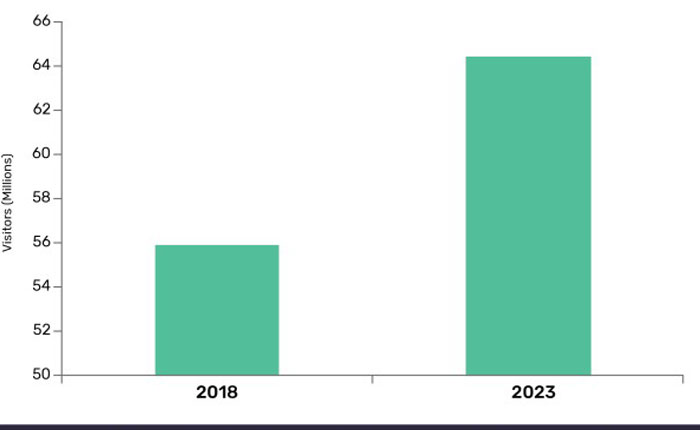
In 2018, 55.9 million UK residents travelled to European destinations. However, GlobalData expects this number to increase to 64.4 million in 2019.

The report, “Tourism Source Market Insight: United Kingdom” also identified that Spain and Eastern European nations will continue to see growth as travellers seek sunshine and city breaks with a smaller price tag.

Laura Beaton, travel and tourism analyst at GlobalData, said: “Of course Brexit has impacted the UK’s outbound tourism industry but the reality is not likely to be as bad as we might have been led to believe, at least in terms of visitor numbers.”

The UK’s longstanding relationship with Spain is not set to be affected by a Brexit deal or no-deal either. In 2017 the then Spanish deputy minister for European affairs, Jorge Toledo, stated that Spain would have a backup plan to shield the country’s tourism industry from Brexit consequences.


GlobalData graph showing an increase in UK outbound travellers.

“Tourism from the UK is an important part of many European countries’ economies and Spain, France, and Italy are going to remain the top destinations for UK travellers for the foreseeable future so it is important that ties are not severed,” added Beaton.

The report also identified destinations such as Hungary, Czech Republic and Romania as places UK travellers would be increasingly travelling to in the future. This is partly because their currencies currently remain weaker than the pound and untapped natural beauty, history and culture is also enticing travellers to visit these countries.

“The depreciation of the pound has had a big impact on expenditure, however, and travellers have had to spend more to match the same experiences they had a few years ago. As a result, cheaper locations are highly sought after by UK travellers.”

“Western Europe is only truly becoming aware of the other offerings of Eastern Europe and this helps to explain how each country has rapidly grown its UK visitor numbers in recent years,” said Beaton.

“Vilnius in Lithuania is a UNESCO World Heritage site and Budapest has many buildings that have won European Heritage Awards so Eastern Europe has plenty to entice travellers away from the traditional city breaks of Paris and Rome.”

Italy sees International events on the rise with 8.1 per cent increase in 2018

Italy has seen a jump in the number of international events, which have a significant proportion of overseas participants, increase from 7.9 per cent in 2017 to 8.1 per cent in 2018.

Most conferences and events (59.5 per cent) are local in dimension – with participants (excluding speakers) mainly coming from the same region as the host venue.

Overall, conferences and events held in Italy increased by 5.8 per cent in 2018, with participant figures slightly down (-2.4 per cent).

The decrease in growth figures was due to a fall in conferences promoted by international associations.

As a result, the recommendation was that Italy needs to undertake more promotional activities to combat competition from other destinations.

“Internationalisation, planning and quality are the three elements Italy needs to compete and get out of the impasse we have observed in the associations markets,” said Alessandra Albarelli, president of Federcongressi&eventi.

“Internationalisation means strengthening Convention Bureau Italia’s role in promoting the country as a MICE destination, in partnership with national tourist board ENIT; planning consists of implementing, together with all the institutions, particularly the Ministry of Agricultural, Food and Forestry Policies and Tourism, long-term, targeted strategic activities for the sector.”

The latest results are from the Italian Survey of Conferences and Events, the research project by Italy’s meeting industry association Federcongressi&eventi.

Professor Roberto Nelli, who headed up the survey made some recommendations: “A first attempt at mapping events and conferences hosted in Italy shows that, given the current situation in which most events are hosted in places that can be described as part of Italy’s ‘Great Beauty’, it is possible to identify meeting industry development strategies that leverage the strengths of certain regions: for example, those with vast potential in their cultural and natural heritage that has not been fully exploited.”

Hotels and conference centres were the best performers. Conference hotels play host to most events: 80.6 per cent of the total, +6.9 per cent versus 2017. Conference centres also performed well, accounting for 3.2 per cent of total events (+3.9 per cent) but also registering the highest average number of events per venue: 156.3.

Office workers dread all-day meetings, according to new study

A new study commissioned by Drayton Manor Park has found that out of 1,000 surveyed office workers, half of them dread-all day meetings.

The survey also identified that 59 per cent of respondents would rather concentrate on their work than have to attend a training session. A further 44 per cent attributed this feeling of dread with knowing that the meeting format would be the same as the last one they attended.

Other factors included too much being crammed into an agenda and the meeting not starting on time.

As a result of this dread of meetings, half of the survey respondents admitted to zoning out, while 12 per cent confirmed they had fallen asleep during meetings and 10 per cent said they had secretly listened to music during meetings.

“Our survey results show that businesses need to seriously think about the way it delivers meetings and training sessions. In a time where businesses are scrutinising all budgets, delivering effective meetings which people look forward to can ensure that no time is wasted when lots of talent is taken out of the office and invited to an all-day session,” said Melissa Penn, Drayton Manor Park conference and events manager.

An unsurprising result from the survey is that 82 per cent of meeting attendees agreed that productivity slumped after lunch, with only 22 per cent saying they joined in energising team activities, designed to help delegates break out of the post-lunch slump.

“It is clear that enthusiasm and motivation for meetings is flat at the moment and a change in format is required.

“We hope that our report will encourage event organisers to shake up their current meeting schedule and consider new methods to help re-energise attendees for the whole session,” Penn added.

One positive that was taken from the study if that 71 per cent of respondents said that would more receptive to all-day meetings if they were held off-site.

UKCAMS reveals Conference industry now worth £20bn

New research into the UK’s conference and meetings sector, the ‘UK Conference and Meeting Survey 2019’ (UKCAMS), reveals a robust and buoyant industry. There was an estimated £20bn of direct expenditure generated by conference and meeting delegates in venues and in wider destination spend in 2018, up from £18.1bn in 2017. At the same time, the overall number of conferences and meetings held in 2018 was the highest in recent years – an average of 428 conferences and meetings per venue compared with 373 in 2017 and 419 in 2016.

These positive UKCAMS 2019 results show the industry flourishing. The research findings also reveal that the overall number of conferences and meetings in 2018 was an estimated 1.48m compared with the 2017 figure of 1.29m (and 1.45m in 2016). While most events (66%) comprised 50 delegates or fewer, with just 6% of events having more than 200 delegates, the average event size was 72 delegates, the same as for 2017.

Levels of capital investment by venues remained strong with 73% of venues reporting that they had invested in their property in 2018, with 17% investing over £500,000.

The ‘UK Conference and Meeting Survey’, now in its 26th consecutive year, has a specific focus on the value and volume of the market and the performance of meeting venues. It also highlights key market trends identified by venues. The results provide a definitive insight into the conference and meetings sector and are widely used to inform investment, advocacy and marketing activities.

Other key findings from the research include:

  • In 2018, there were an estimated 95.3m delegates accounting for approximately 152.8m delegate days.
  • The average duration of conferences and meetings was 1.6 days (unchanged from previous years), although almost two-thirds of events lasted only one day or less
  • Conference and training centres (640 events) and hotels (453 events) hosted higher than average numbers of events
  • Just over a third (35%) of conferences and meetings in 2018 were organised by a professional conference organiser (PCO) or event management agency

While the majority of UK venues are focused on the domestic meetings market, some 10% of venues are proactive in seeking to attract international conferences, which account for 11% or more of their business. Venues tended to target international conferences through trade shows and familiarisation visits.

Kerrin MacPhie, VisitBritain’s head of business events, commented: “The ‘UK Conference and Meeting Survey 2019’ provides UK destinations and venues with valuable insights into the sector’s scale and latest trends, helping to inform their business planning and marketing activity.

“The UK is home to many world-renowned venues that consistently host leading international events. Their success not only needs to be recorded but also celebrated. VisitBritain recognises the importance of the ICCA ranking as a key tool in achieving this. The UKCAMS research results show us that more can be done by UK venues to record ICCA activity and we strongly encourage them to consistently log their international ICCA events. Doing so recognises and celebrates their world-class credentials, reinforcing the UK’s position as a leading business events destination.”

Copies of the full UKCAMS 2019 report are available priced £180 + VAT. Click here to download the form.

Creating better places to live, meet and thrive in

The Global Destination Sustainability Index’s Whitepaper highlights trends and strategies undertaken by 47 leading cities to become regenerative hubs for economic, social and environmental development.

At the European Cities Marking Conference, the Global Destination Sustainability Index (GDS-Index) released their third Whitepaper that details the case studies, data analysis and the actions taken by 47 Destination Management Organisations (DMOs) and municipalities to become destinations of choice for meetings, events and business tourism.

The whitepaper defines six converging mega trends that present destinations and the Event Industry with opportunities to improve their performance and adapt to the risks presented by climate breakdown, ecocide, demographic shifts, social change and digitalisation.

It highlights four fundamental building blocks for DMOs to become sustainable destination stewards and changemakers and defines eight tactics on how destinations can integrate sustainability into their core strategy and become leaders in future-oriented collaboration.

According to MCI’s CEO Sébastien Tondeur, “Scientific predictions about the rate and effect of human impact on climate and our living planet are increasing in certainty and accuracy. As an industry we need to step up, scale up and speed up our sustainability efforts. Destinations are key to the transformation of our industry, and the GDS-Index is an important catalyst helping them transform.”

Petra Stusek, ECM President, comments that “Destination Management Organisations are evolving into destination stewards and changemakers. They are progressively taking a bigger role in accelerating their city’s sustainable development plan. Through this report the GDS-index is sharing best practice and pieces of wisdom with the ultimate goal of supporting other destinations to focus on sustainable growth.”

Senthil Gopinath, CEO of ICCA, comments: “ICCA is proud to provide strategic support to the GDS-Index and contribute to the ever-growing sustainability of the global meetings industry. Alongside our global community of member-suppliers and international associations, we continuously seek to ensure every aspect of our strategic planning, events and general activities strongly adheres to and promotes best practices in sustainability.”

Carina Bauer, CEO of IMEX Group, mentions that “the economic, social and environmental significance of the Events Industry is massive. We could influence safe and fair working conditions for 26 million jobs, direct $1.5 trillion USD towards more responsible supply chains, and inspire 1.5 billion participants to action. Our industry has a decisive role in the achievement of the 2030 Sustainable Development Agenda and its 17 SDGs. The next couple of years represent a serous tipping point for us all – and for the generations to come.”

Guy Bigwood, Managing Director of the GDS-Index adds: “Driven by concerned students, citizens, local governments and corporations a new era of sustainability is rising, and will touch every corner of the events industry. We believe that a better and more restorative global future lies in urban innovation and collaborative action. The GDS-Index plays a key role to engage, inspire and enable destinations to become more sustainable places to visit, meet and thrive in.”

The whitepaper is available for download.

London hotel occupancy drops by 0.6% in May

New hotel openings resulted in a slight decline in hotel occupancy rates in London during May, according to new figures from data company STR.

The supply of hotel rooms increased by 1.8% alongside a 1.2% increase in demand, resulting in a 0.6% fall in occupancy to 82%.

The Chelsea Flower Show from 21 to 25 May helped drive up average daily rate (ADR) by 1.6% to £147.76, with the first day of the show recording ADR of £182.33.

Revenue per available room increased by 1% to £121.17.

STR will release its full results of the performance of London hotels during May later this month.

HotStats report UK hotel rates down 11 per cent in April

Hotels in the UK saw an 11 per cent year-on-year decrease in average room rate to £102.35 in April.

And there was also a 1.6 per cent year-on-year drop in room occupancy to 75.9 per cent during the month, according to the latest data tracking full-service hotels from HotStats.

Hotels in the UK suffered their largest margin of year-on-year profit decline since late 2016, as ancillary revenues fell and costs soared in April,.

The 10 per cent year-on-year decline in GOPPAR (gross operating profit per available room) to £43.22 was far greater than the 1 per cent decrease in RevPAR (revenue per available room), which came in at £87.39 for the month.

Revenue declines were felt across all departments, including declines in food and beverage (down 6.4 per cent) and conference and banqueting (down 14.2 per cent) revenue.

“Whether or not unfinished Brexit is to blame, the hope is that the profit deflation this month is an exaggerated blip due to the timing of Easter, rather than something more ominous,” said Michael Grove, director of intelligence and customer solutions, EMEA, at HotStats.

The leisure-led Stratford-upon-Avon hotel market was one location to benefit from the timing of Easter, as events in key visitor attractions across the town, including the RSC Theatre and Guildhall, helped fuel a 10.3 per cent increase in RevPAR to £64.30, as the recovery in the market in 2019 continues apace.

Occupancy was at 75.2 per cent, up from 70.1 per cent year on year, while the average room rate was up 2.6 per cent on 2018 at £84.42.

In contrast to the wider UK, it was a positive month of performance for hotels in Reading, with a 4.2-percent increase in RevPAR to £62.08, contributing to a 16.4 per cent increase in profit per room.

The increase in profit was supported by an eighth consecutive month of ARR growth to £89.69, and a sixth consecutive month of room occupancy growth to 69.2 per cent.

How the future of hospitality is set to change

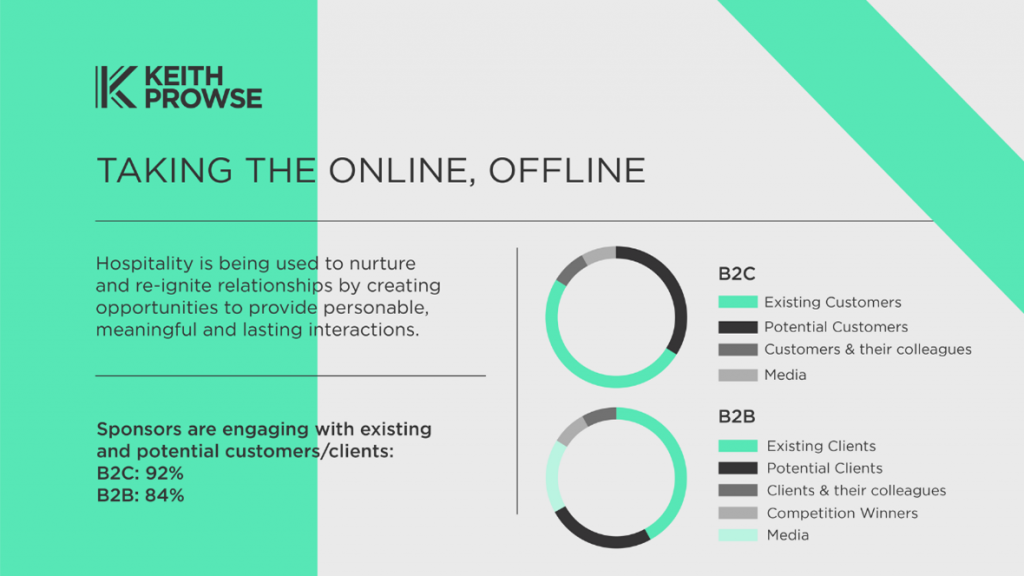
Keith Prowse, providers of sports hospitality to events such as the Wimbledon Championships, the Ashes and more, have released a new white paper titled ‘People Buy Experiences’.

The new research examines the future of the hospitality sector, and how what was once considered VIP has now become more accessible.

The paper underscores the importance of meeting face to face, showing that many sponsors and brands are using hospitality as a method of building trust with clients and customers.

Sam Coates, head of marketing for Keith Prowse, delivered a talk showcasing some of the results at IMEX Frankfurt on Thursday 23 May.

Among the key findings were that 40% of hospitality buyers were from small businesses, and 61% of attendees to hospitality events were from small businesses.

The industries which were most prominent for hospitality events were professional services, finance, construction and education.

When asked what reason buyers choose hospitality events, 31% said it was to build trust, while 27% said it was facilitate networking. 27% also said it was used to reward or recognise their members of staff.

The hospitality events people aspire to attend the most are tennis and rugby, according to survey results.

The closing remarks of the white paper state: “The automation of brand messaging is eroding trust between brands and their consumers.

“Brands want to meet their stakeholders and clients, and they increasingly understand that premium experiences that are rich in content and time help create the opportunity to engage face-to-face and re-build trust.”

Download the White Paper here.